
Google launched its Tensor G5 chipset for the Pixel 10, moving to TSMC’s 3 nm process and ending its manufacturing partnership with Samsung. The CPU features a new 1+5+2 core architecture and offers a 34% performance improvement over the G4. A key upgrade is the neural processing unit, which achieves a 60% performance enhancement. Its embedded Gemini Nano model completes local processing 260% faster while consuming 50% less power. Amazon offers the Pixel 10 for pre-order starting at $799, with shipments beginning August 28.
Google has launched its Tensor G5 chipset, marking a strategic shift to TSMC’s 3 nm process. This transition ends Google’s previous manufacturing partnership with Samsung and includes comprehensive architectural updates across the Pixel 10 device lineup.
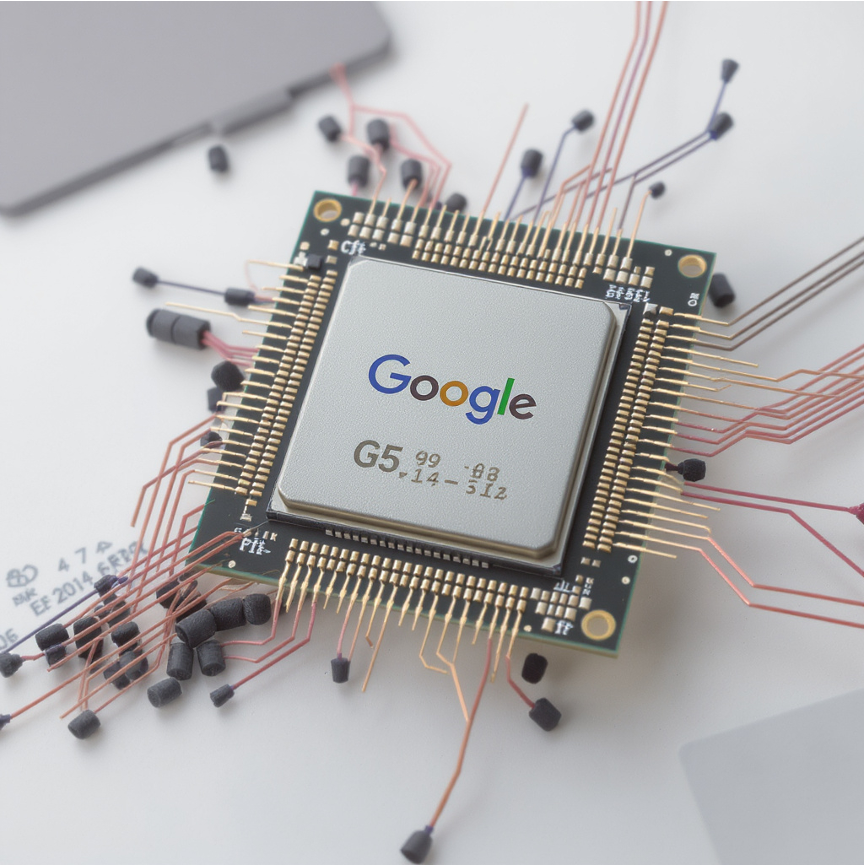
Google states that the Tensor G5’s improved power efficiency lets the Pixel 10 series run longer, adding hours to battery life, while also providing noticeable AI computational benefits.
CPU design implements 1+5+2 core cluster architecture
Google engineers restructured the central processing unit from the Tensor G4’s 1+3+4 cluster configuration to a 1+5+2 arrangement in the Tensor G5. Android Authority documentation confirms that Google disclosed this architectural change during technical briefing sessions, although the company declined to provide detailed clock frequency specifications.
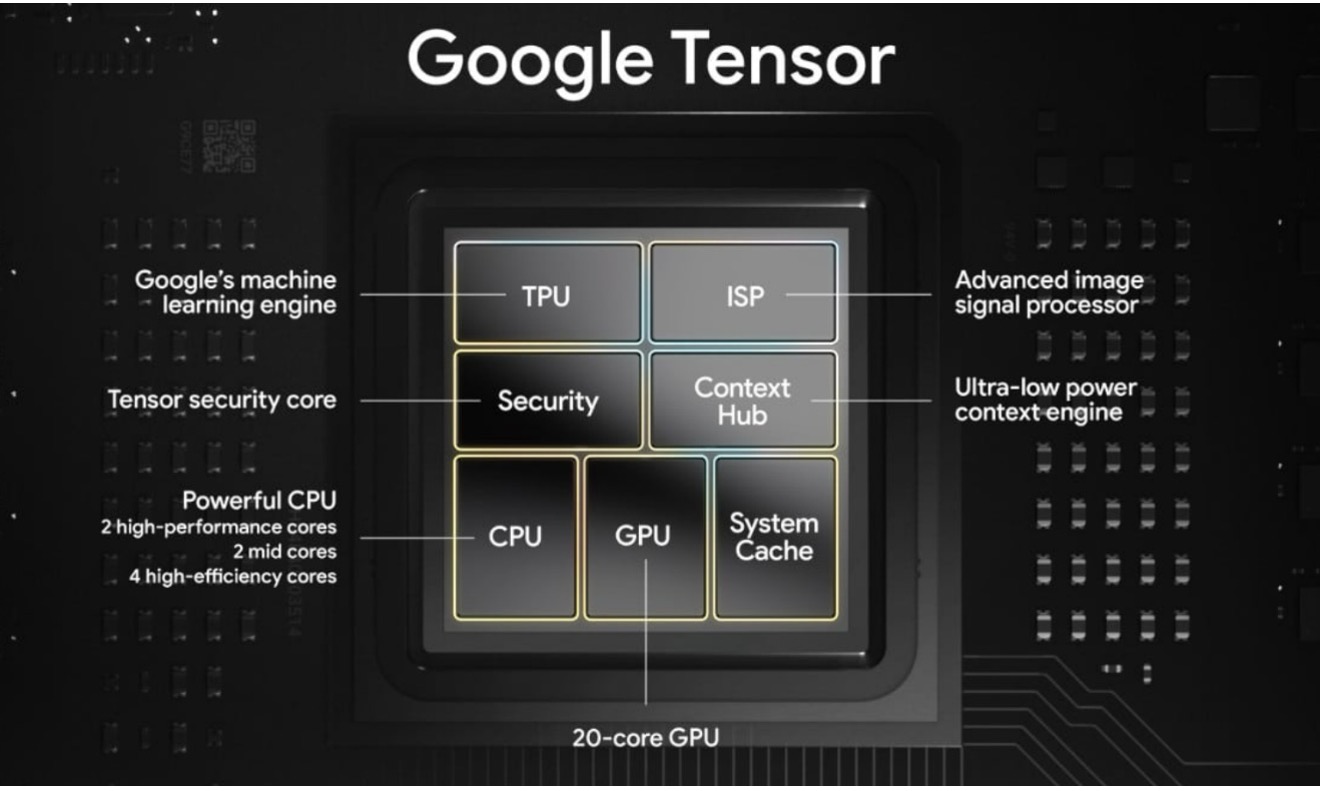
Figure 1. The original Google Tensor SoC. (Source: Google)
Geekbench 6 benchmark analysis of the Pixel 10 Pro Fold revealed specific operational frequencies: the performance core runs at 3.78 GHz, intermediate cores operate at 3.05 GHz, and efficiency cores function at 2.25 GHz.
Google reports that the Tensor G5 CPU delivers a 34% performance improvement compared to the Tensor G4 baseline measurements, but the company did not clarify whether this applies to single-core or multi-core performance. When compared to industry alternatives like Snapdragon 8 Elite, Dimensity 9400+, and A18 Pro processors, these established solutions likely still hold performance advantages over Google’s current implementation.
Graphics processing unit excludes ray-tracing implementation
Google integrates updated graphics processor intellectual property within the Tensor G5 architecture, though comprehensive technical specifications remain undisclosed. Industry analysis suggests Google incorporates an Imagination Technologies DXT-48-1536 graphics processing unit, pending official technical confirmation.
VeriSilicon is also a component provider for the Tensor G5 but is responsible for the display controller (DC9000).
The Tensor G5 GPU architecture omits ray-tracing functionality, creating potential performance disadvantages in mobile gaming applications compared to competing processor solutions, notwithstanding the technology’s measured adoption trajectory in mobile computing environments.
Neural processing unit delivers 60% computational improvement
Google’s dedicated tensor processing unit achieves 60% performance enhancement compared to Tensor G4 neural processing capabilities. The Tensor G5 integrates Google’s proprietary Matryoshka Transformer architecture, implementing 2 billion effective computational parameters.
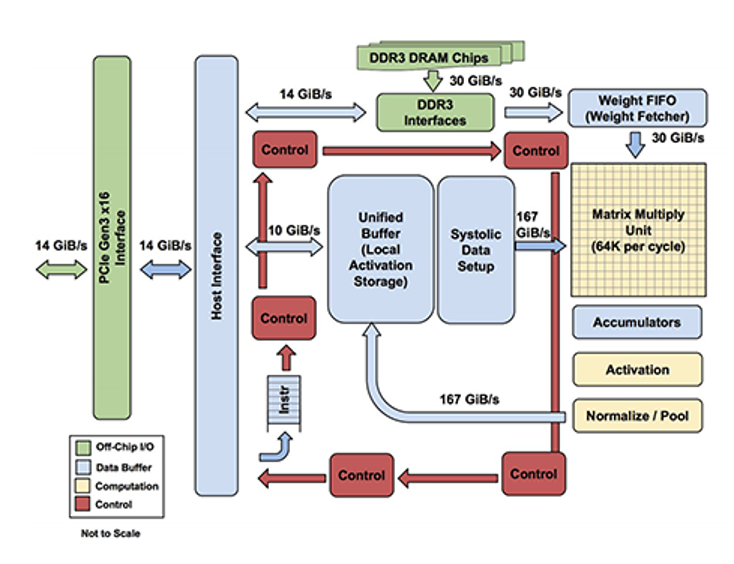
Figure 2. Google’s TensorFlow processing unit architecture. (Source: Google)
The embedded Gemini Nano model executing on Tensor G5 hardware completes local processing operations 260% faster while consuming 50% reduced power consumption compared to Tensor G4 performance benchmarks. Token processing capabilities expanded from 12,000 tokens on Tensor G4 to 32,000 tokens on Tensor G5, providing computational capacity equivalent to analyzing 100 screenshot images.
Image signal processor enhances low-light video capture
The revised image signal processor implementation reduces motion-blur artifacts in low-illumination video recording scenarios. Google establishes 10-bit HDR recording as standard configuration for 1080p and 4K 30 fps video capture operations.
Google omits native 8K local video recording capabilities from the Pixel 10 series, directing users toward the company’s cloud-based Video Boost service for ultra-high-resolution content-generation requirements.
Wireless connectivity retains Exynos 5400 modem architecture
Google maintains the Exynos 5400 5G modem integration for wireless communication functions across all Pixel 10 product variants, preserving compatibility with established network infrastructure implementations.
Commercial availability and pricing framework
Amazon offers pre-order access to the entire Pixel 10 product lineup starting at $799, with shipments beginning on August 28. The retail partner features promotional programs including $100 gift cards for the base model, boosting to $200 for Pixel 10 Pro and Pixel 10 Pro XL configurations.
Consumers selecting the Pixel 10 Pro Fold at $1,799 receive $300 gift card incentives, establishing this model as the premium offering within the product portfolio.
Technical assessment and market position
The Tensor G5’s move to TSMC’s 3 nm process, along with architectural updates and improved AI processing infrastructure, makes Google’s semiconductor solution a strong option for integrated device applications. However, it still shows some limitations compared to established mobile processors from traditional semiconductor makers in performance tests.
The new neural processing unit represents Google’s continued investment in on-device AI capabilities, with the Matryoshka Transformer architecture demonstrating the company’s focus on efficient local processing rather than cloud-dependent computational models.
LIKE WHAT YOU’RE READING? TELL YOUR FRIENDS; WE DO THIS EVERY DAY, ALL DAY.