
Maxon has a substantial fall release of its Maxon One tool bundle, introducing new features across its ecosystem benefitting a range of disciplines. For instance, Cinema 4D has GPU-accelerated simulations, Maxon Studio boasts Red Giant effects and reusable Capsules, Redshift offers procedural clouds and refined realism, and ZBrush pro sculpting available on iPad. Maxon also presented its new visual identity meant to emphasize its tool connectivity.
Maxon One gets new tools and features. (Source: Maxon)
As we head into fall, Maxon is presenting a bold new look. First, it introduced an ecosystem redesign in which Maxon One (comprising Cinema 4D, ZBrush, Redshift, Red Giant, and Forger) delivers new features across a unified creative ecosystem. Aligning with this concept of product unification, Maxon also introduced a new visual identity that it describes as modular, connected, and consistent—a visual expression of how the tools are designed work better together.
As Maxon emphasizes, Maxon One unifies Cinema 4D, ZBrush, Redshift, Red Giant, and Maxon Studio in a deeply integrated platform designed to work harmoniously from one stage of creation to the next—across VFX, motion graphics, 3D modeling, sculpting, rendering, and more, as well as across disciplines.
To this end, Cinema 4D now has GPU-accelerated, art-directable simulations, while Maxon Studio streamlines video and broadcast design with Red Giant effects and customizable templates, enhanced with embedded assets and reusable Capsules. Redshift enhances architectural rendering with procedural clouds, refined realism, and faster interactive displacement, while ZBrush brings professional-grade sculpting to iPad with 3D printing support and pipeline integration.
Maxon One’s new branding. (Source: Maxon)
Those and other new features and functions have been integrated into the Maxon One bundle that are beneficial to those focused on cinematic storytelling, broadcast graphics, gaming design, architectural visualization, and more. And because the tools work together, users have the appropriate software at their fingertips at every stage in the production process, resulting in a faster, smoother, more streamlined workflow.
For animators and motion graphics designers
Cinema 4D enables fast, unified simulations that are easy to create and art-direct. All the procedural power of C4D integrates seamlessly with rigid-body, soft-body, cloth, pyro, particles, and now liquids. The new AI search, which operates entirely on the user’s local machine, makes finding Capsules, assets, textures, and presets much easier, with faster and more precise results.
For game developers and virtual production teams
The latest Cineware for Unreal Engine streamlines asset, lighting, and material workflows, reducing rework and accelerating iteration. Support for Cinema 4D modifiers, enhanced texture tag controls, and automatic material instance creation keep scenes accurate and flexible from import to final output.
For sculptors and 3D modelers
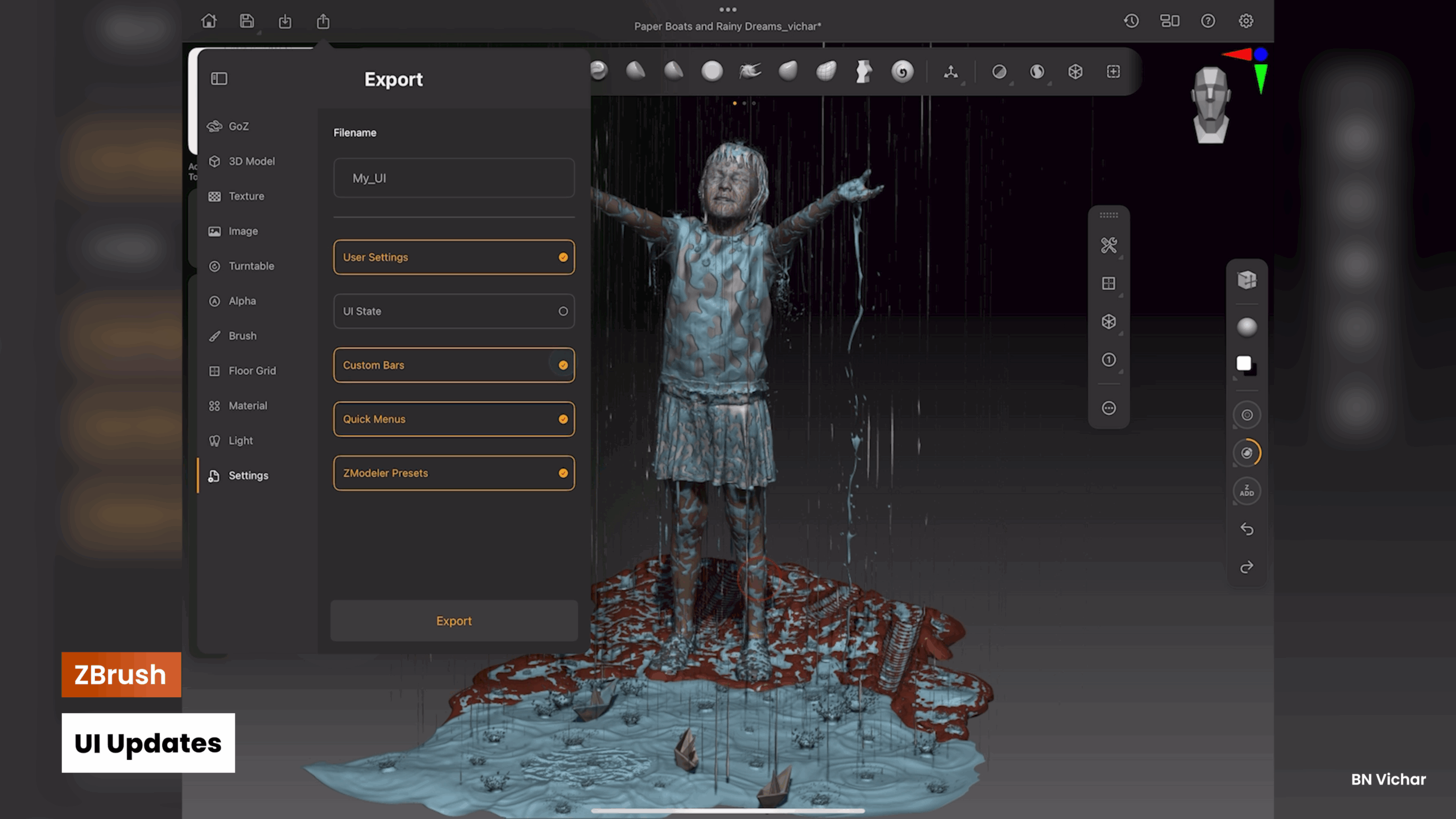
ZBrush adds creative freedom to suit a user’s creative flow on the desktop and iPad. Python scripting, available on the desktop, unlocks automation and deeper pipeline integration, while 3D printing tools bring full desktop parity to the iPad. Surface Noise also sees an upgrade with a refreshed UI, per-noise resets, alpha transforms, and full undo/redo support, giving artists greater control over detail. ZBrush for iPad UI enhancements let users move the bottom bar, adjust the modifier wheel, and save or share custom interfaces for a personalized setup. Artists can rapidly sculpt, customize, and export designs for collectibles, props, and prototypes, with upcoming UV editing and hard-surface modeling updates extending its versatility.
For VFX artists
Redshift introduces new tools for photorealistic and stylized environments with greater realism and speed. Texture Displacement delivers faster, interactive previews with minimal subdivision; Scene Units ensure materials match real-world scale; and the new Procedural Clouds and Sun & Sky system make it easy to add atmospheric depth to a scene. Artists can render more accurate, visually rich worlds in less time, whether for film, advertising, or immersive media.
For editors and colorists
Maxon Studio now supports embedded assets and reusable Capsules, making it possible to build once and use anywhere. This means more customization, faster setup, simple scaling, and consistent brand visuals, all without leaving the creative environment.
New product identities
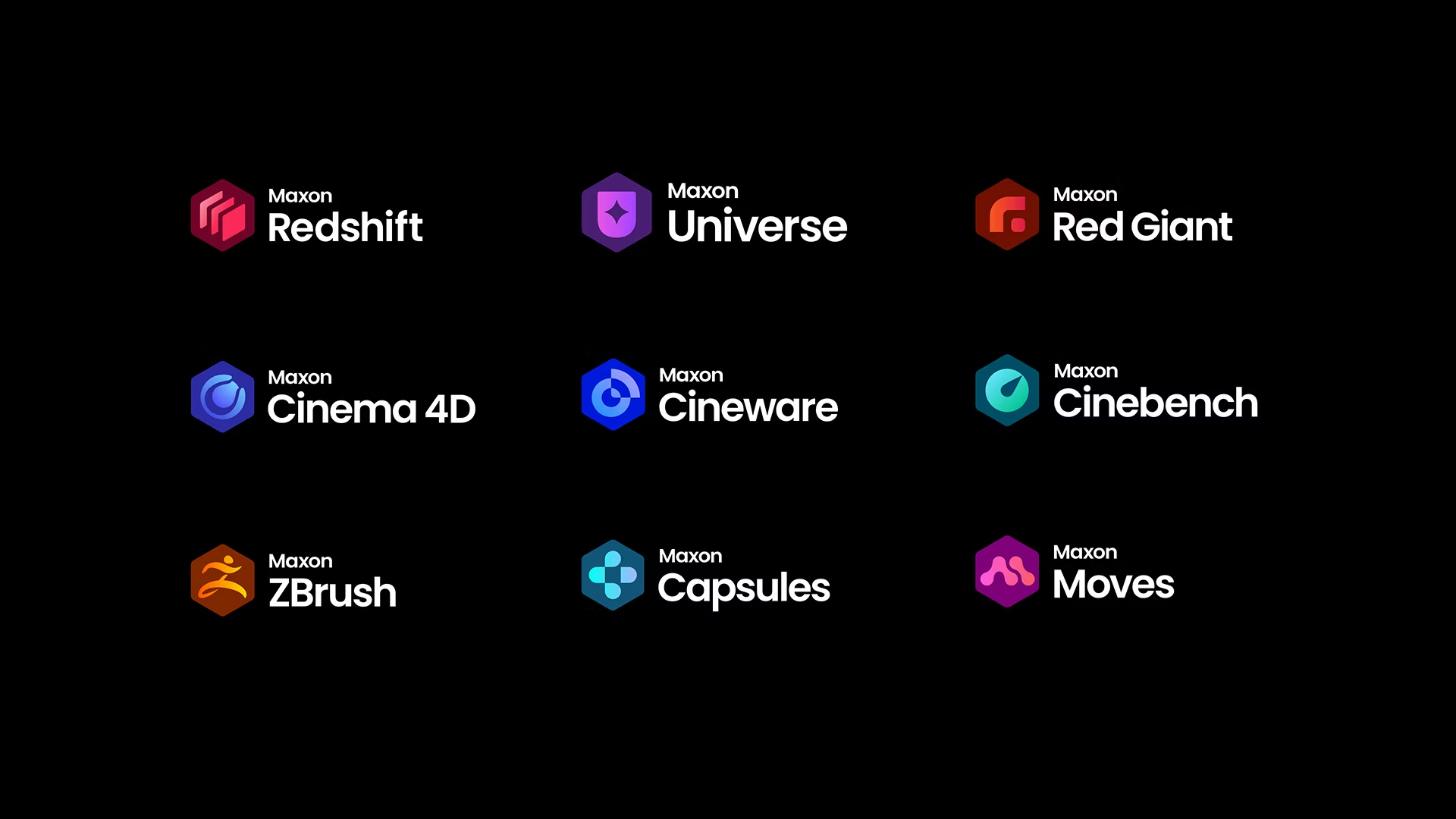
Maxon’s new product identities were designed to fit seamlessly with the existing Maxon logo mark, mimicking the look and feel of a honeycomb and mirroring the philosophy behind Maxon One: individual tools, distinct in purpose, but unified in workflow and stronger together, according to the company. Each logo adopts a simplified geometric design and vibrant accent color, ensuring instant recognition while fitting seamlessly into the broader brand architecture.
Maxon’s new branding extends across its product line. (Source: Maxon)
These new product logos extend the brand identity into every corner of Maxon One, providing a clear, connected look that captures the unique spirit of each tool in the Maxon lineup, said Maxon, while maintaining the coherence of a single family of professional products.
“Redesigning a logo system is more than aesthetics; it’s an opportunity to celebrate and empower the community we serve,” said David McGavran, CEO of Maxon. “Maxon’s mission is to remove friction and give artists freedom to create without limits, and this refreshed design reflects that mission in its unified ecosystem of tools. It showcases our legacy, highlights our advancements, and sets the stage for an exciting future built around the needs of our users.”
The modular framework ensures logos retain clarity even at smaller sizes and across digital platforms. A reimagined typography structure introduces hierarchy and balance across the system.
“Our goal was to create a visual identity that feels inherently Maxon, while highlighting the distinctive attributes of each tool,” said Leo Hageman, director of Brand and Creative, who oversaw the transformation of the Maxon One logo system.
The logo redesign is part of Maxon’s Fall 2025 ecosystem release. Maxon plans to roll out the visual updates comprehensively across its website, social channels, and software platforms beginning this month.
LIKE WHAT YOU’RE READING? INTRODUCE US TO YOUR FRIENDS AND COLLEAGUES.