
I caught a share of James Cameron’s interview with the Boz To The Future Podcast. What I got out of it is that the content makers are concerned that they own their content, and when their work is used, they want to be compensated for it. Meanwhile, AI companies are saying that while they are learning from the preexisting work, they aren’t storing it and their output is far apart enough from the original material that it is completely new. This means there is no reason to compensate the content creators and there is no breach of copyright when learning from preexisting works. I’d like to offer a different perspective that goes beyond copyright and content ownership.
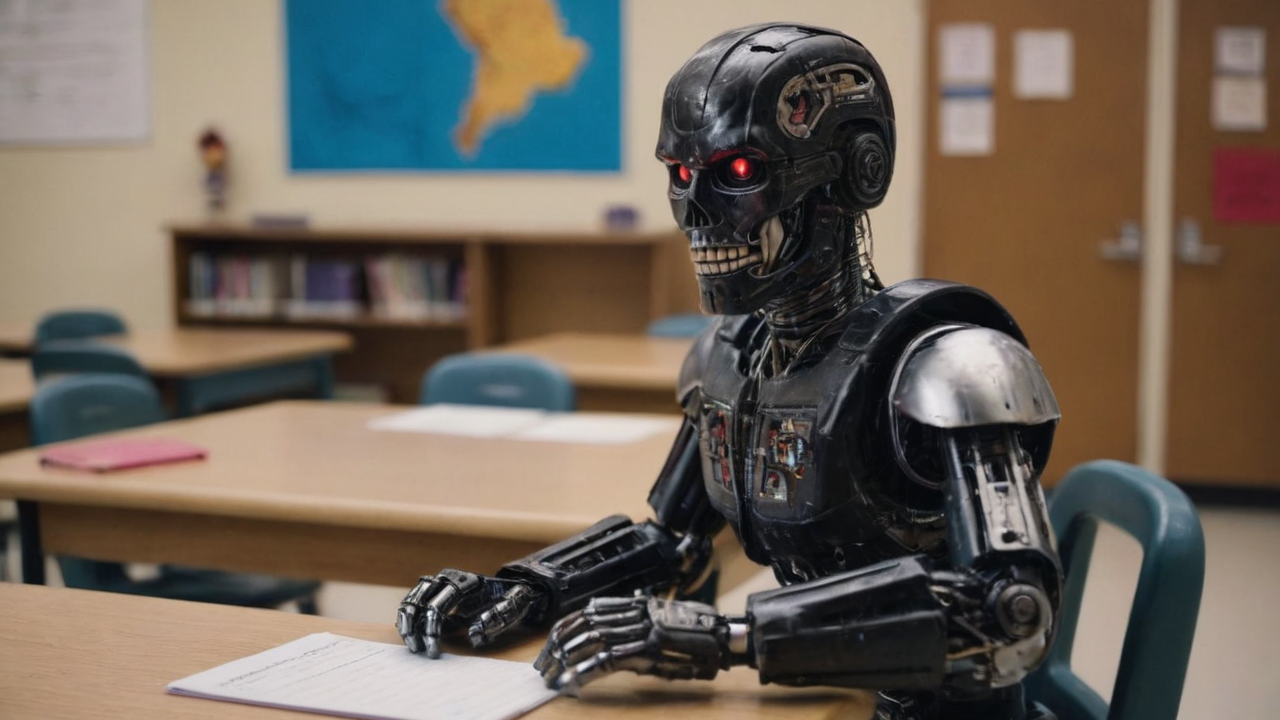
The Readinator. (Source: Neil Schneider)
Consider a student who wrote a book based on an aggregation of all the books he or she read in school. Now imagine the student has a huge financial success from the sales of this book. What does the student owe the earlier content creators who helped him or her earn this success? Is this a question of copyright? Or is this more about the value of knowledge transfer?
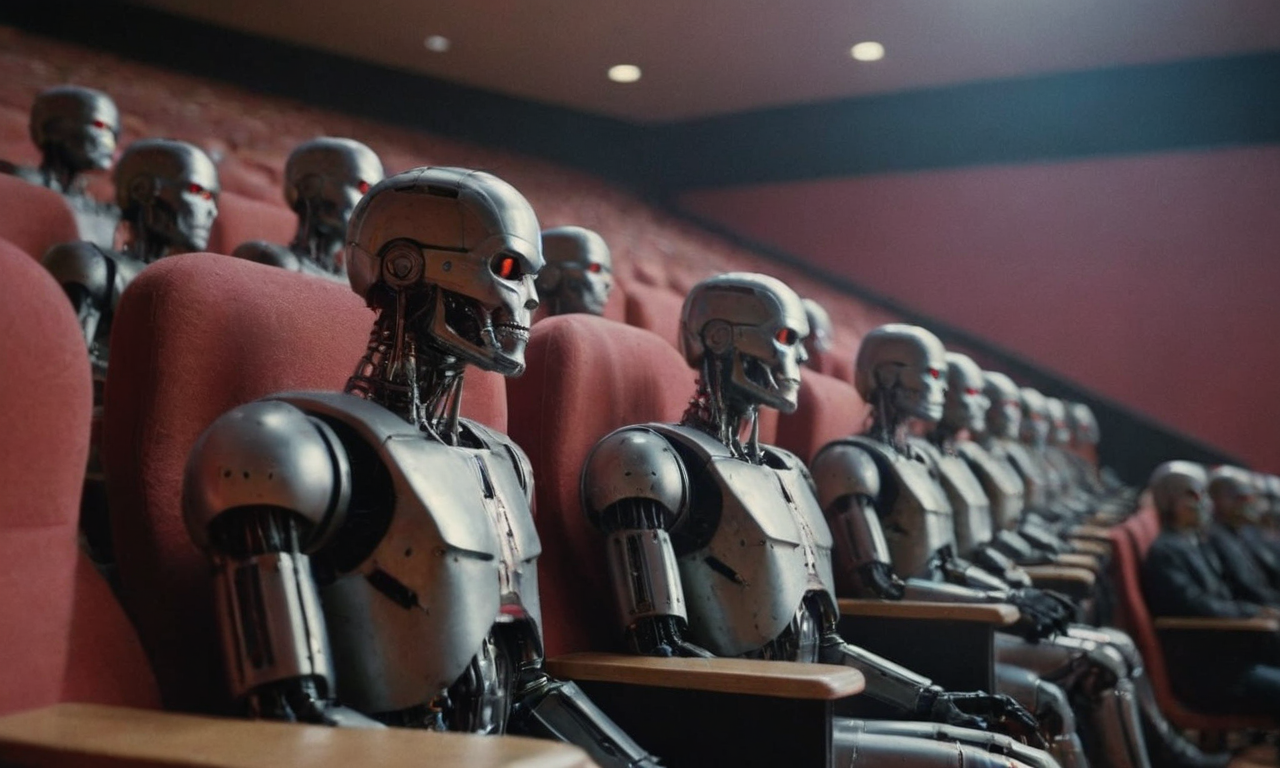
I’ll be back… save my seat, please. (Source: Neil Schneider)
If I rented a movie, I could show it to my family and a few friends at a party, and that’s the limitation of my rights with this consumer purchase. What if I rented or bought that same movie and showed it to an auditorium filled with high school students? Nobody pilfered it, distributed it outside the theater, or charged for it—it’s just an innocent scenario of a one to many transfer of knowledge. This scenario has special licensing and compensation models because that single knowledge experience has value, and it’s understood that the moviegoers can interpret and build their own bodies of knowledge and work based on that scaled experience—which needs to be paid for.
Let’s go back to our student who wrote a successful book about all that the pupil had learned in school. The person made his financial investment. From taxes, he paid his local library for the right to lend him books for his research. His tuition paid for his teachers’ services and learning materials. He paid for the right for his school to show him that auditorium movie. He even paid for the Internet access to download research from all over the world, which also added clicks and ad revenue to compensate the countless publishers, authors, and creators who made our student’s journey possible. It’s these soft-spoken investments that fed the ecosystem that nurtured our student’s potential to contribute to the next generation so the next generation could contribute after that.
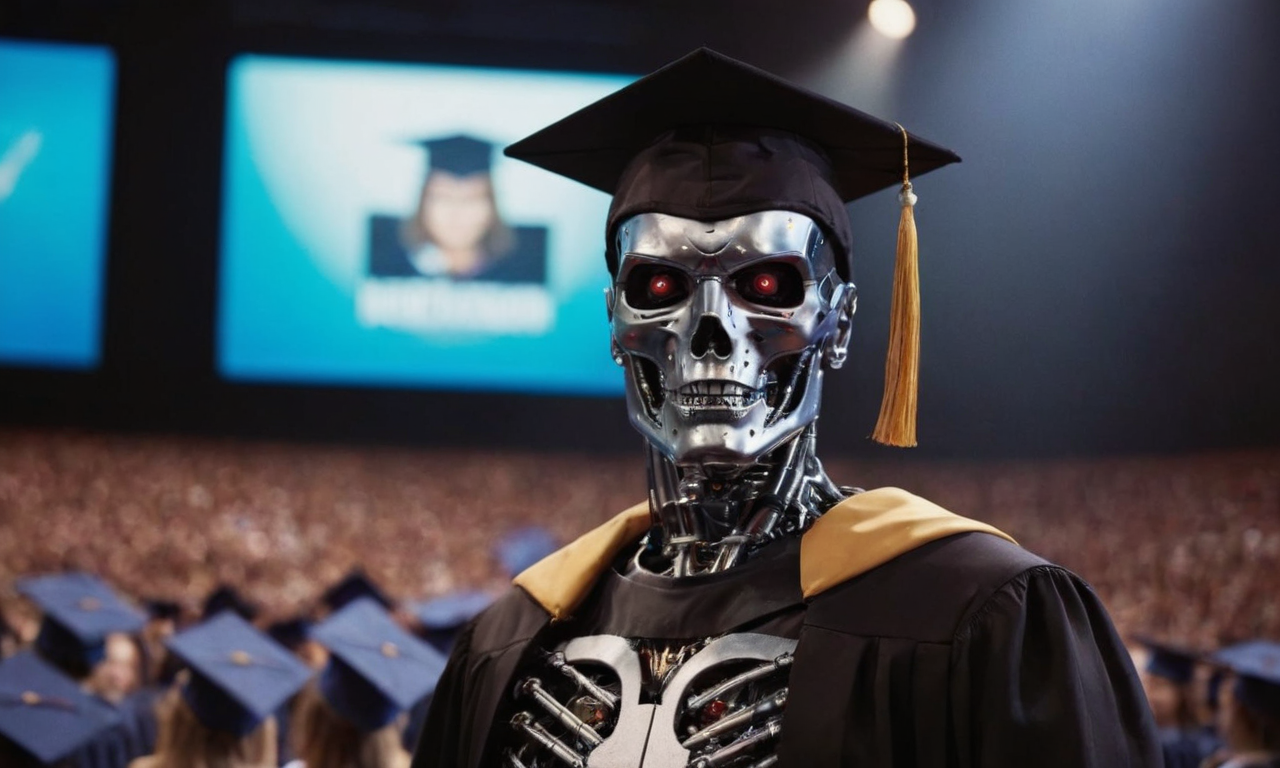
I want to thank my mentors Sarah Connor and Uncle Bob. I know they would be proud to hear me say, “Hasta la vista, baby!” (Source: Neil Schneider)
Jim Cameron’s analogy of us all being AI models in warm-blooded forms that can absorb and use what we experience without breaking copyright is a sensible standard. However, this standard goes both ways. Just as our pupil made investments to reap what his or her future sows, there should also be compensation models and infrastructures so that AI invests and contributes just as much balance as our humble student.
Neil Schneider is executive director at The International Future Computing Association (TIFCA).
WHAT DO YOU THINK? LIKE THIS STORY? TELL YOUR FRIENDS, TELL US.