
Jeff Bezos now drives two ambitious tech paths at once. His new AI start-up, Project Prometheus, aims to build models that learn from the real world—machines, materials, and physical systems—backed by billions in funding and a team drawn from top AI labs. At the same time, Bezos champions a future where data centers operate in orbit, joining efforts from Google, Nvidia, and Blue Origin. Together, these projects sketch a future where AI and off-planet computing grow side by side.

Jeff Bezos advances two parallel efforts that shape discussions around next-generation AI infrastructure. Project Prometheus, announced in late 2025, directs its work toward AI systems that learn from physical processes in engineering, manufacturing, aerospace, and computing. The company has raised $6.2 billion and assembled talent from major AI research labs to build models driven by real-world data rather than digital abstractions. Its hardware stack remains undisclosed, and no evidence confirms the use of Tenstorrent processors. Bezos, however, invested heavily in Tenstorrent in 2024, and that company continues to develop RISC-V-based accelerators for training and inference, with a roadmap that introduces new processors on a two-year cycle. Prometheus’ focus on physical-economy simulation aligns with Tenstorrent’s architecture, which supports high-throughput, energy-efficient workloads at the edge and in data centers, creating a plausible path for future collaboration.
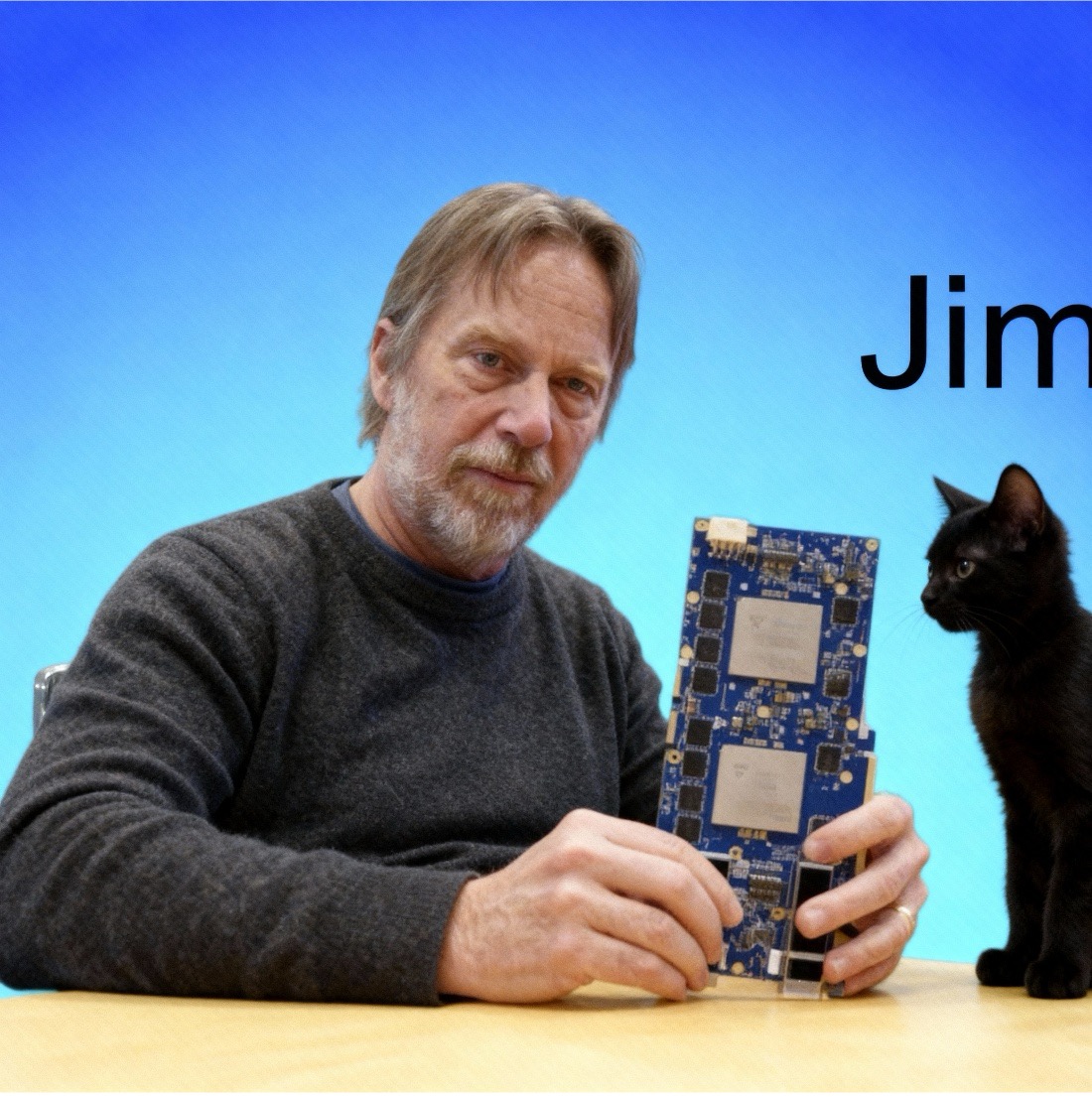
Jim Keller, Tenstorrent CEO.
Bezos also promotes a longer-term shift toward orbital computing. He outlined a scenario in which space-based data centers eventually achieve competitive cost structures as launch economics and in-space manufacturing mature. Google’s Project Suncatcher and Nvidia’s orbital compute initiative explore similar concepts, while Blue Origin notes that reusable launch vehicles and modular station technologies could support off-planet data infrastructure in planning horizons relevant to the current industry. Across all of these efforts, Bezos positions AI development, advanced semiconductor design, and off-planet compute capacity as interconnected components of a broader strategy aimed at expanding computational reach into both physical and orbital environments.
If you’d like to know more about Tenstorrent and the overall AI processor market, check out our AI Processor Market report.
LIKE WHAT YOU’RE READING? INTRODUCE US TO YOUR FRIENDS AND COLLEAGUES.