
Neuromorphic AI has a hardware story but no shared infrastructure—models built for one chip rarely run on another, benchmarks don’t transfer, and research results are difficult to reproduce across platforms. Innatera just launched Synfire to fix that. The open platform gives the neuromorphic community a common repository, standardized model exchange, and hardware-aware deployment tools built on the NIR standard. If it gains adoption, Synfire could do for neuromorphic what Hugging Face did for transformer models—turn a fragmented research field into a deployable ecosystem.
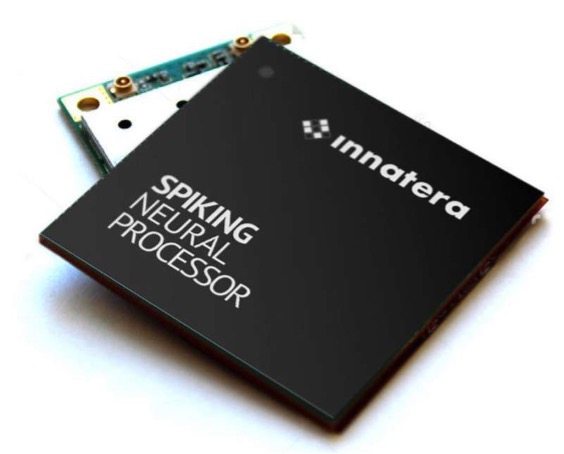
Innatera, the Dutch neuromorphic chip company spun out of Delft University of Technology in 2018, announced Synfire—an open, community-driven platform that targets the fragmentation problem holding neuromorphic AI back from broad deployment. Registration opens now; full platform availability follows in late April.
Neuromorphic hardware has matured significantly over the past several years, but the path from research to production deployment remains blocked by three specific gaps: tools that do not interoperate, models that cannot be reproduced reliably across systems, and no standardized way to exchange spiking neural network (SNN) architectures between research environments and hardware targets. Synfire addresses all three directly.
Planned for launch:

The platform provides a centralized open repository for neuromorphic models and full processing pipelines. Developers can publish, discover, and deploy SNN solutions—covering preprocessing, encoding, inference, and actuation—with hardware-aware metadata that matches models to validated execution targets. The architecture builds on the Neuromorphic Intermediate Representation (NIR), an existing shared language for neuromorphic model exchange, and extends it with the infrastructure layer the ecosystem has lacked.
“Current AI hardware was not built for real-world intelligence. Neuromorphic systems are, but only if models, benchmarks, and hardware can speak the same language,” said Jens Egholm, lead author for NIR and neuromorphic computing researcher. “NIR provided that shared language. Synfire builds the commons on top of it. Upload once, run anywhere, reproduce everything.”
Steve Furber, professor emeritus of computer engineering at the University of Manchester and co-designer of the original Arm processor and SpiNNaker neuromorphic system, framed the platform as a sequencing problem: make neuromorphic computing usable first, then useful. “A community-driven platform like Synfire accelerates that transition by giving developers the infrastructure to lead innovation in the space,” he said.
Synfire ships with a Web platform, CLI, and SDK for developer workflow integration, an open model registry for publishing and discovering SNN solutions, and an extensible architecture designed to evolve with emerging standards. Innatera positions it as vendor-neutral infrastructure co-steered with research institutions and industry partners rather than a proprietary ecosystem.
“There is no consistent way to capture how a model was built, how it should run, or where it has been validated,” said Petruț Antoniu Bogdan, neuromorphic architect at Innatera. “That makes reuse difficult and slows real deployment. Synfire standardizes how models are shared, while remaining flexible enough to evolve with the field.”
Target applications span smart sensing, industrial automation, healthcare monitoring, and consumer devices—all workloads where Innatera’s processors, which mimic the brain’s sensory processing mechanisms, hold a power-efficiency advantage over conventional silicon. The company targets 1 billion deployed devices by 2030.
What do we think?
Synfire targets the right problem at the right time. Neuromorphic hardware is no longer the bottleneck—software interoperability is. Innatera’s decision to build vendor-neutral infrastructure rather than a proprietary stack is the correct strategic move: The platform gains value with every chip vendor and research institution that joins, not just Innatera’s own customers. The NIR foundation gives it credibility. The risk is adoption velocity—open platforms live or die on community momentum, and the neuromorphic developer base remains small. JPR will track third-party hardware support as the leading indicator of whether Synfire achieves ecosystem status or remains a single-vendor initiative.
LIKE WHAT YOU SAW HERE? SHARE THE EXPERIENCE, TELL YOUR FRIENDS.