
Nvidia showed up at CES with a major DLSS update that feels like a behind-the-scenes upgrade to how games look and feel. DLSS 4.5 uses a smarter transformer model to clean up motion, sharpen lighting, and smooth out shimmering—especially at high frame rates. Nvidia also boosted frame generation up to 6×, with a new dynamic mode that adds only the frames you need. It’s all designed to make fast games look steadier and play smoother.
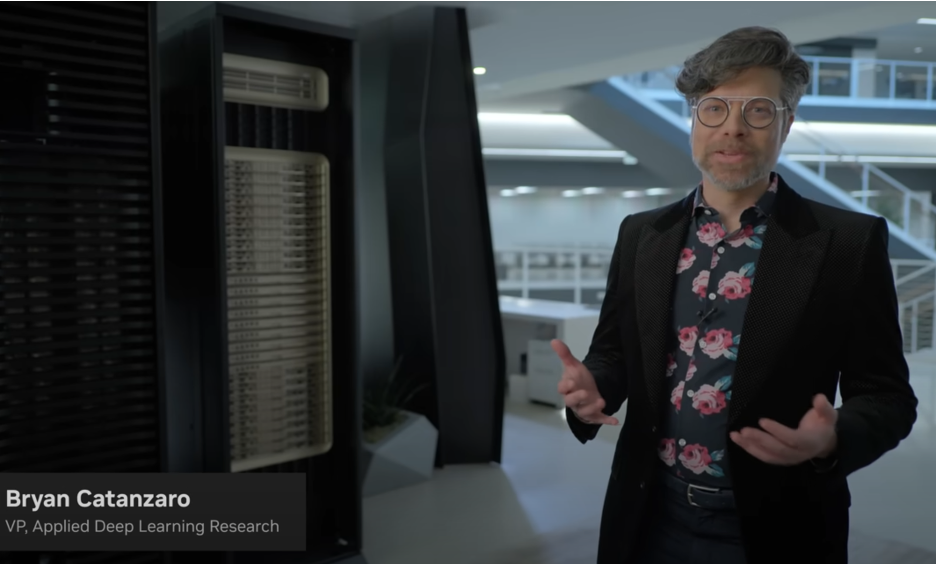
Nvidia introduced DLSS 4.5 at CES and positioned it as an update for players who run games at high frame rates and at resolutions that rely on detailed lighting and complex path-traced scenes.
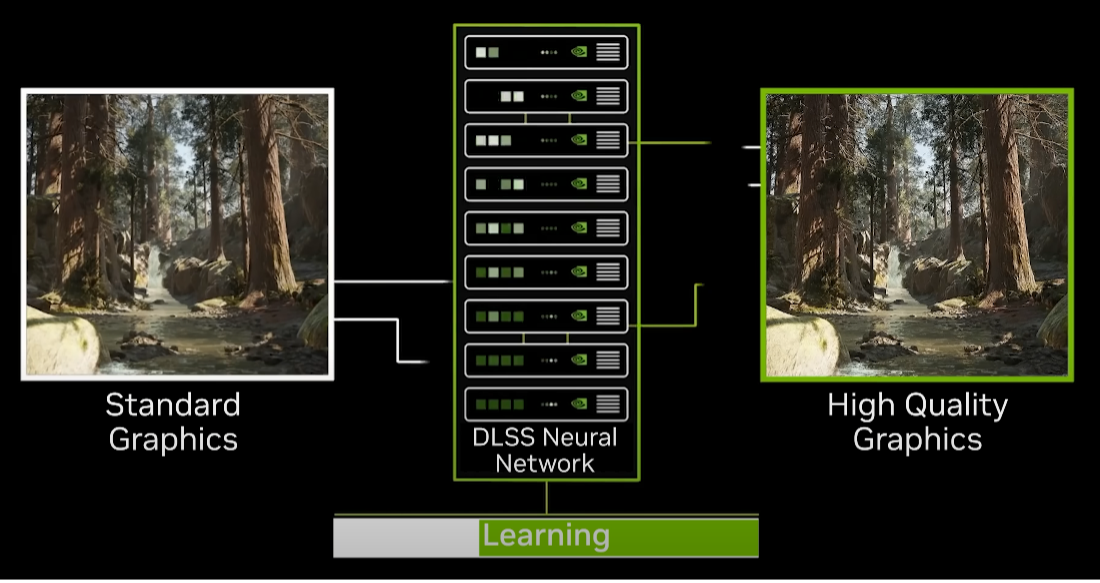
Figure 1. General concept of AI-assisted image processing. (Source: Nvidia)
The release centers on a revised Super Resolution model built on a second-generation transformer architecture. Nvidia trained this model on a broader dataset with greater compute density, which gives it a stronger grasp of scene structure. The model uses pixel samples and motion data from the game engine to refine lighting, define edges more accurately, and maintain clarity during rapid motion. These changes reduce ghosting, improve temporal stability, and address issues such as muted highlights, clipped information, and detail loss in high-contrast regions. Nvidia indicates that these gains appear across all DLSS modes, with more visible changes at Performance and Ultra Performance settings.
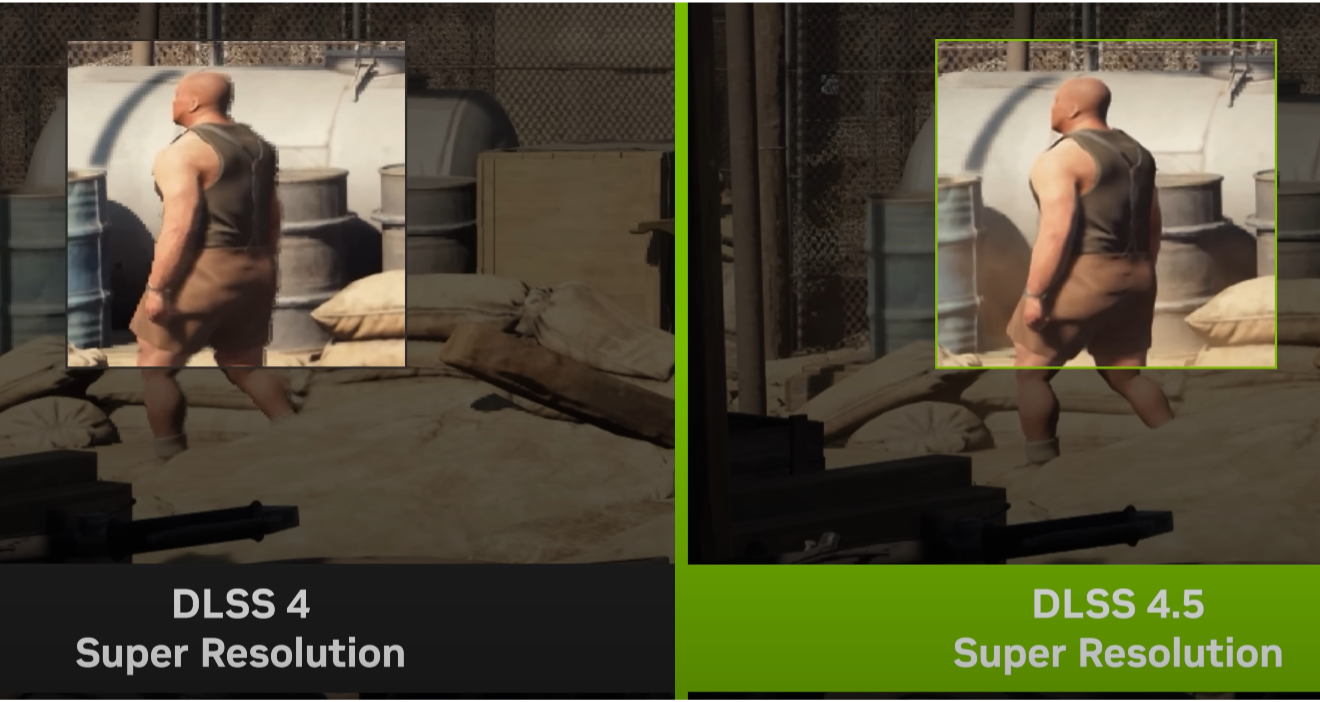
Figure 2. Notice the jaggies in the edge of the man’s shirt in 4.0 are smoothed out in 4.5. (Source: Nvidia)
DLSS 4.5 increases processing requirements, but Nvidia offsets the cost on newer GPUs through FP8 acceleration in the Tensor cores of the RTX 4000 and 5000 series. RTX 2000 and 3000 cards can still run the update, though with a performance trade-off. Users retain control over model selection through the Nvidia App, and early access is available through the beta DLSS Override option ahead of the full release.
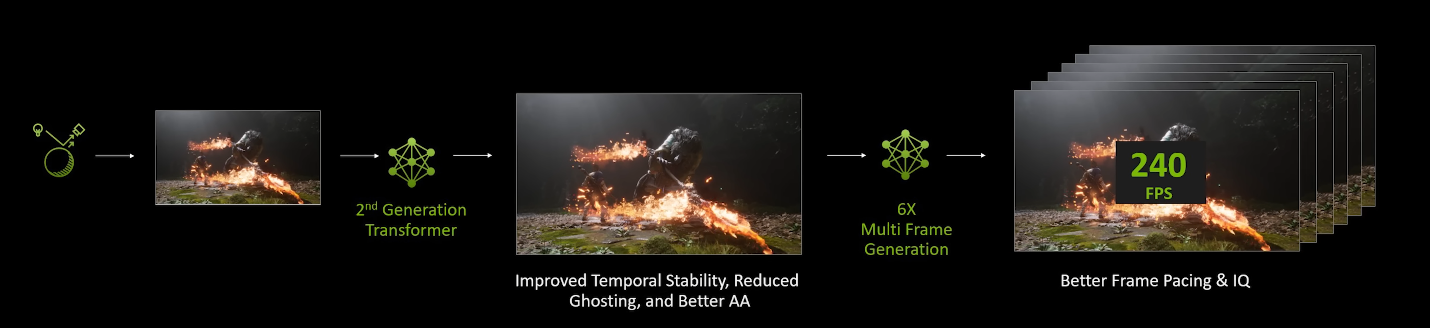
Figure 3. Multi-frame generation is now 6×: one rendered, five generated. (Source: Nvidia)
Nvidia also revealed an expansion of Multi Frame Generation. DLSS 4.5 raises the upper limit from four generated frames per native frame to six. This change seeks to support displays that run at high refresh rates by producing additional frames when needed. Nvidia integrates this version of Frame Generation with its Reflex latency-reduction pipeline to maintain responsiveness during gameplay. A new dynamic mode adjusts the number of generated frames based on real-time performance targets, aligning output with the capabilities of the connected display. Nvidia plans to offer 6× Dynamic Multi Frame Generation on RTX 5000 GPUs when the feature becomes available in the spring.
YOU LIKE THIS KIND OF STUFF? WE HAVE LOTS MORE. TELL YOUR FRIENDS, WE LOVE MEETING NEW PEOPLE.