
$500
(Buyer will receive $500 coupon, good for 90 days, toward any other JPR AIP report)
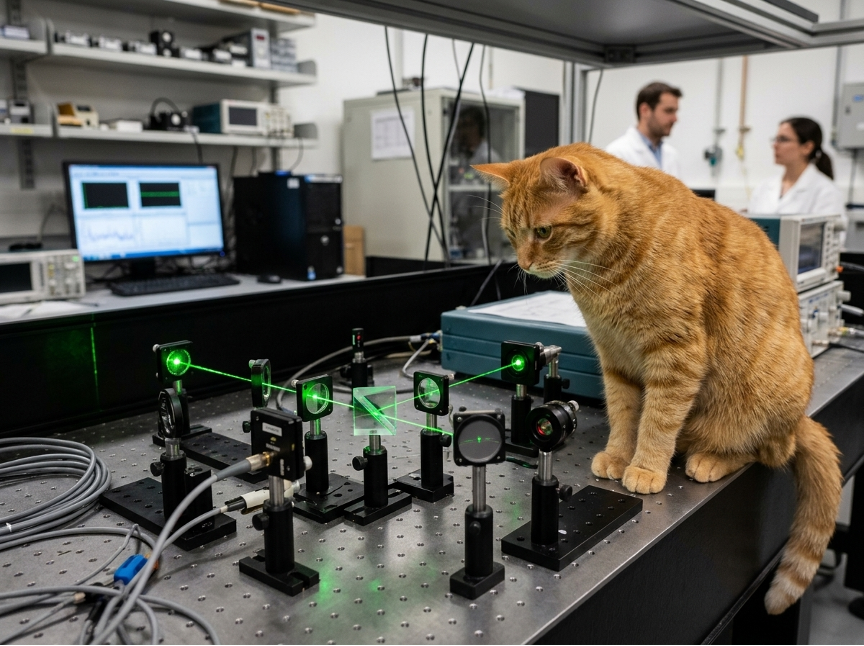
Jon Peddie Research’s Photonic AI Processors report is a supply-side report; it covers the seven companies building photonic compute processors.
The Photonic AI Processors report defines photonic AI processors and how they are used. It
outlines the two distinct product categories that exist: photonic compute processors, where
light performs the arithmetic, and photonic interconnects, where light moves data between
conventional chips and replaces copper wires.
The report also contains information about the companies in this segment and their
technology and products.
While the companies covered in the main body of this report focus on classical photonic AI acceleration (matrix multiplication, inference, HPC), a distinct set of players is building photonic quantum computers that use single photons as qubits and linear optical elements to implement quantum gates and entanglement.
Description
Light-based, optical, or photonic AI processors replace electrons with photons to perform computation, offering potential advantages in speed, energy efficiency, and bandwidth that silicon CMOS cannot match at scale.
The report focuses on photonic compute, not interconnect.
The report contains the following content:
- A comprehensive list of the companies building photonic compute processors
- Analysis of this burgeoning landscape
- Profiles of the seven companies building photonic compute processors and details about their technology
The Photonic AI Processors Report is a valuable resource for understanding the photonic AI processor market, providing insight into the capabilities of these processors today and coming in the near future.
Photonic AI Processors Report Table of Contents
- Executive Summary
- Photonic AI Processors
- Do AI-based photonic compute devices use memory?
- Why are photonic computing devices inherently dataflow devices?
- Some of the work being done by current suppliers
- Photonic AI Market Landscape
- Market Framing
- Architectural divergence
- Physical implementation
- Commercial reality
- Workload segmentation
- Energy as the driving constraint
- Supply chain and strategic context
- The conversion and bandwidth wall
- System-level implications
- Where photonics works
- The real question
- Conclusion
- The companies in photonic AI processors
- Akhetonics
- Arago
- Lightmatter
- Lumai
- Neurophos
- optoML
- Q.ANT
- Summary
- Quantum photonic computing: Adjacent, not the same thing
- What quantum photonic actually means
- Different problem class, different timescale
- Shared infrastructure, diverging roadmaps
- The companies in Quantum Photonics
- Aegiq
- PsiQuantum
- Xanadu
- Summary
- Appendix
- Photon speed in one picosecond
- Optical ring memory
- Photonic switches
- Rectified Linear Unit
- Other reports
Related products
-

RISC-V Market Insights report – a report on the AI Processors market
$4,000 Buy It Now -
The Global Market for Ray Tracing Software
$6,000 Buy It Now -

Add-in Board report series – a report series on the Graphics Add-in Board market
$6,000 Buy It Now -
AI Processors Quarterly Update Report
$2,500 Buy It Now