
TechWatch

Unified memory becomes edge AI’s breaking point

Why memory architecture now decides AI capability.
Jon Peddie

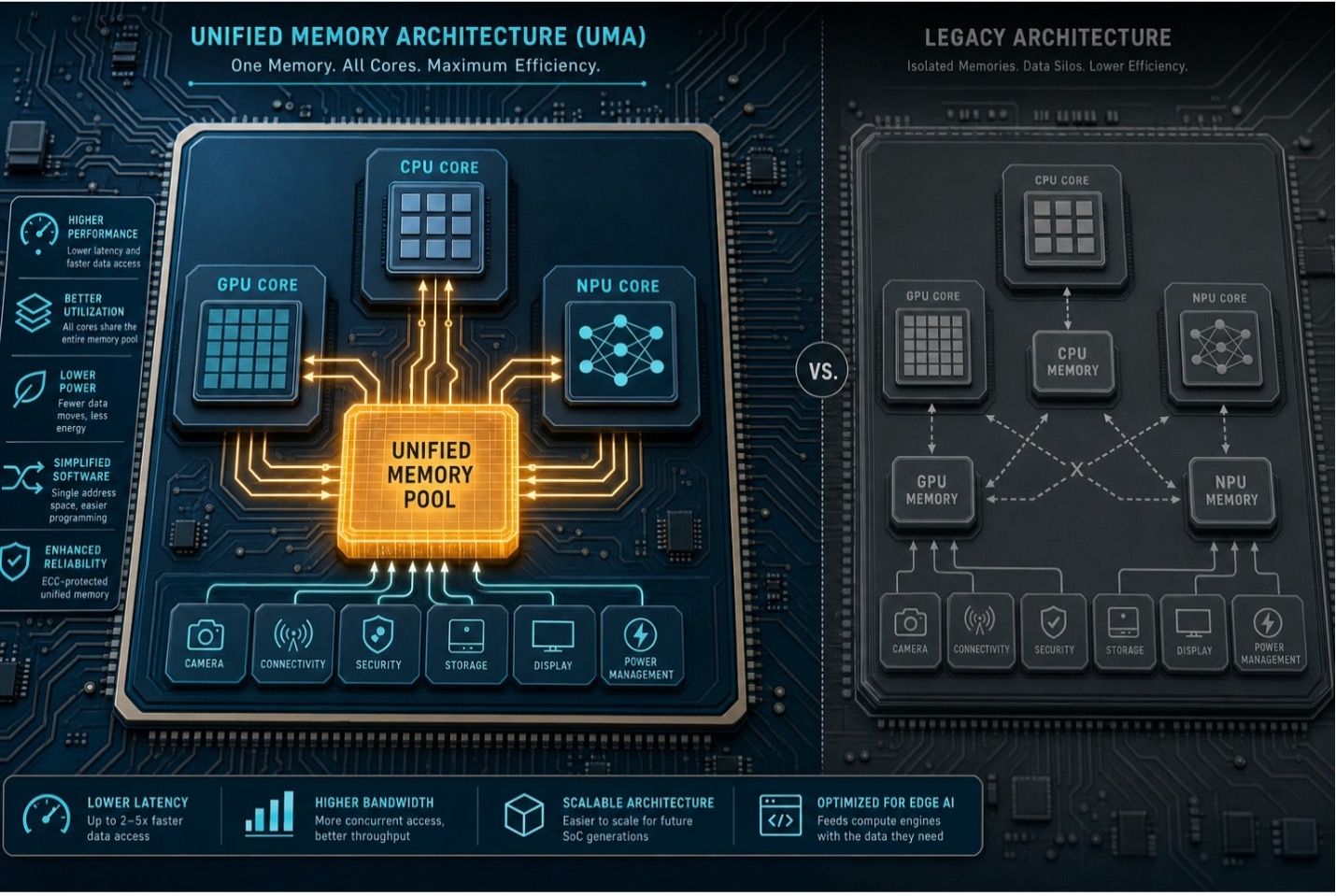
Unified memory architecture (UMA) is not new. Engineers used it to strip cost out of 1990s PCs, squeeze graphics into early mobile phones, and give the Nintendo 64 a single fast memory pool. Today it matters for a new reason: AI models at the edge now demand more memory than many devices carry, and when that memory runs out, AI stops working. It does not slow down first. Here is what that history teaches silicon teams and CIOs building AI-first hardware. UMA solves the same problem each time it appears: two or more processors need memory, and one shared pool
...

Enjoy full access with a TechWatch subscription!

TechWatch is the front line of JPR information gathering service, comprising current stories of interest to the graphics industry spanning the core areas of graphics hardware and software, workstations, gaming, and design.

A subscription to TechWatch includes 4 hours of consulting time to be used over the course of the subscription.

Already a subscriber? Login below

This content is restricted

Subscribe to TechWatch