
“You know, that’s good, because if you actually were as innocent as you pretend to be, we’d never get anywhere. –Sam Spade, The Maltese Falcon, Warner Bros., 1941
Hollywood is sweating bullets that Netflix might end up with the meaningful parts of Warner Bros., ignoring the news/pay-TV stuff. Hollywood is screaming that the young Silicon Valley kid with deep-pocket “friends” will take the whole package and…. Either buyer represents a bigger problem—one less place in the US creative content market for people to work and sell their projects so the world’s audiences will see and appreciate them.
Look, folks, Warner Bros. needs to be rescued; it’s been passed around, used, abused for more than 25 years. Warner Bros. had a helluva run since its formation in 1923 to become one of the ruling production and distribution studios. Today, it’s tired of being slapped around again and again. But as Sam Spade said in The Maltese Falcon, “When you’re slapped, you’ll take it and like it.”
It started when Time bought Warner Bros. (renamed Time Warner) a little over 30 years ago, and it became one of the world’s largest media conglomerates, snapping up CNN and Turner Broadcasting in ensuing years. But AT&T boss Randall Stephenson liked the night lights and glamour of Hollywood and snapped it all up for about $85 billion in 2018. It took him four years to learn that the studio streets weren’t real; and after cutting/thinning here and there, finally he decided he’d had enough fun rearranging and found David Zaslav, who was backed by John Malone, who knows his way around town. Sold the whole package for $43 billion to reality house Discovery.
Of course, he quickly found out that things aren’t like reality TV, so he fired, organized, shuffled divisions/people, killed projects for the good of the consumer, but still, something was missing. Then he got creative with names like HBO, HBO Max, all the while getting bigger paychecks while thinning the flock. The result was less mediocre content at a higher cost – an impromptu, unfriendly yard sale.
Lots of folks came to the sale to see what was left of the once renowned brand born in 1923 and kicked/passed around over the years. But only two were really serious – Netflix and Paramount Skydance – and they both had different views/values of the stuff that was for sale. Who knew there’d be an ugly bidding war because what is one man’s trash is another man’s treasure. Yeah… everyone. Therein lies the rub.
On one side, Netflix Co-CEOs Ted Sarandos and Greg Peters bid $83 billion for the studios, IP vault, and streaming service (HBO) to expand/reinforce their streaming leadership.
One the other, Paramount Skydance’s David Ellison and his backup crew offered up $104 billion-plus for everything: the heritage, the history, the studios, the library, the streaming service, and the pay-TV stuff. The whole enchilada! Of course, they’d probably like to leave the D (Discovery) portion of the company behind and just take WB (Warner Bros.), but what the heck.
The truth? Yeah, look at his roots – Ellison’s dad, Larry Ellison is a guy who doesn’t mind pushing the envelope and expects to win.
An avid sailor, he won sailing’s coveted America’s Cup in 2010 and again in 2013 after being down seven races. He won five Maxi World championships with his vessel Sayanora. He won the deadliest race in Australian history – the1998 Sydney to Hobart Race – where 24 boats were lost/abandon, 55 sailors rescued, five lost. A severe storm hit the fleet with 90-knot winds, 35-foot seas, and at the finish he said, “We were the first survivor to get in and finish the race. It was a race of survival, not for victory, trophies, or anything like that.”
He shares his love of aerobatic flying with his son David. They’re all business, even when they play.
The addition of HBO to Netflix will enable it to dominate the streaming industry, while the combination of WBD and Paramount will expand the demand for newer, better shows/movies. According to The Conversation, Netflix, with its 300 million-plus subscribers, is already the industry leader in the streaming industry, with Amazon Prime and Disney coming in above and below 200 million, respectively. A deal with Warner Bros. would see total paid subscribers for the entity swell to more than 400 million, although Discovery+ is not expected to be part of the deal.
If Netflix is willing to add to its junk bond load and win, they increase their dominance over the streaming market by a massive amount, and the level of financial commitment to making new projects won’t/can’t be 1+1=2. That’s just impossible to sustain.
The film projects greenlighted will be guided/assisted by Netflix’s proven data library of what people like, what people want (even before they know they want it), and what people will sign up for. It works really well! Even if they adopt a realistic theatrical window (30–45 days), don’t expect to see a lot of tentpoles like Dune, A Minecraft Movie, or The Hunger Games or big-budget original IPs like Sinners, Weapons.
The major financial risks just aren’t worth the possible rewards. But will they roll out a continuing series of made-for-theater projects? Sarandos said so, and we believe him! Who knows, they might find out they’re really good at it.
At the same time, the Sarandos/Peters team also has a fantastic record of tapping projects around the globe that people almost universally enjoy. Sarandos emphasized that, previously, they had only been in the streaming business and focused 100 percent of their attention on meeting/exceeding subscribers’ anticipation, and when the deal closes, theatrical – the important part of WB past/future – won’t change, and hopefully they will be able to expand that activity… if they win the tussle.
Yeah, but…. On the other hand, Ellison has already committed to making 30 movies a year and protecting the theatrical window.

Film market – Film production continues to grow on a global scale as the industry finds new outlets for its creative work. (Source: Pixabay, Gerd Altmann)
Let’s sort of realign the facts. There were more than 9,500 films produced around the world, with India leading with 2,500 films, followed by China with nearly 800 projects, Japan with 676 films produced, and then the US following with 510 films. (Interestingly, while India continues to have a healthy movie theater market, it has struggled to get people into theaters in most of its other markets.) But for US video stories, we need to remember that a majority were made in places like Atlanta, Austin, Albuquerque, Newark, New York City, Toronto, Berlin, London, Sydney, and other bright, shiny production centers around the globe as well as Hollywood. Film production is no longer a one-town/one-state industry.
The younger generations that have grown up with digital devices in their hands have also found there are expanded options available to them for their entertainment. A survey by Zebracat found that the younger crowd likes the short 3- to 10-minute videos along with the variety, which they find more interesting, especially when mixed with longer, instant viewing shows/movies.
It’s sort of easy to understand that it’s tough to carve out the better part of a day to go to a dark place with a couple of dozen/hundred strangers to experience even the most awesome of video/audio events. It has to be a mind-blowing, earth-shattering experience that you absolutely, positively can’t enjoy anywhere else. And even then, it can be a “What the hell, we’ll catch it when it streams.”
But still, the theatrical experience needs to be nurtured and preserved because it allows/enables the total creative content community to experiment, spread their wings, and occasionally delivers a video story that makes people just say… damn!
At the same time, we also agree with one of the driving forces behind the formation of WBD, John Malone, who believes streaming isn’t really an entertainment category.
TV watching – in all its forms – is a category of people watching a decent-size screen for a few minutes or couple of hours whose content you’re paying for by subscription or ads. Pay-TV has stabilized or slightly declined in mature markets like the Americas, but it’s still healthy and growing in countries such as China and India.
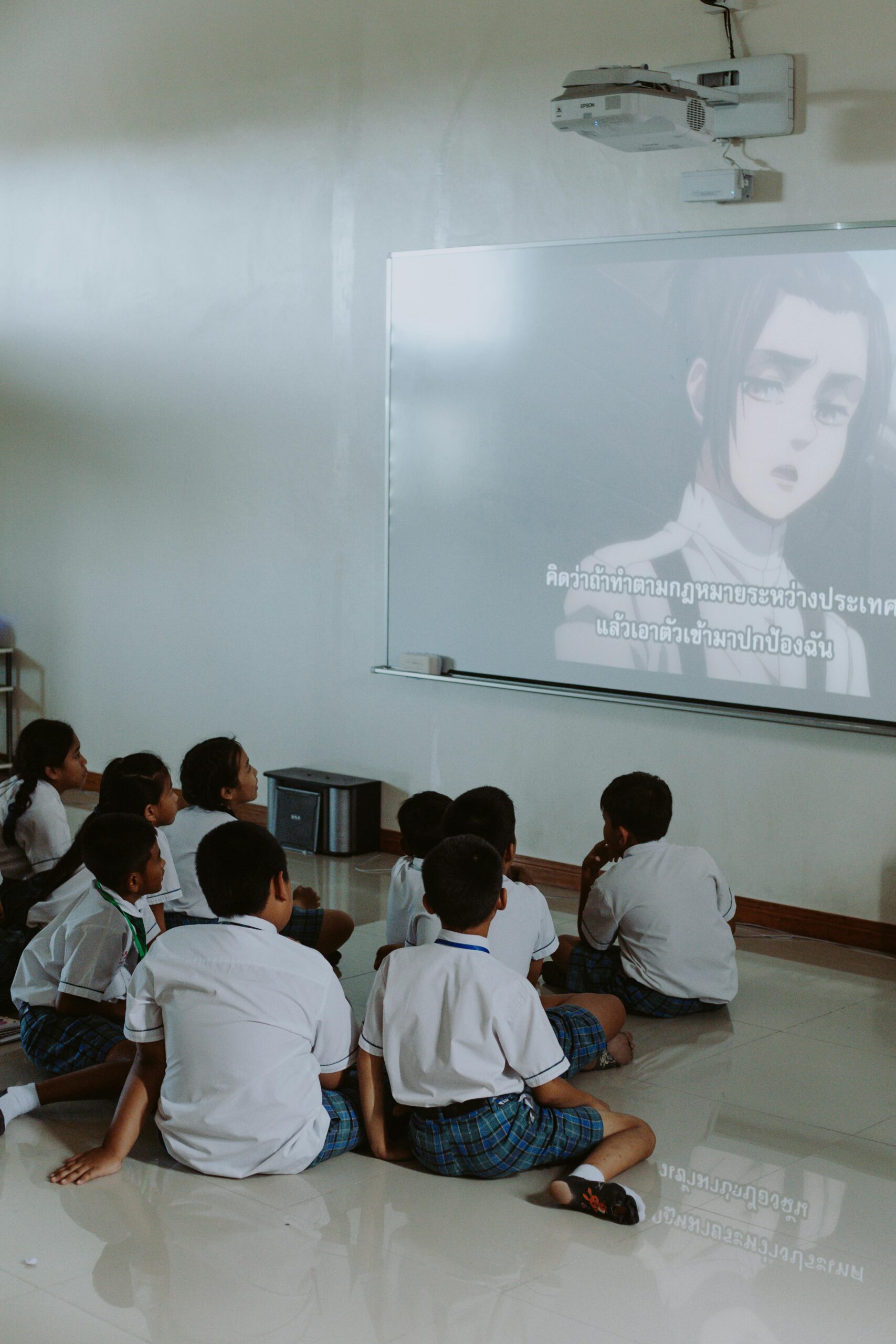
Overall – Outside of the Americas, there continues to be a large and relatively stable market for pay-TV services. (Source: Pexels, Ron Lach)
The global market still produced about $1.5 trillion in revenue last year, with operators starting to focus on things such as skinny bundles, smart pricing and loyalty programs.
Speaking of bundles, let’s not forget that WBD has TNT Sports and Paramount has CBS Sports, both of which have a strong roster of sporting events/activities on their roster. Together, they could entice more sports and challenge the strength and reach of Disney’s ESPN, to appeal to the sports-viewing enthusiast. And for news junkies, CNN could be meshed with CBS News. In addition, they would end up with CBS network, CBS TV stations in 18 leading US markets, cable brands such as MTV, Nickelodeon, BET, Showtime and a legacy TV syndication unit.
However, in ego-driven Hollywood, it’s going to boil down to which guy Zas likes more. Then he can wrap rationale around it. Heck, his bundle has already been signed off, so Ted? David? David? Ted?
But before the fat lady sings and the shareholders go home with their bundles of cash, they will have to gird their loins and… well, you know, the government blessing stuff. Then, and only then, (after long showers) can they begin the real work of slimming down, building up, re-aligning, re-inventing, merging part or all of WBD with… one of them.
No one wants to bet which side US officials will side with, but both teams are focused on influencing the outcome of… the once-in-a-generation movie studio sale.
Abigail Slater, US assistant attorney general, will have a tougher fight dealing with a mercurial boss than settling her earlier cases against Google, HP Enterprise/Jupiter Network challenge or other major trials. Trump has already tried to sunset the 1948 Paramount Decision that dismantled the vertically integrated studio system and has received lots of “assistance” from the Middle East, so….
But EU approval will be relatively straightforward, with just a few tweaks along the way – long but straightforward. It could take up to two years to complete, since it might move to a Phase II investigation, which is more in-depth and thorough. European media folks would probably like to see Paramount Skydance emerge victorious because it would mean four major SVOD services – Netflix, Amazon, Disney and the new kid.
It would also mean another outlet to sell movies/shows.
In this bidding war, as Sam Spade said in The Maltese Falcon, “The… uh… stuff that dreams are made of.”
Yes, we sort of hope the deal will go to Paramount Skydance (note: we have Netflix, not HBO), and they have yet to deliver their “best and final offer” (why would you say that in the middle of negotiations?). The shareholders want the maximum return for the way they’ve let the company be ravaged during the past four years and are probably tired of giving Zaslav bigger and bigger rewards for less return. Even now, he’s set to walk away with a $30 million “golden parachute” plus $537 million in equity on top of last year’s $51.9 million pay package, which would have made Sam Spade say, “I mean, you paid us more than if you had been telling us the truth, and enough more to make it all right.”
We don’t really care who wins since we’ve already got our ad-supported and free services we’re happy with. We just hope that whoever wins will bring back Wile E. Coyote… Zaslav has NO taste!
It will ultimately come down to which side blinks first and how satisfied/dissatisfied shareholders are with the management guidance/recommendations Zaslav has made to date. A few things are certain… teams will shrink, projects will shrink, budgets will shrink… again.
LIKE WHAT YOU’RE READING? INTRODUCE US TO YOUR FRIENDS AND COLLEAGUES.