
Intel reported steady results driven by strong data center and AI demand, with revenue exceeding expectations. CPUs remain central to AI infrastructure, particularly for inference and orchestration workloads. A new Google Cloud agreement reinforces Intel’s position, though supply constraints and memory shortages continue to limit growth. The company forecasts continued demand strength into the next quarter.

Intel reports steady results amid strong AI-driven demand.
The company said resilient demand, despite rising inflationary pressures, drove the Series 3 to become its strongest product launch in five years. The Series 3 now serves enthusiast, creator, commercial, and mainstream segments.
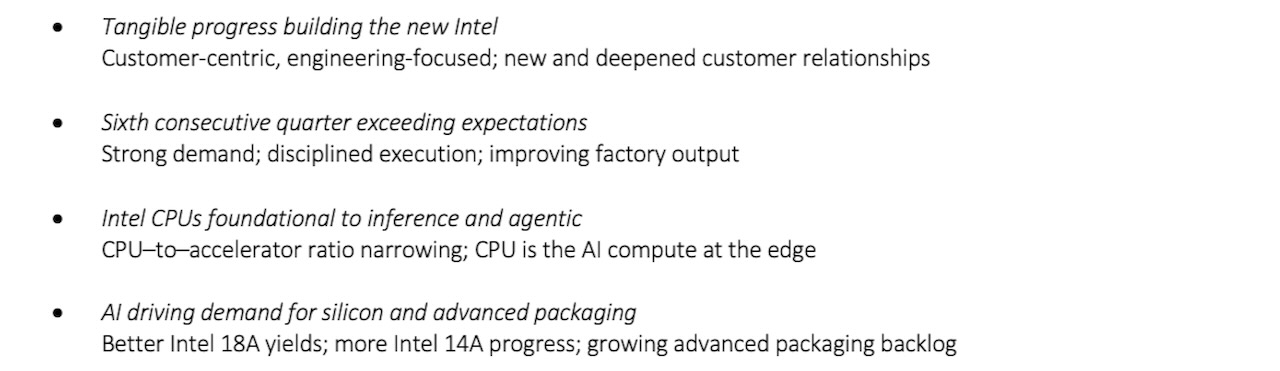
“The next wave of AI will move intelligence closer to the end user, shifting from foundational models to inference and agentic systems. This transition is increasing demand for Intel’s CPUs, wafers, and advanced packaging,” said Lip-Bu Tan, Intel CEO. “We are addressing this opportunity by listening to customers and enabling their success through our technical expertise and differentiated IP. This operational reset has delivered a sixth consecutive quarter of revenue above expectations and strengthened relationships with key partners.”
Intel also announced a multi-year agreement with Google, under which Xeon CPUs will support AI, inference, and other workloads in Google Cloud.
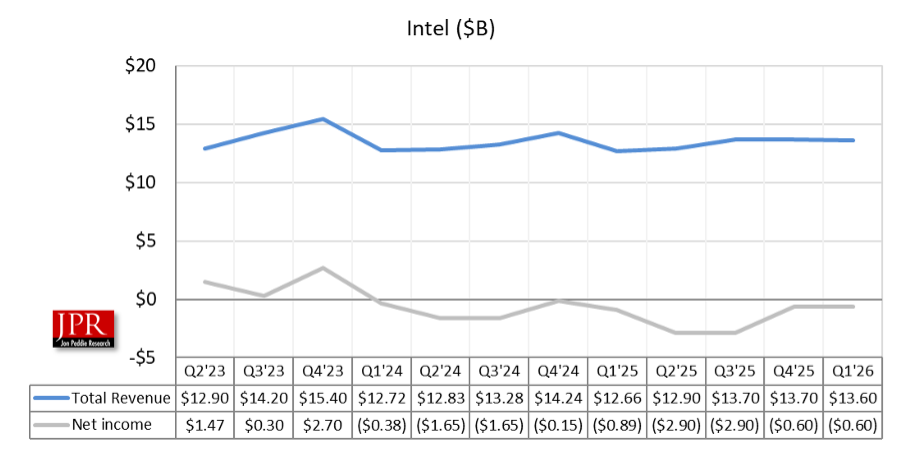
Figure 1. Intel’s Q1 2026 earnings were flat quarter to quarter. (Source: Intel and JPR)
Intel’s Data Center and AI group generated $5.1 billion in revenue, exceeding expectations of $4.41 billion.
“We delivered strong Q1 results, reflecting the expanding role of CPUs in the AI era and sustained demand for silicon, along with disciplined execution to increase supply,” said David Zinsner, Intel CFO. “We remain focused on maximizing our factory network to expand supply and meet customer demand throughout the year.”
For the quarter, Intel’s Client Computing segment, which includes PC chips, reached $7.7 billion in revenue, above Wall Street expectations of $7.1 billion.
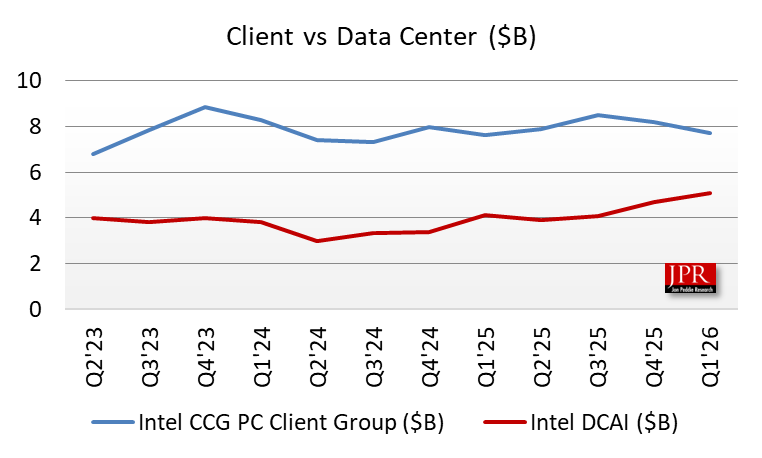
Figure 2. Intel’s data center and client sales. (Source: Intel and JPR)
Despite the Data Center revenue beat, Intel acknowledged that demand is still outstripping supply, though the company said it will continue to ramp up supply each quarter.
Intel is also contending with the fallout from the broader memory chip shortage, which is suppressing PC sales.
The company has forecasted a second-quarter revenue range of $13.8 billion to $14.8 billion, with EPS expectations of $0.08 and non-GAAP EPS of $0.20. Tan emphasized the growing role of CPUs in the AI era and the unprecedented demand for silicon, which has driven the company’s revenue growth. Zinsner noted the company’s disciplined execution to expand available supply and its focus on maximizing the factory network to meet customer needs throughout the year.
Intel said it expects revenue of between $13.8 billion and $14.8 billion for the second quarter. Wall Street was anticipating $13.03 billion.
What do we think?
Intel’s results show steady execution rather than a structural shift. Demand for AI compute continues to favor GPUs, but Intel is positioning CPUs as essential for orchestration, inference, and system balance. The Google Cloud agreement validates that role, though it does not yet signal share gains in training. Supply constraints and memory shortages still limit upside, particularly in client computing. The key question is whether Intel can convert growing AI relevance into sustained data center share gains, or remain a complementary supplier in an increasingly accelerator-driven market.
LIKE WHAT YOU’RE READING? INTRODUCE US TO YOUR FRIENDS AND COLLEAGUES.