
Acer’s Predator Atlas 7 brings the company’s new Intel-based gaming handheld architecture into a smaller 7-inch package. It combines Intel Arc G3 graphics, a 120 Hz FHD display, an 80 Wh battery, dual-fan cooling, and premium controls with Windows 11 and Xbox Game Pass. Acer also gives buyers a choice between Arc G3 and G3 Extreme configurations. The missing piece remains price, which will determine whether the Atlas 7 can turn a solid technical design into a competitive handheld platform.

(Source: Acer)
Acer continues expanding its Predator gaming business with the Predator Atlas 7, a smaller version of the 8-inch Atlas it showed at Computex 2026. The new handheld retains much of the larger machine’s architecture and cuts the display to 7 inches, giving Acer another entry in a Windows handheld market that increasingly resembles a compact PC market.
The processor choice makes the Atlas 7 interesting for silicon teams. Acer offers Intel Arc G3 or Arc G3 Extreme configurations. The standard G3 uses an Arc B370 GPU with 10 Xe3 cores, while the G3 Extreme moves to the Arc B390 with 12 Xe3 cores. The Atlas 8 only offers the Extreme configuration, so the Atlas 7 gives Acer another way to segment price, graphics performance, power, and battery life.
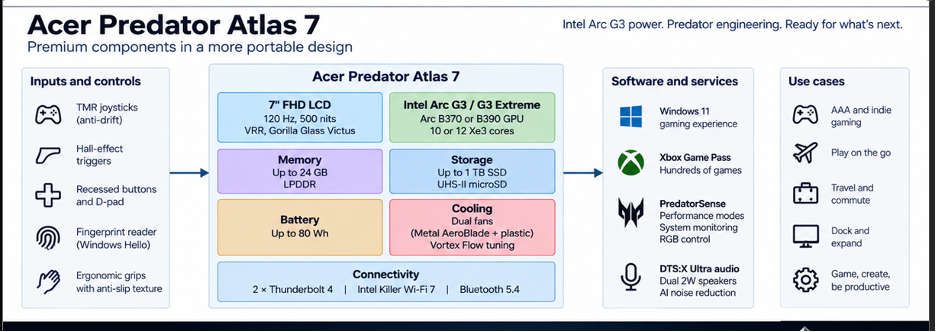
Figure 1. Atlas 7 integrates Intel Arc graphics in a compact handheld platform. (Source: Acer)
Intel’s architecture also gives the handheld market another GPU platform at a time when AMD silicon powers many competing Windows devices. That expands the available hardware target for game developers and gives Intel an opportunity to prove Xe3 graphics across a thermal envelope where efficiency matters as much as peak frame rates.
Acer allows the Atlas 7 to operate at up to 40 W TDP. That figure gives the processor meaningful power headroom inside a small chassis and creates an equally meaningful thermal problem. Acer addresses it with two fans: an 89-blade metal Predator AeroBlade fan using 0.1 mm blades and a secondary plastic fan. Acer says the metal design increases airflow by as much as 10%. Vortex Flow channels guide heated air through the chassis and toward the exhaust.
The combination deserves attention because sustained handheld performance depends heavily on cooling. A processor that reaches an attractive benchmark for a few minutes provides limited value if thermal constraints subsequently reduce clock rates. Acer has given the Atlas 7 a relatively substantial cooling system for its size.
Battery capacity follows the same approach. Acer offers up to 80 Wh, a large battery for a 7-inch handheld. The actual gaming runtime will depend on TDP settings, display brightness, wireless activity, game workload, and software management. Acer’s PredatorSense software lets users adjust performance modes and TDP, providing a direct trade between frame rate, acoustics, heat, and battery life.
Predator Atlas 7 key specifications
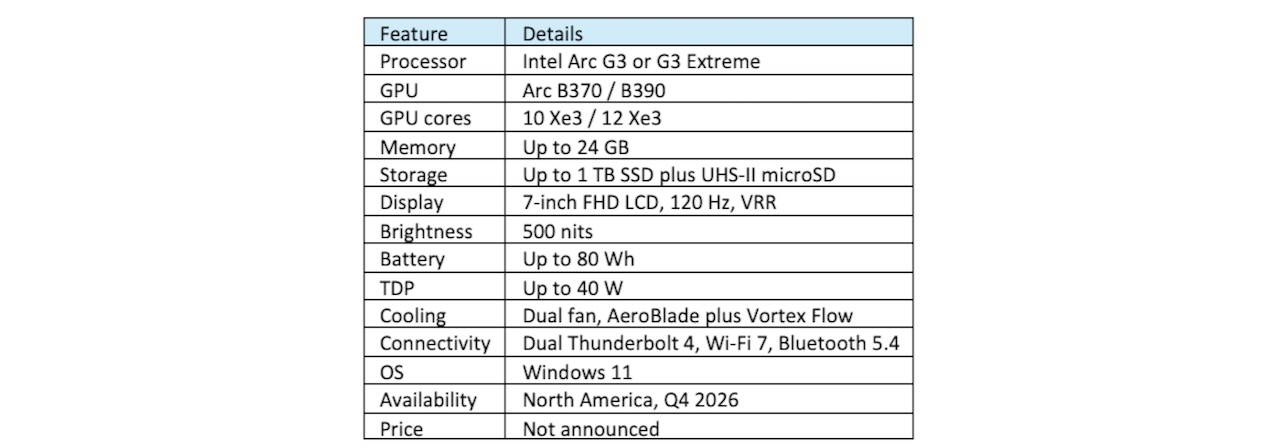
Table 1. Predator Atlas 7 specifications balance graphics, cooling, battery, and connectivity.
The Atlas 7 uses a 1920×1080 LCD touchscreen with a 120 Hz refresh rate, 500-nit peak brightness, VRR, and a 16:9 aspect ratio. Acer protects it with Gorilla Glass Victus and DXC surface treatment and includes a tempered-glass protector.
Acer also puts engineering effort into components users physically touch. Buyers can choose TMR thumbsticks, which use tunneling magnetoresistance sensing to improve precision and reduce drift. Hall-effect analog triggers provide magnetic position sensing. Recessed buttons, a dish-shaped D-pad, larger palm areas, contoured grips, and anti-slip surfaces round out the control package.
These details matter because handheld gaming PCs compete through ergonomics as much as silicon. A notebook can tolerate some compromise in keyboard or touchpad design because users can connect peripherals. A handheld makes its controls part of the machine, and poor stick placement, trigger feel, weight distribution, or thermal behavior can undermine an otherwise capable processor.
Windows remains both an asset and burden
Acer runs Windows 11 and layers PredatorSense over the Xbox Full Screen Experience. PredatorSense provides performance monitoring, TDP control, RGB settings, and gaming configuration. Xbox Game Pass gives the system immediate access to a broad Windows game catalog.
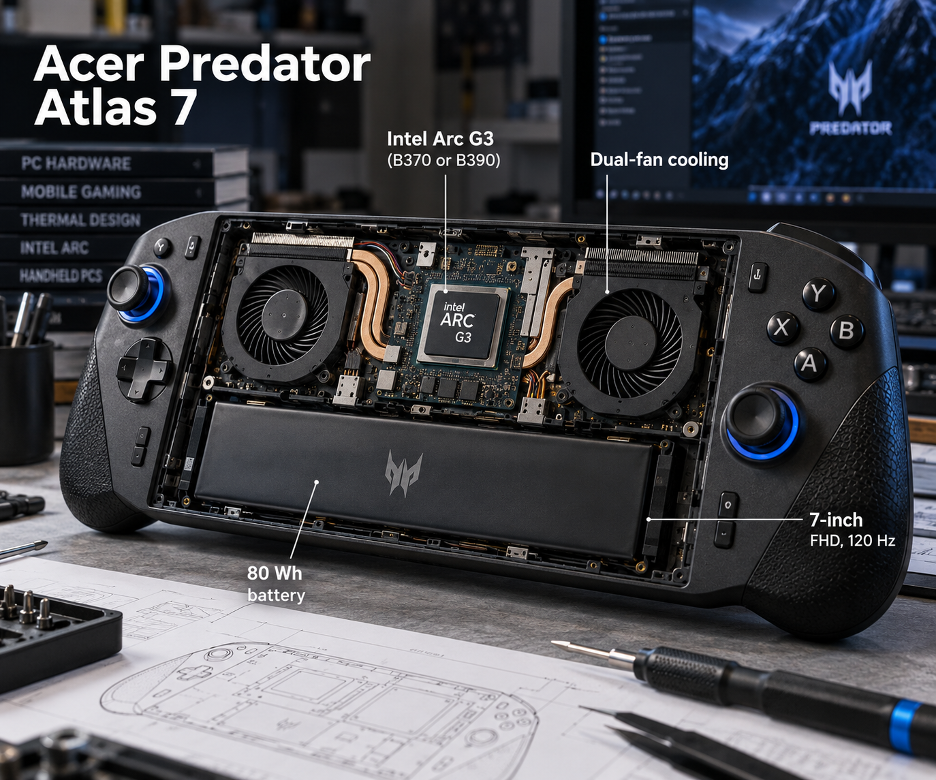
Figure 2. Atlas 7 packs Intel Arc into compact gaming. (Source: Acer)
Windows also gives ISVs a familiar x86 software environment and preserves access to PC launchers, applications, drivers, and peripherals. Dual Thunderbolt 4 ports expand the Atlas beyond handheld gaming into docking, displays, storage, and other PC peripherals. UHS-II microSD adds removable storage, while Intel Killer Wi-Fi 7 and Bluetooth 5.4 handle wireless connections.
The software experience will remain an important part of Acer’s execution. Windows brings compatibility and flexibility to handheld PCs, along with an interface originally designed around larger displays, keyboards, and mice. Acer’s Xbox and PredatorSense layers need to make routine tasks manageable without forcing users repeatedly into the desktop UI.
The Atlas 7 can carry up to 24 GB of RAM and 1 TB of SSD storage. Those capacities look appropriate for contemporary gaming and give developers enough memory to treat the machine as a serious PC target rather than a narrowly constrained portable console.
Acer also showed Project DualPlay Mini, a concept that combines handheld gaming and mobile productivity. That project reinforces the direction implied by the Atlas 7: These machines increasingly operate as portable PCs with integrated game controls rather than dedicated consoles.
Price becomes the unanswered specification
Acer has not announced pricing for either Atlas model. That omission prevents a complete assessment.
The handheld PC market now spans several price tiers, and component choices can push premium machines well above traditional console pricing. The Atlas 7’s 80 Wh battery, Thunderbolt 4, Wi-Fi 7, TMR option, premium display protection, dual-fan cooling, and Intel silicon all add capability and bill-of-materials pressure.
For CIOs, the Atlas 7 has limited direct enterprise significance as a gaming device. Its architecture still provides an interesting view of compact PC design. High-performance integrated graphics, large unified memory pools, fast external I/O, sophisticated thermal management, and increasingly capable mobile processors continue narrowing the functional gap between handhelds, notebooks, and compact desktops.
The Predator Atlas 7 packages Intel’s Arc G3 architecture into a compact Windows gaming PC with few obvious hardware shortcuts. Acer gives it a substantial battery, aggressive cooling, modern connectivity, and controls designed for long-term use. The Arc B370 option could also give Acer room to reach a more accessible price than the Extreme configuration. Price now determines the final equation. If Acer keeps the Atlas 7 within reach of mainstream PC gamers, the machine could give Intel a useful showcase for Xe3 graphics in handheld systems.
What do we think?
The Atlas 7 looks technically well-balanced. Acer matched Intel Arc G3 graphics with serious cooling, an 80 Wh battery, good controls, and enough connectivity to function as a small PC. The standard B370 configuration may prove especially important because it creates room for lower pricing. Performance, battery life, thermals, weight, and price will decide whether the design works in practice.
Intel has finally become credible in handheld gaming, where AMD built an early and commanding lead. Arc G3 gives Intel competitive graphics performance and several design wins, including Acer and MSI. The remaining challenge is commercial: pricing, availability, drivers, and OEM breadth must turn technical progress into meaningful market share.
Inflection point. The Atlas 7 points toward an inflection point in mobile PC design rather than gaming alone. Handhelds now combine notebook-class operating systems, capable integrated GPUs, large memory pools, high-speed I/O, advanced controls, and docking support in increasingly compact packages. Intel’s stronger participation also broadens the silicon base beyond AMD-heavy designs. As performance per watt improves, handheld PCs could become another meaningful client-computing tier, forcing silicon vendors and ISVs to optimize applications across desktops, notebooks, and handheld form factors.
Epilog: Project DualPlay Mini
Acer used the Atlas 7 introduction to show Project DualPlay Mini, an 8-inch concept that explores what happens when a gaming handheld also tries to replace a small notebook. The idea gives Acer another way to examine the increasingly fuzzy boundary between handheld gaming PCs and conventional mobile computers.
DualPlay Mini uses a flip-and-swivel design that converts between handheld and mini-laptop configurations. In handheld mode, integrated controls provide the familiar console-style arrangement. Flip the display and expose the backlit physical keyboard, and the machine becomes a compact PC suited to keyboard-driven games, including first-person shooters, as well as conventional applications.

Figure 3. Project DualPlay Mini. (Source: Acer)
The productivity angle makes the concept more interesting. DualPlay Mini can connect to an external display and operate as a mobile work system, potentially giving a user one x86 machine for gaming, general computing, and docked desktop use. That approach takes advantage of Windows software compatibility rather than creating another specialized gaming platform.
Acer also uses Intel silicon and carries over the Atlas 8’s dual-fan cooling approach, combining a Predator AeroBlade metal fan with a second plastic fan. The metal fan uses thinner blades in the DualPlay Mini implementation.
Project DualPlay Mini remains a concept, so Acer has not established whether it will become a commercial product. Its significance comes from the design question it raises. As integrated graphics improve and mobile processors deliver more performance within handheld power envelopes, the distinction between a gaming handheld, mini-PC, and notebook becomes increasingly difficult to define. DualPlay Mini suggests Acer sees those categories beginning to converge—and wants to find out whether one device can credibly serve all three.
WHATYA THINK, INTERESTING ENOUGH TO SHARE WITH YOUR FRIENDS? WE’VE GOT MORE.