
AMD plans to acquire Fei-Fei Li’s World Labs for about $8.2 billion in stock, bringing frontier model research directly into its silicon and systems organization. World Labs develops spatially intelligent world models that create and reason about 3D environments, with applications in robotics, simulation, autonomous systems, and physical AI. The acquisition gives AMD an unusual feedback loop: Researchers developing emerging AI workloads can help architects understand the compute, memory, interconnect, and software requirements those models will create.
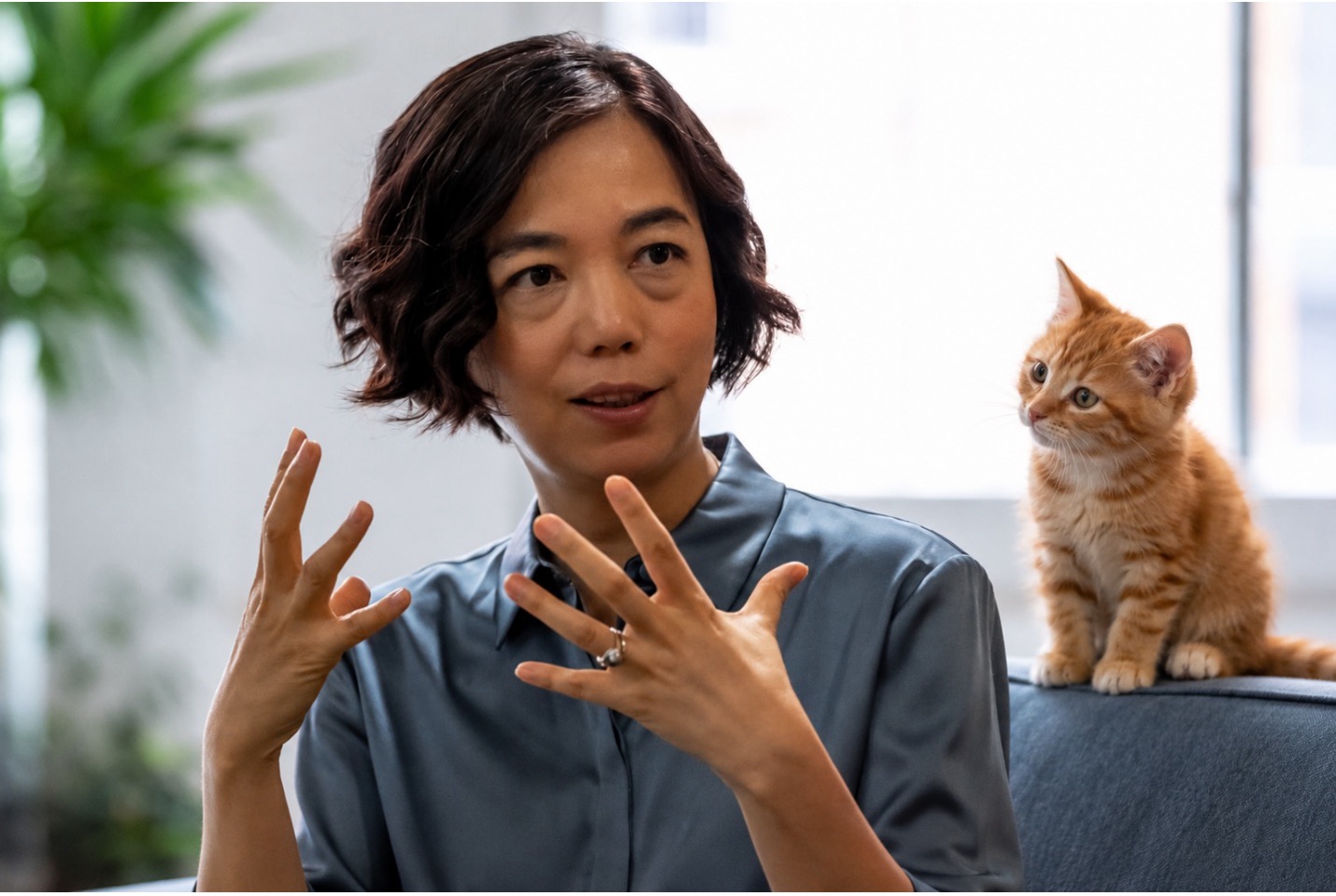
AMD brings model research inside.
AMD has agreed to acquire World Labs, the San Francisco AI research company founded by Fei-Fei Li, in an all-stock transaction valued at approximately $8.2 billion. AMD previously invested in the company. Li will join AMD as chief scientist and executive vice president, according to the announcement material supplied for this story.
The size of the transaction makes this more than another AI talent acquisition. AMD wants direct access to researchers developing the workloads that its future processors and systems will need to run. The company already spans Epyc CPUs, Instinct GPUs, Pensando networking, ROCm software, and rack-scale AI infrastructure. AMD reported $6.7 billion in Data Center revenue for Q2 2026, up 107% year over year, illustrating how central AI infrastructure has become to its business.
World Labs adds model development to that technology chain. Its research focuses on world models—AI systems that develop spatial representations of environments and can generate, predict, and reason about 3D worlds. The company’s Marble model can create a three-dimensional environment from a small number of images.
That work matters to silicon architects because physical AI presents different requirements from text-centric LLM inference. Robotics, autonomous machines, simulation, digital twins, and spatial agents combine visual data, geometry, physics, memory, reasoning, and real-time interaction. These workloads can change the balance among GPU compute, memory capacity, bandwidth, latency, networking, and CPU processing.
AMD has already identified physical AI and robotics as development priorities and plans to demonstrate technology spanning training, simulation, and deployment at ROSCon 2026. The World Labs acquisition gives AMD researchers working on future models direct access to the engineers developing the compute infrastructure underneath them.
That relationship could shorten the feedback cycle between model development and processor architecture. World Labs researchers can identify emerging computational bottlenecks before those workloads reach commercial scale. AMD’s silicon teams can then consider those requirements while defining future GPU, CPU, memory, interconnect, and system architectures.
The strategy also fits AMD’s emphasis on adaptable AI infrastructure. AMD recently argued that infrastructure must accommodate changing model architectures and shifts among training, inference, cloud, and local computing. World Labs gives AMD another way to study those changes from inside the model development process.
For ISVs, the important question concerns how much of that research reaches AMD’s open software environment. World models will require more than raw FLOPS. Developers will need efficient frameworks for simulation, spatial representations, inference, memory management, and heterogeneous computing. Connecting that work with ROCm could expand AMD’s software proposition beyond conventional LLM training and inference.
For CIOs, the acquisition signals where AMD expects AI workloads to move. Enterprise AI infrastructure increasingly needs to accommodate agents, simulation, multimodal models, robotics, and real-time interaction. World Labs gives AMD an opportunity to design infrastructure around those workloads before they become routine production applications.
The acquisition, therefore, connects two development cycles that usually operate at different distances from each other: frontier model research and semiconductor architecture. If AMD integrates those groups effectively while preserving World Labs’ research focus, future AMD platforms could reflect workload requirements identified several years before customers encounter them in production.
What do we think?
AMD is buying insight into future workloads as much as it is buying an AI laboratory. World Labs gives AMD researchers working directly on spatial intelligence, simulation, and physical AI knowledge that can influence processor, memory, networking, and software decisions early in the design cycle. The $8.2 billion price also shows how much AMD values that connection.
Inflection point. The World Labs deal signals an inflection point in AI infrastructure strategy. Chip companies increasingly need visibility into model development before they commit future silicon architectures. AMD now brings frontier model researchers closer to CPU, GPU, networking, memory, software, and rack-scale system development. World models also extend AI beyond language into spatial reasoning, simulation, robotics, and physical interaction. If that transition continues, processor design will increasingly start with emerging model behavior rather than established benchmark workloads.
Dr. Fei-Fei Li showed that AI could identify cats in her landmark 2015 TED Talk.
WHAT DO YOU THINK? LIKE THIS STORY? TELL YOUR FRIENDS, TELL US.