
AMD’s Instinct MI430X unites scientific computing and AI acceleration in a GPU designed for national laboratories, sovereign computing programs, and large research installations. With 432 GB of HBM4, native FP64 performance, and a four-GPU Infinity Fabric configuration, AMD aims to support simulation and AI workloads on common infrastructure. The company projects substantial performance gains over the MI300A. We examine the architecture, software, deployment plans, and the questions buyers should address before committing to this next generation of accelerators.
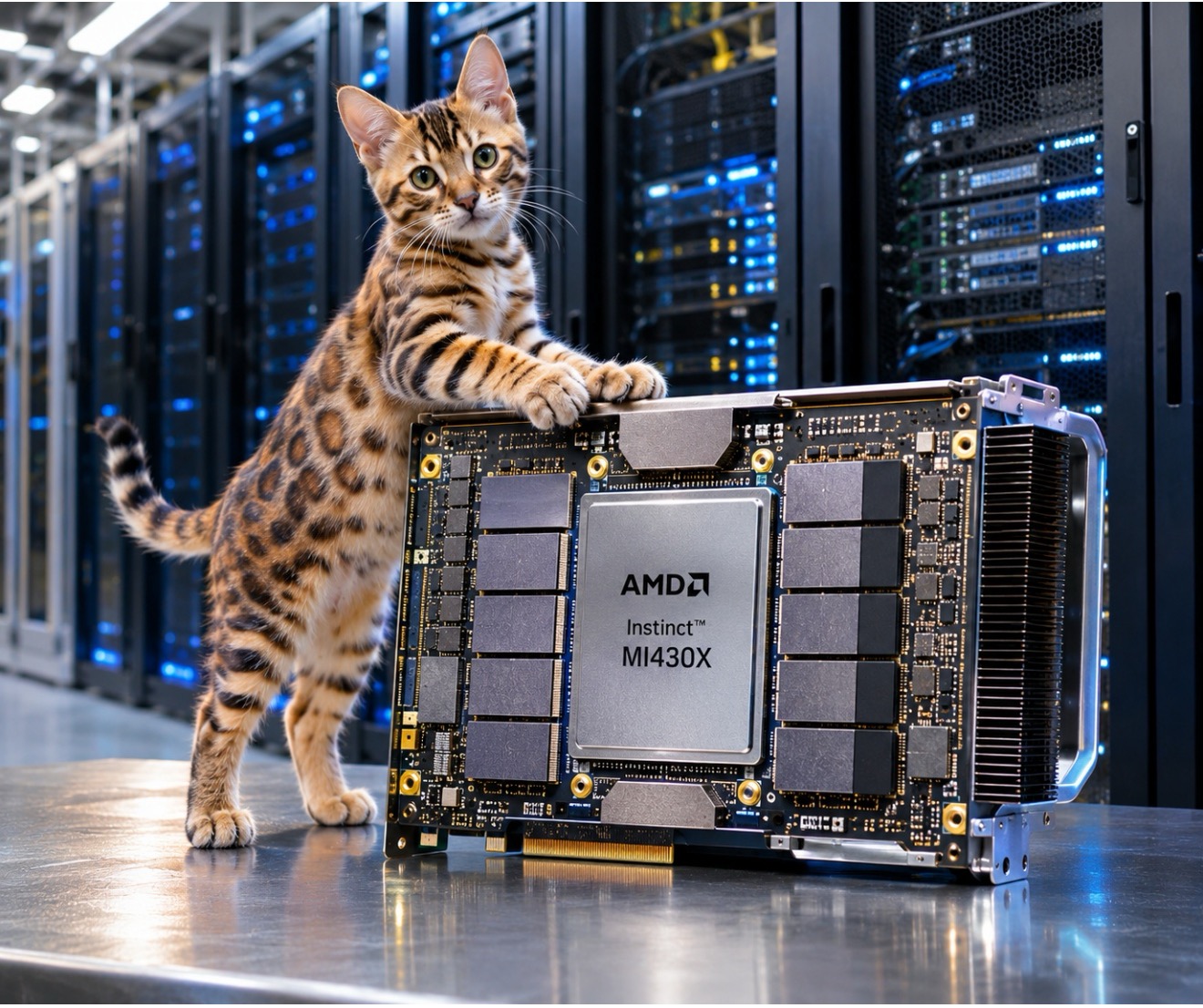
AMD outlined its Instinct MI430X GPU on November 12, 2026, positioning the accelerator for scientific computing, sovereign AI infrastructure, and memory-intensive applications. The processor uses AMD’s CDNA 5 architecture and combines native double-precision arithmetic with low-precision AI computation. AMD sees growing demand for systems that run scientific simulation, AI model development, and data analysis within a common computing environment.
AMD brings native FP64 into AI infrastructure
National laboratories increasingly combine several computational methods within individual research programs. Climate modeling, molecular dynamics, advanced manufacturing, and national security applications depend on simulation codes, data analytics, and AI models. These workloads place different demands on arithmetic precision, memory capacity, and interprocessor communication.
AMD points to Frontier, El Capitan, LUMI, and Lux as examples of its involvement in scientific computing. The company expects its MI430X architecture to extend that experience into systems that support both conventional HPC applications and AI for science.
HPE built Lux around AMD Epyc CPUs, Instinct MI355X GPUs, Pensando networking, and ROCm software. The system will support AI-driven research in fusion power plant design, materials development, advanced manufacturing, and Earth system prediction.
Memory capacity and native precision
The MI430X carries 432 GB of HBM4 with up to 23.3 TB/s of memory bandwidth. AMD specifies peak native FP64 throughput of 288 TFLOPS and FP4 throughput of 9.2 PFLOPS. The architecture includes 256 workgroup processors with Wave32 execution.
Memory capacity plays a central role in the design. Large scientific meshes, molecular models, and AI datasets can occupy substantial amounts of accelerator memory. Additional capacity allows developers to retain larger working datasets on each GPU, reducing communication between nodes.
AMD claims the MI430X offers 50% more memory capacity than Nvidia’s Vera Rubin configuration. Actual application benefits will depend on memory access patterns, precision requirements, and the distribution of work across GPUs. Table 1 summarizes AMD’s published specifications.
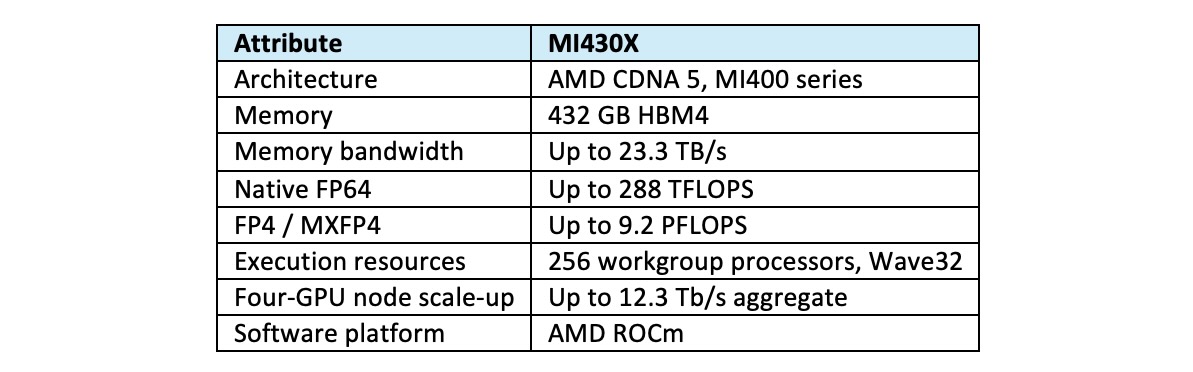
Table 1. AMD Instinct MI430X specifications.
The combination of memory capacity and native precision gives developers additional room to balance computation and data movement. ISVs can evaluate whether larger per-GPU working sets reduce the communication overhead of their applications.
Four GPUs form a direct interconnect mesh
AMD’s proposed node architecture pairs a sixth-generation EPYC SP7 processor with four MI430X accelerators. Infinity Fabric connects every GPU directly to the other three through a switchless, fully connected mesh.

Figure 1. Four MI430X GPUs form a direct Infinity Fabric mesh.
AMD specifies up to 384 GB/s of unidirectional communication bandwidth per GPU, corresponding to approximately 12.3 Tb/s of aggregate scale-up bandwidth across four GPUs.
The topology addresses communication patterns common in scientific applications, including halo exchanges, reductions, and small-message collectives. Direct connections reduce the number of intermediate components involved in these transfers.
For system architects, the arrangement also affects power allocation, package design, cooling, and serviceability. Removing an external switching stage can simplify a node, although the complete system economics will depend on implementation details and application behavior.
AMD says developers familiar with MI300A deployments can carry forward their programming experience and shared-memory concepts as they move to the new architecture.
AMD projects substantial generational gains
AMD projects improvements ranging from 3.96× to 5.57× over the MI300A across four scientific computing benchmarks. The results cover dense numerical computation, mixed-precision processing, memory bandwidth, and communication-sensitive workloads.
The company bases its MI430X figures on engineering models and preliminary silicon targets. AMD measured the MI300A baseline.

Table 2. AMD’s projected MI430X performance versus MI300A.
The HPL projection represents approximately 66% of the GPU’s stated peak FP64 throughput. The BabelStream projection reaches approximately 86% of its specified memory bandwidth. These ratios offer useful reference points for evaluating future measured results.
CIOs and laboratory procurement teams should request application-level benchmarks, power measurements, and system configurations before using the projections in purchasing models.
Native FP64 remains an architectural decision
AMD also challenges proposals to replace substantial native FP64 capability with low-precision matrix hardware and numerical emulation.
At SC26, AMD researchers examined 47 workload configurations across 11 applications using MI350X and MI355X accelerators. Their study considered the performance and memory consequences of FP64 emulation.
The researchers found that dense matrix multiplication offers the principal opportunity for the technique. Many scientific applications spend substantial execution time in sparse linear algebra, stencils, particle transport, and irregular memory operations.
AMD also reports that emulation can increase memory requirements by as much as three times. That additional footprint can change the number of GPUs a simulation requires. Table 3 summarizes the applications and workload categories AMD examined.
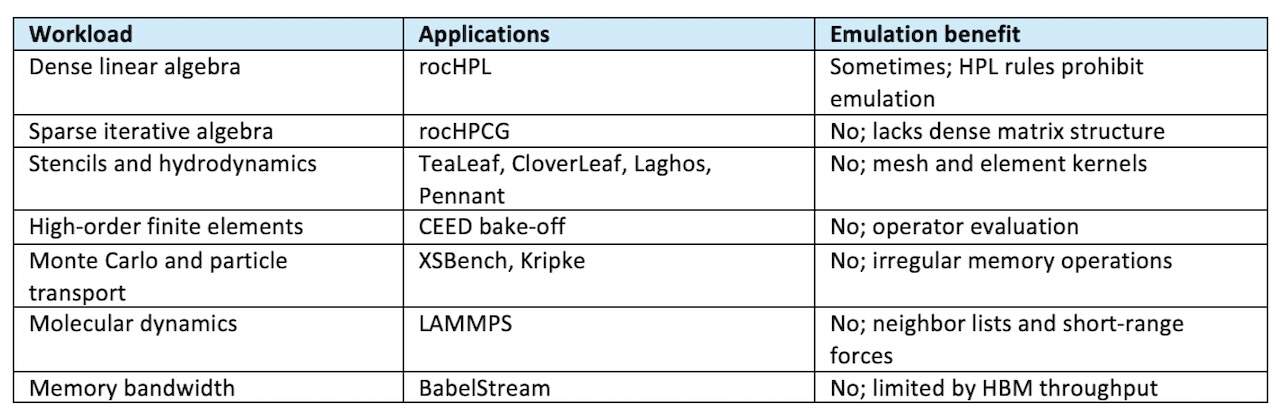
Table 3. FP64 emulation across AMD’s profiled HPC workloads.
AMD’s research supports its decision to retain substantial native FP64 capability. ISVs should evaluate their own kernels, numerical accuracy requirements, and memory footprints before choosing between native execution and emulation. Vendor research provides a starting point for those comparisons.
Software, deployments, and commercial availability
AMD’s ROCm platform supplies the software environment for scientific and AI applications. The company plans a two-year long-term support model for production deployments and offers AMD HPC Assistant to help developers work with HPC software.
AMD identifies several planned MI430X installations. Discovery at Oak Ridge National Laboratory will succeed Frontier. France’s Alice Recoque system will use Eviden BullSequana XH3500 servers. Germany’s Herder system and Finland’s LUMI-AI and LUMI-IQ projects also appear in AMD’s deployment plans.
These projects provide important opportunities to establish measured performance, software compatibility, and operational costs.
AMD has not confirmed the MI430X’s first shipment date, the number of processors sold, or its average selling price. The supplied material describes planned deployments and provides no verified commercial unit count. It, therefore, cannot support a claim of zero shipments or a numerical ASP.
For infrastructure buyers, the immediate questions concern delivery schedules, application performance, power consumption, and software maturity. The MI430X’s commercial value will depend on how effectively its memory capacity, native precision, and AI throughput support the actual workload mix.
What do we think?
AMD has a coherent technical argument for combining native FP64, substantial HBM4 capacity, and AI acceleration. The MI430X addresses scientific workloads that depend on precision and memory bandwidth. Planned national laboratory installations provide opportunities to validate the architecture. We need measured benchmarks, shipping schedules, power data, and pricing before assigning commercial value to AMD’s performance projections and deployment commitments.
Inflection point. The MI430X does not establish an immediate inflection point in AI processor architecture. Its significance lies in the growing overlap between scientific computing and AI infrastructure. National laboratories increasingly need simulation, data analysis, and AI execution within common systems. Native FP64, substantial memory capacity, and low-precision throughput support that convergence. An inflection point in HPC procurement could emerge if production installations demonstrate lower operating costs and broad application compatibility. Measured system results and ROCm adoption will determine whether that transition accelerates.
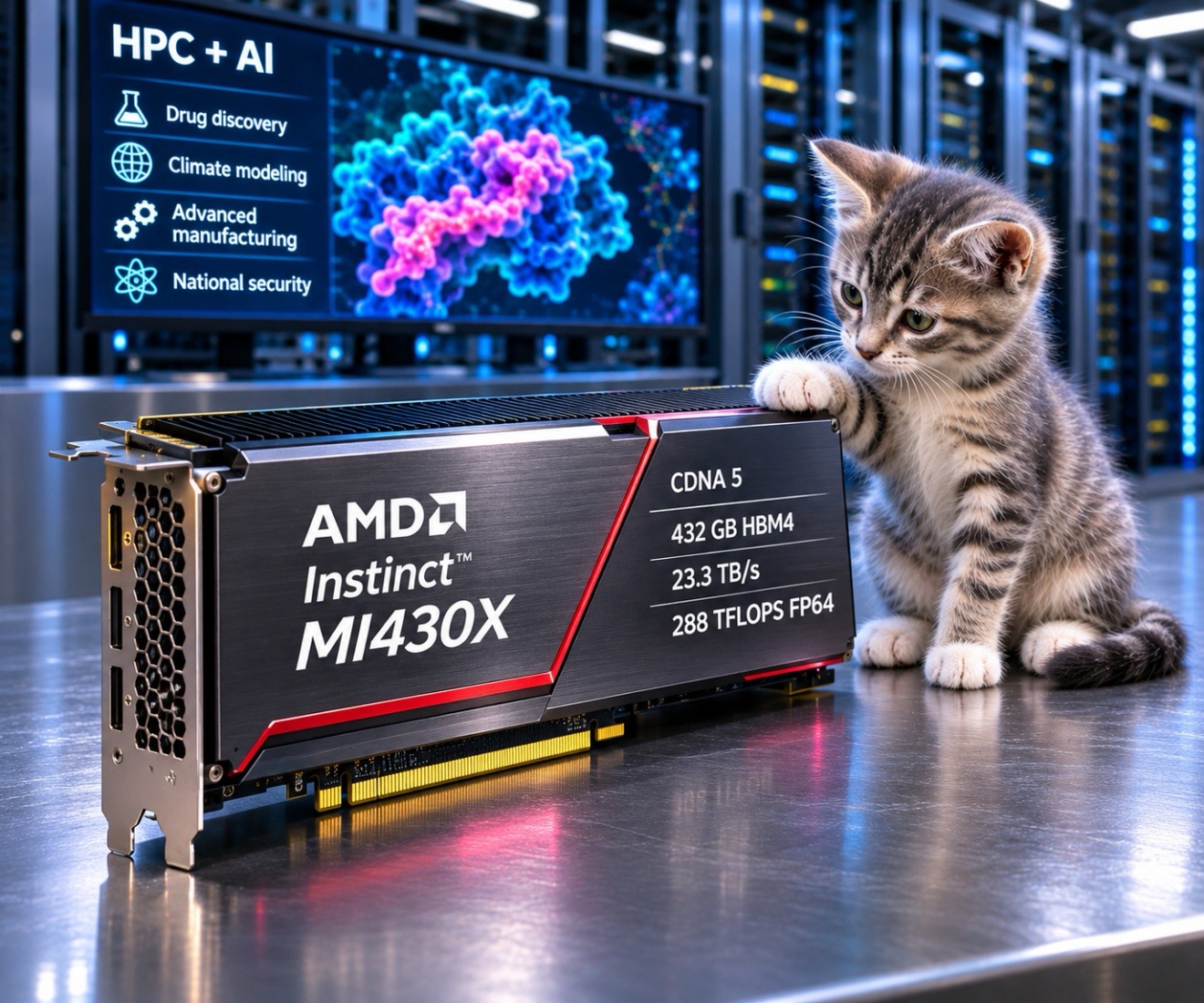
Figure 2. Because it is an unreleased next-generation CDNA 5 accelerator not yet available for individual retail purchase, standard consumer or enterprise pricing is unavailable.
AMD has developed 20 AIPs since 2022, which, if we counted them all, would make our AIP Management Information System Tracker list 372 AIPs from 160 current companies, which is an absurd number fueled by the $44 billion investment in start-ups plus the billions of R&D invested by the publicly held company. If you’re interested in AIPs, check out AIP Library, which has our quarterly report, specialized AIP types report, and several free reports.
LIKE IT? WE’VE GOT LOTS MORE. TELL EVERYONE YOU KNOW.