
AI infrastructure now extends far beyond chips, linking processors, memory, data centers, power, water, land, and public policy into a single system. Demand for AI compute continues to surge, but physical constraints—electricity, cooling, and local acceptance—shape how and where capacity expands. Data centers consume far more energy and water than comparable retail facilities, while creating relatively few jobs. As construction accelerates across the US, opposition grows, signaling a shift toward power-driven site selection and a more complex path for scaling AI infrastructure.
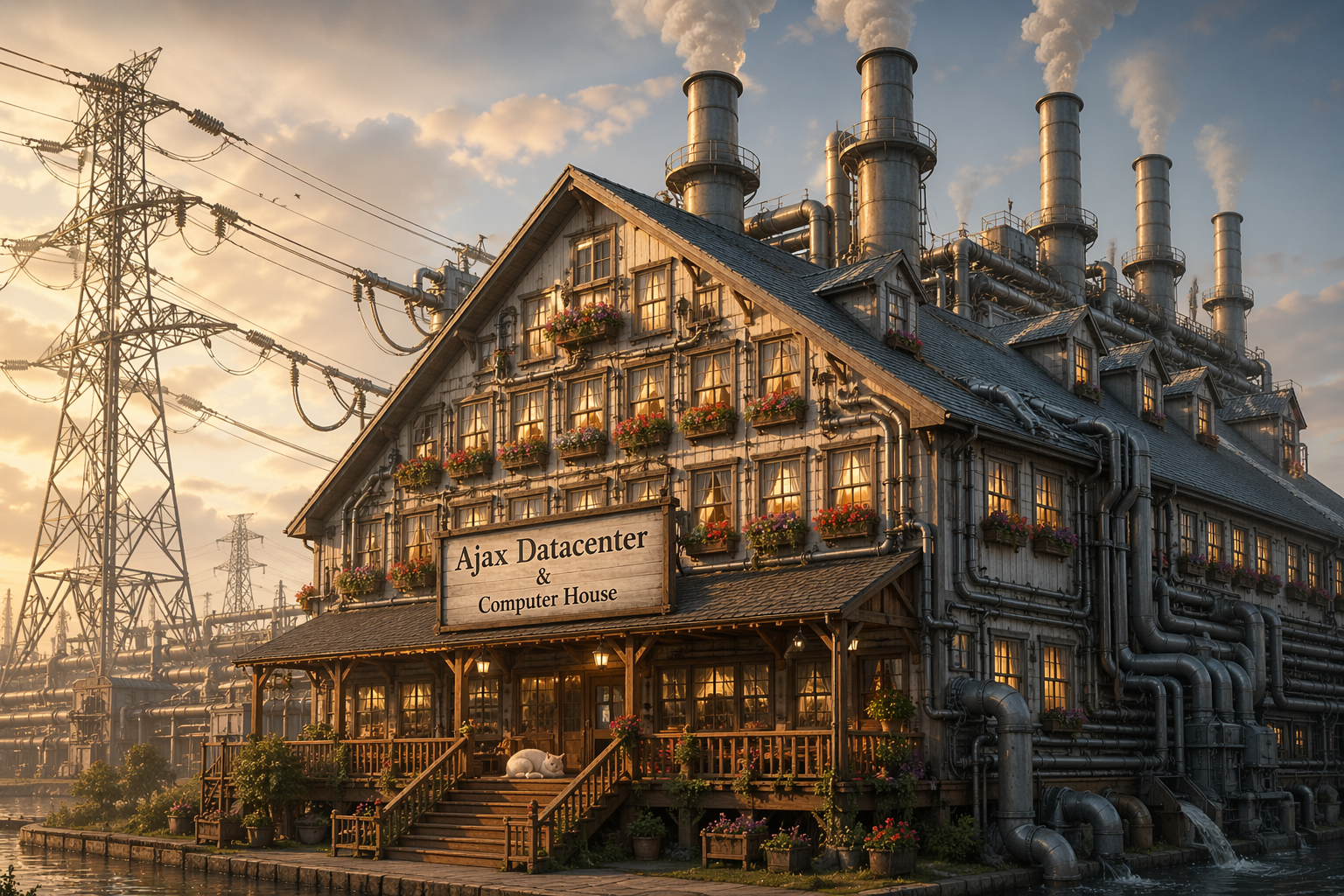
For LLMs and AGIs to operate and thrive, you need AI processors (AIPs) and memory. And for AIPs and memory, you need racks, and racks, and a house for the racks to live in. And those houses need a water supply to cool the AIPs and memory, and they need lots of electricity to power the fans, water pumps, and the AIPs and memory. And those water-and-electricity, AIP/mem-consuming houses, known as data centers, require dirt to build the data-center house on. And dirt gets taxed and regulated, so governments must get involved. And infrastructure like roads, power lines, sewer, and water have to be installed, and that REALLY needs government involvement. And anytime the government gets involved, taxes go up.
Then there are the NIMBY issues—not in my back yard. Nobody wants a water-and-electricity-diverting, cost-raising, heat-generating, traffic-clogging, noisy computer house for a neighbor. But what about the jobs a power-sucking, water-consuming computer house will create? Not counting delivery drivers, a typical data center has about 150 to maybe 200 employees, about the same as a Safeway or a Costco. A 150,000-square-foot Costco consumes about 15 GWh; a same-sized data center sucks in 500 GWh. A Costo facility consumes about 10 million gallons of water per year; a data center consumes about 300 million gallons per year.
Amazon has about 150 data centers in the US, Google 25 (Google may have fewer sites than AWS, but each site is much larger), Meta has 35, Microsoft 60, OpenAI 6, and xAI 3. All told, it is estimated there are 5,381 data centers in the US, more than double in the rest of the world.
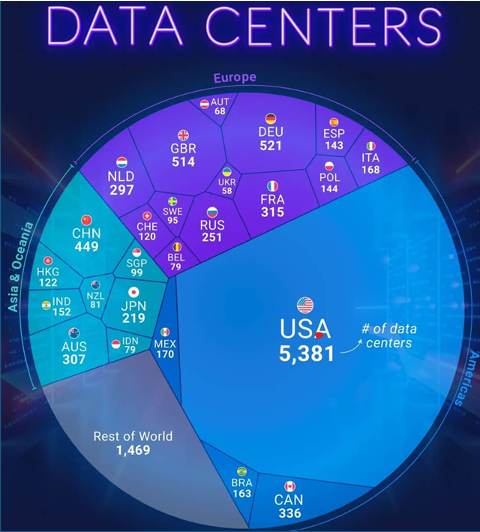
Figure 1. Data centers around the world. (Source: Virtual Capitalist)
As of April 2026, 70 communities (cities, towns, and counties) across the US have rejected or placed restrictions on data center projects since the start of the year.
This local backlash has accelerated significantly, with at least 48 data center projects having been blocked or stalled by local opposition in 2025 alone.
As of April 2026, Maine has passed the first statewide, temporary moratorium in the United States to make it illegal to build large new data centers, with several other states considering similar action.
Gleeful stock shorters are touting and looking for signs of the AI so-called bubble to pop. Lots of naysayers are on their side, posting any bad-foretelling speculations they can find or imagine. They want all the swans to turn black and get tuberculosis. And although only a hundred or so jobs will be created in the operation of a computer house, the ongoing tax stream (after subsidies) will feed the town’s general fund for a decade or more. And there are all the construction jobs in building the infrastructure and the computer house, although truth be told, those jobs usually go to specialists from other cities or states, and are temporary, but generate commerce and taxes while they are in town.
The states with the most computer house projects are:

The fast-rising states (next wave) are: Indiana, Wisconsin, Michigan, Missouri, Arizona, Utah, Louisiana, and Wyoming (65% of data centers are estimated to be in Red states). Virginia has 600-plus data centers.
What’s driving location decisions? Power (availability + price), land (large campuses, 100–1,000 acres), fiber connectivity, and water availability (increasing constraint).
The US data center market is transitioning from a network-driven geography centered in Northern Virginia to a power-driven geography led by Texas and the Midwest. Future AI infrastructure deployment will follow electricity availability rather than legacy connectivity hubs, signaling a structural shift in where compute capacity is built.
Finding homes for the 188 AIPs from the 138 suppliers doesn’t seem to be a problem, right now. In our AIP Tracker Service, we identify the privately held, so-called start-up companies that are VC-funded, and the five that have pulled in over a billion dollars each. Eight others have received $500 million or more from investors. Twenty-seven companies have received $10 million or less, and they are the vulnerable ones if there is a holdup on the erection of new computer houses to hold all the AIPs that could be built. Probably 50% of those 27 companies will just fail and fade away; the other 13 will likely be bought for assets, a dime on the dollar.
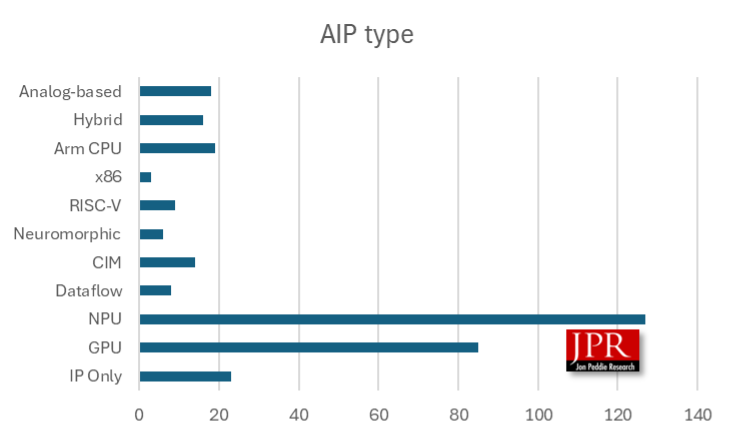
Figure 2. AIP types. (Source: JPR)
The AIP market is truly one of, if not the, most exciting places to be now. The churn, the novel ideas, challenges to von Neumann, and the speed of light are thrilling; the flights of imagination, enthusiasm, and unmeasurable energy of the participants are something we haven’t seen since the late 1990s.
The other exciting part is the market segments; we’ve narrowed them down to five, with lots of subsets like autonomous systems, which include robo vehicles on the road, in the air, on and under the water, and ambulatory robots (now being called physical AI). Most of the 138 companies specialize in one of the many niches, and intelligently, are not trying to be everything to everybody—that’s a survivor’s instinct and makes those companies worth keeping your eye on.
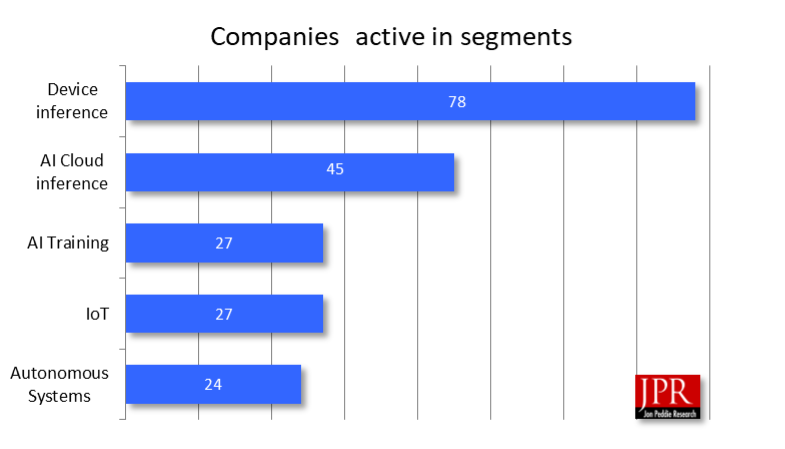
Figure 3. Major AIP market segments. (Source: JPR)
The business models vary greatly, too, as one might imagine, with that many participants.
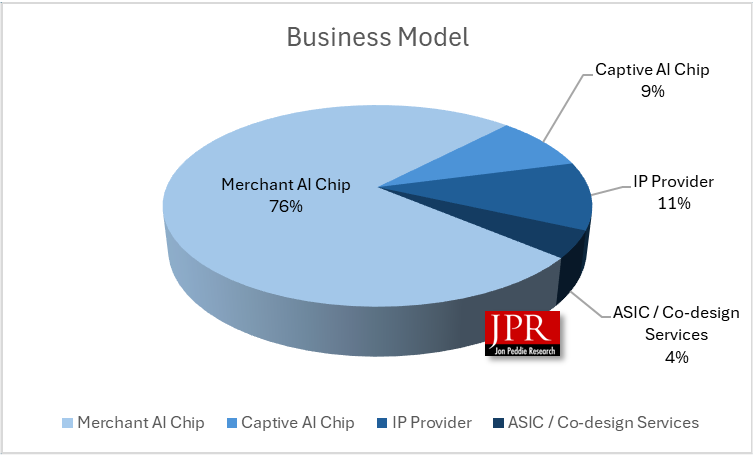
Figure 4. Business models of the AIP suppliers. (Source: JPR)
They are scattered across the world but concentrated in the US, China, and South Korea.
And all over the world, we are seeing pushback on the construction of computer houses, especially in poorer parts of the world that have been traditionally exploited by colonialistic behavior with little regard for the natives’ lives.
The AI market, just barely a decade old (it varies depending on who you’re speaking with), is going through normal growing pains, but this is going to be a really big baby—possibly the biggest industrial revolution we have ever seen—and some say bigger than all the previous ones combined. We agree. If you want to keep up with it, or find out about some corner of it, we’re here for you.
In our AIP Quarterly Update, and a few sections within our AIP Annual report, there are comments about the regularity and social issues (like repulsion of data centers by some communities) but not a regular or dedicated section.
The annual report presents TAM by segment (e.g., IoT, cloud training, device inference, etc.). The AIP Tracker Serviceoffers ASP, units, and SAM.
The AIP Tracker Service includes all the above, plus individual company shipments by quarter. At the bottom of the Tracker page is a comparison of the various AI reports (I know, it can get confusing; we try to offer something for every price point).
We also have a supplementary report on Photonic AI Processors.
If you have any questions or comments, contact Jon at [email protected].
LIKE WHAT YOU’RE READING? TELL YOUR FRIENDS; WE DO THIS EVERY DAY, ALL DAY.