
Artificial intelligence created enormous demand for GPUs, accelerators, networking, memory, and data center infrastructure. Now a new trend is emerging. As AI moves from model training into inference and agentic workloads, CPUs are regaining strategic importance. AMD Chair and CEO Lisa Su believes this shift will reshape AI infrastructure over the next decade. Speaking in Taipei, Su outlined a future in which CPUs, GPUs, ASICs, memory, networking, and advanced packaging all play essential roles in scaling AI. AMD’s response combines investments in Taiwan’s supply chain ecosystem, next-generation Epyc processors, and a broad portfolio designed to support every layer of AI infrastructure.
(Source: FocusTaiwan.tw)
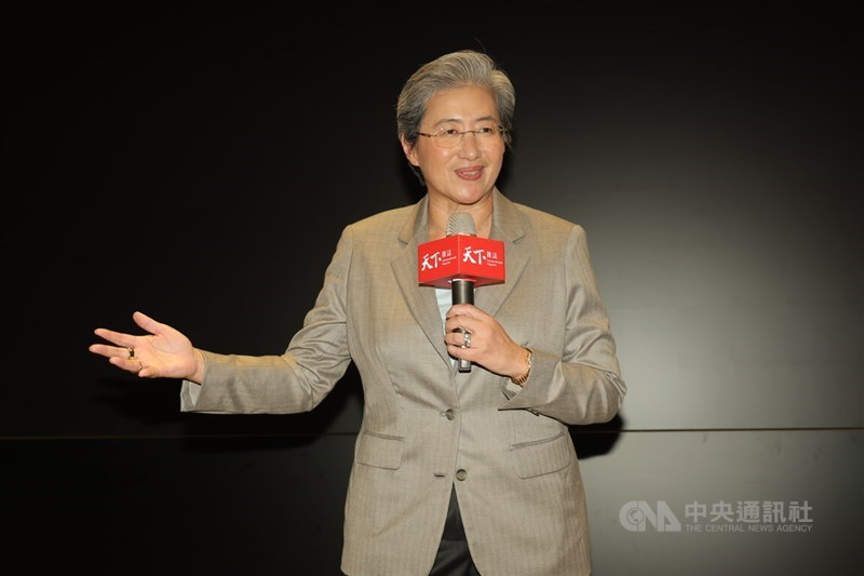
During the CommonWealth Magazine 45th Anniversary Summit in Taipei, AMD Chair and CEO Lisa Su addressed one of the semiconductor industry’s most closely watched questions: how AMD intends to compete with Nvidia in AI infrastructure. Her answer focused less on individual products and more on the scale and composition of the emerging AI market.
AI infrastructure expands beyond accelerators
Su believes the AI infrastructure market is entering a period of rapid expansion. She estimates the data center segment alone could exceed $1 trillion within three to four years. Such growth will require a broad mix of computing technologies rather than reliance on a single processor architecture. CPUs, GPUs, ASICs, memory subsystems, networking fabrics, advanced packaging, and rack-scale integration will all contribute to future AI deployments.
AMD’s position, according to Su, stems from the company’s ability to supply multiple elements of that infrastructure. The company develops CPUs, GPUs, adaptive computing technologies, and AI accelerators that address a growing range of enterprise and cloud workloads.
Inferencing puts CPUs back in the spotlight
One of Su’s most notable observations involved the changing role of CPUs in AI systems. For several years, industry discussion centered almost entirely on GPUs because AI model training consumed massive parallel compute resources. CPU demand remained relatively stable, growing only modestly while attention shifted toward accelerators.
That dynamic is changing.
As enterprises deploy inference engines, retrieval systems, AI agents, orchestration frameworks, vector databases, and distributed AI services, CPU utilization increases throughout the infrastructure stack. CPUs coordinate workloads, manage memory hierarchies, orchestrate networking traffic, schedule accelerator resources, and support many inference-related functions.
Su said demand has risen far faster than expected. CPU supplies have tightened as cloud providers and enterprise customers expand AI deployments. She now projects CPU market growth exceeding 35% annually during the next five years, a dramatic shift from the low single-digit growth rates that characterized the market only a few years ago.
The growth of agentic AI further strengthens the CPU’s role. AI agents require coordination, memory management, workflow execution, security controls, and application integration. Those tasks often rely heavily on CPUs operating alongside GPUs and accelerators rather than replacing them.
Venice and a family-based strategy
AMD’s response centers on a portfolio strategy rather than a single flagship processor. Su emphasized that the company develops multiple CPU configurations optimized for different workloads.
The latest example is Venice, AMD’s next-generation Epyc server processor built on TSMC’s 2 nm process technology. AMD designed Venice for cloud deployments, throughput-intensive workloads, and AI infrastructure head-node functions. The processor has already entered production and will eventually be manufactured at TSMC’s Arizona facilities when advanced-node capacity becomes available.
Su argued that future success requires a complete processor family capable of serving multiple deployment scenarios rather than one design optimized for a narrow workload profile.
Supply chains become strategic assets
AI growth is exposing constraints across the semiconductor ecosystem. Memory availability, power delivery, advanced packaging, substrate production, testing capacity, and data center infrastructure all influence deployment schedules. Su acknowledged that bottlenecks remain widespread but noted that suppliers are responding quickly.
AMD plans to invest more than $10 billion across Taiwan’s AI supply-chain ecosystem to expand manufacturing capacity and strengthen partnerships. The initiative includes collaborations with advanced packaging suppliers, substrate manufacturers, testing providers, and server-system integrators. Companies cited by AMD include ASE Technology Holding, Siliconware Precision Industries, Powertech Technology, Unimicron, Kinsus, Sanmina, Wiwynn, Wistron, and Inventec.
Su described supply-chain investment as a prerequisite for competing in future AI markets. Capacity planning, packaging technology, and rack-scale integration now influence competitiveness as much as processor architecture.
China remains important
Before arriving in Taiwan, Su visited customers and developers in China. She acknowledged that export restrictions limit AMD’s ability to sell its most advanced AI accelerators in the region. Nevertheless, China continues to represent approximately 20% of AMD’s revenue through PC, gaming, and server products.
Su also noted the rapid progress of China’s domestic semiconductor industry, which continues to expand capabilities across multiple segments of the computing market.
AI infrastructure is evolving into a heterogeneous computing environment where CPUs, GPUs, ASICs, networking fabrics, memory systems, and software orchestration platforms operate together. The transition from training-focused deployments toward large-scale inference and agentic AI is increasing demand throughout the infrastructure stack. AMD’s strategy reflects that reality. The company is investing simultaneously in processor design, manufacturing partnerships, packaging technology, and supply-chain capacity to address a market that continues to expand in both scale and complexity.
What do we think?
Lisa Su’s comments highlight a significant shift in AI infrastructure economics. GPUs remain essential for training and large-scale inference, but CPUs are reclaiming a central role as AI deployments move into production environments. Agentic AI, orchestration software, vector databases, and distributed inference all increase CPU utilization. AMD benefits from a broad portfolio spanning CPUs, GPUs, adaptive computing, and data center infrastructure. The company’s investment in Taiwan’s ecosystem reinforces a strategy built around platform scale rather than a single product category.
The resurgence of CPU demand may mark an inflection point in AI infrastructure. During the first phase of generative AI, attention focused on training accelerators and GPU capacity. The next phase emphasizes deployment, orchestration, memory management, networking, and agentic workflows. That transition elevates CPUs back into a central position within the computing stack. If inference and AI agents continue expanding at current rates, the industry could enter an inflection point where balanced heterogeneous systems matter more than accelerator performance alone.
We have all the AI processors in our AI Processor tracking database, long with estimated unit shipping, specification (including FP and INT8 TOPS, and FP16 TFLOPS), and more.
LIKE WHAT YOU’RE READING? INTRODUCE US TO YOUR FRIENDS AND COLLEAGUES.