
GreenWaves Technologies is a 49-person Grenoble, France, fabless company doing something genuinely hard: shipping AI inference silicon for devices that run on batteries. Their GAP processor family pairs RISC-V compute clusters with a dedicated hardware neural network engine, hitting performance levels that competing microcontrollers cannot match at equivalent power. With GAP9 in volume production, tier 1 hearables customers using it for neural noise cancellation, French defense backing, and a €20M Series B closed in 2023, GreenWaves carries more commercial credibility than its headcount suggests.
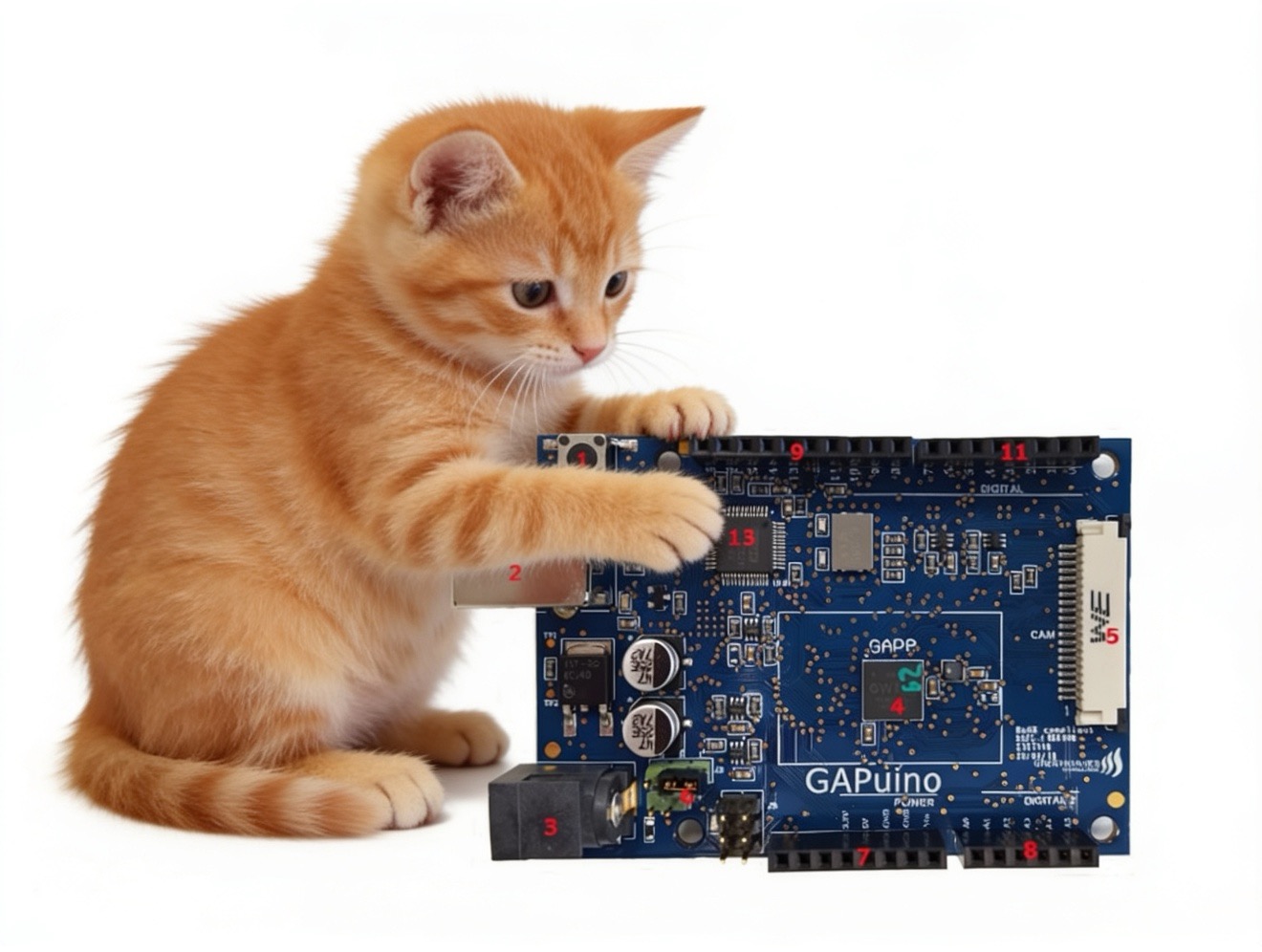
GreenWaves Technologies incorporated in late 2014 in Grenoble, France. Loïc Liétar (CEO), Eric Flamand (CTO), Denis Mestdagh, and Joël Cambonie—all veterans of ST-Ericsson—founded the company after exploring high data rate wireless communications, then pivoting to Flamand’s concept for an ultra-low-power AI processor. That pivot defined the company’s direction entirely.
GreenWaves designs on the open-source PULP (parallel ultra-low-power) platform developed jointly by ETH Zurich and the University of Bologna, fabricates through GlobalFoundries and TSMC, employs 49 people, and has raised approximately $33.3 million across two rounds.
The architecture
The GAP processor family organizes compute across three layers. A fabric controller handles system-level orchestration. A parallel cluster of eight to nine RISC-V cores handles flexible workloads: image pre- and post-processing, adaptive audio functions including active noise cancellation, and general DSP tasks. The NE16 hardware neural network engine executes the computationally intensive portions of AI inference—convolutions and multiply-accumulate operations at INT2, INT4, and INT8 precision. Transprecision floating-point units on the RISC-V cores support vectorized operations from 2-bit integers to 32-bit floats, enabling efficient handling of different network layer types within a single inference pass.
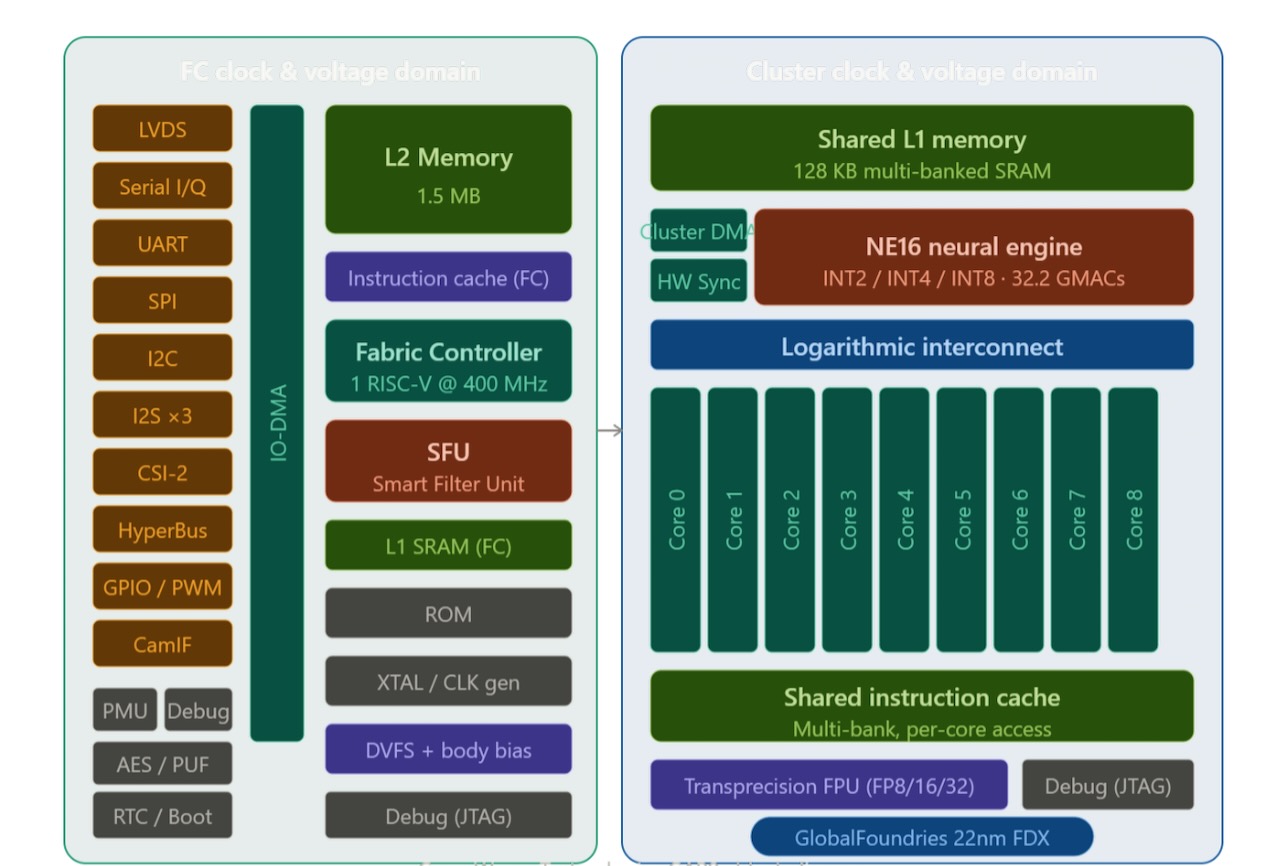
Figure 1. GAP9 block diagram. (Source: GreenWaves)
The coral-colored NE16 and SFU blocks are the two most significant additions—the NE16 is what makes GAP9 a genuine AI processor rather than just a DSP SoC.
The NE16 is not an autonomous NPU. The RISC-V cluster schedules data, formats inputs, and manages layer transitions. The engine performs dedicated hardware matrix multiply operations—convolution, batch normalization, activation, pooling—without software intervention in the compute itself. The cluster drives the engine; the engine does the arithmetic in hardware. This hybrid model is the architectural norm at the edge. Texas Instruments’ TDA4VM uses an MMA orchestrated by Arm Cortex-A72 cores. Canaan’s Kendryte K510 uses the identical NE16 engine orchestrated by RISC-V from the same PULP platform. Arm Ethos NPUs require a host processor to feed them. GreenWaves’ approach is consistent with how production edge-AI silicon actually works.

Table 1. Product history (Source: GreenWaves)
GAP8 shipped in 2018, drawing immediate adoption from the maker and developer community through Sipeed MAIX boards and M5StickV devices. The 16× power reduction versus an equivalent STM32F7 Cortex-M7 workload—3.7 mA versus 60 mA—established the architectural credibility that carried into GAP9.
GAP9, fabricated on GlobalFoundries’ 22 nm FD-SOI, arrived in 2022. It replaces the HWCE with the NE16 hardware NN engine and delivers 50 GOPS at 50 mW with 41.6 GB/s peak cluster memory bandwidth—a 20× improvement over GAP8—enabling inference on neural networks 10 times larger than GAP8 could handle at equivalent power. The 22 nm FD-SOI process provides dynamic voltage scaling advantages at sub-threshold operation, the critical region for always-on IoT sensing. GAP9 runs MobileNet V1 at 160 × 160 resolution with 0.25 channel scaling in 12 ms at 806 μW per frame—a benchmark that matters specifically for always-on computer vision in battery-powered devices. Security features include AES-128/256 hardware cryptography and a physically unclonable function (PUF) for per-device identification. Peripherals include bi-directional multi-channel digital audio, CSI2 and parallel camera interfaces, and multi-channel I2S for wearable audio applications. The software stack includes the GAP SDK, AutoTiler automatic code generator for neural network graphs, and GAPFlow for converting TensorFlow and other training framework models into deployable inference code.
GAP10 targets the automotive market—a deliberate shift away from power-constrained sensing toward higher compute at competitive cost. CEO Liétar confirmed that automotive applications do not carry the same low-power restrictions as IoT, positioning GAP10 as a higher-performance part.
Customer traction
At the time GreenWaves closed its Series B in February 2023, GAP9 carried design wins with tier 1 TWS hearables vendors. Those customers use GAP9 for neural network-based noise filtering and adaptive transparency—features requiring real-time audio inference at earbud power budgets. Tier 1 TWS vendors run qualification cycles that reject parts failing power budgets without appeal; GAP9’s presence in production reflects a passed qualification, not a speculative design win.
In November 2024, GreenWaves partnered with InnoPhase IoT and IDUN Audio to deliver a lossless audio headset reference design with integrated Wi-Fi, combining GAP9’s AI processing with InnoPhase’s ultra-low-power wireless stack. The company exhibited at CES 2024 and CES 2025, maintaining a consistent commercial presence across both cycles.

Table 2. Funding
The Definvest Fund, managed by Bpifrance on behalf of France’s Armed Forces Ministry, signals institutional interest in GAP9 for low-power sensing in military and dual-use applications. Defense-adjacent investors evaluating edge AI processors for power-constrained field deployment represent a different demand signal than consumer electronics design wins. Both now sit in GreenWaves’ investor base simultaneously a combination that strengthens the case for GAP10 funding and strategic optionality.
Revenue is not publicly disclosed. Given 49 employees and a production ramp underway, low single-digit millions annually is a reasonable estimate, consistent with Liétar’s stated goal of reaching tens of millions in revenue as GAP9 ramps.
Closing
GreenWaves enters its next product cycle—GAP10 in development, defense interest materializing—with more commercial grounding than most European deep-tech semiconductor start-ups at a comparable funding level. Tier 1 TWS qualification, a shipping SDK with two processor generations behind it, and a PULP-rooted architecture with a track record across TSMC 55 nm and GlobalFoundries’ 22 nm FD-SOI give the company a credible foundation for whatever GAP10 targets next.
What do we think?
GreenWaves made the right architectural bet early—RISC-V plus hardware AI acceleration at ultra-low power—and shipped it before most competitors finished taping-out. The hearables traction is real validation. The risk is scale: 49 employees and ~$33 million raised is thin capital for a company competing in a market where Arm, Nordic, and Ambiq all target the same socket. GAP10’s roadmap and funding trajectory will determine whether GreenWaves scales or gets acquired.
GAP9’s adoption in tier 1 hearables marks an inflection point in edge AI hardware: the moment dedicated silicon for neural network inference became a hard requirement in consumer audio products rather than an optional premium feature. That inflection point now drives every major TWS platform toward on-device AI for noise cancellation, voice detection, and health sensing. GreenWaves arrived at that inflection point with qualified silicon already in production—which explains why Thales, Bpifrance, and Zepp Health all backed the same €20M (~US $23.2 million) round.
The customer traction and funding sections give commercial validation signals: tier 1 TWS qualification, defense backing, and the reference design partnerships that indicate ecosystem momentum rather than isolated chip sales.
GreenWaves’ GAP series chips are three of the 152 AI processors in our AI Processor Tracking Service, which also lists performance and other specifications for 291 products.
WHAT DO YOU THINK? GOOD ENOUGH TO TELL YOUR FRIENDS ABOUT IT? YOU HAVE OUR PERMISSION TO SHARE IT.