
Rebellions is a Seoul-based AI inference chip company that has moved from founding to mass production in five years—a genuinely fast trajectory in semiconductor terms. Their ATOM and ATOM-Max chips run Korea’s largest commercial AI service, deploy in Saudi Arabia’s sovereign AI infrastructure, and power telecom AI assistants handling 50 million API calls per day. With $850 million raised, a second-generation chiplet architecture launching, and custom HBM co-design underway with Samsung and SK Hynix, Rebellions is one of the most commercially credible non-US AI silicon companies operating today.
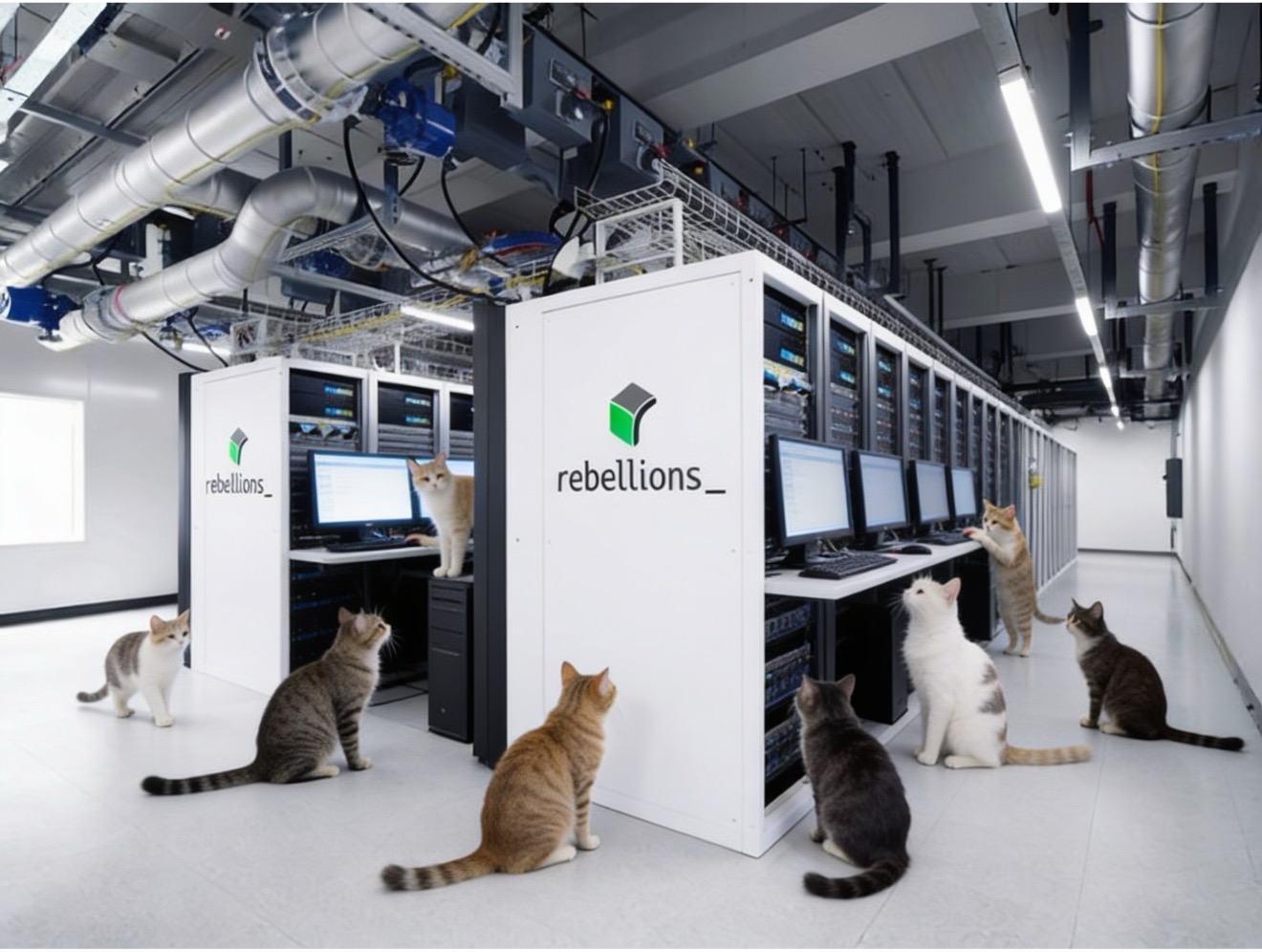
Rebellions was founded in 2020 in Seoul, South Korea. CEO Sunghyun Park and CFO Sungkyue Shin lead the company, which grew from a small team of semiconductor veterans into an organization that has shipped AI inference silicon to customers across South Korea, Japan, Saudi Arabia, and the US. The company merged with Sapeon Korea in June 2024, broadening its customer base and product portfolio, and raised $850 million in total funding—including a $253 million Series C in September-November 2025 led by Arm and Samsung at a $1.4 billion valuation, and a $400 million pre-IPO round closed in March 2026.
The ATOM architecture
Rebellions’ first-generation product, ATOM and its higher-performance variant ATOM-Max, entered mass production in 2023 and currently operate across four deployment regions. The architecture uses a Coarse-Grained Reconfigurable Array (CGRA) compute model—a programmable dataflow fabric that maps neural network inference graphs onto reconfigurable processing elements without the overhead of GPU-style shader dispatch. CGRA execution reduces the instruction-fetch and decode overhead that constrains GPU efficiency on inference workloads, delivering competitive throughput per watt for large language model decode stages.
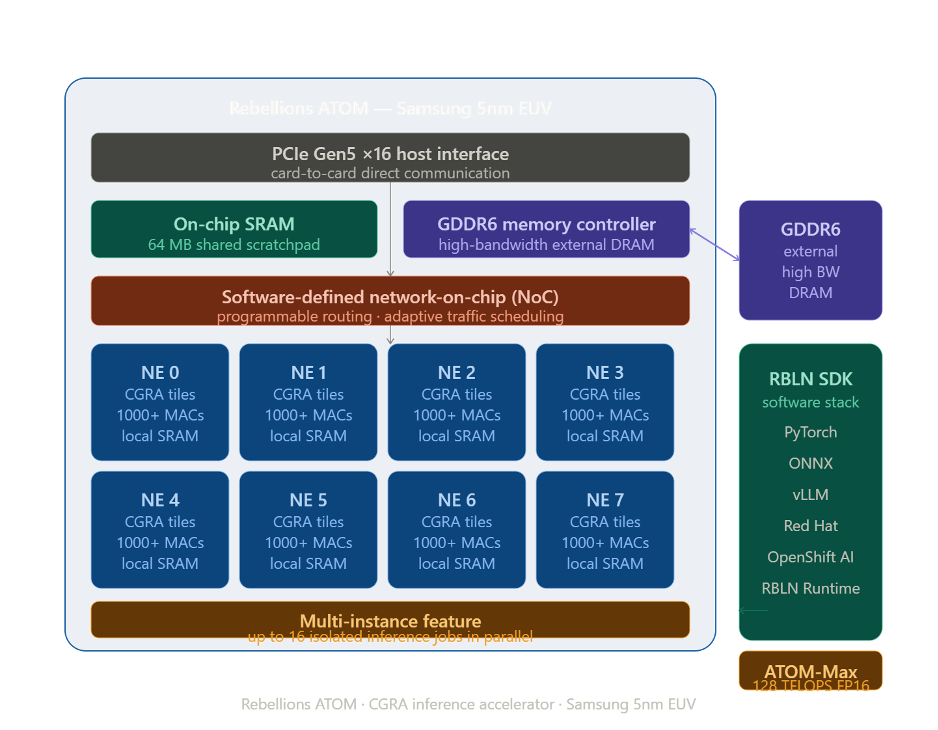
Figure 1. The REBEL-Quad extends this with four compute chiplets on UCIe-Advanced interconnect plus 144 GB HBM3E. (Source: JPR)
The SK Telecom deployment represents Rebellions’ largest installation to date. A multi-rack ATOM cluster partially powers A-DoT, SK Telecom’s proprietary AI assistant, which handles Korea-specific services including call summarization. A-DoT processes up to 50 million API calls per day—by Park’s account, the highest token consumption of any commercial AI service in South Korea. Korea Telecom runs Rebellions hardware in NPU-as-a-service infrastructure. Both deployments confirm that ATOM moved beyond pilot status into operational AI service infrastructure.
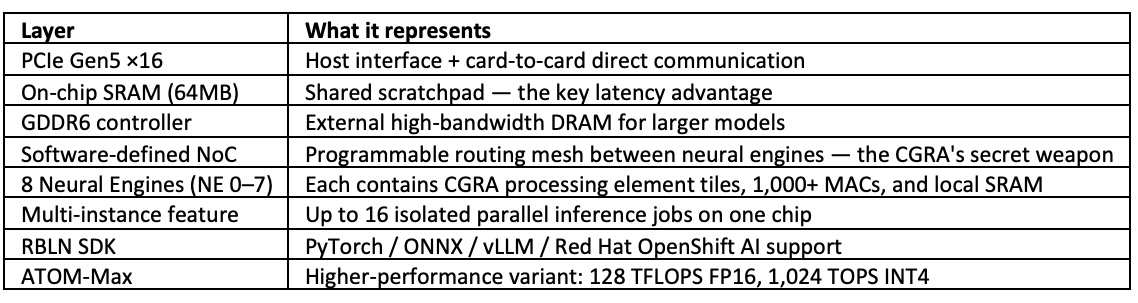
Table 1. Rebellions’ ATOM’s key architectural elements.
The REBEL-Quad and memory strategy
The second-generation product, REBEL-Quad, launched in August 2025 on Samsung 4 nm. It integrates four compute chiplets using UCIe-Advanced interconnect, carries 144 GB of HBM3E, and delivers 1 POPS of FP16 compute within a 300 W envelope. The chiplet architecture reflects a deliberate pivot from monolithic die design to modular integration—allowing Rebellions to scale compute and memory independently.
Memory sits at the center of Rebellions’ technical roadmap. As LLM inference scales, KV cache size determines the number of concurrent users a given system can serve, and memory bandwidth determines decode speed. Park frames memory supply chain security as Rebellions’ structural advantage: Backed by both Samsung Foundry for fabrication and SK Hynix for HBM supply, the company can secure memory allocation that independent AI chip vendors without strategic investor relationships cannot guarantee.
Rebellions and its partners are actively co-designing custom HBM implementations. The effort targets base-die logic that accelerates fast token decoding—embedding inference-specific logic directly into the memory stack rather than routing data back to the compute die for every decode step. Park acknowledges that no industry standard exists yet for what logic belongs in the HBM base die, positioning the co-design effort as an early-mover exploration rather than a production commitment.
The company taped-out CXL and Ethernet I/O dies, with compute chiplet commercialization plans still evolving. Rebellions collaborates with Marvell on system-level technologies including optical scale-up interconnects. Park is evaluating co-packaged optics for future generations to support larger scale-up domains as customer cluster sizes grow.
South Korea and the Middle East anchor Rebellions’ current commercial deployments. Saudi Arabia has become a priority market—Aramco and its venture arm Wa’ed Ventures invested $15 million in July 2024, establishing Rebellions’ Riyadh subsidiary. Park notes that Saudi Arabia’s Vision 2030 AI infrastructure ambitions have not slowed despite regional turbulence, and that Nvidia’s previous dominance in the region has created space for alternative hardware vendors as sovereign AI programs explicitly target heterogeneous compute—Nvidia and non-Nvidia hardware running alongside each other.
Rebellions’ open-source software stack, optimized for Red Hat, is gaining traction with US customers, though Park describes North America as still an early-stage market for the company.
Disaggregated inference
Rebellions participates in a disaggregated inference project with Arm and SK Telecom. In that configuration, Rebellions’ compute chiplets—which carry significant on-chip SRAM—handle the memory-intensive decode stage, while prefill runs elsewhere. The architecture draws a comparison to Groq’s SRAM-based LPU model, which Nvidia acquired for $20 billion. Park draws the parallel explicitly, noting that the two biggest exits in AI silicon—Groq and Cerebras—both used SRAM-heavy architectures, while predicting that the next wave of value creation will favor 3D DRAM stacking rather than pure SRAM.

Figure 2. Sunghyun Park (Source: Rebellions)
Early rounds from 2020–2023 of ~$197 million, from various venture firms, with Samsung (lead); SK Hynix, Aramco/Wa’ed were pre-IPO. In March 2026, $400 million in strategic investment brought the total to $850 million, with a $1.4 billion valuation.
Revenue estimates for late 2025 run $3–12 million per quarter, reflecting early commercial scaling across multiple deployment regions. Park’s stated target of $1 billion in revenue by 2027 implies a steep ramp from that base. Rebellions is in active IPO preparation, evaluating both Nasdaq and domestic Korean exchange listings, with a further pre-IPO strategic round remaining an option before any public offering.
Rebellions has accomplished what most AI chip start-ups do not: moved from first silicon to multi-region commercial deployment with real AI service operators as paying customers, rather than infrastructure pilots. The ATOM architecture proved out in production. The REBEL-Quad extends the platform to data center scale. The co-design relationships with Samsung and SK Hynix give the company structural memory supply advantages that pure-play fabless vendors cannot replicate. Whether Rebellions reaches Park’s $1B revenue target depends on how quickly REBEL-Quad ramps in the Middle East and whether the US market converts from interest to deployment volume—but the commercial foundation is more substantial than the company’s relatively low international profile suggests.
What do we think?
Rebellions has the right ingredients: production silicon, live service deployments, strategic memory partners, and sovereign AI customers that explicitly want non-Nvidia options. The CGRA architecture is technically credible, the SK Telecom deployment at 50 million daily API calls is real proof, and the Samsung-SK Hynix memory co-design positions the company well for the memory-centric inference era Park describes. The $1B 2027 revenue target is aggressive but not implausible.
Rebellions’ trajectory marks an inflection point in the AI silicon market: the moment non-US AI chip companies moved from research benchmarks to operational service deployments at scale. That inflection point is geopolitically driven—sovereign AI mandates in Saudi Arabia and South Korea are creating demand for alternatives to US-controlled AI infrastructure that didn’t exist three years ago. Rebellions, positioned at the intersection of Korean semiconductor supply chain strength and Middle Eastern sovereign AI ambition, arrived at that inflection point with production silicon already running.
SK Telecom’s 50 million daily API calls, the Saudi sovereign AI context, the memory supply chain security argument, and the IPO trajectory that indicates commercial maturity. The $850M raised, credible production deployments, and a $1B 2027 revenue target that frames the company’s commercial ambitions.
The Rebellions’ ATOM-Max is one of the 152 AI processors in our AI Processor Tracking Service, which also lists performance and other specifications for 291 products.
WHAT DO YOU THINK? LIKE THIS STORY? TELL YOUR FRIENDS, TELL US.