
Intel deepened its SambaNova partnership in February 2026, joining a $350 million funding round and committing to a multiyear hardware integration agreement. SambaNova’s new SN50 chip targets Nvidia’s Blackwell B200 GPU, claiming superior price-performance ratios and 256-processor scale-out configurations. Intel CEO Lip-Bu Tan, who chairs SambaNova through his Walden International venture firm, recused himself from negotiations. SoftBank already deploys the SN50. Intel, facing four consecutive years of revenue decline, needs SambaNova’s customer base—which includes Meta, Hugging Face, and major AI labs—to challenge Nvidia’s dominance.
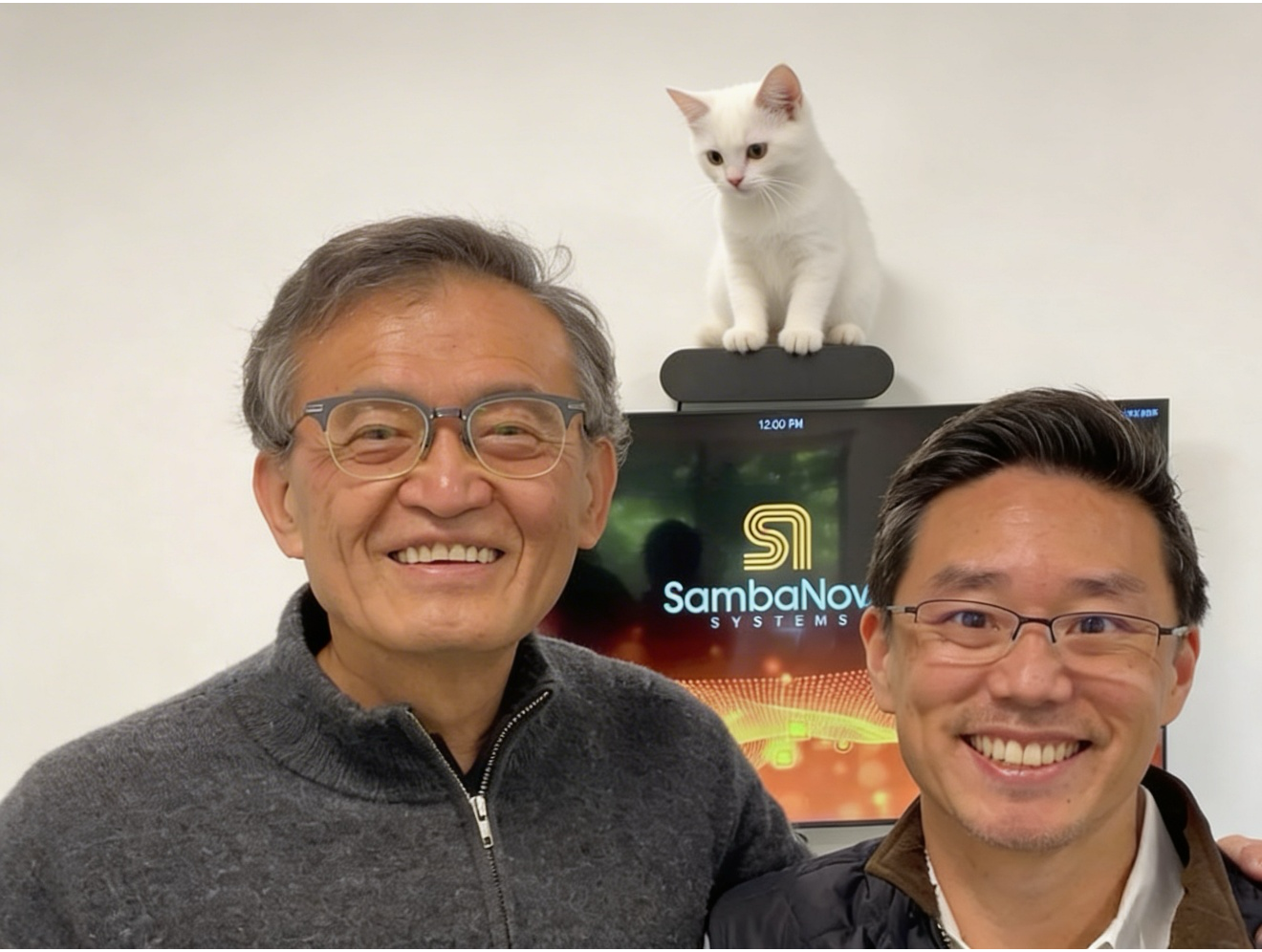
Lip-Bu Tan, CEO of Intel, and Rodrigo Liang, CEO of SambaNova, are old friends. (Source: Business Wire and JPR AI)
Intel Corporation and SambaNova Systems executed a multiyear strategic collaboration agreement in February 2026, establishing a hardware integration framework under which SambaNova will deploy Intel server processors and graphics accelerators across its AI inference infrastructure. Intel simultaneously committed $350 million to SambaNova’s Series F funding round, extending an investment relationship that originated in 2019 when Intel first acquired a minority stake in the Santa Clara, California-based chipmaker.
The collaboration carries notable governance complexity. Lip-Bu Tan also holds the chairmanship of SambaNova, a position he assumed in 2017 through his founding venture firm, Walden International, which placed an early-stage bet on the company, alongside Google Ventures. Intel disclosed that Tan had removed himself from all internal deliberations regarding the partnership, with an Intel spokesperson confirming the recusal to avoid conflicts of interest arising from his dual executive roles.
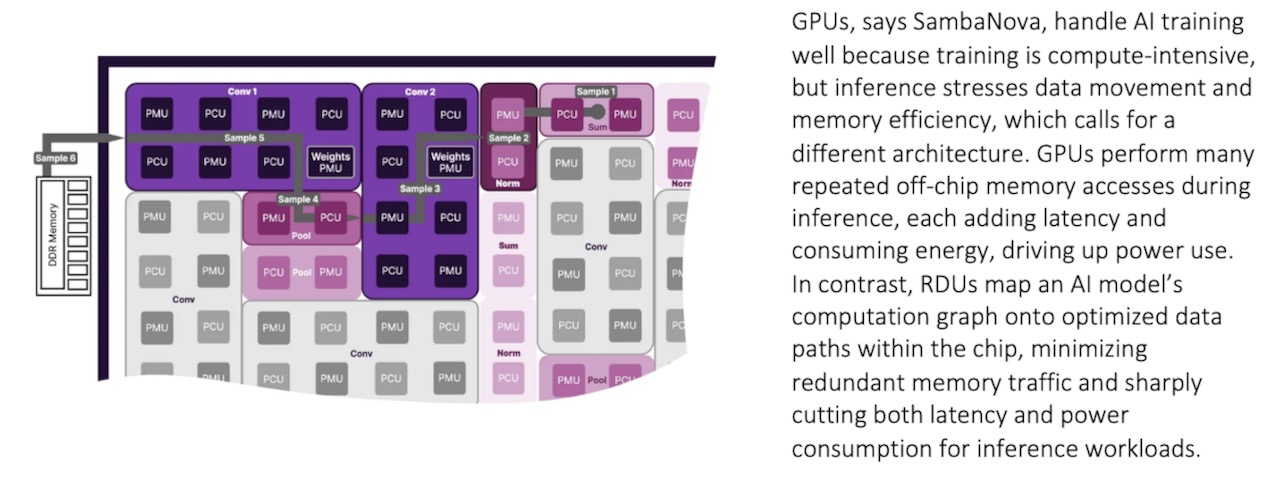
Figure 1. SambaNova’s RDUs. (Source: SambaNova)
SambaNova’s core product is the SN50, purpose-built for agentic inference using a Reconfigurable Dataflow Unit (RDU) AI processor, targeting the inference workload segment that Nvidia currently dominates with its Blackwell-architecture B200 GPU systems.
SambaNova says its SN50 delivers superior throughput-per-dollar ratios compared to the B200, and the architecture supports scale-out configurations connecting up to 256 processors within a single logical compute cluster. SoftBank, a major institutional investor in OpenAI, confirmed active SN50 deployment and an ongoing customer relationship with SambaNova, lending third-party validation to the chip’s production readiness.
Intel’s strategic rationale for deepening the SambaNova relationship reflects the severity of its competitive position in the AI accelerator market. Nvidia’s graphics processing units established category dominance following the November 2022 launch of ChatGPT, which triggered explosive demand for high-throughput AI training and inference hardware. Nvidia now holds the title of the world’s highest-capitalized publicly traded company, while Intel recorded four consecutive years of revenue contraction. Intel’s own discrete graphics accelerator program remains in active development, with Tan publicly confirming ongoing assembly work at a Cisco-hosted industry event earlier in February 2026. Intel’s stock appreciated approximately 75% over the preceding 12 months, driven primarily by US government semiconductor investment programs and a strategic supply agreement with Nvidia.
Prior to the partnership announcement, Intel pursued a full acquisition of SambaNova at a reported valuation of $1.6 billion. Negotiations collapsed without a transaction in January 2026. The collaboration structure represents a capital-efficient alternative, enabling Intel to access SambaNova’s customer base—which includes Hugging Face, Meta, and multiple frontier AI research laboratories—without absorbing the full acquisition premium or integration risk.
The joint commercial arrangement establishes coordinated sales and marketing operations between the two companies, targeting enterprise customers building heterogeneous AI compute environments. SambaNova also operates a proprietary cloud platform for AI model inference and markets turnkey processor clusters for on-premises data-center deployment.
SambaNova’s existing investor syndicate includes Vista Equity Partners, Battery Ventures, Cambium Capital, the Qatar Investment Authority, Seligman Ventures, and T. Rowe Price, reflecting institutional confidence in the company’s differentiated architecture strategy against Nvidia’s entrenched market position.
What do we think?
Intel’s SambaNova partnership represents a pragmatic hedge against continued GPU market dominance. The recusal of Tan from negotiations introduces governance optics that institutional investors will scrutinize carefully—dual chairmanships create structural conflicts that recusals alone do not fully resolve but an acquisition would have. The collapsed $1.6 billion acquisition attempt signals Intel valued SambaNova’s technology highly but lacked balance sheet conviction to close. The SN50’s performance claims against Blackwell require independent third-party benchmarking before enterprise procurement teams treat them seriously. SoftBank’s deployment provides meaningful validation, but one anchor customer does not establish market traction.
What deserves deeper attention is SambaNova’s dataflow architecture. Unlike conventional von Neumann processors that move data to compute units, dataflow architectures push computation directly to where data resides, eliminating the memory bandwidth bottlenecks that constrain GPU performance on large language model inference workloads. This architectural advantage compounds at scale—the SN50’s 256-processor configurations exploit dataflow’s inherent parallelism in ways that GPU clusters fundamentally cannot replicate without prohibitive interconnect overhead (see: Can AI save science?). If SambaNova’s architecture delivers on its theoretical advantages at production scale, Intel may have partnered with the most structurally differentiated challenger to Nvidia’s dominance in the market. Intel needs this partnership far more than SambaNova does. Intel’s former CEO, Pat Gelsinger, has a similar dataflow bet with Next Silicon, and Nvidia with Groq.
There’s a lot going on in the $493 billion AI processor world right now, and we’re tracking all 133 companies by specifications (including token), investors, management, and chip details.
LIKE WHAT YOU SAW HERE? SHARE THE EXPERIENCE, TELL YOUR FRIENDS.