
CES used to be a nice, manageable trade show where you’d get your first look at new TVs, game/computer systems, quirky stuff, and catch up with companies and folks you hadn’t seen for a year—without overloading your senses and abusing your body.
Those days are long gone!
Today, thanks to CTA and the largest companies around the globe, they’ve expanded consumer electronics to encompass anything, everything, including the content creation, development, distribution, and viewing/listening industry.
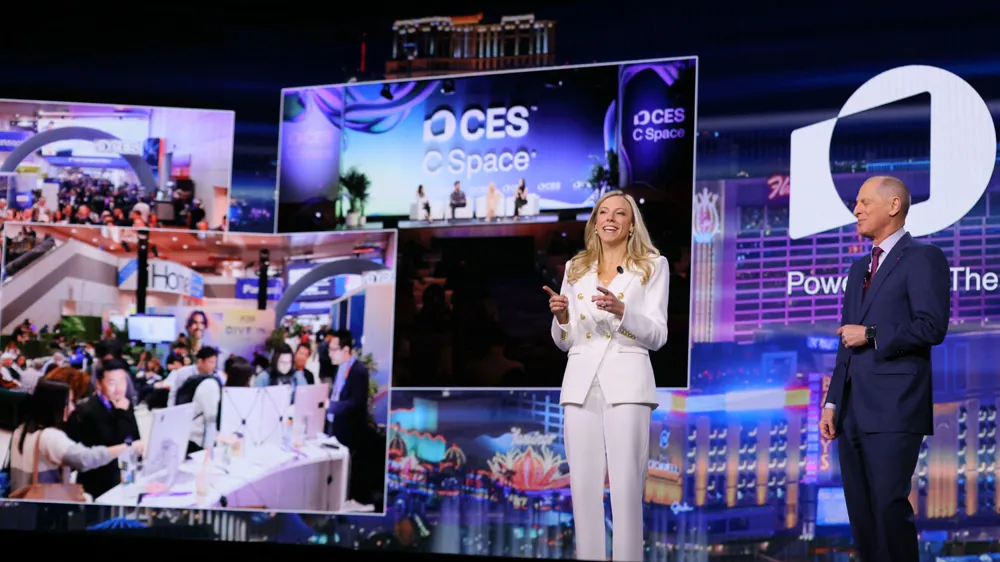
Gary Shapiro (right), CTA CEO, and Kinsey Fabrizio (left), CTA president, opened CES 2026 for more than 140,000 attendees from over 120 countries. (Source: CTA)
As is standard, Gary Shapiro, CTA CEO, kicked off the event, and this year, with Kinsey Fabrizio, CTA president, set the tone and outlined what people should expect to see during the three-day event—which included 3,500-plus companies from around the globe along with a robust schedule of educational/informational sessions. Some of the products/ideas were insanely great and gave us a vision of what we can expect to become the new norm in the years ahead, but many were simply insane.
During their opening remarks, Shapiro and Fabrizio excoriated the tools/technology trade restrictions. Instead, governments should focus on setting goals and guide rails, and allow innovators and consumers what survives/thrives and what doesn’t.
We’ll quickly cover the key subjects and focus most of the Insider on the discussions, solutions, and products that will affect the content creation, production, and distribution industry.
The constant theme was AI. It was so prevalent that everything was/is AI to the point when nothing is AI. One industry analyst explained it best when he said it’s the same old software maturation story. Whoever does the best job of deploying the software and how people—real people—do something with it will set the future reality.
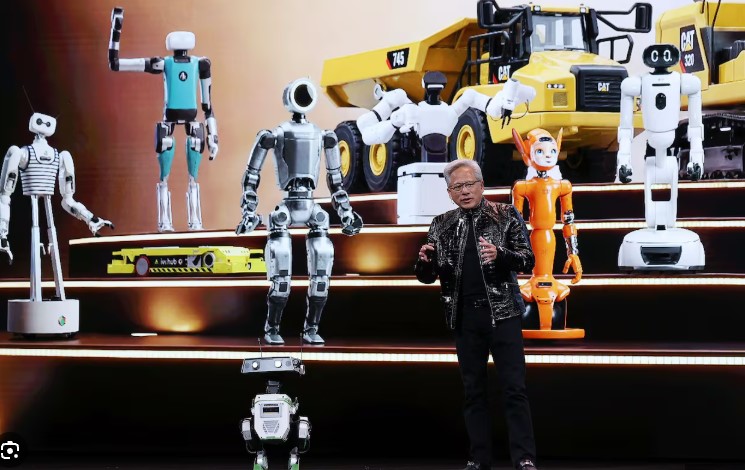
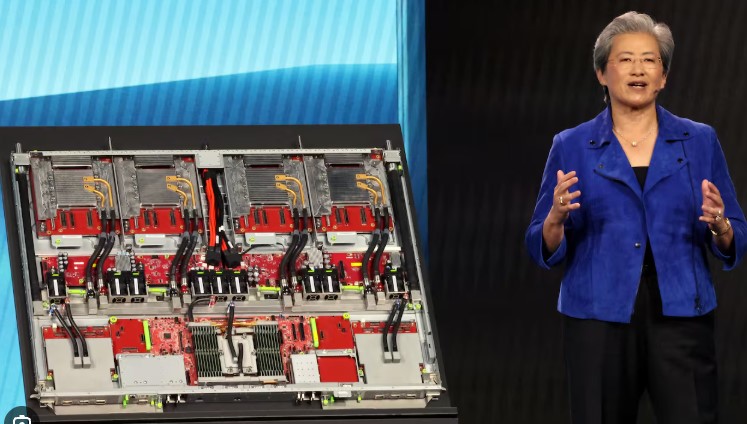
AI World – Jensen Huang, Nvidia CEO (top) and Lisa Su, AMD CEO (bottom) set the stage for AI everywhere during their separate keynote presentations, with Huang highlighting autonomous and robotic AI, while Su focused on applications that would affect/assist people on a daily basis. (Source: CTA)
Nvidia’s CEO, Jensen Huang, and AMD’s CEO, Lisa Su, leaders of the foundational products that make AI possible, explained their company’s vision and direction of AI moving forward. In his trademark black leather biker/trucker jacket, Huang received an almost messianic reception, as almost everyone attending the show was eager/hungry to learn what AI would really be and how it would influence/affect the world of tomorrow.
He announced that Nvidia’s Vera Rubin technology, which will power new supercomputers and AI data centers and are being built around the globe, is in full production, and that Alpamayo, a set of open-source reasoning model technology, will be part of tomorrow’s physical AI technology that will power/influence tomorrow’s products and applications.
Whether it’s robots, autonomous cars, cameras, or content production workflow, Huang noted it will be able to perceive, understand, reason, and perform complex actions independently.
Huang and global business/government customers expect the Vera Rubin—designed to maintain the company’s leadership in the AI industry (90% of the world market)—to be the foundation of cloud, AI data center, and tech firms’ infrastructure. Even with Vera Rubin priced at an estimated price of $30,000 per chip and in combination with the firm’s extensive library of open-source applications and building blocks, Huang expects the technology to advance to accelerate the development/deployment of AI everywhere.
AMD’s Su presented a more pragmatic view of delivering future AI solutions, as the company worked with firms in the healthcare, space, science, agentic and physical AI, gaming, and PC industry.
“Technology feels different today because AI is different,” Su said, “and AI can be/will be everywhere for everyone as AI has grown from a million to more than a billion users in just a few years, and we are already delivering solutions that are helping firms train, run, scale, and use advanced AI workloads.”
During her presentation, Su showcased real-world solutions that are in place today including AI-accelerated scientific research, healthcare diagnostics, embedded AI PCs, and autonomous systems that were being shown on the trade show’s floor during CES.
And if you’re going to make a statement at the show, you can’t do much better than holding your keynote speech at the Sphere, the unparalleled immersive entertainment center.
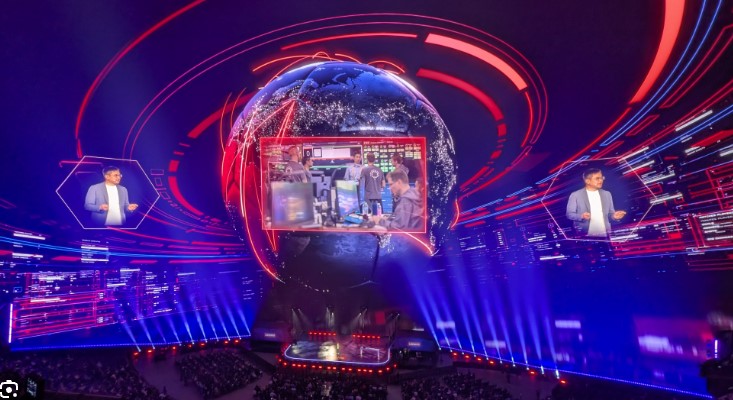
More, More – Lenovo took us a little by surprise with its presentation in the Sphere. It was a fantastic unveiling venue for the company and gave a clear picture that the company had product-line depth and breadth. (Source: LinkedIn)
We admit, we were “a little” surprised when Lenovo said they were going take over the Shere for their keynote, but then we thought, the company was one that produced a “pretty good” notebook computer, the ThinkPad they had acquired from IBM years ago.
Yes, they introduced two new ThinkPads—the ThinkPad Xl Aura and Plus Gen 7 Auto Twist—which were very impressive and made us think we just might go back to using their on-the-go computing solutions again. More important, they showed an impressive array of hybrid AI including AI smartphones, agentic-native wearables, next-generation enterprise AI infrastructure, personal AI super agents, and highlighted the collaboration they are carrying out with the entertainment and sports industries.
The new and present solutions, available to creatives, can perceptively and proactively help creative and production folks increase their project workflow and productivity.
It really was a powerful way for Lenovo to show the attendees and media folks they were delivering smarter AI for all.
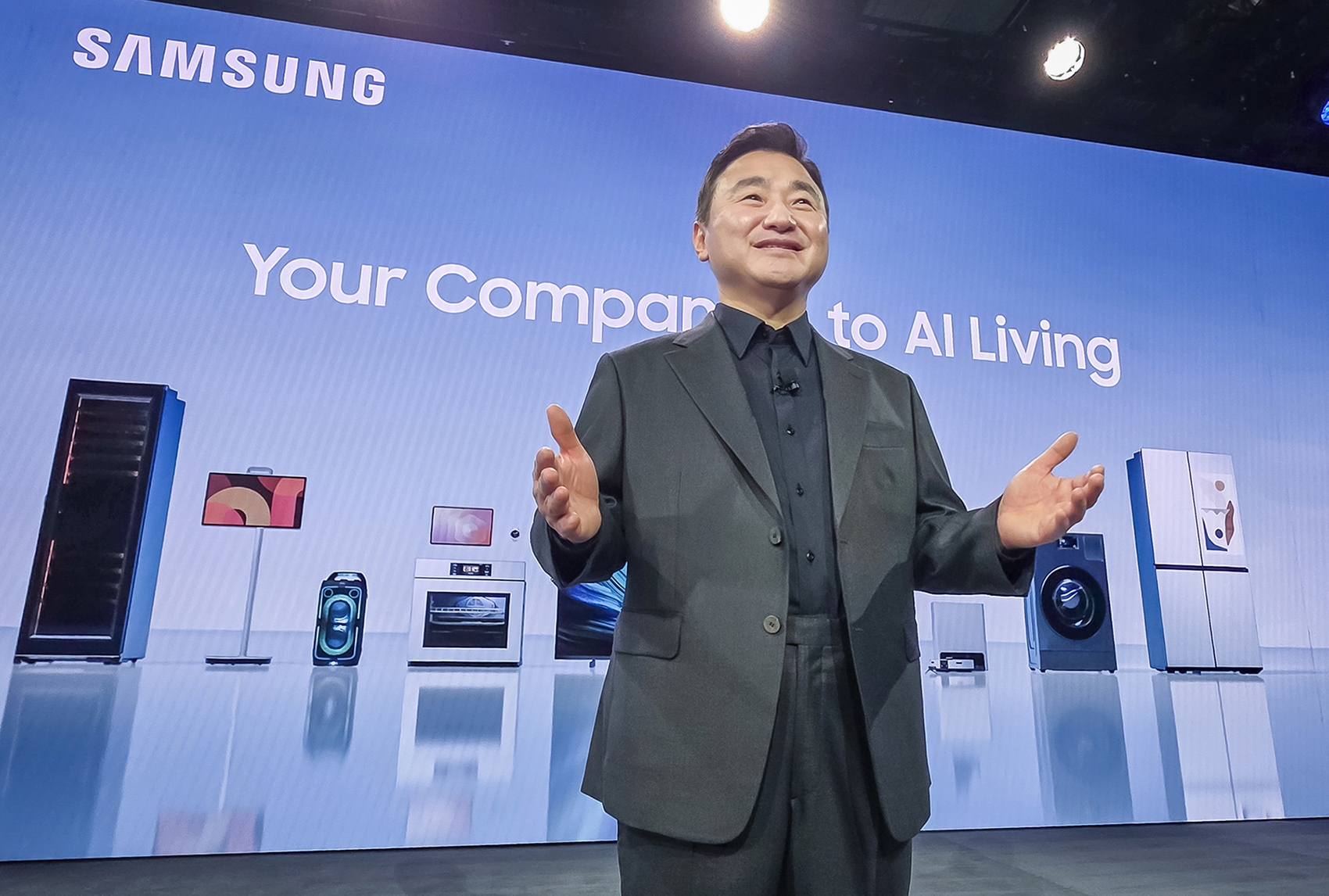
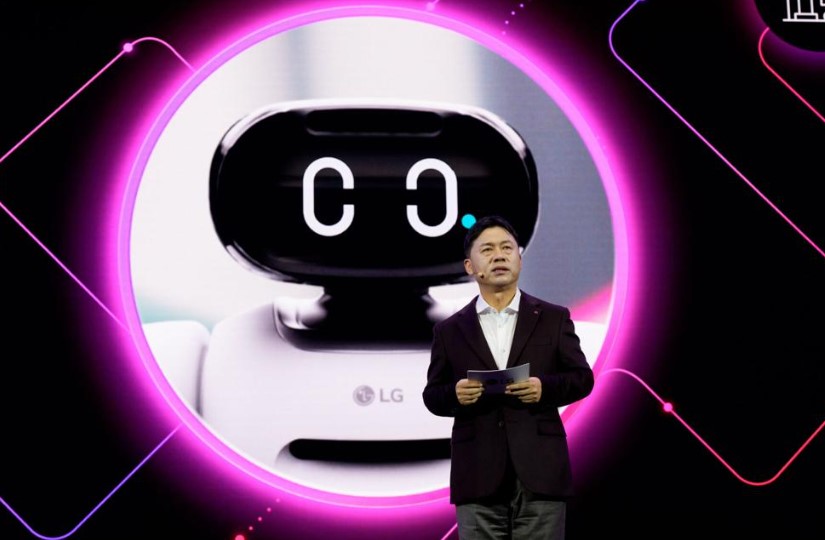
Smart at Home – Samsung’s TM Rho, CEO of Samsung’s DX Division (top) and LG’s CEO Jae-Cheol Lyu (bottom), took the stage at different times during the early part of CES to spell out their company’s vision of tomorrow’s home and highlight key products they were unveiling at the show. (Source: CTA)
Since 1976, however, CES has been an event where consumer electronics folks like Samsung and LG lay out their strategies and product offerings for the coming year, and newer, bigger, better home entertainment is always an eye-catcher.
This year, screens highlighted new micro RGB display technology that delivered stunning picture quality, no matter how large the screen, and dramatically improved integrated audio.
Samsung’s “Companions for AI Living” included an impressive array of TVs that also include an added feature of one-click ACR that makes it easier to find entertainment you want—while tracking all of your customer data. No, they’re not alone, all of the screen manufacturers do it because all that consumer data has become a major profit center for smart home appliance producers. Of course, you can opt-out if you jump through a lot of hoops, but one click approval is a lot easier.
But beyond beautiful home entertainment screens, Samsung also showed off an impressive lineup of tablets, 3D gaming screens, speakers, trifold smartphones, smart home appliances, and gadgets that would make your home safe, secure, and easy to live in.
LG highlighted their answer to their ultra-personalized AI smart home lineup that included a home robot that would fold laundry, a refrigerator you could talk to, and all of those connected AI devices that supposedly make life easier, safer, more comfortable, and… more human.
All the personal and home product manufacturers’ AI-enabled products/devices need is a continuing flow of household/individual data. Beyond that little sticking point, we admit we still like knobs we can turn and buttons we can push. In addition, we still play CDs in our office, and at home, we use a regular old-fashioned hand-crank can opener and push-to-burn toaster.
But our focus at this year’s CES was to learn more about how AI is changing the content creation, production, delivery, and consumption industry.
There was an extensive set of sessions and discussions on how AI technology, tools, and products are changing the entertainment industry.
The overriding theme was it’s here, creeping into every segment of the industry, and how can folks who make their living developing and spinning video stories harness and use it appropriately to improve and enhance their video stories. At the extreme, there was Anthony Wood, founder/CEO of Roku, who predicted that within a few years, the first hit movie will be released that had been created entirely by AI to lower the cost of content production. However, we don’t think that cost will ever replace the human touch in terms of creative ideas, as people want to experience personalized empathy and connection when they put their seats in seats in front of the screen.
Folks want the human touch that data—even all the data in the world—simply can’t create, deliver.
Industry leaders like Adobe had a more measured view of AI being another in a long line of collaborative creative tools creatives use, like their advanced Firefly models and tools that enable film/show production people to develop better, more exciting visual stories more efficiently, effectively, even with shrinking budgets (time/money).
Allison Blais, Adobe’s VP of Digital Media Business Operations, emphasized that the company has integrated their products with more than 25 third-party providers such as Runway and 11 labs to enable creators to use specialized tools in their workflow to produce effects and scenes that previously required days/weeks to achieve.
A growing concern from our perspective is the fact that while AI has significantly helped senior creatives develop quality content better and more quickly, it has minimized the need for beginners in the industry who have historically done all of the time-consuming, tedious work that is required to deliver high-quality video stories.
Hannah Elsakr, Adobe’s VP of Generative AI New Business Ventures, suggested that the future crews were cutting their teeth in the emerging creator market.
“The Internet-native influencers/creatives are using the AI-enabled tools to develop short to medium-length video stories to quickly learn what storylines resonate and which fail,” she said, adding that they are learning by trial and error which ideas click with an audience and which resoundingly flop.
It gave us a whole new perspective on the creators and where our next generation of producers, directors, production, and post professionals will come from and the tricks of the trade they will have learned along the way, she added.
Some (a lot) will fall by the wayside because viewers are very particular about what they like/dislike. However, enough will persevere and grow to become film/show producers/creators.
As Brad Haugen, EVP of digital strategy at Lionsgate, added, these digital entrepreneurs aren’t just creating/producing Internet stuff but actually represent the next generation of TV showrunners, filmmakers, shooters, and production professionals who will deliver tomorrow’s movies and shows.
The school of hard knocks is a tough teacher, but usually those who survive never forget it’s all about the audience and their entertainment.
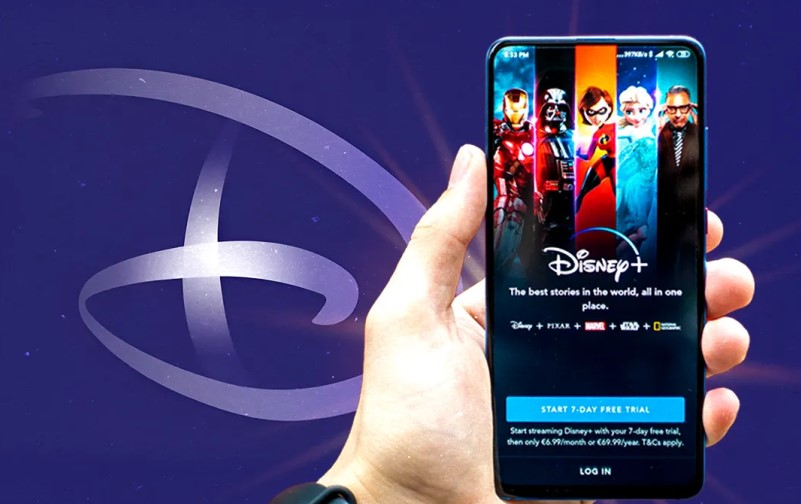
(Source: Disney)
At CES, Disney and Netflix both spelled out how they were taking a page from the creators’ handbook and launching shorts and micro dramas to attract the Gen Z/Alpha audience. Relying heavily on AI, the two were going to develop a continuing series of short-form videos based around their sports, news, and entertainment content to appeal to the mobile-first generations.
In addition to all the “good news” at CES, Samsung took the opportunity to confirm one of the negatives of the negative effects of the global rush of AI and large high-capacity data center build-out—a shortage of storage and inevitable price increase. While Samsung officials played up the impact in the semiconductor high-speed, high-bandwidth flash-based memory storage, a senior executive from IDC told us the data-processing-hungry industry is going to have a negative effect on all storage as manufacturers shift production mid-market storage to higher-margin high-speed, high-capacity storage devices.
“And you’re not going to see availability or prices ease up for several years,” he added.
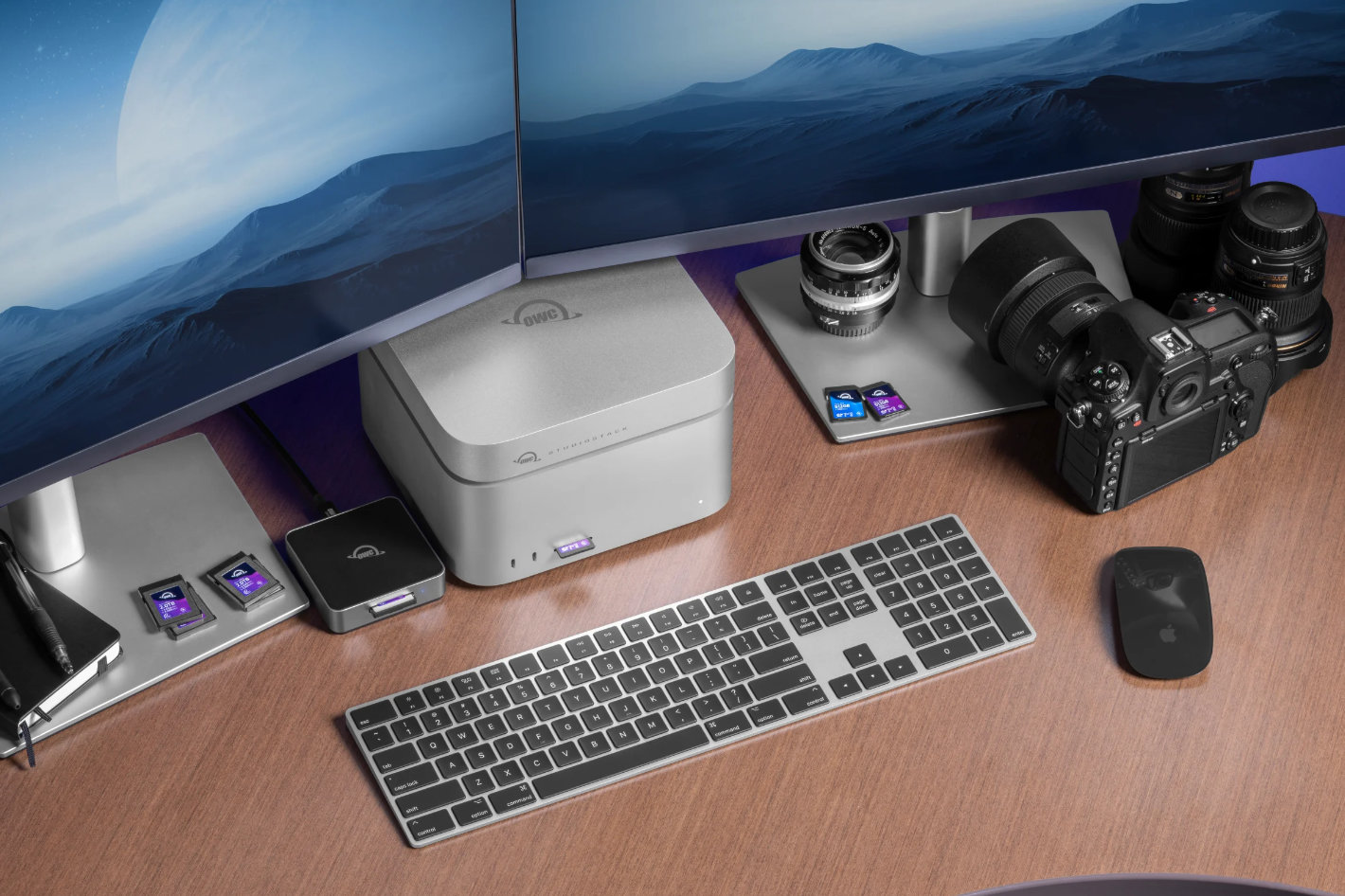
Speed, Reliability, Economy – While businesses and governments around the world are building out major AI data centers, they are focusing on huge volumes of data and storage. OWC introduced a series of new video production work group solutions designed to economically speed workflow and keep project files safe/secure. (Source: OWC)
Storage gave us yet another reason to spend some quality time with Larry O’Connor, founder and CEO of OWC, at the show.
“Video production has historically been local,” O’Connor said, “but over time, creators had shifted to cloud storage services because it was relatively easy to manage and reasonably reliable for collaborative work.
“But peer-to-peer creative production doesn’t really fit in today’s processor/storage intensive AI work processing now that content professionals can access, share, work on, and review centrally stored video files anywhere in the world quickly, reliably, safely, and economically,” he emphasized.
O’Connor noted that he has seen a steady return to on-premises video production because of improved workflow performance, predictable costs, and enhanced control/security of today’s expensive to replace/recover film and show content.
“AI is based on a continuous flow of large volumes of data,” O’Connor emphasized, “and if some data is lost/misfiled, the algorithms will add/substitute new data. That’s not possible when you’re working on a film/show project. You always need the original, backup, and backup of the backup data to quickly and economically meet critical project deadlines. Today’s production teams survive and thrive by underpromising and overdelivering.”
For creatives, AI is a production tool, and at the end of the day, you want to know that production is safe, secure, and… available.
For us, CES is still about meeting the consumer’s expectations. Next year, we’ll see who’s back.
LIKE WHAT YOU’RE READING? INTRODUCE US TO YOUR FRIENDS AND COLLEAGUES.