
Axelera AI has revealed details of Titania, its third-generation AI accelerator architecture, designed to bring high-performance inference into conventional data centers without requiring expensive liquid-cooled infrastructure. The chiplet-based design combines digital in-memory computing, RISC-V processing, and LPDDR6 memory, targeting large AI models and enterprise deployments. It represents a significant expansion for a company previously focused on edge and enterprise AI, and an opportunity to challenge GPU-based infrastructure on cost and energy efficiency.

(Source: Axelera)
Eindhoven, Netherlands-based Axelera AI has unveiled Titania, a chiplet-based AI accelerator architecture aimed at high-performance computing (HPC) and large-scale AI inference. The company claims its technology will deliver data center-class performance within the power and cooling constraints of conventional enterprise infrastructure.
The announcement, made ahead of SC26 in Chicago, represents a significant step beyond Axelera’s established markets in embedded, edge, and enterprise AI. Titania is designed for large language models (LLMs), mixture-of-experts (MoE) architectures, and other demanding inference workloads, with particular emphasis on memory capacity, latency, and energy efficiency.
Axelera has been looking to enter the HPC segment for some time. The company originally explored doing so through an acquisition before deciding to develop the technology itself. Titania is the result, building on the digital in-memory computing architecture already used in its existing products.
From edge AI to the data center
As JPR has previously reported, Axelera’s original focus was on comparatively low-power AI acceleration, particularly computer vision and inference at the edge.
Its first-generation Metis processor delivers up to 214 TOPS of INT8 performance with typical application power of approximately 4–8 W. Offered in M.2, PCIe, and compute-board formats, Metis targets applications including industrial inspection, video analytics, robotics, and embedded AI systems.
The second-generation Europa architecture, commercially launched in September 2026, expanded that proposition into more demanding edge and enterprise server applications. Europa delivers a claimed 629 TOPS at INT8 within a 45 W power envelope, doubling the number of AI processing cores and adding 16 RISC-V vector processing units for pre- and post-processing. Multiple chips can be combined on PCIe cards for higher performance.
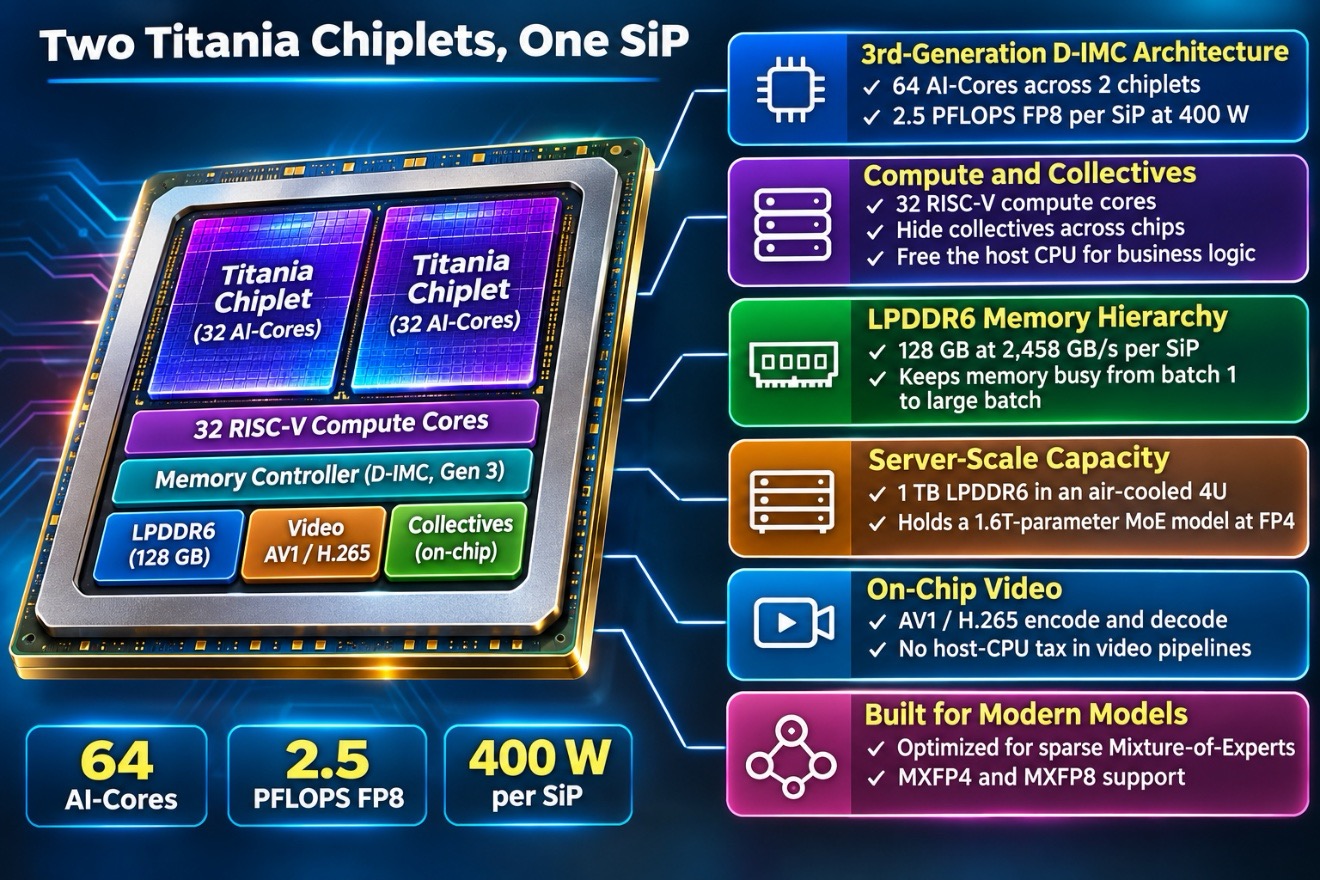
Figure 1. Titania integrates dual AI chiplets, LPDDR6, and RISC-V control.
Europa also expanded Axelera’s capabilities beyond computer vision into larger generative AI and multimodal workloads. However, these products remained primarily focused on the lower and middle tiers of AI infrastructure, rather than the largest data center deployments.
The new architecture builds on Axelera’s digital in-memory computing (D-IMC) technology, adding floating-point processing, greater programmability, and a scalable chiplet design. Each system-in-package (SiP) combines two Titania chiplets, providing 64 AI processing cores and programmable RISC-V compute.
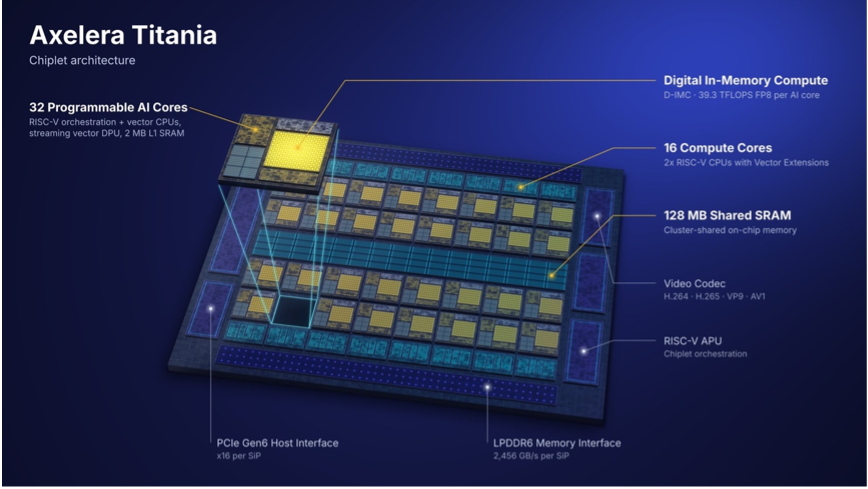
Figure 2. Axelera’s new Titania. (Source: Axelera)
A single package is designed to deliver 2.5 PFLOPS of FP8 compute within a 400 W power envelope, supported by 128 GB of LPDDR6 memory and approximately 2.46 TB/s of memory bandwidth.
The architecture supports FP8, FP4, and other low-precision floating-point formats used in modern generative AI workloads.
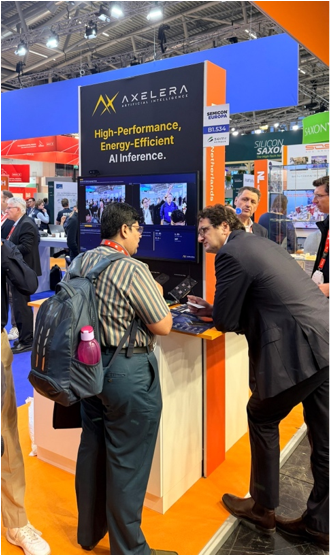
Figure 3. Axelera at Semicon 2026, Munich. (Source: JPR)
Taking a different approach to AI infrastructure
Axelera’s principal argument is that large-scale AI inference does not necessarily require the power consumption, infrastructure costs, and memory architecture associated with the most powerful GPU systems.
Instead of using high-bandwidth memory (HBM), Titania employs LPDDR6, combining relatively high memory capacity with lower power consumption and potentially lower cost.
The company argues that large, sparse MoE models often place greater demands on memory capacity and efficient data movement than raw processing throughput. By combining its D-IMC architecture with LPDDR6 and a high-bandwidth scale-up network, Axelera aims to keep processing elements productive without depending on HBM.
Its proposed AX8 reference server will integrate eight Titania packages in a conventional 4U air-cooled chassis, delivering:

According to Axelera, a single AX8 server will accommodate a 1.6 trillion-parameter model at FP4 precision, with additional memory available for KV caching. The company says five such systems could be accommodated within a conventional 30 kW air-cooled rack.
Axelera projects up to seven times greater throughput per watt and up to a twentyfold improvement in total cost of ownership compared with high-end data center servers. Titania will be offered as PCIe accelerator cards and OCP-compliant modules, with OEM and ODM partners developing complete systems. Both air- and liquid-cooled configurations are planned.
The architecture also extends Axelera’s Voyager SDK and AxeleraScript software environment, supporting existing models alongside capabilities including tensor and expert parallelism, speculative decoding, and KV-cache off-loading. This software continuity is intended to allow customers using existing Axelera hardware to move to Titania without rewriting applications.
Axelera says it has more than $300 million in confirmed commitments associated with Titania. Production is scheduled to begin in the third quarter of 2027, with customer deployments extending into early 2028.The development has benefited from European investment, including up to €61.6 million (US $67.7 million) in funding through the EuroHPC Joint Undertaking’s DARE initiative. Axelera also raised more than $250 million in February 2026, bringing its total funding to approximately $450 million.
What do we think?
Titania is an ambitious move for Axelera, but not an unexpected one. The company has spent several years demonstrating that digital in-memory computing can deliver competitive AI inference performance at relatively low power. The question has always been whether that architecture could scale beyond the edge. The decision to develop an HPC-class accelerator internally, rather than acquire its way into the market, suggests Axelera believes its existing architecture provides a sufficiently strong foundation.
There is an important distinction, however. Titania is primarily an accelerator for large-scale AI inference rather than a general-purpose HPC processor. Its strength will need to be demonstrated on modern AI models, not necessarily the scientific and simulation workloads traditionally associated with HPC.
What interests us most is the growing challenge to the assumption that high-performance AI must mean HBM-equipped GPUs and increasingly power-hungry infrastructure. Much of the AI accelerator market has been dominated by comparisons of peak TOPS or FLOPS. But inference performance increasingly depends on how effectively a system manages memory, moves data, and serves multiple users.
This is particularly important for MoE models, long contexts, and agentic AI applications, where memory requirements can be substantial even when only a fraction of a model’s parameters are active for any particular operation.
Axelera is not alone in pursuing this opportunity. Other European companies, including Semidynamics, are also developing memory-centric AI inference architectures that seek to make greater use of relatively inexpensive LPDDR rather than depending exclusively on HBM. The approaches differ, but the underlying argument is similar: Maximizing theoretical compute performance is not necessarily the most efficient route to delivering useful tokens.
That does not mean HBM has become unnecessary. Its bandwidth advantages remain substantial, particularly for workloads requiring high levels of concurrency and sustained compute utilization. Axelera will have to demonstrate that its architecture can overcome the bandwidth limitations of LPDDR across a sufficiently broad range of real applications.
Axelera’s expansion complements the efforts of companies such as SiPearl and Semidynamics to establish competitive European alternatives in high-performance computing and AI infrastructure. Its participation alongside SiPearl in the Æther AI gigafactory initiative already points toward potential deployment opportunities. For Axelera, the immediate challenge is delivering on its considerable ambitions. Titania puts it in a substantially more demanding market.
LIKE WHAT YOU’RE READING? DON’T KEEP IT A SECRET, TELL YOUR FRIENDS AND FAMILY, AND PEOPLE YOU MEET IN COFFEE SHOPS.