
While wandering CES, visitors stumbled on a towering 8-foot Intel Core Ultra 3 model built from 42,000 LEGO tiles and glowing with more than 600 LEDs. Khoi Nguyen led the project and teamed up with Zach Hill, a lifelong LEGO fan and former Intel intern. Hill designed the massive 3D model, then spent weeks assembling it, even moving it to his garage when it hit the ceiling. Nguyen wired the electronics, and Michael Larsen created software that lit the LEDs based on real CPU, GPU, and NPU activity. The team saw it as a playful celebration of how small building blocks create big ideas.
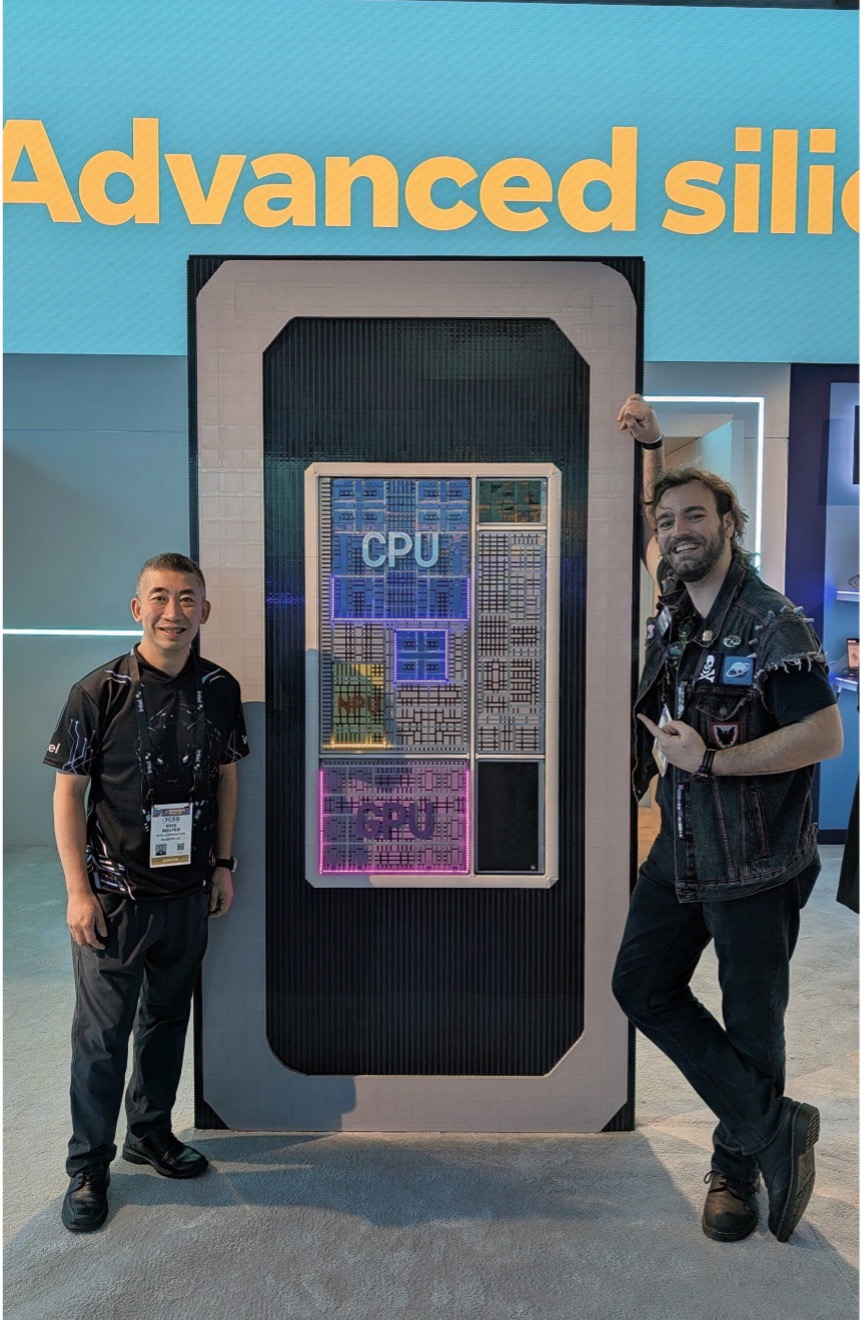
Khoi Nguyen (left) and Zach Hill (right), with the fully-assembled 42,000-piece CPU model. (Source: Intel Corporation)
If you were roaming around the halls of CES, and not too burnt-out, you might have noticed a giant Intel Core Ultra 3 floor plan built with 42,000 LEGO tiles backlit with over 600 LEDs.
“This CPU brick building model has LED lights that light up its CPU, NPU, and GPU tiles based on Windows Task Manager,” explained Khoi Nguyen, mastermind of the unique installation.
(Source: Intel)
Nguyen recruited Zach Hill, a former Intel intern and member of Intel’s Graphics Technical Marketing team who is a longtime LEGO enthusiast.
This is not Hill’s first Intel-centric build.
In 2023, Hill designed a 600-piece Intel Arc A750 GPU. PC Gamer called it “a seriously impressive piece of engineering; it even includes moving parts,” with “spinning fans made from steering wheels, with fifteen LEGO meat cleaver pieces clipped onto each of them.”
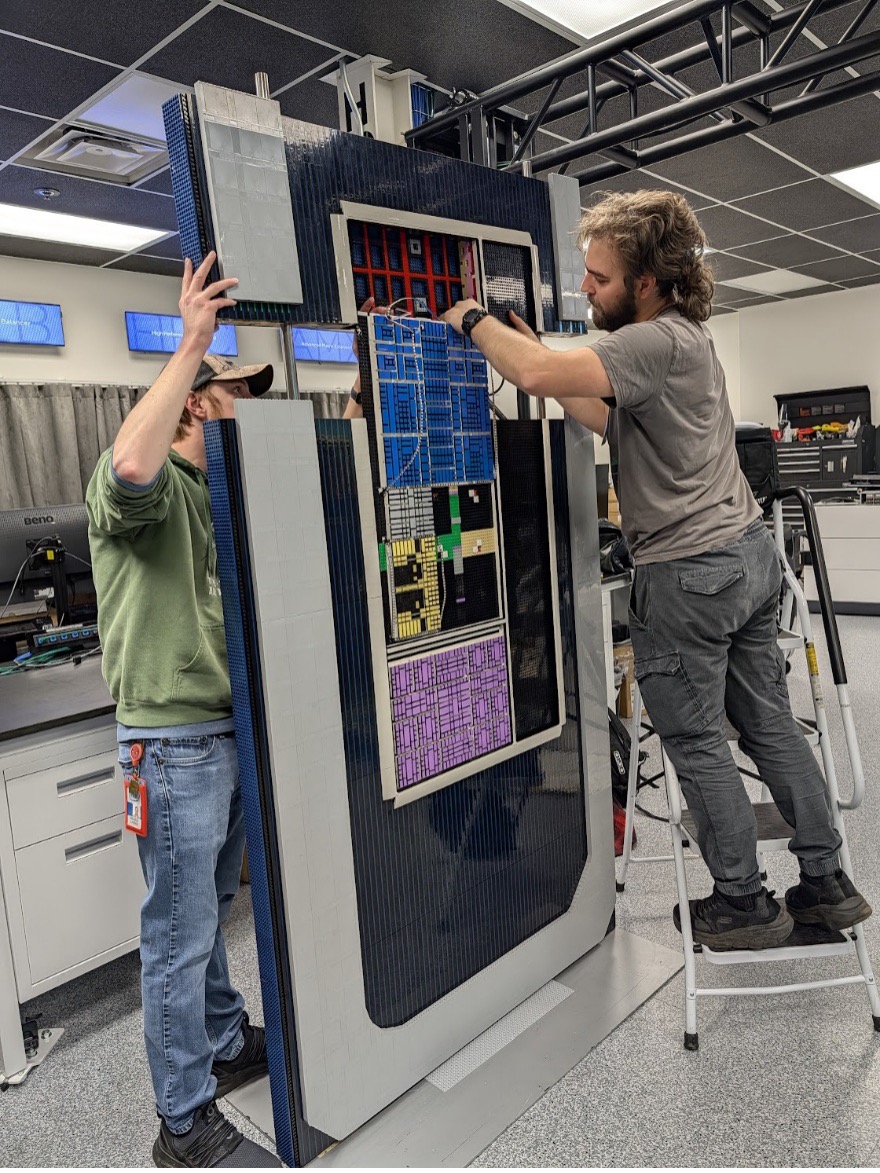
Nguyen and Hill brainstormed the model, and Hill used LEGO Group’s BrickLink Studio software to create the 3D model. Now, while dreaming up the concept is one feat, putting the literal pieces together—all 42,000 of them—was quite another.
It took Hill weeks to build the set. At first, it sprawled across the floor in his house, then had to be moved to his garage because it was hitting the ceiling. (The entire model measures about 8 feet tall and 4 feet wide.)

(Source: Intel)
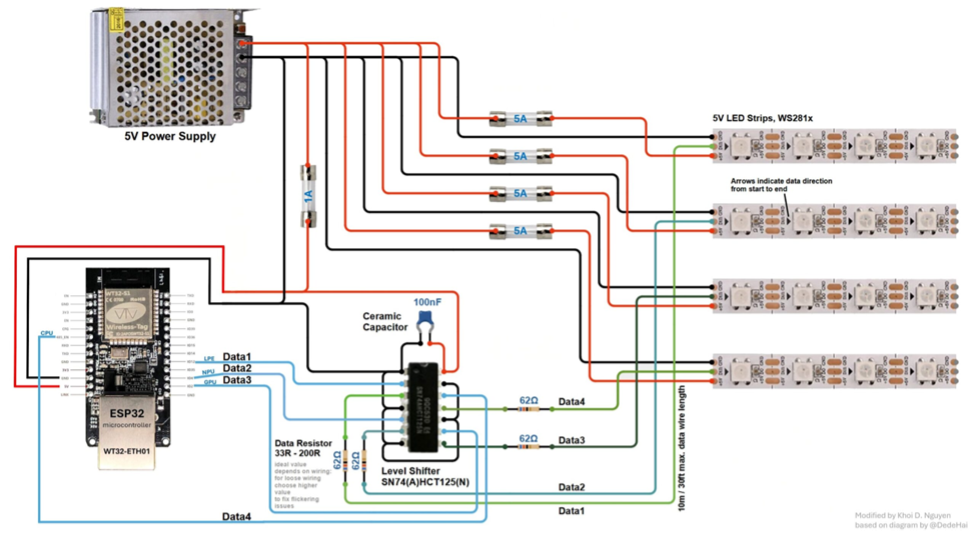
“For the last 10 days, I have been up until 3 am every night, integrating the model with the electronics for the LEDs. We had to modify and make changes to the building bricks to make space for everything. It’s exhausting but also very rewarding to see it coming together,” said Nguyen, who also designed the power harness and data-line level shifter circuitry so all 600-plus LEDs would work correctly.
And teammate Michael Larsen wrote the software that triggers the LEDs to light up in the correct sequence.
“Larsen figured out a way to easily get the NPU utilization represented by using Intel OpenVINO to run the AI model to analyze Windows Task Manager, and pull out the corresponding percentage of utilization, then send the signals to the LEDs on the model,” Nguyen explained.
Hill explains how his lifelong love of LEGO began with an early fascination with the building blocks of the universe, and how LEGO bricks—like transistors in modern computers—reflect the expandable, modular nature of atomic and molecular structures.
“Just as LEGO pieces or silicon are meaningless on their own, they come alive when thoughtfully arranged by humans who turn simple components into something powerful, expressive, and unique,” said Hill.
“I’m particularly excited to support the launch of Intel Core Ultra CPUs with this giant LEGO build, as it represents the versatility shared by Intel CPUs and LEGO pieces—technological advancements which enable work, play, and interpersonal connection.”
If you’d like to build your own, the plans can be seen in the graphic below.
(Source: Intel)
LIKE IT? THINK YOUR FRIENDS AND ASSOCIATES MIGHT? PLEASE SEND IT TO THEM WITH OUR BEST WISHES.