
Moore Threads and Mu Xi, two Chinese GPU companies, filed IPO prospectuses for Shanghai’s Science and Technology Innovation Board on June 30. Both target AI computing markets, led by former executives from Nvidia and AMD. Despite three-year losses totaling 4.99 billion yuan (Moore Threads) and 3.06 billion yuan (Mu Xi), they benefit from US export restrictions, creating domestic demand. IDC predicts over half of China’s AI computing will use domestic suppliers by year-end, though recent relaxed restrictions on AMD/Nvidia shipments may challenge their market positioning.
On June 30, two GPU chip design companies in mainland China, Moore Threads and Mu Xi, submitted IPO prospectuses for listing on the Science and Technology Innovation Board (A-share) of the Shanghai Stock Exchange. This step responds to the rising demand for GPUs and AI chips in the market and aims to address the supply gap caused by restrictions impacting Nvidia’s products.
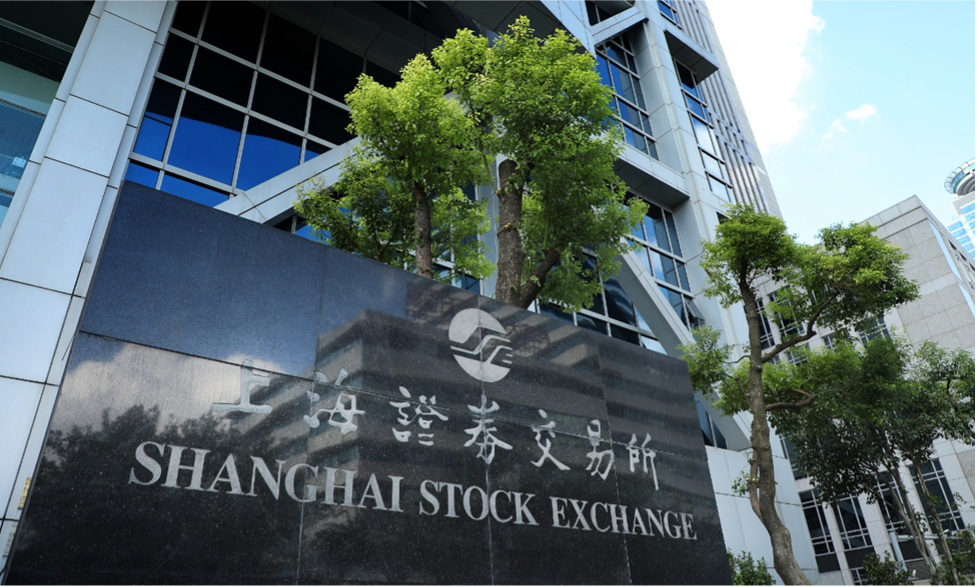
Shanghai Stock Exchange. (Source: CFP)
Moore Threads develops consumer graphics GPUs and AI-focused so-called GPGPUs. Its primary AI GPU models are the S4000 and S5000, while the S80 and S70 target the consumer graphics market. Mu Xi focuses on AI computing-related GPGPUs, mainly for AI model inference and training, with core products including the Xiyun C500 and the Xisi N100 inference GPU.
Both companies employ teams with backgrounds from Nvidia, AMD, and Huawei HiSilicon. Zhang Jianzhong, founder and CEO of Moore Threads, previously served as global vice president and general manager of Nvidia China. Chen Weiliang, founder of Mu Xi, led multi-generation GPU design and product lines at AMD.
China’s GPU makers operate under the shadow of global giants like Nvidia and AMD, facing high R&D costs and long development cycles. According to their prospectuses, Moore Threads incurred losses of 4.99 billion yuan (about US $684 million) over the past three years, while Mu Xi reported losses of 3.06 billion yuan (about US $420 million) during the same period.
Industry analysts note that the growth of large-scale AI models is driving domestic demand for GPUs and AI chips. Meanwhile, export bans on Nvidia’s A100/H100, A800/H800, and the H20 high-end GPUs have created a market opportunity for Chinese products. IDC predicts that by the end of this year, more than half of China’s AI computing power will rely on domestic suppliers.
Reuters reported that Moore Threads was added to the US entity list in October 2023, blocking collaboration with overseas foundries like TSMC. Mu Xi, however, still depends on imported technologies for several key components.
He Hui, research director at Omdia Semiconductor, observed that Moore Threads and Mu Xi are viewed as leading domestic GPU firms, and their ability to succeed in the capital market will shape their future R&D efforts.
Both companies highlight US sanctions as a significant risk factor but also consider them a potential advantage. Moore Threads states that export controls are accelerating the move toward domestic alternatives. Mu Xi notes that geopolitical pressures are encouraging Chinese customers to adopt local GPU solutions, strengthening domestic partnerships and supply chains.
What do we think?
Now that AMD and Nvidia are allowed to ship GPUs to China again, will future Chinese GPU companies be thwarted in their IPO bids?
WHAT DO YOU THINK? LIKE THIS STORY? TELL YOUR FRIENDS, TELL US.