
Europe’s accelerated computing build-out is expanding rapidly, with Nvidia announcing 35 new AI and HPC systems across 23 countries. The program is mainly a sovereign AI infrastructure story, but it also shows how quantum developers are being drawn into the GPU-accelerated computing stack. Through CUDA-Q, NVQLink, and tools such as Nvidia Ising, companies including Aegiq, Pasqal, Quandela, and Alice & Bob are connecting QPUs more closely with classical compute for calibration, control, feedback, and future error-correction workflows. The result is not useful quantum computing yet, but a more mature infrastructure layer around quantum hardware.

Nvidia at ISC HP 2026. (Source: JPR)
Nvidia used ISC 2026 to highlight the scale of Europe’s accelerated computing build-out, announcing 35 Nvidia -based AI and HPC systems across 23 countries.
The announcement primarily focuses on sovereign AI infrastructure. Europe is expanding local compute capacity for AI model development, simulation, climate science, healthcare, industrial research, and public-sector workloads. Nvidia is positioning itself as the technology supplier powering much of that capacity, with systems based on Blackwell, Hopper, Grace Hopper, Quantum InfiniBand, CUDA-X, NIM, AI Enterprise, and CUDA-Q.
Nvidia says its infrastructure is now powering more than 90% of Europe’s AI factory build-out, with 800 AI EFLOPS deployed or announced since last year. The new systems include Barcelona Supercomputing Center’s MareNostrum 5 AI upgrade, BavariaAI’s Blue Swan, Italy’s IT4LIA, HLRS’s HammerHAI in Germany, and Sweden’s Mimer AI Factory.
Nvidia says the MareNostrum 5 AI upgrade will use GB300 NVL72 and GB200 NVL4 systems connected by Quantum-X800 InfiniBand, delivering up to around 20 EFLOPS of AI training and 33 EFLOPS of AI inference. Italy’s IT4LIA AI factory is described as using more than 8,000 GPUs, delivering 82 EFLOPS of AI training and 164 EFLOPS of AI inference.
Europe’s AI infrastructure is becoming more distributed, more sovereign, and more closely tied to national and regional research priorities, but at the main EU supercomputing event, Nvidia showed how the company’s platform has expanded beyond GPU hardware into networking, software, model deployment, simulation, and hybrid computing workflows.
If the company has its way, it will be as embedded in EU quantum as it is across AI today. Nvidia highlighted several projects linking quantum processors with GPU-accelerated infrastructure. These include work with CINECA, EuroHPC, and Pasqal to integrate a neutral-atom QPU at the CINECA supercomputing center, with CUDA-Q deployed through Slurm. Nvidia also pointed to Fraunhofer FOKUS work connecting CUDA-Q with the Eclipse Qrisp quantum programming language, Qilimanjaro’s integration of CUDA-Q into its QiliSDK at Barcelona Supercomputing Center, and Jülich’s use of GH200-based Jupiter infrastructure to simulate a 50-qubit quantum computer.
Useful quantum computing will not depend only on the QPU. Quantum systems need classical compute for simulation, compilation, calibration, control, error mitigation, and, eventually, error correction. The closer that compute can sit to the QPU, the more useful it becomes to the live operation of the quantum system. Nvidia is addressing this through CUDA-Q and NVQLink. CUDA-Q is the company’s software platform for hybrid quantum-classical computing. NVQLink is intended to connect quantum processors with accelerated computing systems at low latency, allowing GPUs to support real-time control, calibration, and feedback workflows.
Nvidia doesn’t need to worry about which quantum modality wins. Superconducting, photonic, neutral-atom, and silicon spin systems use very different hardware, but all require a classical computing layer around the quantum device.
Several companies are already moving in this direction. Alice & Bob is working on superconducting cat qubits with closer GPU/QPU integration. Quandela is connecting photonic processors to accelerated workflows. Pasqal is integrating neutral-atom QPUs with accelerated computing, including CUDA-Q and Slurm-based workflows. Further afield, Diraq is linking silicon spin qubits to GPU-accelerated computing.
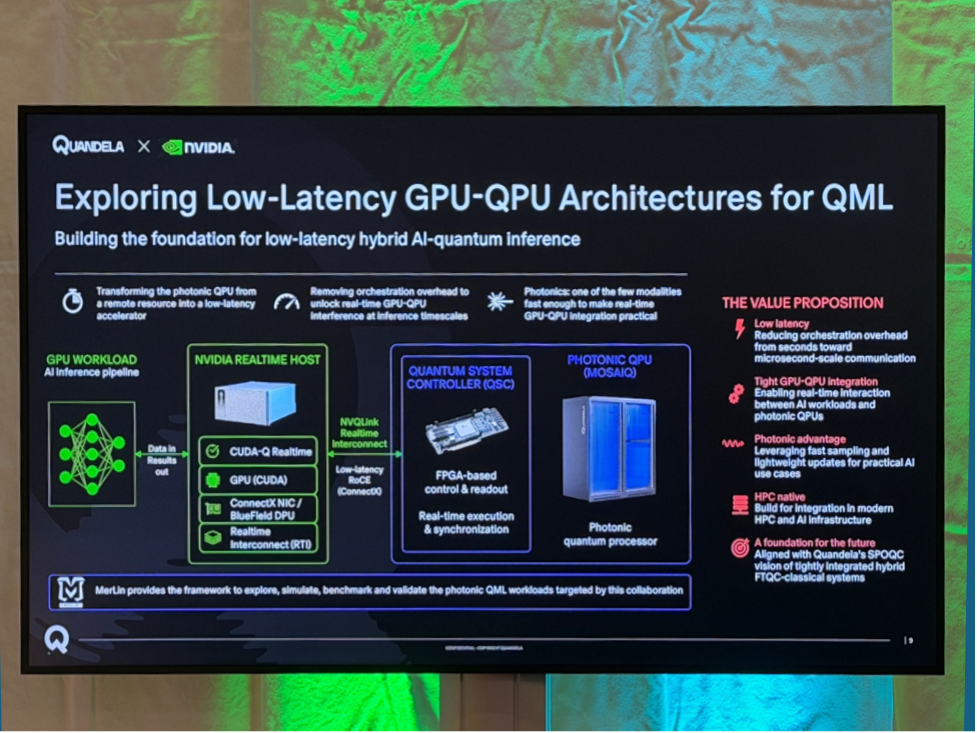
Figure 1. Quandela x Nvidia. (Source: JPR)
Aegiq is a useful example. The company is using Nvidia Ising to automate calibration of the QPU system deployed at the UK National Quantum Computing Centre. That is a practical application of AI and accelerated computing in quantum system development.
What do we think?
For all the talk about sovereign AI and gradually decoupling from Nvidia, Europe wants more local compute capacity, and Nvidia is supplying a large part of the hardware and software stack behind that build-out.
The quantum element is smaller, but it is strategically important. Nvidia does not need to back a single qubit modality. Instead, it is building the classical computing layer that many quantum systems will need around them. Nvidia’s opportunity is to make GPUs, CUDA-Q, and NVQLink part of that infrastructure.
For Europe, this could also be strategic. The region has credible quantum companies across several modalities, including Alice & Bob, Quandela, Pasqal, and Aegiq. Connecting those systems into GPU-accelerated HPC environments gives them access to the classical compute needed to move beyond isolated lab demonstrations.
WHAT DO YOU THINK? GOOD ENOUGH TO TELL YOUR FRIENDS ABOUT IT? YOU HAVE OUR PERMISSION TO SHARE IT.