
Welcome to our exclusive interview with Markus Mosen, the new CEO of Imagination Technologies. Stepping into the role earlier this year, Mosen is on a mission to steer this historic 35-year-old engineering powerhouse back to growth and secure the industry recognition it truly deserves. In this candid conversation, we explore how Imagination is navigating the shifting semiconductor landscape, balancing advanced AI integration with powerful graphics capabilities, and championing its role as a fiercely independent IP supplier.
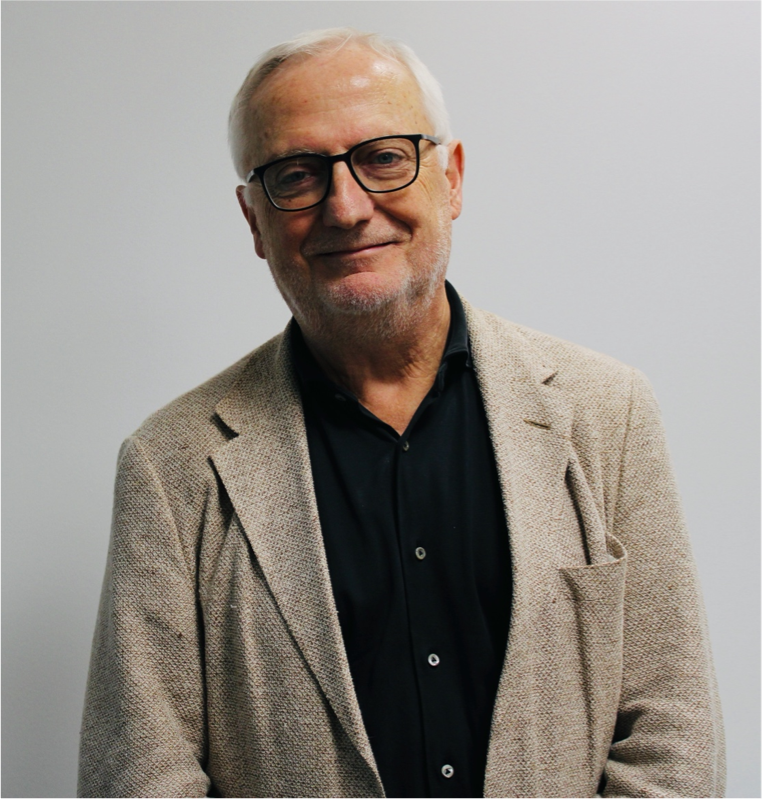
Markus Mosen, Imagination Technologies’ CEO. (Source: JPR)
First of a two-part series of interviews with Imagination Technologies.
Markus Mosen, Imagination Technologies’ eighth CEO in 10 years, has only been running the company since February. His description of the job is straightforward: restore top-line growth (a process he tells us is going well) and decide where Imagination can genuinely compete.
GPU remains central to the strategy, but AI increasingly shapes both the architecture and, critically, the software around it. The E-Series GPU is already part of that development, with F-Series expected around late 2026 or early 2027, focused on compute and automotive.
As Arm and other historic IP vendors move closer to delivering silicon platforms, Imagination sees an opportunity to reinforce its position as an independent IP supplier. We can see from the ongoing fracas between Arm and Qualcomm that it can create serious tensions when a former IP supplier decides to make silicon that can compete with its customers.
Why join Imagination?
Markus Mosen: The short answer is the challenge. I like challenges. I knew Imagination from the industry; I realized there was something to do here.
What is your vision for Imagination?
Mosen: There are two basic elements: control and manage cost, and drive the top line. To drive the top line, you need to address the right markets. There are many ways to control costs, including improving efficiency.
We’ve spent a lot of time discussing AI capabilities going into the GPU. Is AI foundational for Imagination’s future growth?
Mosen: Definitely. But I don’t think we’re currently in a position where we can say we will do only one thing. The question is how we enable the company to develop an AI architecture while retaining our graphics capabilities. A large part of that is software.
How many people does Imagination have today?
Mosen: Around 600 globally. You need to make sure those teams are as efficient as possible. So we’re investing in new tools that can give us more capacity and capability. When we talk about applications and markets, especially AI, I basically see two major markets: the US and China.
Arm somehow manages to sell UK-origin technology into a range of markets despite now being listed in the US.
Mosen: Arm is also moving towards developing chips itself. And if you’re developing chips, you also need to be close to foundries where possible. Those foundries are not here. The fact that competitors are moving towards developing ICs or chips themselves is definitely an opportunity for us. We already know there are customers who are uncomfortable with that. Once your IP supplier is also moving into chips, customers can begin to see them as a competitor.
The argument from the other side is that maybe it’s very hard IP—still fundamentally licensable, even if it increasingly looks like a chip, especially if it’s bespoke for one customer.
Mosen: Yes, but you’re still becoming a competitor to your customers. IP is not just IP. Even IDM companies develop their own IP, and they don’t necessarily want to share things with a competitor. For CPUs, you might be able to do this successfully. Moving beyond CPU may be more complicated. I wouldn’t say it could never be an option for Imagination, but as of today, I would say no.
One argument is that IP has become so complex that there’s a limit to the number of customers capable of integrating it themselves. There are companies that can absolutely do it, then there’s a whole tier of companies that are already doing something complex in their own business and may not want to take on integrating an ambitious GPU as well. How do you meet those people somewhere in the middle?
Mosen: It depends a lot on the region and on the customer. We have customers we’ve worked with for 10 or 15 years or longer. For them, moving to the next generation once it’s proven is natural. Automotive customers, for example, tend to be more conservative. Some are moving from our B-Series to D and may go directly from D to F. They have substantial experience dealing with our IP and developing their own solutions around it. For newer and younger companies, particularly some of the design companies in Asia, integration can be more challenging.
Our answer to complexity has been to deliver increasingly complex products that are, nevertheless, easier to use and easier to integrate into our customers’ SoCs. That’s an inherent advantage for our partners. They have a partner they can depend on that has been around for a long time and is willing to work with them to solve problems. For us, there’s also an inherent advantage over start-ups: We have an established customer base, established market share, and an established royalty base that can continue growing.
The inherent problem with moving to a chip or something hardened is that you lose differentiation. If there’s simply one hardened thing you can buy from Arm, how is that different from buying a chip from Nvidia or AMD? The key benefit of IP is that you can configure it, change it, integrate it, and differentiate. The moment it becomes silicon, you can’t do that anymore. In some ways, the market is moving more towards customization—custom ASICs and semi-custom ASICs.
We’ve already picked up feedback from some customers building around Arm chiplet solutions or CSS-type large CPU platforms. They make a big investment and then, a couple of weeks later, see somebody else announce something almost identical and ask, Why did I pay so much money for this?
It sounds as though focusing on IP is quite a consequential strategic decision. Are there other major strategic decisions you can talk about at this relatively early stage in your CEO tenure?
Mosen: There are things you need to do to make the company successful. The key is to focus on what you can do best. E-Series is one step. The next series, F-Series, is coming around late 2026 or early 2027 and, again, has a focus on data center and automotive. The next question is, Once we deliver that, what comes next? AI is today. Edge AI is today. We need to make sure we can deliver there as well. But don’t play around too much. It isn’t easy. It’s an uphill run, and it will take time.
Before you came to Imagination, people told you, “I didn’t know they were still around.” Meanwhile, start-ups with little track record attract enormous valuations and investment. How do you change that perception?
Mosen: The start-up story is always like that. We hear about the very successful start-ups—maybe 5% of the total. The rest disappear. You could say we’re a start-up that happens to be 35 years old. We don’t have one major advantage that a start-up has: They get a large start-up investment and a period of time in which to make something happen. But we have other things we can build on—experience, a customer base, and engineering capability. That’s what we need to focus on.
Can Imagination break through its historical revenue ceiling around $150 million or thereabouts?
Mosen: On the royalty side, the sky is the limit. We’re forecasting double-digit market-share increases in multiple markets, which will power revenue in the long term. That’s a significant change from where we were. Because of our focus on the GPU, even in the short time since I joined, we’ve been able to work more closely with partners and meet their demands.
Customers say, Can you give us more memory capability so we can run faster AI models? We’ve doubled our memory bandwidth, and we’re going to double it again next year. Customers want bigger GPUs; we’re going to provide bigger GPUs. By answering customer needs and winning more sockets, in the long term, we expect significantly more royalty revenue.
What resources and capabilities do you need to get to that next phase?
Mosen: One is software. We need to invest in software and improve our DDK (driver development kit) deliveries. We can also make significant improvements through the use of AI internally.
You mean using AI in the development process?
Mosen: Yes. We are improving those capabilities. The second area is new markets and new customers — or, more accurately, new markets even with existing customers.
There are plenty of potential customers we haven’t even touched. At the same time, some customers where we’re strong in automotive have other businesses. Semiconductor companies rarely do only automotive. So there are opportunities to go out and win more business with what we already have.
Then there’s the roadmap. To develop a roadmap, you take input from the market, customers, your own organization, R&D, and innovation teams. Then you have to formulate a roadmap out of that. At the end of the day, it has to be something you can execute and sell into the market.
What do you tell potential customers about why Imagination should be their supplier? What’s the key differentiation today that makes Imagination relevant?
Mosen: We’re one of the last companies offering this kind of licensable IP with genuine differentiation. Imagination historically had differentiation, and we still have differentiation today compared with competitors. There aren’t many companies that can offer IP which puts that customer in a position to compete with the big GPU companies. For me, that’s the major differentiation.
Automotive is relatively straightforward in one sense, but it brings requirements around security and functional safety that have to be addressed. We’re doing that. That’s one reason we still have so many customers interested in working with us on automotive solutions. And we have to grow with our customers because automotive itself is changing. Automotive isn’t only cockpit anymore.
What’s the mix today between sales in the US and China? Is there much of a European market?
Mosen: I ask myself the same thing sometimes, Is there a European market? There are certainly European semiconductor companies, and we have some European business, but not enough. Regionally, the business is largely between the US and China. It isn’t fifty-fifty. and the mix depends on application. Automotive is mainly Americas; computing is mainly China.
There are also regions where we’re clearly underrepresented. We’re going to establish more of a regional structure so we can become more engaged, for example, in Korea. There are large companies there that aren’t buying our IP yet. We want to change that.
Dependency on one customer is not good, and Imagination’s history has proven that. Of course, having one of the leading players in a segment as a customer is very valuable, but you also need broad regional presence and not neglect major markets.
What can you publicly say about customers today?
Mosen: It’s mostly confidential until a program ships. Otherwise, you end up pre-announcing the customer’s strategy. We do have strategic partners we can discuss publicly. Some customers are very clear that they don’t want public communication, so we respect that. Renesas is broadly known. Google is another example.
One focus going forward will be automotive in China because we’re not very present there today. If you take the biggest electric-vehicle manufacturer in China, BYD, they increasingly have their own solutions. In some respects, they’re also becoming a semiconductor company.
How is the plan for Imagination to be the GPU of choice for RISC-V vendors progressing? Is there volume behind that yet?
Mosen: RISC-V is an open architecture. We always knew it would take a long time to build the ecosystem, just as every other architecture took decades. It is moving slowly, but that was expected. We continue to see ourselves as the GPU of choice for RISC-V. So far, RISC-V has replaced a lot of in-house microcontroller designs and started pushing towards lower-end consumer devices. We expect it to become more relevant as time goes on and interest increases.
We’ll be working much more closely over the coming months and years with leading RISC-V players as CPU-and-GPU SoCs are developed. Even though it will take time, I believe it can become one of the leading architectures for the future. You can see the ecosystem continuing to grow and evolve, especially in China.
If I were better at this, what would I have asked you?
Mosen: The important thing to understand is that Imagination is fundamentally an engineering company. In many respects, we’re doing chip design even though the result isn’t itself manufactured as our silicon. We have those capabilities, which means we understand what customers really need and want. We need to improve software, as I said, and that will happen. We also need to continue investing in hardware capability and move with changes in the market.
My intention is to maximize the value of the company—shareholder value, but also value for the people here. Imagination has a team capable of competing and being very strong on the R&D side. We still have other areas to improve, and efficiency has to improve continuously.
As a semiconductor company, you can’t say that last year was great so next year we can relax. Technology keeps improving, and the company has to improve with it. The end game is to make Imagination sustainably growing. I think we’re on the right track.
What do we think?
Imagination has spent years being discussed through the lens of geopolitics. Mosen clearly wants the discussion moved back to products, engineering, customers, and growth, and he shared with us that Imagination is already making strong progress back to historical revenue highs.
Imagination’s position as an independent IP supplier may have become more interesting. AI is clearly important, but Mosen’s starting point is leveraging Imagination’s GPU technology into new sockets at existing customers, which is something Imagination can plausibly address quickly. The products themselves are looking good this year, and the product cadence seems to be back on track, with F-Series targeting an early ’27 launch. Let’s not forget that this architecture remains the basis of the extremely successful Apple GPU offering (albeit with increasing divergence on both sides as time goes on). If F-Series is all that Imagination is hinting it will be, it should give the company a differentiated position in both GPU and AI.
The semiconductor industry’s largest IP companies increasingly want to capture more of the value around their architectures. That makes commercial sense for them, but it creates room for Imagination to focus on enabling customers’ chips rather than eventually competing with them. Imagination cannot win merely by saying it is independent. Its technology must be competitive. But if it can combine GPU and AI capability with architectural flexibility, customer neutrality could become part of the product proposition.
A sale or listing for the company has been much mooted in recent years and is ultimately much easier to contemplate from a position of improving revenue, stronger customer engagement, and a credible roadmap, than from a company perceived to be permanently restructuring. There is finally the outline of a sensible sequence for creating value and new customer relationships in a company that has risen and fallen and risen again several times now.
WHAT DO YOU THINK? GOOD ENOUGH TO TELL YOUR FRIENDS ABOUT IT? YOU HAVE OUR PERMISSION TO SHARE IT.