
Farm robots can’t wait for a cloud server to tell them where the weeds are. Korean design house SemiFive signed a turnkey contract with Mobilint to build a robotics AI chip that does its thinking on board, with LPDDR6 memory, PCIe Gen6, and UCIe-S chiplet links. The deal lands as SemiFive ramps a 500 mm² HyperAccel inference chip on Samsung 4nm and nearly doubles its order book. Here’s what the chip does, how the deal works, and why it matters.
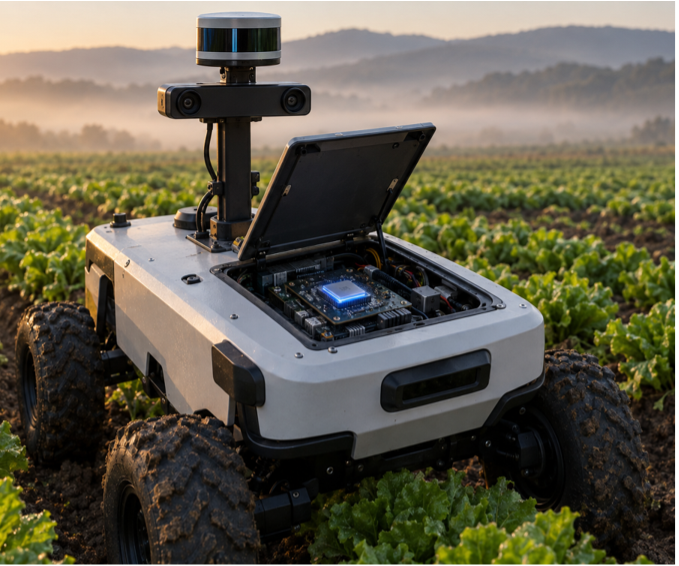
Field robots need AI chips that keep working without a network.
SemiFive signed a turnkey development contract with Mobilint, a Korean AI semiconductor company, on October 1, 2026, to design an AI chip for robots. The project runs under the K-On-Device AI Semiconductor Technology Development program, which Korea’s Ministry of Trade, Industry and Resources (MOTIR) funds and leads. The program pairs domestic chip developers with companies that use the parts, and it sets commercialization as the goal, so the silicon has to leave the lab and ship in products.
Agricultural robots come first. Those machines work outdoors, often in fields with weak or no network coverage, and they must process camera and sensor data in real time. A robot that waits on a remote server for a perception result can stall, misjudge a crop row, or stop. Mobilint and SemiFive want a chip that runs perception and planning models on the robot and keeps working when the link drops.
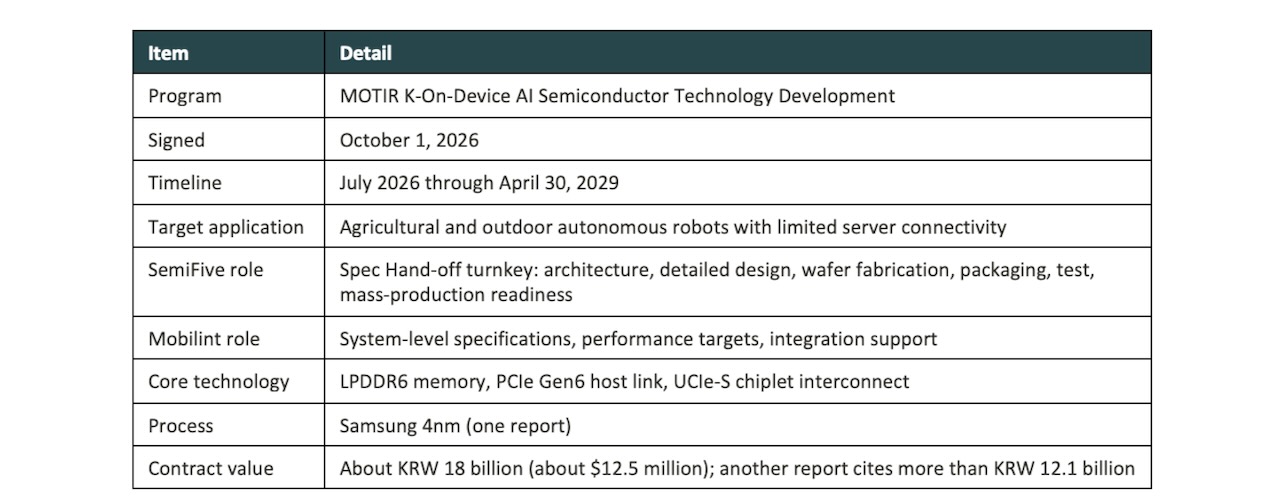
Table 1. SemiFive–Mobilint robotics AI chip contract. (Sources: SemiFive, EE Asia, industry reports)
What goes into the package
The chip combines three interface technologies. LPDDR6, the new-generation low-power DRAM standard, supplies memory bandwidth at a power level a battery-driven machine can afford. PCIe Gen6 links the AI chip to the robot’s host processor and motion controller. UCIe-S, the standard-package version of the Universal Chiplet Interconnect Express specification, connects function-specific chiplets inside one package so they behave as a single monolithic die.
That mix goes after data movement, the cost real-time control loops feel first. Every trip from compute to external memory adds latency and burns energy. A wide, low-power memory path and short die-to-die links keep weights and activations close to the compute, which lets a robot run larger models inside a fixed power and thermal budget. UCIe-S also gives the design a modular path: Mobilint can mix compute, I/O, and memory-control chiplets and scale the configuration across robot classes with no full redesign. Industry reports place wafer fabrication on Samsung Foundry’s 4nm process.
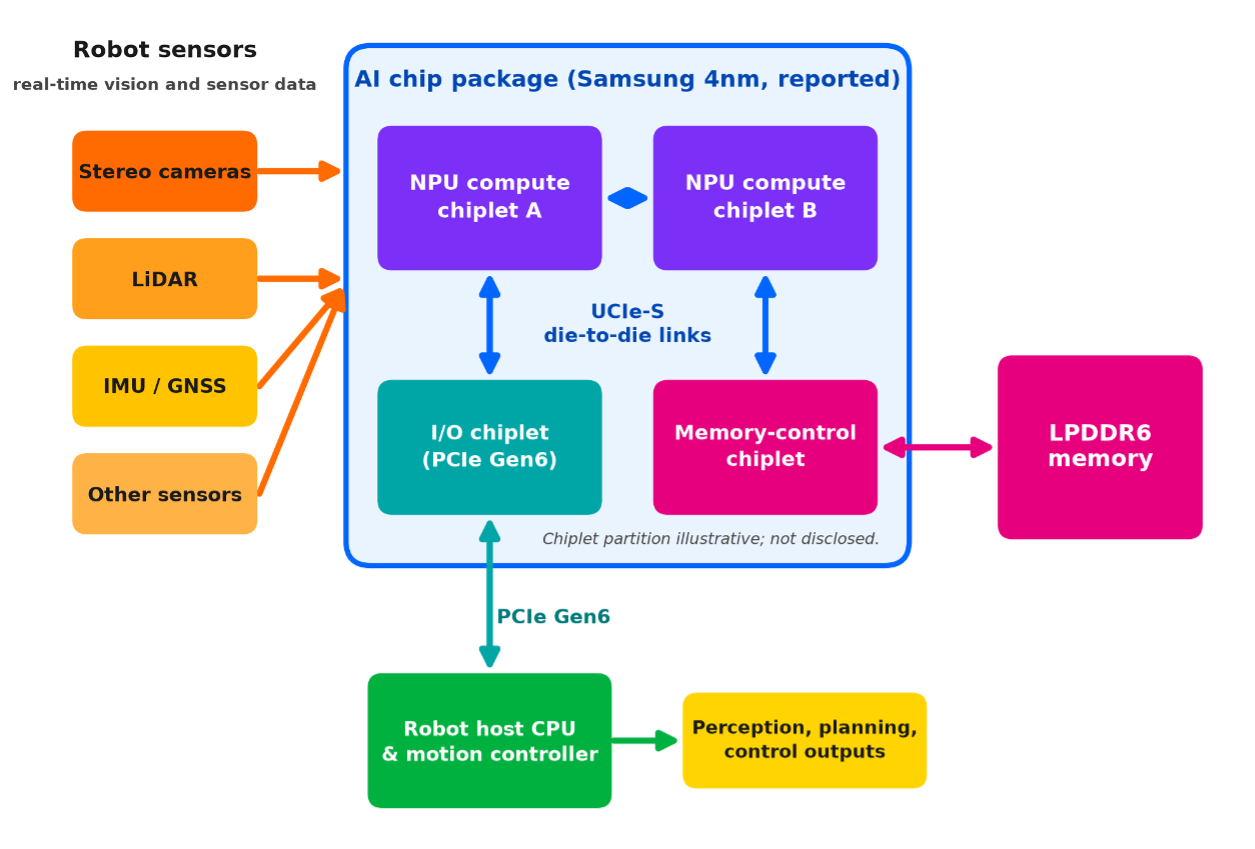
Figure 1. Mobilint robotics AI chip: Chiplets joined by UCIe-S, LPDDR6, PCIe Gen6.
The customer writes the requirements
SemiFive will run the project under its Spec Hand-off model, the entry-level engagement in its turnkey business, where work starts at the specification. In a conventional ASIC flow, the customer completes much of the design and then hands off backend work. Under Spec Hand-off, Mobilint defines performance targets and system specifications, and supplies integration support. SemiFive takes over from there: architecture definition, detailed design, verification, wafer fabrication, packaging, test, and mass-production readiness.
For a fabless NPU company, that model moves engineering effort toward models, compilers, and software, where the company sets itself apart. The two firms know each other’s flows. SemiFive supported production of Mobilint’s Aries inference SoC, so the robotics program starts with a working relationship.
“This contract marks a pivotal moment for SemiFive as we extend our proven, end-to-end ASIC capabilities from data center and edge AI into the realm of robotics AI,” said Brandon Cho, CEO and cofounder of SemiFive.
A production pipeline that keeps filling
The robotics contract adds to a design house that has started to turn design wins into volume. In September, SemiFive began mass production of a data center AI inference accelerator for HyperAccel, its first large-scale production run on Samsung Foundry’s 4nm node. The chip targets LLM inference and measures more than 500 mm². Big dies make power delivery, heat removal, and yield harder to manage, and SemiFive carried the project from frontend design and verification through packaging, test, and volume supply. SemiFive expects HyperAccel volumes to grow with follow-on purchase orders as HyperAccel expands its service.
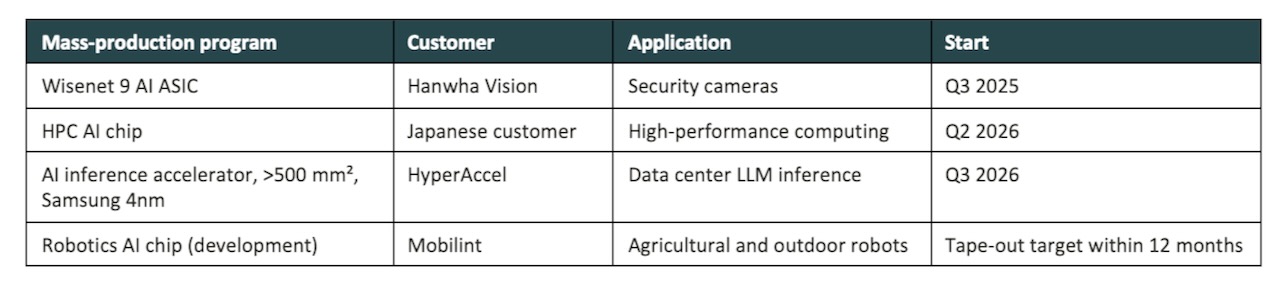
Table 2. SemiFive production pipeline. (Source: SemiFive)
Each program shifts SemiFive’s revenue from one-time NRE toward recurring production income, and the order book shows it. SemiFive booked KRW 42.3 billion in new mass-production orders in the first half of 2026, nearly double its 2025 full-year intake of KRW 21.2 billion. Quarterly orders rose 71%, from KRW 15.6 billion in Q1 to KRW 26.7 billion in Q2, and overseas customers accounted for 45% of Q2 bookings. Earlier in 2026, the company also won an FHE accelerator design from US-based Niobium, worth about KRW 10 billion.
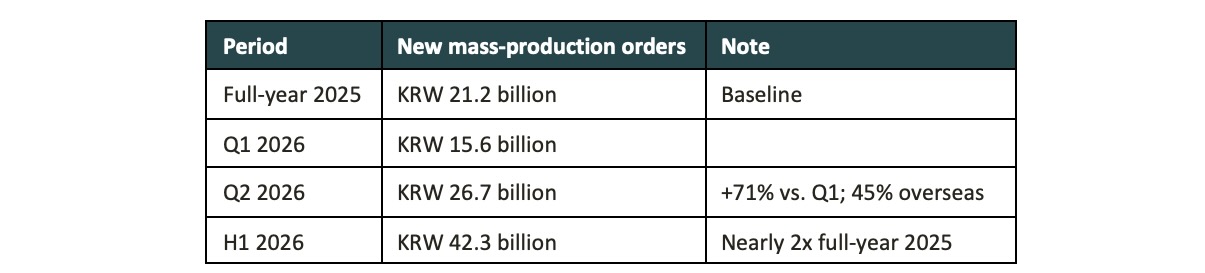
Table 3. SemiFive order intake. (Source: SemiFive)
What it means for each buyer
Silicon teams get a reference case: one turnkey house taking responsibility for LPDDR6, PCIe Gen6, and UCIe-S in a single robotics program, a demanding interface mix for an edge part. Teams that plan chiplet-based edge devices should watch how SemiFive handles UCIe-S integration and known-good-die test.
ISVs get a new deployment target. Perception, mapping, and planning software will need to fit the NPU’s memory and precision limits, and Mobilint’s compiler stack will decide how easily developers port their models.
CIOs and IT leaders who run fleets in agriculture, logistics, or field service gain a path to on-device inference that cuts dependence on connectivity and cloud fees, and keeps sensor data on the machine.
Schedule and open questions
The program runs from July 2026 to April 30, 2029. One report targets first tape-out within 12 months, followed by silicon validation and pilot deployments on partner robot platforms. Neither company has disclosed TOPS, power, or die-area targets. Reports also differ on contract value: One cites about KRW 18 billion (about $12.5 million), and another cites more than KRW 12.1 billion.
SemiFive now designs chips for data centers, security cameras, HPC systems, and robots, and three of those programs have reached volume. The Mobilint project remains a development contract. The real test comes when working silicon rides a robot down a crop row with no signal and makes its own decisions.
What do we think?
SemiFive picked a smart entry point. Robotics needs custom inference silicon, and few robot makers or NPU start-ups can staff a full backend design team. The HyperAccel ramp gives SemiFive credibility on 4nm big dies, and the order book backs it up. We want to see Mobilint’s performance and power targets, and first silicon, before we score the robotics bet.
Inflection point. And yes, in a measured way. AI compute has lived mainly in data centers and phones, and the Mobilint chip moves serious inference onto machines that work in fields with no network. When a government program, a fabless NPU company, and a turnkey design house commit LPDDR6, PCIe Gen6, and chiplets to a farm robot, physical AI moves from demos into product plans. We see an inflection point for robotics edge AI, with the deciding proof due at first working silicon.
YOU LIKE THIS KIND OF STUFF? WE HAVE LOTS MORE. TELL YOUR FRIENDS, WE LOVE MEETING NEW PEOPLE.