
MediaTek wants a larger role in AI computing, and its strategy now extends well beyond smartphones. At a recent New York presentation, the company outlined plans for custom data center accelerators, AI PCs, automotive systems, and intelligent edge devices. A $3.5 billion investment from Nvidia strengthens that effort, while MediaTek’s ASIC engineering and advanced packaging capabilities provide a foundation for expansion. The opportunity is substantial, although execution, software support, and customer adoption will determine how much of it MediaTek captures.
Any questions?
MediaTek has spent much of its history developing processors and connectivity technology for consumer electronics. Its products helped expand optical drives, digital televisions, smartphones, and connected devices. The company now wants to apply that experience to AI infrastructure, personal computing, and automotive systems.
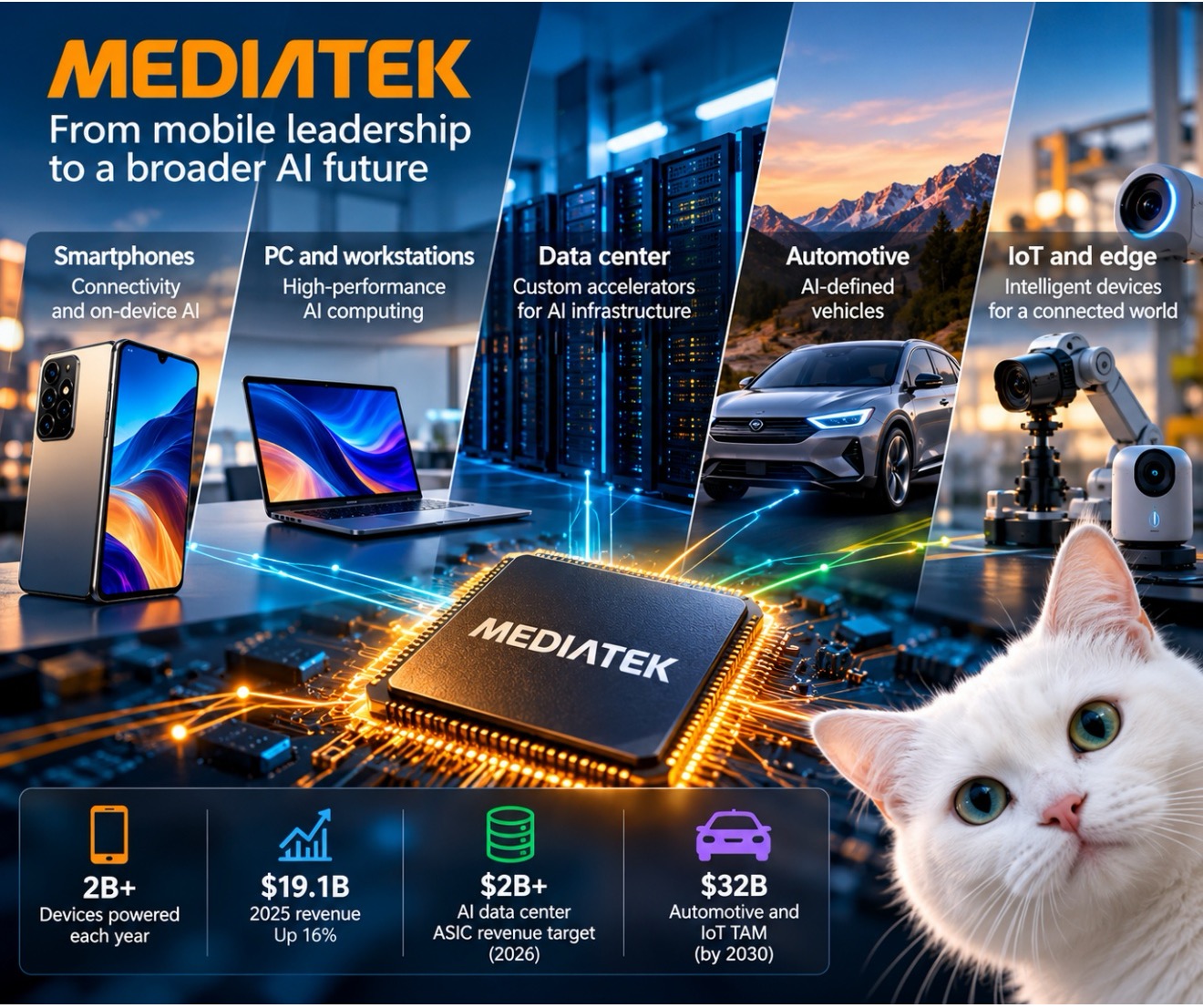
At its New York presentation, MediaTek described a business that supplies more than 2 billion devices annually and has maintained the leading share of smartphone SoC shipments since the third quarter of 2020.
The company reported $19.1 billion in 2025 revenue, representing 16% annual growth. It also cited a market capitalization exceeding $230 billion and a sevenfold increase in market value since 2022.
Those figures provide context for a company that increasingly competes for semiconductor business beyond its traditional mobile markets.
MediaTek’s strategy combines three capabilities: SoC integration, custom ASIC development, and high-performance computing. Its established consumer business provides manufacturing scale, customer relationships, and engineering resources for expansion.
The company also reported that it shipped 5.3 billion devices in 2025 through its global supply chain, a broader measure than its annual powered-device figure.
MediaTek expects data center AI accelerators to become an important source of incremental revenue.
Nvidia expands the relationship
Nvidia has invested $3.5 billion in MediaTek through overseas convertible bonds, according to the company. The companies also expanded their technical collaboration across AI infrastructure, personal computing, automotive electronics, and connected devices. Their relationship gives MediaTek access to Nvidia technologies that support several different product categories. In data centers, MediaTek plans to use NVLink Fusion to connect custom accelerators with Nvidia’s rack-scale infrastructure. In personal computing, the companies combine MediaTek’s CPU, memory, connectivity, and power management expertise with Nvidia’s graphics and AI technologies. In automotive systems, MediaTek’s Dimensity Auto platforms integrate Nvidia graphics and AI capabilities and operate alongside Nvidia Drive AGX.
The relationship creates opportunities for MediaTek to participate in systems that combine general-purpose computing, graphics, neural processing, and specialized acceleration.
It also raises an important architectural question for silicon teams: How much of the system should rely on Nvidia’s existing infrastructure, and how much should a customer customize?
The answer is easy—MediaTek is the king of custom and has been for a while.
Custom accelerators target the data center
MediaTek identified custom AI ASICs as a significant growth opportunity. The company expects approximately $2 billion or more in AI data center ASIC revenue during 2026. It also identified an estimated $80 billion AI data center silicon serviceable market in 2027 and targeted a 15%–20% share of that opportunity. That percentage represents approximately $12 billion–$16 billion in potential annual business if the market reaches the stated size and MediaTek achieves its target.
MediaTek reported that its first data center AI ASIC would enter production during the fourth quarter of 2026 for a major US hyperscaler.
The company emphasized low-power design, design-technology co-optimization, intellectual property, advanced packaging, and engineering support as reasons customers select its services.
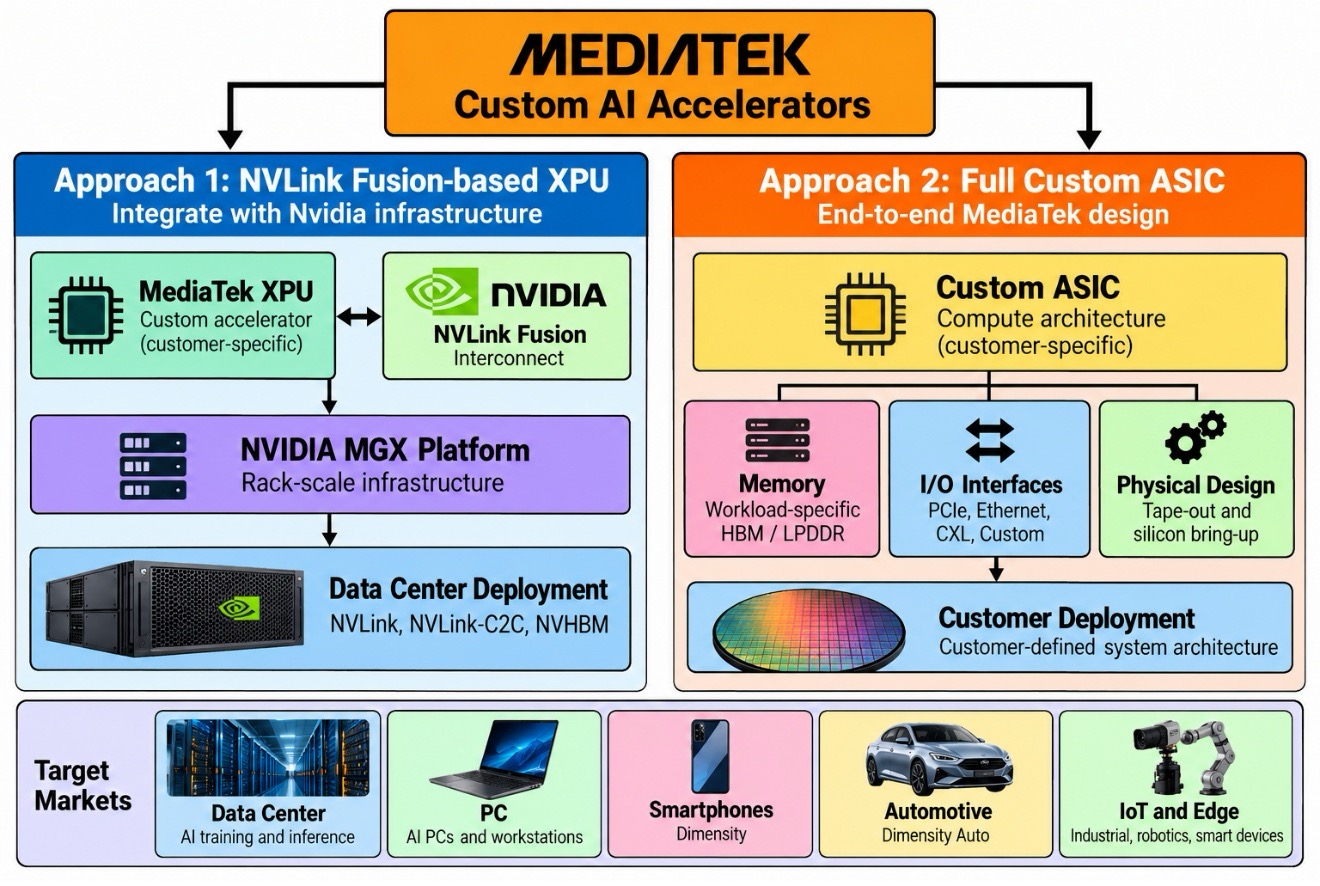
Figure 1. MediaTek offers two paths to custom AI acceleration.
Its custom accelerator strategy follows two development paths.
The first uses Nvidia NVLink Fusion, including qualified interconnect components and infrastructure interfaces. Customers can develop specialized XPUs while retaining compatibility with Nvidia rack-scale systems.
The second gives MediaTek responsibility for the complete accelerator architecture, including compute resources, memory interfaces, I/O, physical design, tape-out, and silicon bring-up.
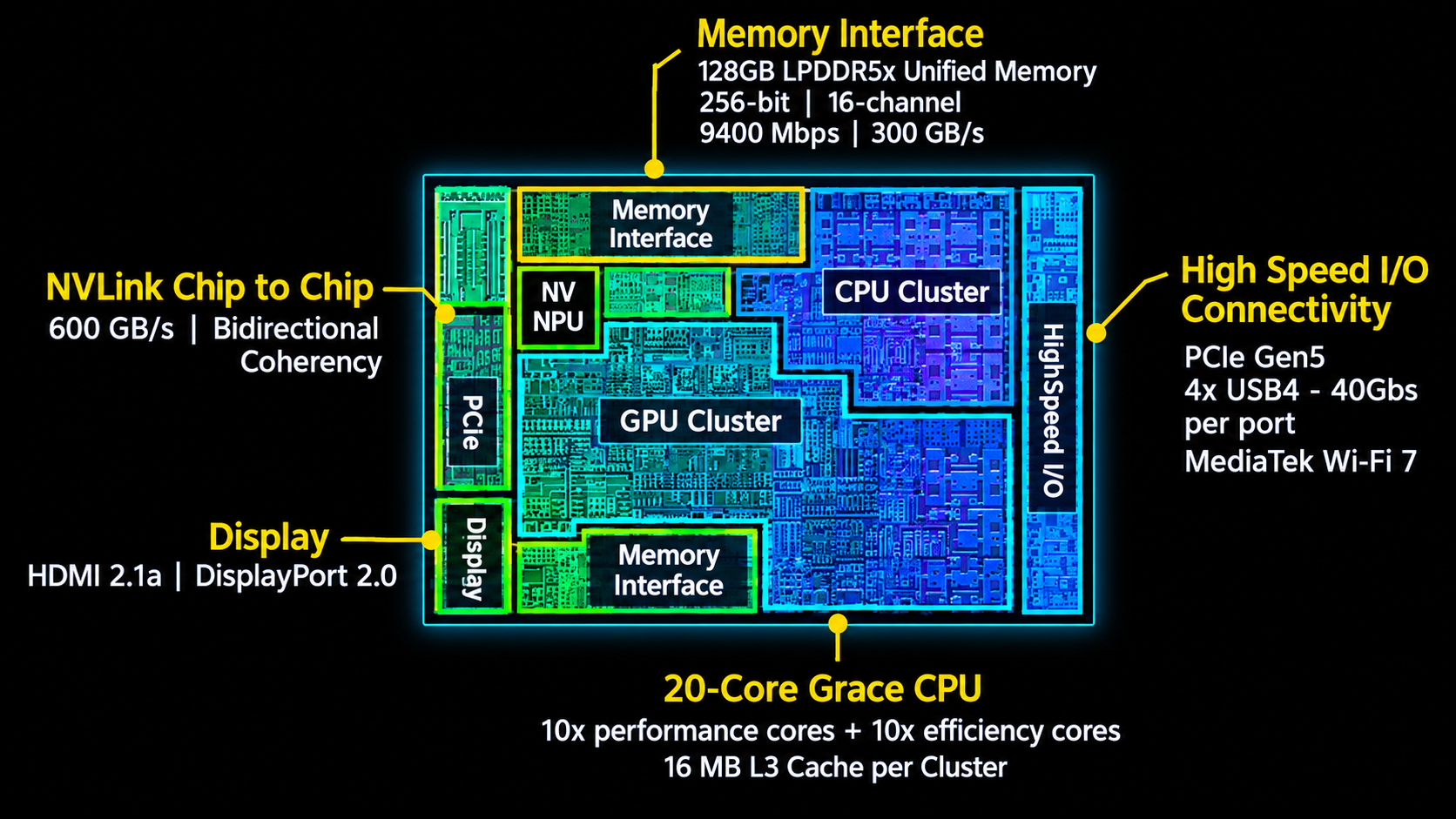
Figure 2. Custom-built CPU, I/O, and memory tile for RTX Spark. (Source: MediaTek)
A full custom design provides greater architectural control. It also requires sufficient deployment volume and workload stability to justify engineering costs.
MediaTek’s opportunity depends on winning additional hyperscaler programs and executing complex silicon designs within customer schedules.
Two approaches to custom AI silicon
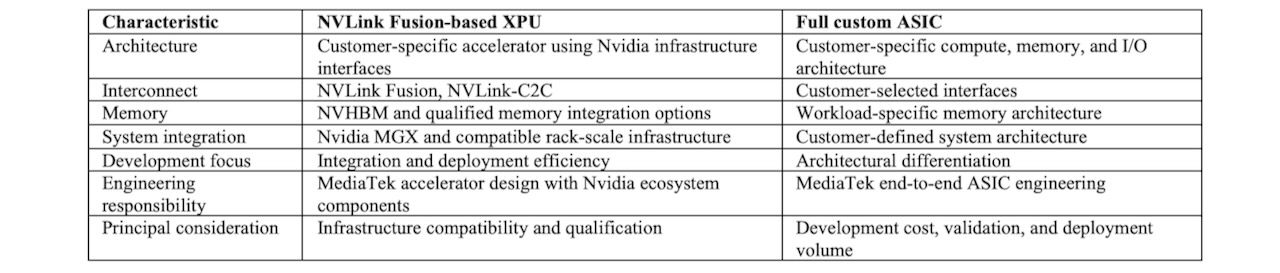
Table 1. MediaTek offers two custom accelerator development approaches for AI infrastructure, balancing system integration requirements, architectural flexibility, and engineering investment.
The two approaches allow MediaTek to address customers with different levels of architectural ambition and existing infrastructure commitments. MediaTek has demonstrated it can produce a custom, high-volume chip faster than any other company on the planet. Part of that comes from a long, unique, and well-earned special relationship with TMSC.
Personal computing becomes another growth market
MediaTek also described plans to expand its computing portfolio across Android tablets, Chromebooks, Googlebooks, Windows PCs, and AI workstations.
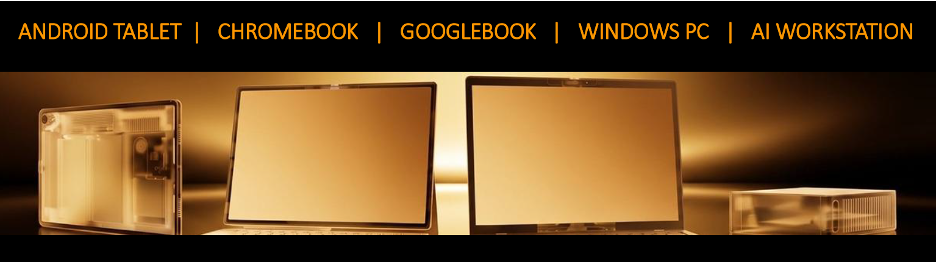
The company highlighted RTX Spark, a platform that combines MediaTek engineering with Nvidia computing technology.
MediaTek’s contribution includes CPU integration, memory controllers, connectivity, power management, and system-level optimization.
The company discussed a 20-core Grace CPU configuration with 10 performance cores and 10 efficiency cores. It also identified 128 GB of LPDDR5X unified memory, a 256-bit memory interface, and approximately 300 GB/s of memory bandwidth. NVLink chip-to-chip connectivity provides 600 GB/s of bidirectional bandwidth.
These specifications illustrate the increasing importance of memory capacity and interconnect performance in local AI computing.
Developers need sufficient memory to run large models, while ISVs require access to software frameworks, accelerators, and system resources. MediaTek and Nvidia want the platform to support developers, content creators, and gamers through CUDA, RTX graphics, DLSS, and local AI execution.
MediaTek reported that six OEMs had launched RTX Spark laptops and that compact desktop systems would follow.
The company also highlighted Nvidia DGX Spark systems for local AI development, including configurations that combine multiple devices to increase available memory and model capacity.
For CIOs, local AI systems offer another deployment option for workloads involving proprietary data, development, and inference.
Physical AI extends the opportunity
MediaTek’s Genio portfolio addresses industrial automation, robotics, drones, smart-home products, retail systems, and intelligent displays. The company estimates a $32 billion total addressable market for these applications by 2030. Its strategy combines embedded processing, wireless connectivity, and AI acceleration. MediaTek also expects opportunities in medical monitoring, automotive displays, and other specialized connected devices.
These markets place different demands on silicon. Industrial systems prioritize reliability and long operating lifetimes, while mobile and battery-powered products require careful power management. The company believes its experience integrating processing and connectivity into consumer SoCs provides a useful foundation for these applications.
Execution determines the next phase
MediaTek’s expansion requires substantial engineering investment. The company reported that R&D accounts for approximately 25% of revenue, exceeding $5 billion annually. That investment supports custom accelerators, AI PCs, automotive computing, and connectivity development.
MediaTek also expects US customers to account for more than half its revenue in 2027, reflecting the importance of hyperscaler and technology-company relationships.
Its projected revenue growth depends on the production schedules of large customers, the economics of custom silicon, and the ability to support increasingly complex platforms.
For ISVs, the important developments involve software compatibility, memory architecture, and access to AI acceleration across devices.
For CIOs, MediaTek’s expansion introduces additional options for local AI systems, embedded computing, and specialized data center infrastructure.
The company has established a broad engineering foundation. Its next challenge involves converting that foundation into recurring revenue across several computing markets.
What do we think?
MediaTek has the engineering resources, manufacturing relationships, and customer base to expand into AI infrastructure. Its collaboration with Nvidia strengthens its position in custom accelerators and personal computing. The $2 billion ASIC revenue target represents a substantial opportunity. Execution remains the determining factor. Hyperscaler design wins, software support, and production economics will establish the value of this expansion.
Inflection point. MediaTek’s expansion suggests a potential inflection point in AI semiconductor development. Hyperscalers increasingly want custom accelerators that match their workloads, memory requirements, and power budgets. Nvidia’s investment and NVLink Fusion provide MediaTek with access to an established infrastructure ecosystem. The combination could accelerate specialized silicon deployment and broaden competition in AI infrastructure. The inflection point will become measurable when custom ASIC revenue, production volumes, and customer diversification demonstrate sustained growth beyond MediaTek’s established mobile processor business.
LIKE WHAT YOU’RE READING? INTRODUCE US TO YOUR FRIENDS AND COLLEAGUES.