
Microchip Technology just completed its acquisition of Hailo, adding one of the most mature independent edge AI chip companies left standing to its embedded portfolio. The deal closed September 21, terms undisclosed, and marks the first acquisition since CEO Steve Sanghi began his second stint running the company. We walk through what Hailo actually brings, why Microchip’s own acquisition history makes this fit look questionable on paper, and what this means for the handful of independent edge AI chip start-ups still out there.

As we predicted in our AI processor information system tracker, the overcrowded population of 181 AIP companies and their 328 products is not sustainable. Start-ups have raised more than $30 billion in venture capital and grants. Fourteen filed for IPOs, 25 were acquired, and two shut down. This week, while Euclyd and Axelera reported new $100+ million investment rounds, nine-year-old Hailo was acquired by Microchip.
Microchip completed its acquisition of Hailo on September 21, adding the Israeli company’s AI accelerators, vision processors, robotics processors, and AI software to its embedded systems lineup. Neither company disclosed transaction terms, and Microchip said the deal carries no material impact on its financial results. CEO Steve Sanghi framed the move directly: Hailo “strengthens our ability to deliver complete, production-ready platforms” for intelligent systems. The acquisition marks Microchip’s first since Sanghi began his second tenure at the helm last year, and it closed roughly on schedule against the end-of-Q3 target set when the deal was first announced.
Hailo brings real maturity to the table. Founded in Tel Aviv in February 2017 by Orr Danon, Avi Baum, Hadar Zeitlin, and Rami Feig, all IDF elite technology unit alumni, the company raised $344 million total across seed and Series A, B, and C rounds, hitting unicorn status at a $1 billion valuation during its October 2021 Series C. More than 100 customers run Hailo silicon today, concentrated in industrial and automotive markets, with HP as its first publicly disclosed customer, supplying Hailo-based accelerator cards for point-of-sale systems. A developer community of more than 10,000 users has grown around the platform, with 80% working with Raspberry Pi hardware through a partnership that brought Hailo’s M.2 accelerator cards directly to the hobbyist market.

Table 1. Hailo’s product line: four generations, from 26 TOPS to generative AI.
Hailo’s core technical differentiator sits in how its NPU handles data movement: Compute and SRAM mix directly on-chip, and a compiler analyzes each AI model to assign compute and memory resources in a way that minimizes data movement specifically, the actual bottleneck in most edge inference workloads.
Microchip’s own acquisition history makes this deal harder to read as obvious synergy. The company has made roughly a dozen acquisitions over 20 years, including analog chipmaker Micrel in 2015, microcontroller maker Atmel in 2016, and Microsemi in 2018, plus two AI-specific software plays: VectorBlox, an AI software stack for FPGAs, in 2019, and Neuronix, an AI model optimization start-up, in April 2024. Microchip’s strategy runs on acquisition-driven growth more than clean technology fit, built around cross-selling across a broad embedded portfolio instead of moving up the value chain into full systems or solutions, a path several competitors have taken instead. The company’s real differentiator lies in keeping product lines running for decades to serve high-reliability markets, military, aerospace, automotive, and industrial, where a design win can stay installed in a factory or aircraft for 10 to 20 years or longer.
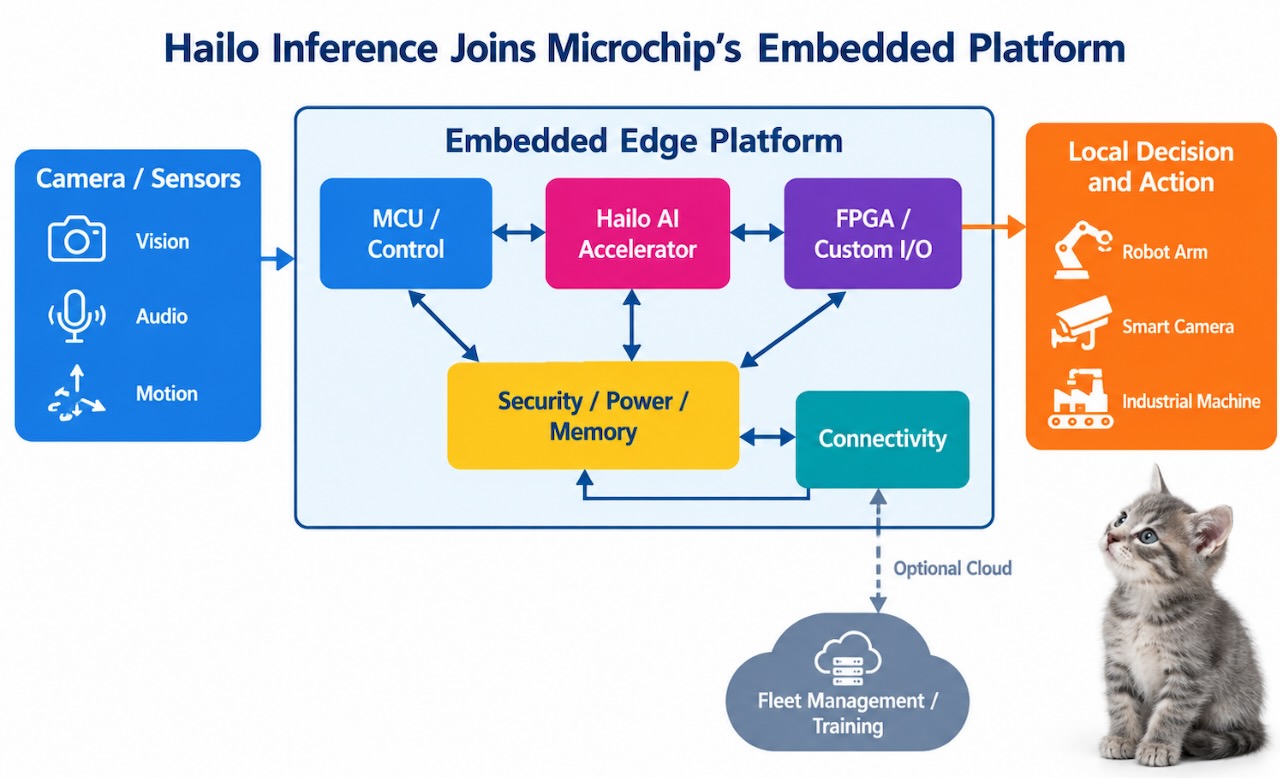
Figure 1. Hailo inference joins Microchip’s embedded control and connectivity stack.
Real synergy candidates do exist inside the portfolio. Neuronix, the model optimization team Microchip acquired in 2024, works at the upper layers of the AI stack, shrinking models in ways that stay largely hardware agnostic, since smaller models benefit any silicon underneath them, making genuine collaboration with Hailo’s software and hardware stack plausible. VectorBlox and MPLAB, Microchip’s FPGA AI software and microcontroller development environment, respectively, show no obvious immediate connection to Hailo’s technology. The more likely rationale treats Hailo as filling a genuine gap in Microchip’s own portfolio, a proven accelerator and NPU line, not a deep technical synergy play—a mature software stack with a large user base, multiple hardware generations already proven in the field, and 100 industrial and automotive customers likely already buying other Microchip parts for the same embedded systems. Microchip’s own track record suggests it keeps Hailo’s hardware lines running as separate offerings instead of folding the IP into new combined SoCs. That option stays open regardless, given Microchip’s stated interest in tighter platform integration across its broader embedded line-up.
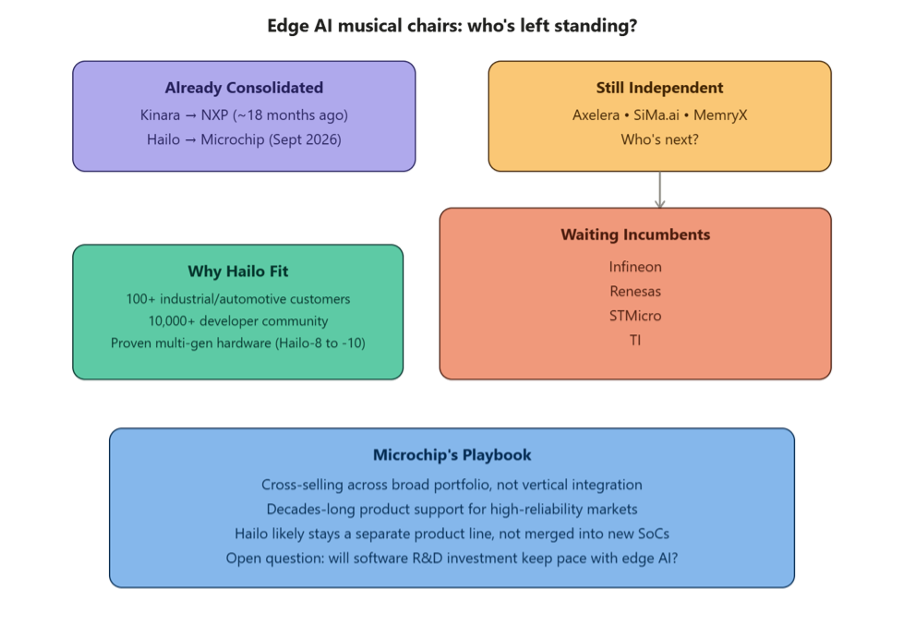
Figure 2. Kinara and Hailo are gone—three independents remain, four incumbents circling.
The acquisition lands in a sharper competitive question. NXP acquired Hailo’s competitor, Kinara, roughly 18 months earlier, and the pattern now raises a real structural issue: Can the embedded market actually support independent edge AI chip companies going forward, or will it consolidate into a musical-chairs situation, with remaining independents like Axelera, SiMa.ai, and MemryX matched against large semiconductor incumbents, including Infineon, Renesas, STMicro, and TI? Edge AI is a genuine growth market, a sharp contrast to the long-lifecycle markets Microchip typically serves, and AI technology itself advances faster than any other corner of embedded tech. Hailo needs continued, substantial investment in hardware and, especially, software to keep pace, and whether Microchip actually funds that level of ongoing engineering and R&D remains an open question.
Microchip separately licensed neuromorphic IP from its Silicon Storage Technology subsidiary to AnalogAI on September 15, six days before the Hailo deal closed, putting analog compute-in-memory technology into a company building on-device training for environment-adapting robots, drones, and vehicles. The licensed IP, called memBrain SAGE, delivers analog compute-in-memory performance at or below 1 W, built on SST’s silicon-proven SuperFlash memory technology and already deployed in 40nm and 28nm foundry processes, with a 22nm version on the roadmap. AnalogAI’s own pitch centers on hardware that trains and runs inference simultaneously in real-world environments, a genuinely different technical approach from Hailo’s inference-focused accelerators. That timing shows Microchip pursuing edge AI on two fronts simultaneously, acquiring digital NPU capability through Hailo and licensing out its own analog compute-in-memory IP elsewhere at the same time.
What do we think?
Microchip fills an important gap in its embedded portfolio by acquiring Hailo, which has raised over $340 million since its inception in 2017. The deal adds proven edge AI processors, vision technology, software, customers, and an established developer base. The critical issue now shifts to execution. Microchip needs to maintain Hailo’s silicon and software development pace while connecting the technology with its MCU, FPGA, connectivity, security, and embedded systems portfolio. Watch whether Microchip actually funds Hailo’s software roadmap at the pace edge AI demands, since that investment level, not the acquisition itself, determines whether this becomes a genuine platform or a shelved product line.
Inflection point. Microchip, founded in 1989 as a VC-led spinout from General Instrument, went public in 1993. Microchip’s Hailo acquisition signals an inflection point in edge AI as specialized accelerator companies increasingly move inside broadline semiconductor suppliers. The Kinara and Hailo deals suggest that customers want more than stand-alone inference silicon. They need processors, software, security, connectivity, long product lifecycles, and support under a common platform. Consolidation also gives specialized AI architectures access to established distribution and industrial customers. The next test comes from execution: Microchip must maintain Hailo’s silicon and software roadmap, while integrating its technology without slowing the development pace that made Hailo competitive.
If Axelera, SiMa.ai, and MemryX face the same fate, independent edge AI silicon effectively disappears as a category, folding entirely into broadline semiconductor companies pursuing cross-selling strategies, instead of remaining a venture-backed growth market with room for multiple stand-alone winners.
WHAT DO YOU THINK? GOOD ENOUGH TO TELL YOUR FRIENDS ABOUT IT? YOU HAVE OUR PERMISSION TO SHARE IT.