
nPower Software has introduced Power Surfacing Viz 1.0, a stand-alone application that converts CAD models into rendered images, technical illustrations, and animations. The software combines a geometric modeling kernel, multiple rendering engines, and AI assistance through the Model Context Protocol (MCP). Engineers can import assemblies, assign materials, develop exploded views, and distribute rendering jobs across Windows computers. The approach gives design and product communication teams another way to produce technical visuals while retaining direct control over geometry, lighting, and animation.

nPower Software, the end-user software division of IntegrityWare, introduced Power Surfacing Viz 1.0 on November 2, 2026. The Windows application combines CAD geometry processing, rendering, animation, and AI-assisted scene preparation in a stand-alone environment. It targets engineers, industrial designers, technical illustrators, and product communication teams that need to explain the construction, appearance, and operation of mechanical assemblies.
The software accepts STEP, OBJ, STL, 3MF, glTF, and Blender data. Users can import engineering models, assign materials, establish lighting, position cameras, and create still images or animations. The application provides geometry operations, including sectioning, micro-filleting, and face modification, that support technical presentation.
nPower built Viz around Solids#, IntegrityWare’s geometric modeling kernel written in C#. The kernel supports analytic geometry and subdivision surfaces (SubDs), giving the application a foundation for working with mechanical models and freeform shapes. This architecture allows Viz to perform geometry operations within its visualization workflow.
Geometry processing and technical illustration
CAD models frequently contain geometric details that complicate visualization. Sharp edges can disappear under certain lighting conditions, curved surfaces can reveal tessellation artifacts, and dense assemblies can obscure internal components.
Viz addresses these issues through a multithreaded tessellation engine and view-dependent geometry processing. The engine adjusts the representation of curved surfaces for rendering and supports smooth-edge presentation. Micro-filleting creates subtle highlights along edges while preserving the underlying CAD geometry.
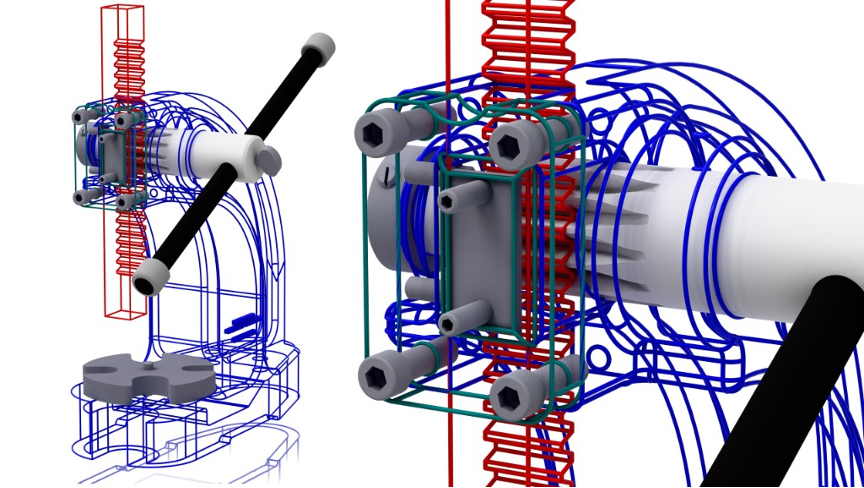
Figure 1. Customized curve and vertex rendering highlights edges. (Source: nPower)
Engineers can generate section views, assign contrasting colors to cut faces, and control the display of edges and vertices. The application also supports projected sketches, face splitting, and text embossing or cutting. These functions help illustrate component interfaces, internal mechanisms, and assembly relationships.
For silicon and systems engineering teams, such capabilities could support package illustrations, cooling assemblies, server chassis presentations, and mechanical integration documentation. The software’s emphasis on geometric accuracy gives technical teams control over the presentation of complex hardware.
AI assistance through MCP
The software’s AI interface uses an MCP Bridge to communicate with compatible AI agents, including ChatGPT, Codex, Claude, Cursor, and Grok.
Users can issue natural-language commands to prepare scenes, assign materials, position cameras, create animation sequences, and initiate rendering operations. The AI agent translates the instructions into application actions through the bridge.
An engineer might request an exploded assembly, specify the sequence of component separation, adjust the camera position, and initiate a render. Viz provides manual controls for subsequent adjustments.
nPower demonstrated the workflow with an arbor press assembly. According to the company, six Codex prompts produced a disassembly and reassembly animation incorporating materials, camera changes, and remote rendering. The example illustrates how language-based interaction can coordinate multiple visualization operations. It also raises questions about the reliability of agent-generated instructions, repeatability, and the degree of supervision required for complex models.
For ISVs, the MCP approach provides an example of connecting an AI agent to specialized engineering software through an application interface. Its practical value will depend on the functions the bridge exposes and how consistently agents execute compound operations.
Animation and assembly communication
Viz includes a keyframe animation system for controlling component motion, exploded assemblies, cutaways, and sectioning operations. Colored motion paths in the viewport correspond to tracks in the animation editor.
Users can control component movement, timing, camera position, and visibility to illustrate assembly and disassembly procedures. Transparency and sectioning functions reveal internal relationships as parts move.
These capabilities address requirements in manufacturing documentation, maintenance instructions, engineering reviews, and customer presentations. Animated assembly sequences can help technicians understand component placement and service procedures.
Rendering engines and distributed processing
Viz supports LuxCore, Cycles, and bundled KeyShot rendering options. The KeyShot integration supports still-image rendering without an additional KeyShot license. Users who want KeyShot animation rendering need a full KeyShot license.
nPower also supplies a free Power Surfacing Render Worker that distributes still-image and animation jobs across Windows computers.
The worker caches unchanged geometry in GPU memory between animation frames. This approach reduces repeated geometry transfers and can improve rendering throughput when successive frames reuse the same assembly data. The worker can process multiple frames concurrently when GPU utilization and available memory permit. Users can run rendering jobs on one workstation or distribute them across several machines.
For IT organizations, this arrangement introduces a way to use existing Windows workstations as rendering resources. Performance will depend on scene complexity, GPU memory capacity, rendering engine, and the number of concurrent jobs.
The company has not supplied standardized performance benchmarks in its announcement. Buyers will need to evaluate rendering speed, memory consumption, and scaling behavior using representative engineering assemblies.
Pricing and deployment
nPower offers perpetual and subscription licensing for Power Surfacing Viz 1.0. The company also provides network licensing options and a free evaluation.

Table 1. Features list. (Source: nPower)
The introductory perpetual license gives engineering groups an option for purchasing visualization software as a capital expense. Annual subscriptions offer another procurement model. Network licensing could accommodate teams that share visualization resources.
CIOs evaluating Viz should examine AI-agent access controls, rendering infrastructure requirements, deployment management, and integration with existing CAD data pipelines. The announcement does not detail enterprise security controls or agent permission management.
Engineering implications
Viz brings geometry preparation, technical illustration, animation, and rendering into a single application. Its MCP interface adds natural-language interaction to tasks that traditionally require several manual operations.
The combination could shorten preparation time for engineering presentations and technical documentation, particularly when teams regularly reuse complex assemblies.

Figure 2. Product rendering in Power Surfacing Viz using LuxCore lighting and reflections. (Source: nPower)
Organizations should test import fidelity, geometry processing, animation repeatability, and rendering performance before incorporating the application into production workflows. Those evaluations will establish whether AI-assisted visualization delivers measurable productivity gains.
The release also illustrates an emerging direction for engineering software: AI agents operating established geometric and rendering tools through defined interfaces. That architecture could extend automation across additional CAD and visualization workflows as developers expand the functions available to agents.
What do we think?
nPower has identified a practical application for AI in engineering visualization. MCP integration gives agents access to established geometry and rendering functions while preserving manual controls. The combination should interest engineering departments that regularly prepare product illustrations and assembly animations. Its commercial success will depend on workflow reliability, import accuracy, rendering performance, and demonstrable reductions in production time.
Inflection point. Power Surfacing Viz 1.0 represents an incremental step toward agent-assisted engineering software. Its MCP interface allows AI systems to execute visualization operations through established application functions. That approach could reduce repetitive setup work and encourage ISVs to expose additional engineering capabilities to AI agents. The release does not establish an inflection point in AI adoption. Broader integration, reliable automation, measurable productivity improvements, and enterprise deployment will determine whether this model changes engineering workflows across the CAD software industry over the coming years.
LIKE WHAT YOU’RE READING? INTRODUCE US TO YOUR FRIENDS AND COLLEAGUES.