
Qualcomm is moving from mobile leadership into AI data centers with Dragonfly, a platform that combines accelerators, CPUs, custom silicon, connectivity, software, and High Bandwidth Compute memory technology. The company plans fiscal 2027 production and already points to Microsoft, Meta, and Humain as early customers or deployment partners. For ISVs, silicon teams, and CIOs, the message centers on complete infrastructure: Memory architecture, software portability, rack economics, supply assurance, and export-compliant product paths now define AI deployment strategy and timing decisions.
(Source: Qualcomm)
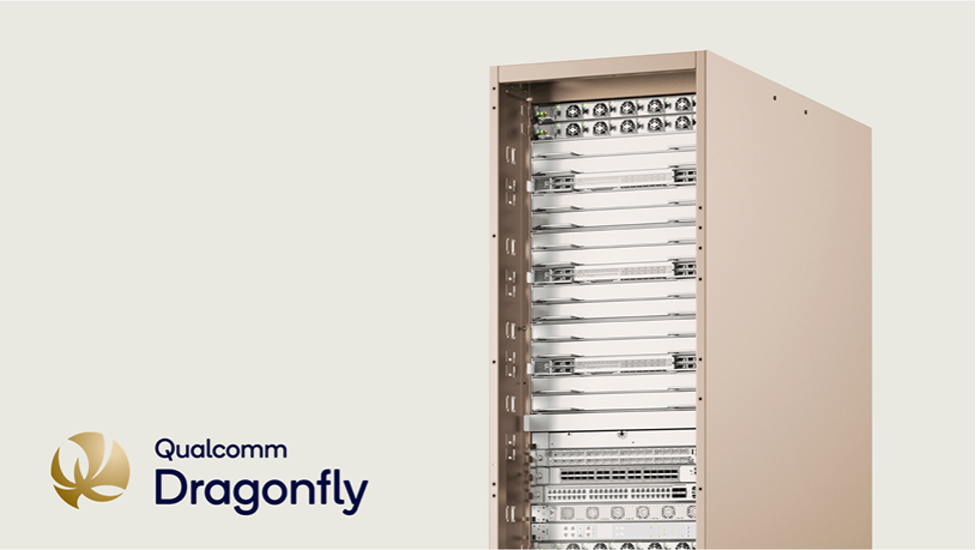
Qualcomm has expanded its AI strategy into the data center with Dragonfly, a platform brand that covers AI accelerators, server CPUs, custom silicon, connectivity chips, and software. CEO Cristiano Amon presented the portfolio as a data center infrastructure business, not a single-chip entry. The move gives Qualcomm a direct role in the systems that hyperscalers, AI service providers, and enterprises need for training, inference, and custom model deployment.
Dragonfly builds on Qualcomm’s long experience in low-power SoCs, wireless connectivity, Arm CPU design, and heterogeneous computing. The company now wants to apply those skills to AI racks, where performance per watt, memory bandwidth, software control, and supply security influence every deployment plan. That framing should interest silicon teams evaluating new accelerator architectures and CIOs trying to manage AI infrastructure cost, capacity, and availability.
The technical center of the announcement is High Bandwidth Compute, or HBC. Qualcomm says HBC combines accelerator logic with 3D-stacked DRAM in a tightly coupled package. The company claims the architecture can deliver six times the bandwidth per watt of current HBM-based systems. That claim targets a real data center constraint. AI models now stress memory bandwidth, memory capacity, data movement, and rack power as much as raw arithmetic throughput.
Qualcomm describes HBC as a memory-centric accelerator architecture. The design keeps data closer to compute, reduces movement across external interfaces, and improves bandwidth efficiency. Silicon teams will want details on packaging, thermals, yield, repair, memory supplier support, interconnect topology, and compiler visibility. CIOs will focus on rack power, cooling, utilization, procurement timing, cloud access, service support, and software compatibility.

Table 1. Characteristics of Qualcomm’s chip strategy. (Source: Qualcomm)
Qualcomm plans to ship its first HBC chip inside the AI250 data center rack in fiscal 2027. Microsoft and Meta have endorsed the architecture through recorded presentations and identified themselves as early adopters of Dragonfly technologies, including HBC and Qualcomm server CPUs. Qualcomm also disclosed two hyperscale custom silicon engagements that should generate revenue before year-end.
Humain, the Saudi Arabian AI company, has committed to deploying 200 MW of Qualcomm accelerator racks. That agreement gives Qualcomm a large infrastructure target and helps position Dragonfly as a rack-scale product family. For CIOs, the Humain deal matters because it points to deployment planning at power-plant scale, not isolated accelerator trials.
Qualcomm also expects China to play a role in the data center push. Amon said the company plans export-compliant versions of its AI accelerators, CPUs, networking products, and custom silicon for Chinese customers. Qualcomm already maintains strong relationships with Chinese smartphone and automotive manufacturers. The company can use those channels as it pursues enterprise AI and cloud infrastructure opportunities under US export rules.
Software will determine how far Dragonfly can travel. Qualcomm acquired Modular for nearly $4 billion to strengthen compiler technology and AI software support. Modular gives Qualcomm a clearer path toward developer productivity, model portability, and framework integration. Nvidia’s CUDA ecosystem still sets a high bar for AI developers, infrastructure teams, and ISVs. Qualcomm needs tools that let customers move models onto Dragonfly without creating a new engineering burden.
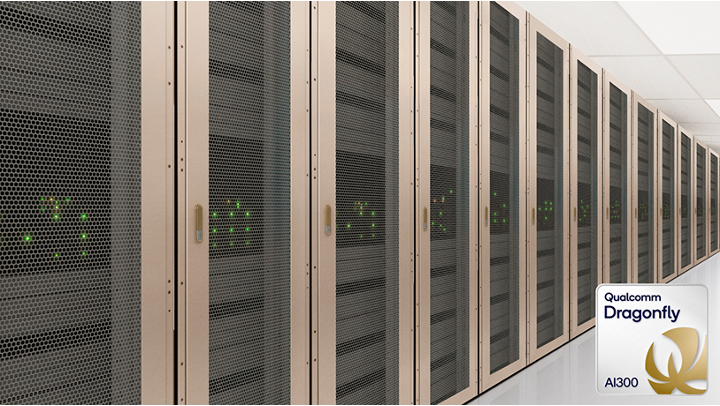
Figure 1. Qualcomm’s vision of the future. (Source: Qualcomm)
The revenue targets show the scale of Qualcomm’s ambition. The company projects roughly $300 million in data center revenue this fiscal year and $5 billion by fiscal 2027. Amon expects the data center chip market to exceed $1 trillion by 2029 and wants Qualcomm to capture more than 5% of that opportunity. That outcome would reduce Qualcomm’s dependence on handsets and put data center products on a similar revenue footing later in the decade.
The competitive field already includes Nvidia, AMD, Intel, cloud-owned ASICs, and specialized accelerator start-ups. Nvidia also continues to expand its platform reach with CPUs such as Vera, networking, software, and full-rack systems. Qualcomm, therefore, needs more than an efficient chip. It needs a deployable platform with credible software, predictable supply, service channels, and reference designs that customers can validate quickly.
Dragonfly reflects a broader shift in AI infrastructure buying. Customers now evaluate systems, not chips. They want accelerators, CPUs, memory, networking, power, cooling, compilers, orchestration, and support to work as one deployment unit. That shift gives Qualcomm a logical opening because the company already knows heterogeneous integration and power-aware design as AI infrastructure planning moves toward memory efficiency, rack-scale integration, and software portability. HBC gives the hardware story a technical point of difference. Modular gives the software story a credible path. Customer deployments will determine whether Qualcomm turns its mobile-era design discipline into a data center business with durable AI infrastructure relevance.
What do we think?
Qualcomm has a credible data center plan because it links silicon, memory, software, and customers in one program. HBC gives Dragonfly a useful technical angle, and Modular strengthens the software path. Execution remains the issue. Qualcomm must prove rack performance, developer adoption, supply scale, and support quality before CIOs treat Dragonfly as a standard AI platform.
Dragonfly may signal an inflection point in AI infrastructure because the market now rewards platform efficiency, not isolated accelerator speed. Qualcomm’s HBC approach puts memory bandwidth, packaging, and power at the center of system design. The inflection point emerges as hyperscalers and enterprises evaluate AI racks through total cost, software portability, and supply resilience. If Qualcomm delivers, AI data centers could support more diverse architectures and reduce dependence on a single software-hardware model.
LIKE WHAT YOU’RE READING? TELL YOUR FRIENDS; WE DO THIS EVERY DAY, ALL DAY.