
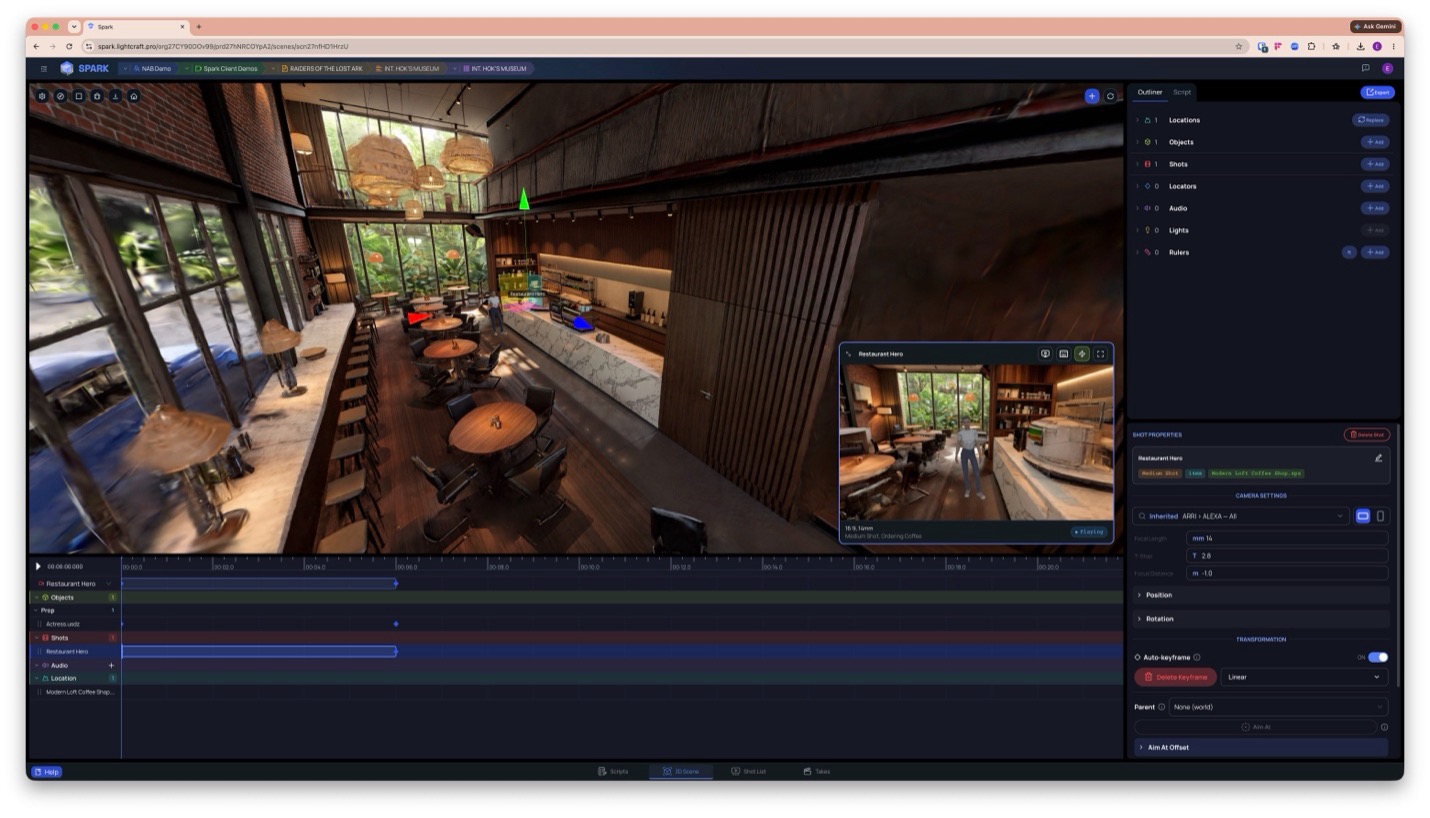
Lightcraft Technology is changing filmmaking with an interactive previsualization tool that reduces the high costs associated with the process. Spark Story, a browser- and app-based tool for directors, cinematographers, producers, and virtual production supervisors, lets teams shape shots and begin crafting their project from the very beginning. Working together live, teams can use scripts, Gaussian splats, imported USD assets, camera motion, and more to very quickly generate an interactive previs, getting everyone on the same page right away. Lightcraft has added four new features and implemented a rolling beta ahead of the system’s fall release, all announced at Siggraph 2026. Here, Eliot Mack, co-founder and CEO, discusses Spark Story in detail.
(Source: Lightcraft)
At Siggraph 2026, there was a constant crowd and buzz around the Lightcraft Technology booth, as the company demonstrated Spark Story, which was launched in rolling beta at the conference, ahead of its fall release.
Last year, we detailed Lightcraft’s origins and how its tech evolved over the years from the Previzion real-time VFX system to the Jetset mobile app for accessing virtual production tools. Then came Spark several months later, a browser-based, real-time collaborative platform for visual storytelling that uses the most recent Web technologies for tackling everything from film pre-production to post. At NAB 2026, the company piqued interest in its next chapter with a preview of its Spark Story, an interactive collaborative previsualization system. Building on that interest, Lightcraft announced Spark Story beta, which integrates Jetset and more to let filmmakers start visualizing their projects in 3D from the outset using a browser or mobile app.
“A new day is dawning for filmmakers who want to break free from old formulas; Backrooms and Obsession are only the beginning,” said Eliot Mack, CEO and co-founder of Lightcraft, referring to the successful low-budgeted films. Co-founder and lead investor Bill Warner, founder of Avid, is chairman. “With Spark Story, ambitious teams can rewrite the rules of Hollywood, making the projects they want to see, without the massive costs and infrastructure usually required for big ideas.”
Lightcraft is opening access to Spark Story beta through a waitlist in rounds, projecting fall 2026 for the general launch. Pricing will be $29.95 per month for Spark Story.
Eliot Mack discusses Spark Story
Lightcraft has been building what it sees as a revolutionary filmmaking system that spans pre-production to post. Its most recent chapter contains a product called Spark Story, a browser- and app-based interactive 3D previs tool that fits into a bigger production story—tool-wise, process-wise, and industry-wise. At Siggraph, JPR talked with Mack to learn more about Spark Story.
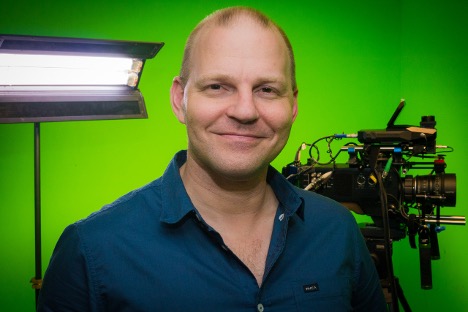
Eliot Mack, Lightcraft CEO and co-founder. (Source: Lightcraft)
You’ve had quite the crowd at your booth. What kind of reception/interest were you getting, and why do you think that was?
Eliot Mack: The interest was senior-level, and it was sustained. Across the three exhibition days, we saw virtual production supervisors and previs leads from major studios, VFX supervisors and studio heads, broadcasters, technology partners, and film school educators, and a number of visitors came back multiple times, bringing colleagues with them. International traffic was strong as well.
Two reasons why: The first is the demo format. We build a live shot in front of people, real camera moves, real environments, and then hand it over and let them drive. Everyone who has tried it has liked it. The second is timing. Audiences just showed up in force for a new wave of films, and the people walking the Siggraph floor could feel that an entire pipeline has matured at once. We used to say something big was going to happen in filmmaking. Now it is happening, and people wanted to see where they fit in it.
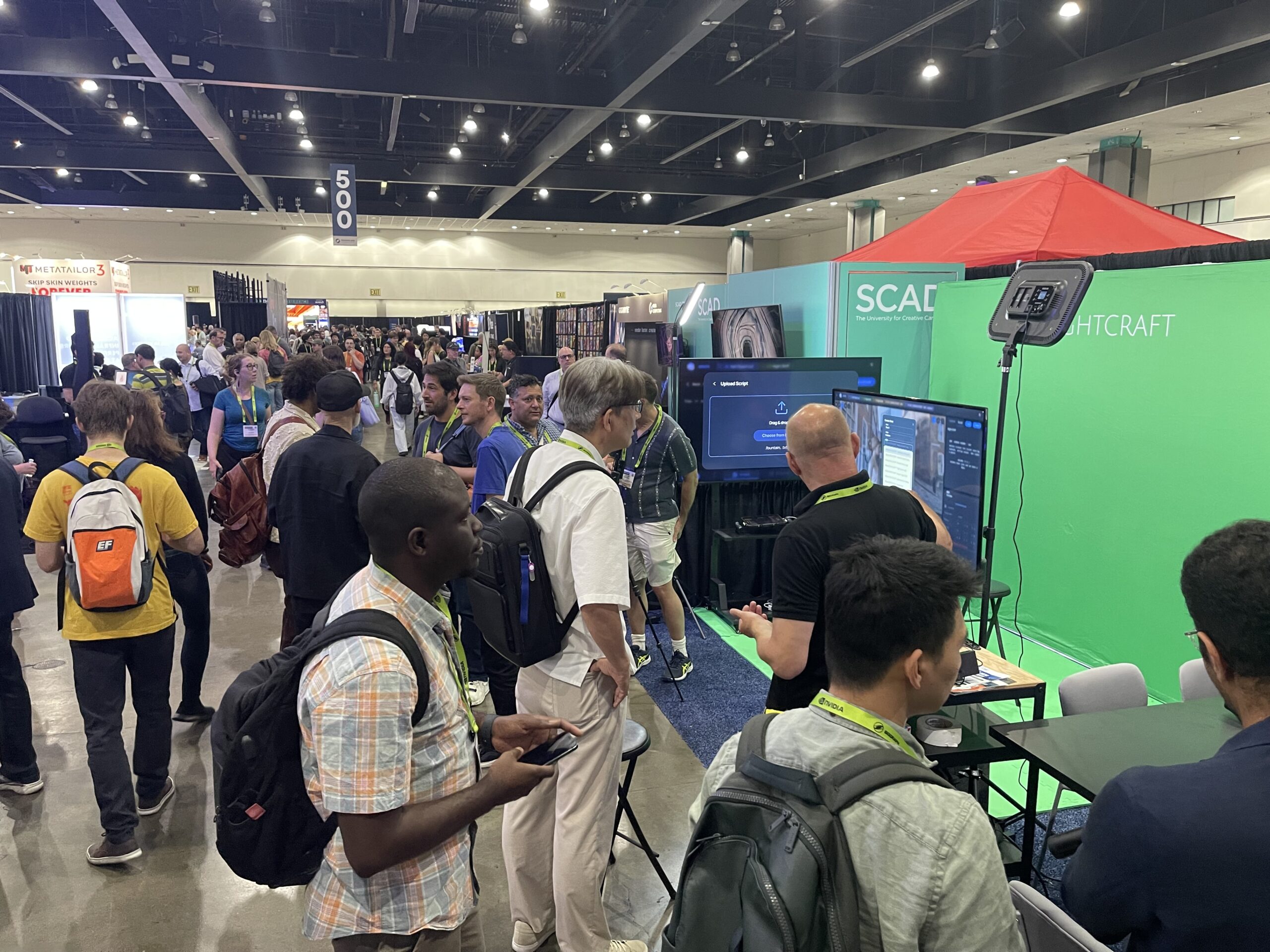
The Lightcraft booth at Siggraph had a constant stream of visitors. (Source: Lightcraft)
Okay, tell me about Spark Story, and how it fits into the Spark platform.
Mack: Spark Story is an interactive previs system that lets filmmakers start making real-time 3D shots on Day One with their team, in the browser and on their phones. You can load a full script, a Gaussian splat scan of a real location, or a generated 3D environment, populate the scene with 3D assets, and build shots by keyframing camera moves or driving the camera with an iPhone. Everything is grounded in real camera specs, sensor formats, and physical dimensions, so creative decisions translate directly to set. And you do not have to be an expert to use it. (A video showing how Spark Story works can be found here.)
It fits into the platform as the first module. Spark is the system of record for a production: Scenes, shots, assets, scans, takes, and lens metadata all live in one collaborative graph the whole team works in together. Spark Story covers the design phase of a project; Jetset covers the on-set production phase, where a movie camera is moving around. As Jetset projects scaled up, teams needed an overarching planning layer. That became Spark. The platform roadmap takes people from pre-production through post.
Why is the real-time compositing feature important?
Mack: Real-time compositing is one of our biggest additions since NAB (also new: a 3D asset and environment library, Spark Atlas, and direct USD file loading). On the iOS side of the platform, you can put a real actor into the virtual environment live during the shoot and watch the composite as you frame the shot. Every take then syncs back to the browser through Spark Atlas, our companion desktop app, and is attached to the right 3D scene and script section.
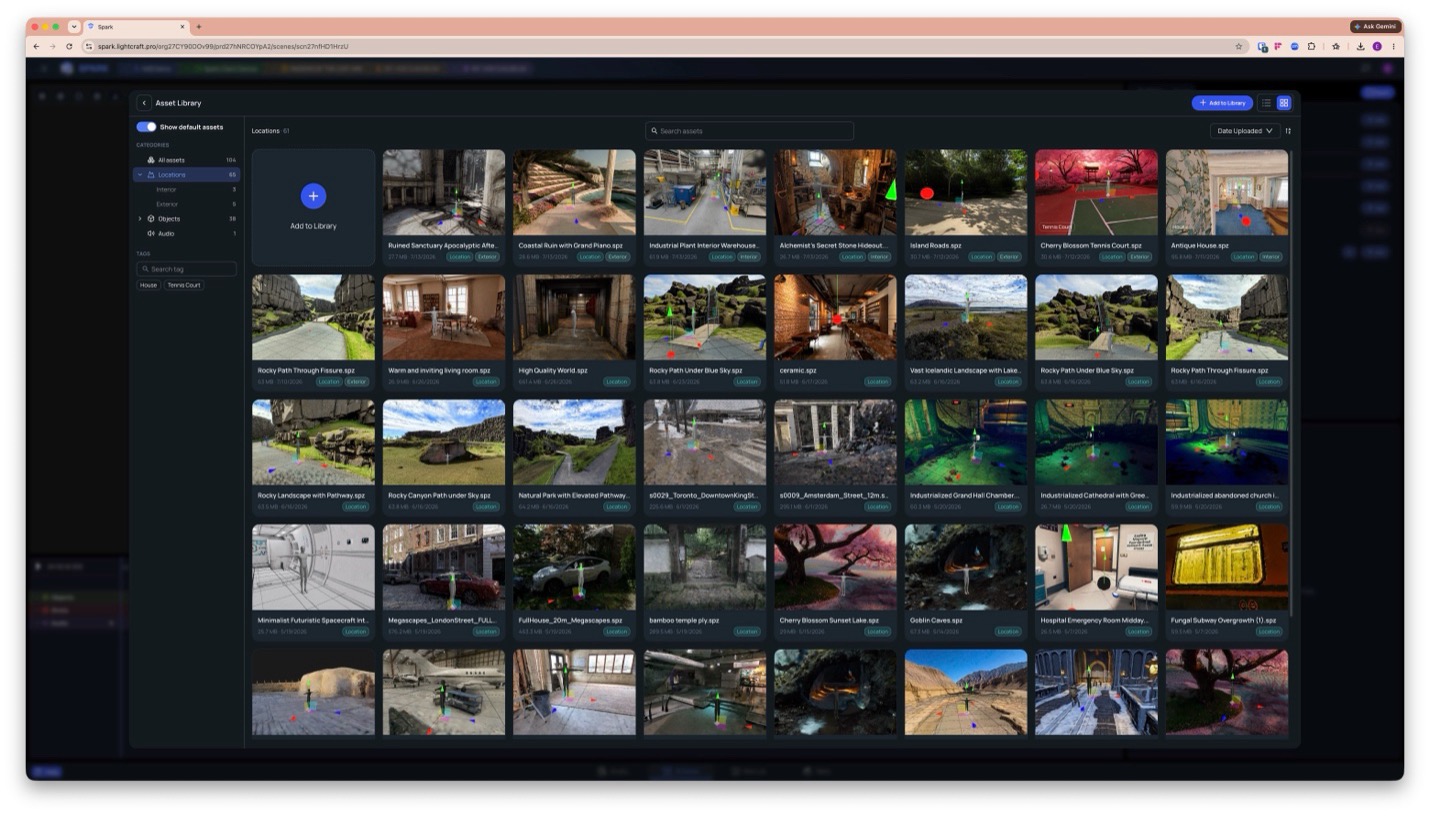
New to Spark Story: a web image library. (Source: Lightcraft)
This allows previs to stop being an abstraction. Instead of finding out in post whether a shot works, you can see it while you can still change it. As Bill Warner put it in a recent Boston Globe piece, ‘You can do it many times, in real time.’ It is also the through line of the company in that the original Previzion system that did this for studios cost about $180,000 and won an Emmy. That capability now runs on hardware filmmakers already own.
The iOS breakthroughs go beyond compositing as well. Spark can now shoot at 24 and 25 fps in full 4K, taking real advantage of the iPhone’s camera capabilities. That was not possible with Jetset, and it changes what a take captured in Spark can become downstream.
What are the biggest advantages users get using Spark Story?
Mack: When you can see the shot, everything downstream gets cheaper and calmer. Teams get on the same page instead of arguing based on imagination. You see what is going to work before you commit money to it. You know what needs to be done next. You stop making shoot-day errors, which is where budgets quietly die. Pitches get more potent because they are not just words anymore. And filmmakers get better over time because iteration is finally cheap.
Structurally, the advantages are that it runs in the browser with nothing to install, collaboration is in real time with the whole team in one 3D scene, and it compresses previs cycles from weeks to days.
At what point does it plug into a user’s pipeline? Will it work with general DCC software?
Mack: It plugs in at the earliest phase, script and prep, and follows the project into production. You can start from either direction: script first, then build the shots, or visual first, then attach the story. Because it is built on open standards, USD and USDZ for assets and standard Gaussian splat formats for environments, it sits alongside existing pipelines rather than asking anyone to replace them. Shot lists carry embedded 3D metadata into production, and the capture side connects instantly: Scan a QR code and the iPhone becomes the camera.
What OS does it run on?
Mack: Spark Story runs in the browser, so there is nothing to install on the desktop; it runs in Chrome on Mac, Windows, or Linux. The companion app runs on iOS, on both iPhone and iPad, and shares the same live database as the browser, so it is one platform on two surfaces rather than a separate product. The browser commitment is structural: Spark is not a desktop application and will not become one.
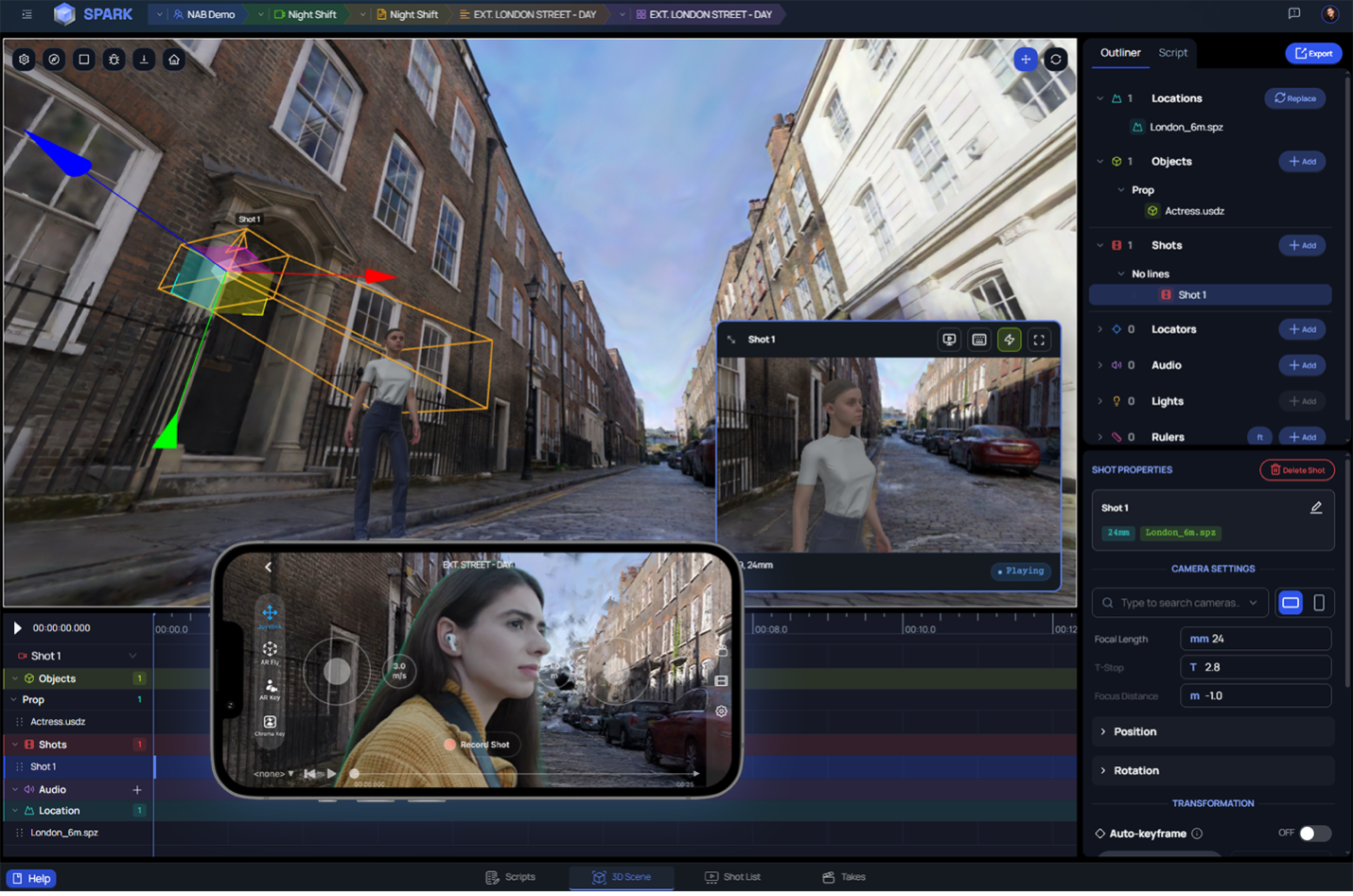
Using Spark Story. (Source: Lightcraft)
What user segment is Spark Story targeted at?
Mack: Three lanes. Big-budget productions will use it to compress previs cycles from weeks to days and to take cost and schedule risk out of complex shots. Independent and emerging filmmakers will use it because production value is won in prep, and this is the first time that level of prep has been within reach. And there is a rising class of creators—the audience showed up for films like Backrooms and Obsession—who want a real path into the industry. The design bar across all three is the same: You should not have to be an expert to use it.
How is Spark Story different from similar products?
Mack: Three things, and the first one has no real precedent in previs.
First, it is browser-based with real-time collaboration: multiple people working in the same 3D scene at once, with no specialized software or per-seat desktop licenses. The incumbent previs pipelines, whether Unreal, Maya, or a dedicated previs house, are single-operator desktop workflows.
Second, it is grounded in real production constraints, actual camera specs, sensor formats, and physical dimensions, so what you design is what you can shoot.
Third, it is a script-to-shot pipeline in one platform, connected to a capture layer (Jetset) on set. Competitors offer pieces of that; Spark Story is built as the system of record that holds it all together.
What advantage does it give indie filmmakers? What makes it a time- and cost-saver?
Mack: For indies, the honest answer is that production value is won in prep, and prep is exactly what Spark Story makes cheap. A concrete example from that same Boston Globe piece: A location that costs $3,000 a day can be scanned once, and the team can then work the whole film as if they were standing on location. Every shoot day you do not waste, every setup you do not have to re-rig, is money that stays on screen.
The market has already proven what disciplined prep buys. Obsession was shot in about 20 days on roughly $750,000 and has done $262.7 million domestic, per trade coverage, with the production value earning the studio a distribution deal. Spark Story is priced for that world: $29.95 a month, letting you start your team and invite two additional users.
What are Spark Story’s current limitations?
Mack: We are direct about what it is not. Spark Story is a previs and collaboration layer, not a render engine; it works with splats and existing assets rather than generating final-quality frames on its own. Where teams want to push further, the path runs through hybrid workflows that pair Spark captures with downstream finishing, with the artist in control at every step.
Any project implementations so far?
Mack: Yes. On the capture side, Jetset has been used on shipped and in-production work by creators and production companies for over a year. On Spark Story, the beta cohort is already developing real projects in the platform, including feature-length work built end to end, script through shots. The previs-to-production workflow described below is already proving fruitful for many of the teams testing the product today, and we expect the first public case studies from the beta in the coming months.
Anything else you’d like to add?
Mack: Spark Story is a previs system for a growing class of filmmakers, but it does not stop there. With the new iOS capture capabilities, 4K at true cinema frame rates, real-time compositing, and every take synced into the platform, teams can bring a show full circle: start in previs, move into production on an iPhone, and get much closer to final pixels than was ever possible with Jetset, using hybrid workflows that take advantage of the latest rotoscoping, relighting, and enhancement models, with the artist in control throughout. Across the creator economy in particular, we think that is a very big deal, and it is already how many of our beta teams are working today.
The bigger frame is the one we would leave readers with. The technology has finally caught up to what filmmakers need, and not just ours: A whole pipeline has matured at once. That means lower costs, faster production timelines, and more room for creative risk, which changes who gets to make big, original stories. Ambitious teams are starting to rewrite the rules. Spark Story is built to live at the center of that, the link between what is bubbling up and the legacy pipelines, and it is the first module of a platform that will take people from pre-production through post.
Lightcraft helps filmmakers break through the barriers that prevent great movies and series from being made.
LIKE IT? THINK YOUR FRIENDS AND ASSOCIATES MIGHT? PLEASE SEND IT TO THEM WITH OUR BEST WISHES.