
Tesla and SpaceX are building a 100 million-square-foot chip fab in rural Texas, and the details raise as many questions as they answer. Terafab licenses Intel’s newest process technology, splits its output between robotics chips and radiation-hardened space silicon, and runs on natural gas instead of solar, a real gap given Tesla’s own clean-energy business. We walk through the timeline, the economics behind a $16.8 billion opening bet, and why nearly 900 Grimes County residents signed a petition before construction even finished.
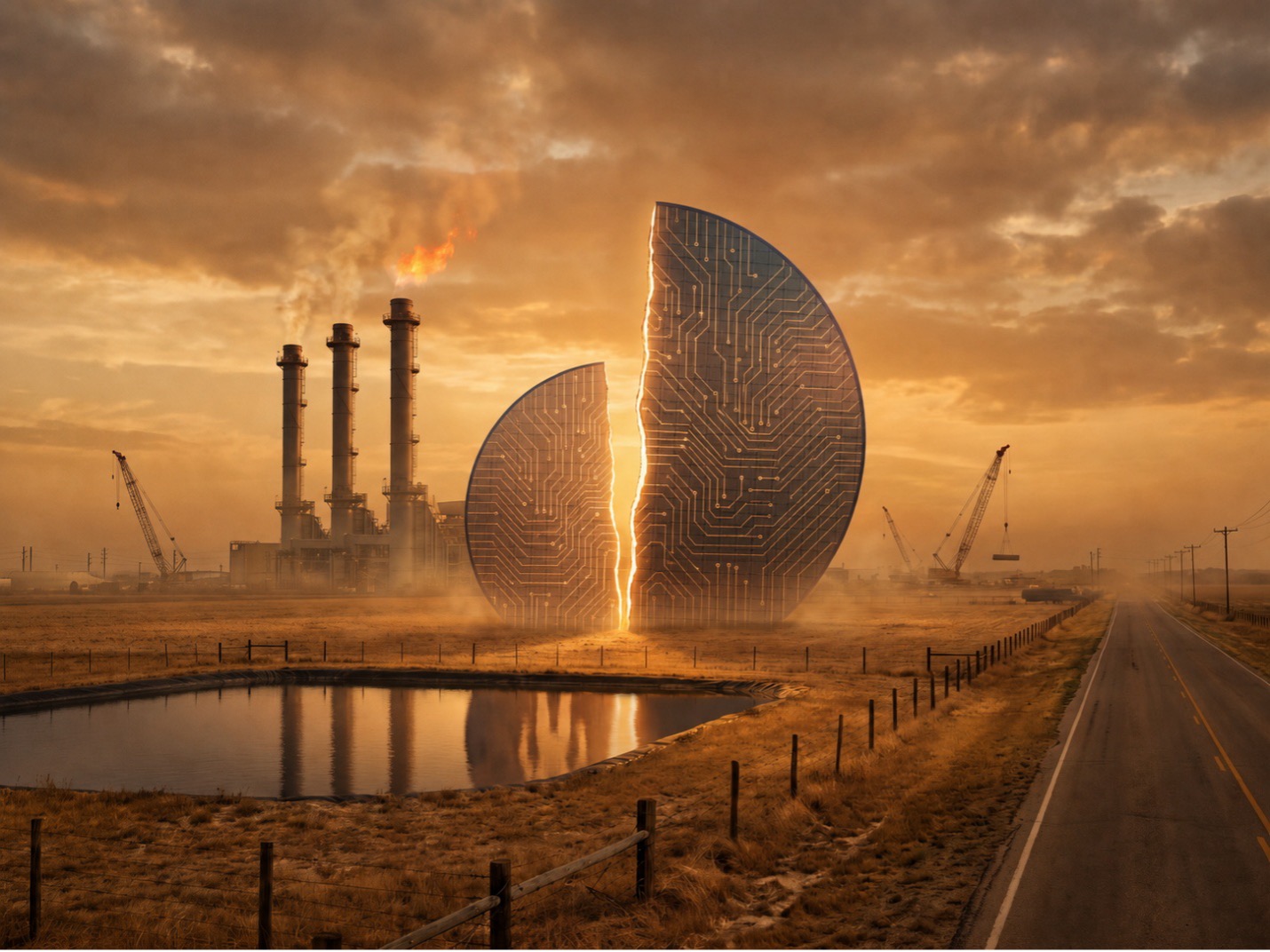
Terafab runs on a staggered schedule, not a single opening date. Small-batch production of Tesla’s AI5 chip starts late 2026 or early 2027, through a research fab precursor built at the Giga Texas North Campus. The main Grimes County facility targets its first chips, Tesla’s AI6 architecture and SpaceX’s radiation-hardened D3, by late 2027. True volume production, the output that actually justifies a 100 million-square-foot floor plan, doesn’t arrive until 2028.

Table 1. Terafab operational timeline.
Nobody has put an official payoff year on the project, and Wall Street treats the cash commitment as a long-term capital risk, not a near-term bet. Three factors shape the actual economics. Vertical integration is the first: Handling logic, memory, and packaging under one roof lets Tesla and SpaceX hope to skip the premium foundry margins a supplier like TSMC would otherwise collect; and across millions of vehicles, Optimus robots, and Starlink satellites, even a few hundred dollars saved per chip adds up to billions annually. Tax subsidies are the second: A $30 million grant from the Texas Enterprise Fund, plus a 10-year, 100% property tax abatement in Grimes County running 2027 through 2036, cutting operational overhead hard during the ramp-up years. Capital exposure is the third, and it cuts the other way: The opening $16.8 billion investment runs more than four times Tesla’s entire annual net income, according to Motley Fool research, and semiconductor equipment ages out every few years, which means the facility needs high-capacity utilization the moment it opens in 2028 or risks turning into a cash trap instead of a cost-saver. Grimes County is in southeastern Texas. It sits about 40 miles northwest of Houston, right between Houston and College Station in the Brazos River valley.
Intel isn’t running Terafab. The company will license the technology, positioning itself as the fab’s primary technology partner, not its operator. Terafab is licensing Intel’s 14A process node, giving the facility sub-2 nm capability without decades of independent research and development. Intel is also helping design the advanced packaging that puts memory and processing onto a single wafer, a step aimed at 1 TW of annual compute output. Tesla hired Gary Jiang, a 17-year Intel veteran with a track record managing billion-dollar fab start-ups, specifically to run the 14A licensing and implementation.
Terafab splits its floor space by application, 25% toward edge-computing robotics and 75% toward space-based AI infrastructure. Tesla’s AI5 and AI6 chips power the Cybercab, Cybervan, and Optimus humanoid robots, optimized for edge computing and real-time inference, high performance per thread per watt so mobile robots and autonomous vehicles process high-definition video locally without leaning on a cloud data center. SpaceX’s D3 chips serve a different environment entirely, built for Starlink infrastructure and SpaceX’s new Gigasat factories, which build heavy space-based data center craft. D3’s design goal centers on radiation hardening and extreme thermal tolerance, silicon built to survive vacuum conditions and handle orbital mesh routing and heavy computational payloads at the same time.
The energy plan has ignited real controversy in Texas, and the contradiction sits right at the center of it: Tesla, one of the world’s largest commercial solar and battery developers, put no terrestrial solar into Terafab’s initial blueprint. SpaceX is spending billions instead on dedicated, on-site natural gas plants, bypassing the ERCOT grid entirely, plants the company describes as the cleanest per-megawatt gas facilities in the country. Utility-scale battery storage runs alongside the gas turbines to absorb real-time compute load spikes. Environmental groups and industry analysts have flagged the gap between that setup and Tesla’s own sustainability mission directly, and the pattern echoes a similar fight already underway around Elon Musk’s xAI data centers in Memphis, which drew a Clean Air Act lawsuit over unpermitted gas turbines.
Water -tells a cleaner story. Chip manufacturing needs millions of gallons daily to clean silicon wafers, and instead of drawing from community groundwater or the nearby Navasota River, a Musk-affiliated entity bought the water rights and surrounding land of the Gibbons Creek Reservoir, a body of water originally built to cool a coal plant that no longer exists. Terafab draws its industrial cooling from that reservoir, running a closed-loop system designed to recycle water on campus continuously, with on-site wastewater treatment handling hazardous runoff internally instead of sending it off-site.
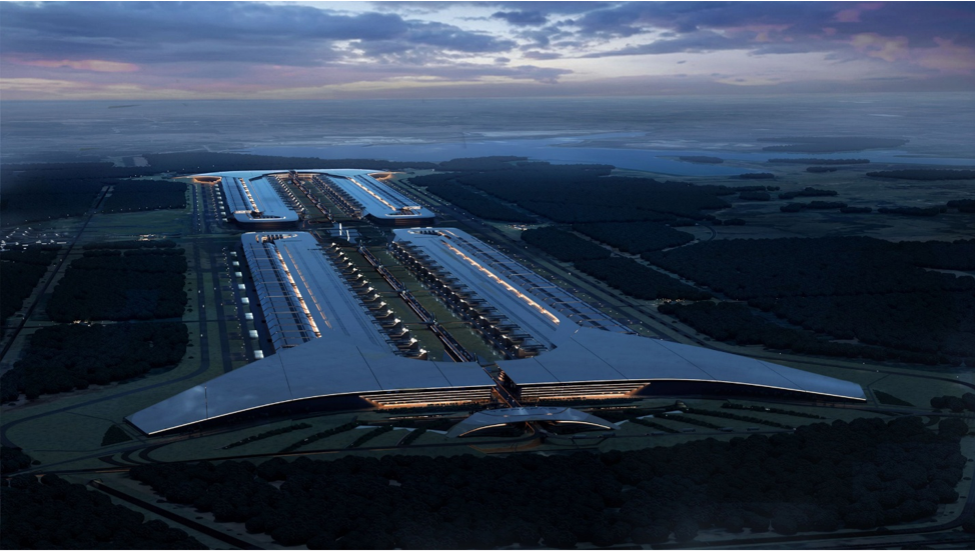
Figure 1. Terafab Texas is on pace to clear 100 million square feet once finished, more than five times the size of China’s New Century Global Center, the current record holder, and bigger than the Pentagon, Apple Park, and the Mall of America put together. (Source: SpaceX)
None of this has landed quietly with the roughly 30,000 rural residents of Grimes County. Nearly 900 of them signed a petition demanding strict pollution controls and independent environmental oversight before the county grants any major tax break. The concerns run past emissions and chemical waste too: Locals have raised real anxiety about thousands of temporary construction workers straining local roads, rural infrastructure, and emergency services that weren’t built for a population surge this size. Grimes County now has to weigh a $16.8 billion investment and a decade of tax revenue against a fight its own residents didn’t ask to have.
Terafab is betting that vertical integration, tax breaks, and Intel’s process technology add up to real savings once volume production starts in 2028. It’s also betting that a rural Texas county, a skeptical Wall Street, and environmental regulators watching the Memphis precedent all stay patient long enough to find out. Neither bet has settled so far, and the facility hasn’t produced a single commercial chip.
What do we think?
The chip economics look sound on paper: Vertical integration plus tax breaks plus Intel’s 14A process is a real formula for margin. The energy and water story looks like a separate company, one that skipped its core business to save time. That gap between stated values and execution is the risk worth pricing, not the chip roadmap.
Inflection point: Terafab marks an inflection point for vertically integrated AI silicon: a test of whether a company building millions of edge devices can out-earn the foundry model by owning logic, memory, and packaging outright, instead of renting capacity from TSMC or Samsung. That bet stays theoretical until 2028, when volume production either proves the economics or turns a $16.8 billion facility into the cash trap analysts warn about. Watch capacity utilization in year one, not the chip specs, to see whether this model spreads.
The New York Times analyzed more than 600 public predictions and commitments Musk has made since roughly 2000, across statements, social media posts, and investor calls. Fewer than 1 in 5 were delivered as promised—under 20%. And the trend line is negative: In 2015, he fulfilled nearly three-quarters of what he announced. That success rate has eroded steadily since.
LIKE WHAT YOU’RE READING? TELL YOUR FRIENDS; WE DO THIS EVERY DAY, ALL DAY.