
Chinese processor developer CIX Technology has raised nearly RMB 1 billion in a Series B round as it moves from chip development into something more difficult: getting processors into real systems. The company now has a Lenovo design win, a three-tier CIX ClawCore processor roadmap, and ambitions stretching from AI PCs to edge servers and robotics. Lenovo gives CIX’s Arm processor ambitions some commercial weight.
(Source: CIX)
Chinese processor developer CIX Technology has completed a Series B financing round worth nearly 1 billion RMB (roughly $140–150 million), giving the five-year-old company more money to push its Arm-based processors from interesting silicon into volume products.
The Series B round was co-led by the Shanghai IC Fund and Pudong Venture Capital. Existing investors including Lenovo Capital, Tongge Venture Capital, and Oriza Puhua increased their investments, with additional Chinese state and private investment funds participating. CIX says the money will go toward scaling existing products and developing and manufacturing its next generation of what it calls agent CPUs.
CIX investors. (Source: CIX)
The company was founded in October 2021 by Sun Wenjian, a semiconductor executive with experience at both AMD and Microsoft. Sun previously headed AMD’s custom silicon activities in China and earlier worked on Xbox CPU development at Microsoft. Co-founder and CTO Liu Fang spent more than two decades in Silicon Valley, including roles at Sun Microsystems, P.A. Semi, Apple, AMD, and Meta. At Apple, she worked as a core architect across multiple generations of A-series and M-series processor development. CPU design is full of companies with novel architectural ideas; fewer have teams that have already taken large SoCs through architecture, implementation, and customer deployment.
CIX unveiled its first production-oriented processor, the P1, in 2024. The 6nm heterogeneous SoC combines a 12-core Armv9.2 CPU (eight performance cores and four efficiency cores) with an Arm Immortalis-G720 GPU and an NPU. CIX quotes up to 45 TOPS of aggregate heterogeneous AI performance and support for as much as 64GB of shared LPDDR5 memory.
Enter, Lenovo
In May 2026, Lenovo launched the AI Host P7 and AI Host mini, both based around CIX silicon. Lenovo has described the launch as CIX entering its AI product-line ecosystem: a considerably more concrete milestone than the collection of demonstration boards and reference platforms that too often constitutes traction for a processor start-up. Lenovo Capital is also an investor in CIX.
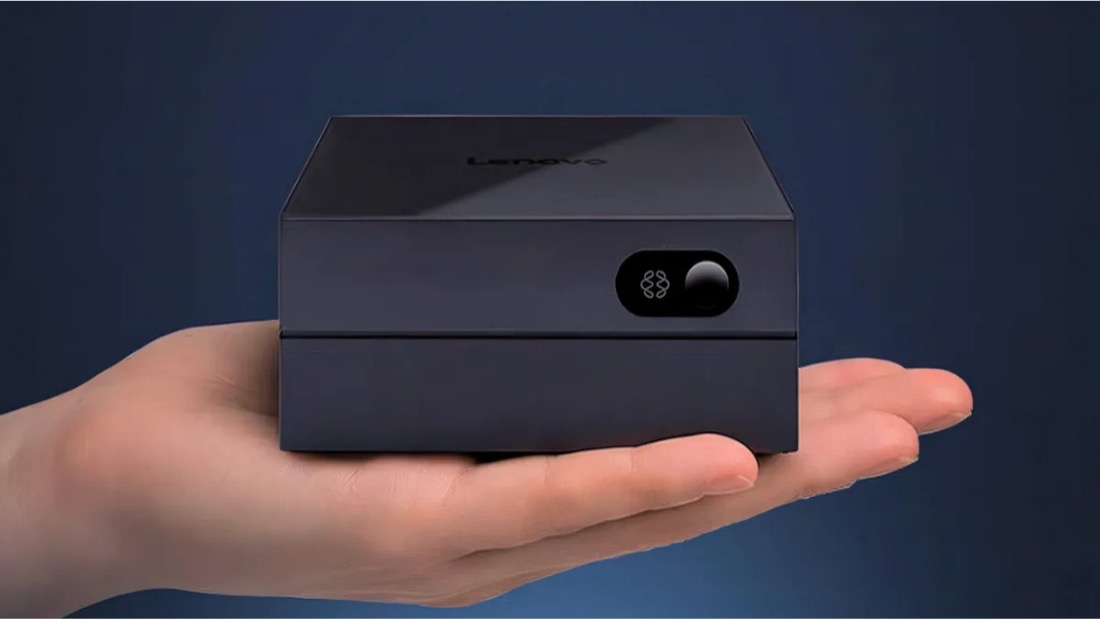
Figure 1. The Lenovo AI Host P7 is a compact, portable AI-dedicated host device. (Source: Lenovo)
The flagship P7 is a compact system using a customized P1 as its main processor. Lenovo and CIX say the complete system can provide up to 190 TOPS of local AI performance, support as much as 80GB of memory and a 128K context window, and run locally deployed models with as many as 122 billion parameters. The companies also cite inference performance of up to 50 tokens/sec and a maximum system power figure of 30W.
The 122B-parameter-at-30W claim isn’t yet an independently established P1 benchmark. The P1 itself is quoted at 45 TOPS, while the complete P7 system is advertised at up to 190 TOPS. The system figure, therefore, cannot simply be attributed to the P1 without understanding the complete acceleration configuration and how Lenovo is aggregating the available compute.
Saying that a system can support a 122B-parameter model tells us relatively little without knowing the model architecture, quantization level, active parameter count in the case of an MoE model, memory footprint, context length, first-token latency, and sustained throughput.
Getting out the ClawCores
The company has introduced the CIX ClawCore family, aimed explicitly at systems running AI agents and related workloads. It consists of three tiers: ClawCore-P, ClawCore-A, and ClawCore-E, spanning higher-performance systems through lower-power endpoints.
The P version builds on the company’s existing high-performance architecture. ClawCore-A is positioned more toward edge inference and systems requiring additional accelerator expansion, while the lower-power ClawCore-E is intended for always-available endpoint devices.
CIX is calling these products “agent CPUs.” We say, think of them as heterogeneous Arm SoCs packaged with an agent-centric software stack. Agents need CPU performance for orchestration and serial work, GPU and NPU acceleration, substantial memory capacity and bandwidth, low idle power, security, and software capable of dispatching workloads across those resources. None of those requirements, individually, creates a new class of processor.
What CIX is attempting is to optimize the combination around an emerging workload and then wrap that silicon in enough software and system capability to make local agents practical.
The company has reinforced that strategy with its Agentic OS 2.0 software and an AGX Station desktop system, shown alongside the ClawCore family at the 2026 World AI Conference.
CIX has discussed pairing its CPUs with Chinese-developed GPUs and AI accelerators for humanoid and embodied-AI systems. That would provide a domestic alternative to the “Intel or Arm CPU plus Nvidia accelerator” combinations currently common in high-end robotics development. The opportunity is obvious, particularly in China, where domestic semiconductor supply has become a strategic objective. Replacing the host CPU in a robotics platform is one thing. Replacing Nvidia means competing not only with its GPU silicon but with CUDA and the broad developer ecosystem Nvidia has spent years assembling.
What do we think?
China has put substantial capital into semiconductor start-ups, and money is not proof of product-market fit. What changes the picture is Lenovo. Getting a processor into a commercially launched system from one of the world’s largest PC suppliers is substantially more valuable as evidence than another benchmark slide. Lenovo is also an investor, so this is not an arm’s-length endorsement, but the relationship gives CIX access to distribution that processor start-ups struggle to acquire.
Sun Wenjian understands custom SoC development, while Liu Fang’s career spans P.A. Semi, Apple, AMD, and Meta. CIX, therefore, has senior people who have seen complex processors through to broad customer deployment.
The important test will be whether it can demonstrate architectural advantages that cannot simply be replicated by other Arm vendors with their next generation of silicon and software.
CIX will be joining the other 154 AI processor companies in our AI processor management information system. JPR puts the “I” in AI (and because you will ask—Intelligence, market intelligence).
LIKE WHAT YOU SAW HERE? SHARE THE EXPERIENCE, TELL YOUR FRIENDS.