
Intel arrived at CES with a story about momentum. The company brought Panther Lake, its first 18A product, and Lip-Bu Tan opened with the message that Intel had delivered exactly when it said it would. He described a world reshaped by AI and framed Panther Lake as Intel’s next step in that transition. Jim Johnson then walked through the chip’s architecture, explaining how 18A, new CPU clusters, a larger Xe3 GPU tile, and a stronger NPU push the Core Ultra Series 3 forward. He kept the tone confident and grounded, pointing to gains in graphics, AI throughput, and efficiency that laptop makers can build around. The story widened as he described designs for thin-and-light systems, discrete-GPU laptops, and new edge deployments in robotics and automation. Intel also revealed plans for handheld gaming devices built on the same platform. By the end of the presentation, Intel cast Panther Lake as a sign of its manufacturing progress and as a platform ready for PCs, edge systems, and AI-driven workloads across the year ahead.
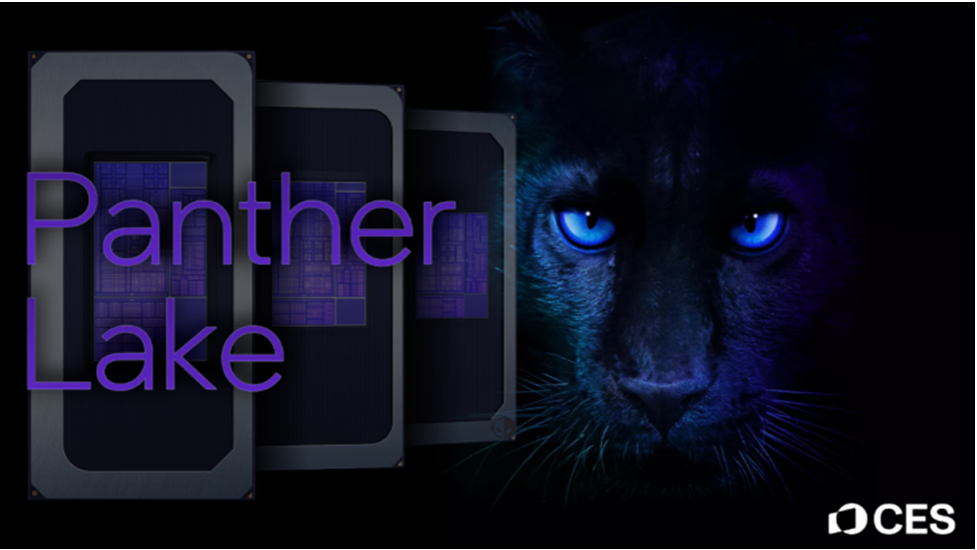
Intel entered CES 2026 with a clear objective: to demonstrate progress on its 18A manufacturing process and show that its next-generation client processors can anchor a renewed position in the PC and edge-AI markets. The company centered its announcements on Panther Lake, the first high-volume product built on 18A and the foundation of the new Intel Core Ultra Series 3 lineup. Intel’s leadership framed Panther Lake as proof that its manufacturing roadmap remains on schedule and that 18A has reached production quality in time for the 2025–2026 product cycles.
Intel CEO Lip-Bu Tan described the launch as a milestone that confirms Intel’s ability to deliver products on its promised timeline and transition its client portfolio away from external foundries. The company used the moment to reassure investors who continue to watch yield reports and cost structures closely after a multiyear period of execution challenges.
In his opening remarks, he said, “We are living in a moment where compute is being redefined. AI is reshaping every workflow, every industry, and every device, from cars to edge.” He said it is Intel’s mission to make that transition intelligible, efficient, and ubiquitous.

Figure 1. Lip-Bu Tan kicking off Intel’s CES Panther lake 18A process.
Tan said Intel has met its commitment to ship its first 18A product by the end of 2025 and is ramping all Core Ultra Series 3 versions. This announcement, he added, will represent the next evolution of the PC.
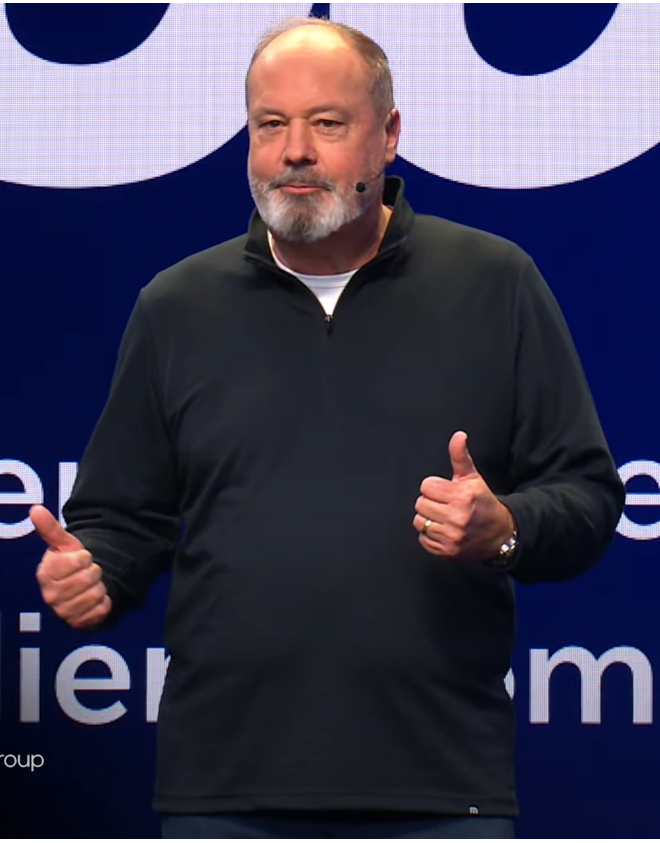
Figure 2. Senior VP and GM, Client Computing Group, Jim Johnson.
Jim Johnson, senior vice president and general manager—Client Computing Group, spoke about Intel’s leading-edge technology, 18A, the investment in manufacturing, R&D, and product development in the US, and briefly described 18A’s RibbonFET and PowerVia, which he said will bring 30% better chip density and 15% better performance per watt.
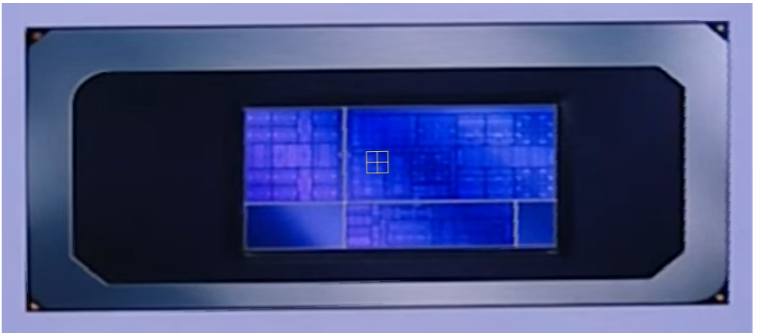
Figure 3. Intel Panther Lake chip.
Johnson went on to outline the technical structure of Panther Lake and emphasized the architectural changes that distinguish the Series 3 platform from its Lunar Lake predecessor. It has new E-cores, P-cores, and a massive GPU with built-in ray tracing, as well as a 5th-gen NPU that packs more AI in a very dense area. Intel has moved the GPU tile to its own chiplet and expanded it from four cores to 12. The GPU chiplet gives Intel scaling capability to meet various customer needs. The CPU has been increased from eight cores to 12, and operates at significantly lower voltage.
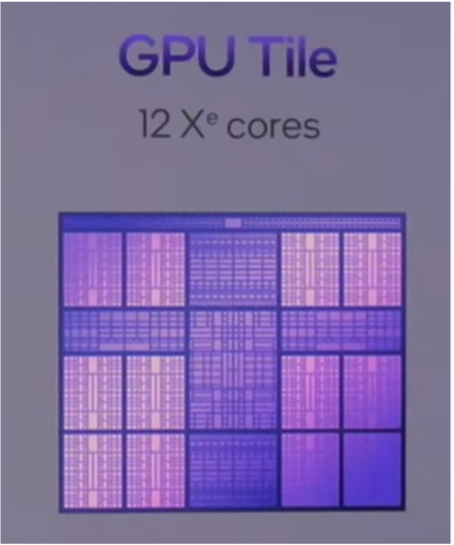
Figure 4. Intel’s Panther Lake 12-core GPU chiplet.
Intel created a new arrangement of compute blocks, including redesigned CPU clusters, a separate graphics chiplet built on the Xe3 architecture, and a significantly revised neural processing unit. Johnson described how 18A’s transistor and backside power delivery system enable these changes by improving current density and power routing. These shifts allow more functional units in each die region and more flexible chiplet integration.
The CPU subsystem gained a more balanced mix of core types. Intel organized the highest-end parts around four performance-oriented P-cores, eight efficiency-oriented E-cores, and four low-power LPE cores. The company highlighted improvements in work-per-clock metrics for each core type and pointed to a clearer division of responsibilities across cores to improve sustained performance under variable workloads. Intel positioned the Core Ultra X9 388H as the most advanced configuration in this generation. The part carries 16 total cores, a peak clock speed of 5.1 GHz, and 18 MB of shared L3. Johnson acknowledged that the previous Ultra 9 285H had more P-cores and more L3 cache but argued that the architectural changes in the X9 388H produce stronger real-world results. Intel cited gaming performance that exceeds the earlier flagship by a substantial margin and stronger multithreaded output compared with comparable Ultra 2 parts.
The integrated graphics processor, Arc B390, shows the clearest generational shift. Intel replaced its Arc Alchemist Xe-LPG units with Xe3 units derived from the Battlemage architecture used in the company’s recent desktop GPUs. The largest configuration reaches 12 Xe cores, a significant increase over the prior generation, and aligns the IGP’s behavior more closely with the discrete Arc stack. This move simplifies driver development, strengthens AI-accelerated media pipelines, and unifies the graphics software ecosystem across product classes. Intel expanded the graphics subsystem with XeSS 3, a scaling and frame-generation technology that leverages AI blocks in the graphics pipeline to increase effective frame rates.
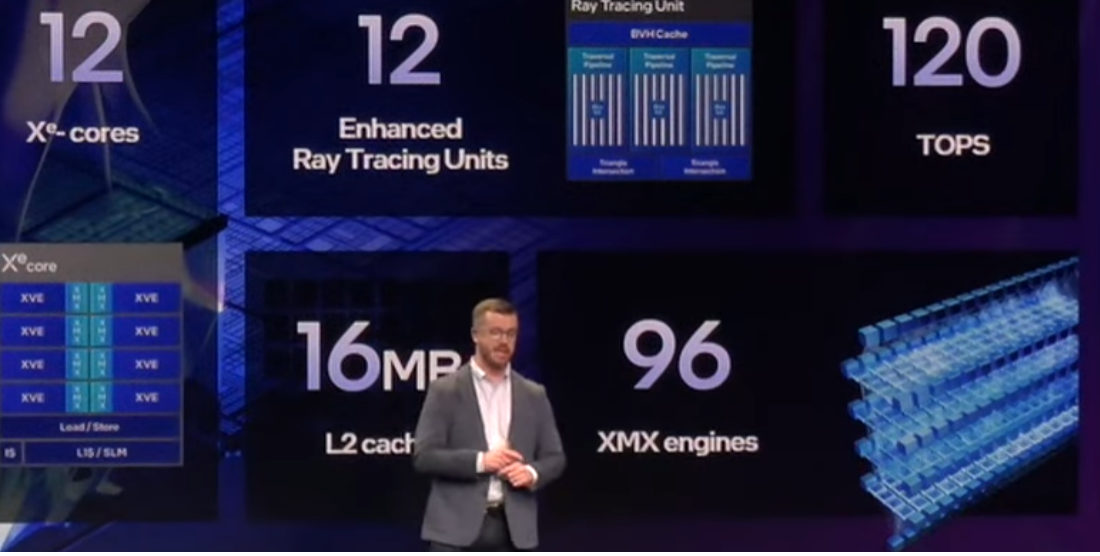
Figure 5. Intel’s Dan Roger, VP & GM of PC product, shows off the new Arc B390 iGPU.
AI performance shaped most of Intel’s remarks because the company intends to anchor Series 3 in the emerging segment of “AI PCs.” Intel highlighted its NPU 5 design, which delivers up to 50 TOPS on supported workloads. The company explained that the combination of NPU 5 and the Xe3 IGP can produce up to 170 TOPS of total AI compute when the system coordinates workloads across both blocks. Intel cited internal data and early independent results from Arc-based discrete cards to support the claim that its AI performance scales competitively within its price bands. This approach places the CPU, GPU, and NPU as complementary engines that collectively handle inference, content creation, and on-device model acceleration.
The Panther Lake iGPU will be the first integrated system to ship with AI multi-frame generation, delivering up to 4×the frames with XeSS 3 AI-generated frames (three AI-generated frames for every single rendered frame).
Intel structured the Series 3 family into multiple tiers, with integrated features that vary by chassis class and intended system role. The X-branded variants focus on higher graphics performance because they include the largest Xe3 IGPs. These parts target thin-and-light systems that rely on integrated graphics for gaming or creative workloads. By contrast, the non-X Ultra 9 and Ultra 7 options include fewer Xe cores but offer more PCIe 5.0 lanes, which benefits systems that include a discrete GPU. Intel expects laptop vendors to differentiate their designs based on these trade-offs rather than rely on a one-size-fits-all approach.
The midrange Ultra 5 class follows the same structural pattern. The 338H and 336H maintain 12 CPU cores and target mainstream performance, while the lower-end Ultra 5 variants retain only eight cores and ship with reduced graphics configurations to support budget-oriented laptops. Intel described these choices as a way to extend the 18A-based architecture across a broad price range.
The company also extended Series 3 into embedded and industrial markets. For the first time in Intel’s client roadmap, the new platform carries certifications for edge environments such as automation, robotics, smart infrastructure, and healthcare devices. The company credits this expansion to its unified architecture, extended operating-temperature tolerances, and predictable real-time performance characteristics. Intel cited internal data showing that Series 3 delivers stronger performance per watt per dollar in video analytics, LLM workloads, and vision-language-action pipelines compared with traditional multi-chip CPU-and-GPU designs.
Intel expects the broader market to respond quickly. More than 200 laptop designs from partners are scheduled to ship with Series 3, with preorders beginning in early January and retail availability later in the month. Intel believes this adoption rate demonstrates market confidence in 18A as a production-ready node and in Panther Lake as a competitive product in both performance and efficiency metrics.
Intel intends Panther Lake and Series 3 to serve as evidence that it can compete in this market while rebuilding its manufacturing pipeline. The company plans to extend 18A to additional product lines once yields reach commercial targets. Executives described month-to-month improvements in wafer output and indicated confidence that the process will support the broader 2026 portfolio.
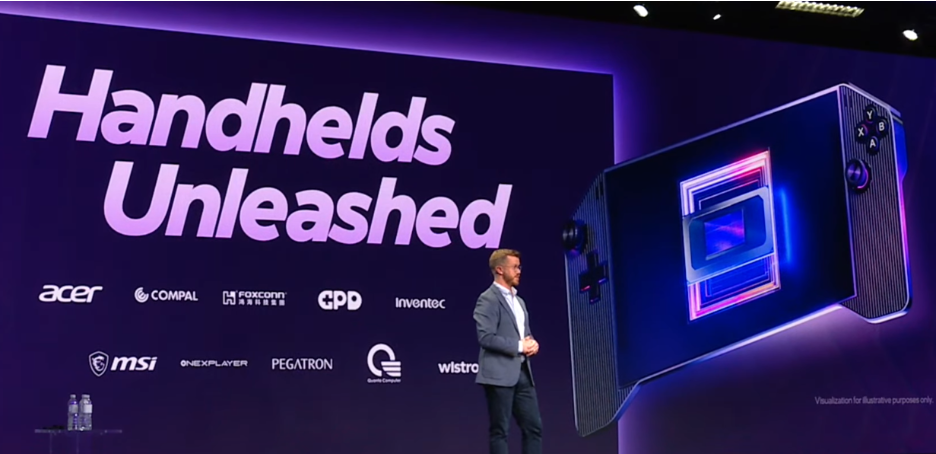
Figure 6. Intel plans to aggressively enter the handheld gaming market.
Intel also outlined an initiative to apply Panther Lake designs to handheld gaming systems. Johnson noted growing customer interest in handheld PCs and described how the Xe3 IGP and improved CPU subsystem support these devices. Intel expects multiple partners to deliver handheld systems based on Panther Lake within the year.
Through these announcements, Intel aimed to show that Series 3 reflects a broader strategic repositioning. Panther Lake demonstrates progress in manufacturing. The CPU, GPU, and NPU redesigns show a shift toward AI-centric compute models. The broad system-design pipeline indicates that OEMs intend to integrate the architecture into both conventional PCs and edge devices. The competitive landscape ensures pressure from AMD’s AI-focused roadmaps and Nvidia’s dominance in discrete AI compute, but Intel positions Series 3 as a platform that spans consumer laptops, professional systems, and embedded equipment. The company argues that this range positions it to regain share across multiple segments while establishing 18A as a viable production process for future generations.
Johnson went on to explain how Intel is invested in and enabling AI on the PC, and cited several examples.
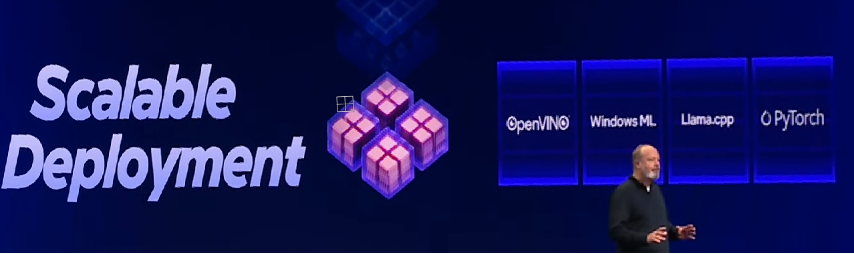
Figure 7. The SoC with CPU, GPU, and NPU can run all popular models.
Johnson said Intel has shipped over 4 zetta OPS to over 40 data centers.
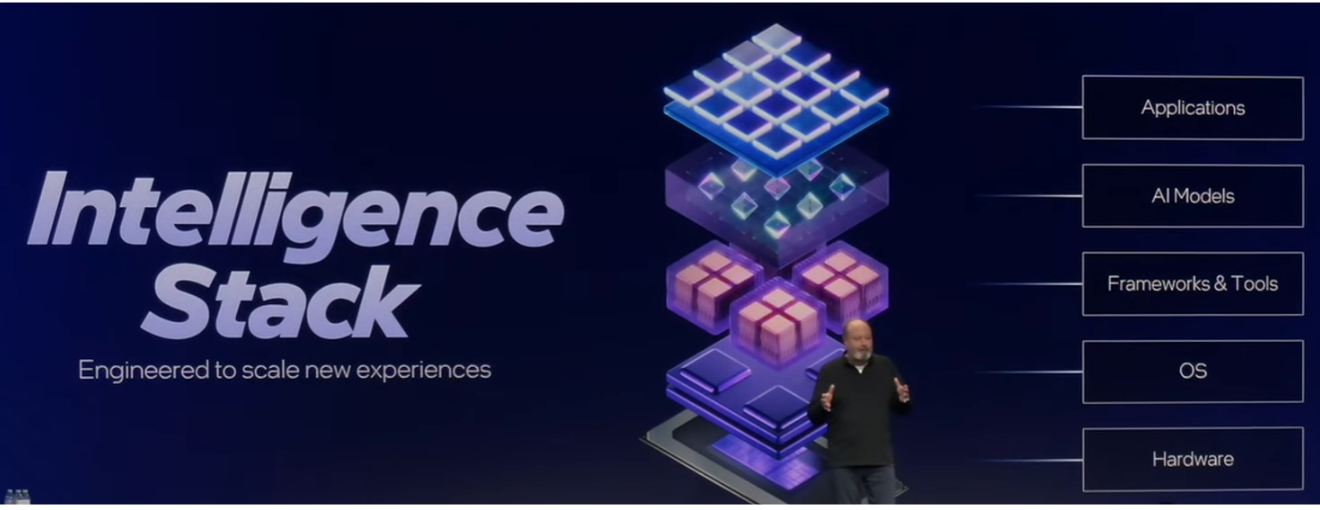
Figure 8. Intel’s AI stack.
Intel believes their HW-SW stack enables the hybrid era of AI, connecting AI PC with cloud AI.
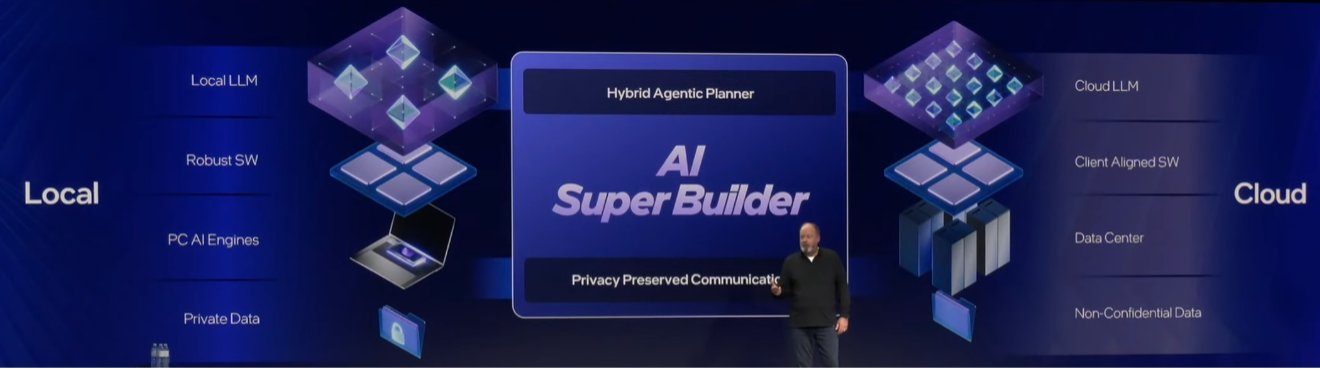
Figure 9. Intel Core Ultra 3 launched the hybrid AI era.
The more you localize your AI ops, the more secure your data is, and the less you spend on communications to/from the cloud.
Vision language models (VLMs), a close cousin to LLMs, are going to revolutionize AI, especially at the edge.
What do we think?
Intel says they are ramping, and AI PCs and other edge devices will be available now, today. What has to happen next is fort people to be entranced by these new processors and the PCs they live in. It’s not like the old days, where Intel won just by showing up. They have serious competition from AMD, Qualcomm, and in the data center, Nvidia. We’ll know if Intel got it right when they report Q3 results. If they have, and we think they will, they are going to have a great Q3, and the share price should soar because there’s a lot, an awful lot, of people who want Intel to succeed.
WHAT DO YOU THINK? GOOD ENOUGH TO TELL YOUR FRIENDS ABOUT IT? YOU HAVE OUR PERMISSION TO SHARE IT.