
MediaTek has introduced the Dimensity CX C10 Max, a 3nm flagship notebook SoC with an eight-core Arm CPU, 11-core GPU, and 55-TOPS NPU aimed at Google’s new premium Googlebook platform. The silicon itself looks evolutionary, sharing much of its architecture with the Kompanio Ultra 910. The more important change is strategic: MediaTek now has a premium compute brand, a Google-backed route into high-end notebooks, and less reason than ever to regard Windows as the only path into the PC market.
(Source: MediaTek)
MediaTek has launched the Dimensity CX C10 Max, the first processor in a new Dimensity Compute Experiences family and its most explicit attempt yet to establish itself as a supplier of premium notebook silicon.
The C10 Max is manufactured using TSMC’s 3nm process and combines an eight-core All Big Core CPU, an 11-core Arm Immortalis-G925 GPU, MediaTek’s eighth-generation NPU 890, and an Imagiq 1090 image signal processor. The NPU delivers up to 55 TOPS and is intended to run generative and agentic AI workloads locally, including features developed around Google’s Gemini Intelligence.
MediaTek is positioning the processor for fanless Googlebooks with all-day battery life. Lenovo is expected to introduce the first Googlebook based on the C10 Max.
Googlebook itself is important context. Google introduced the platform in May as a new premium laptop category built around Gemini Intelligence, Android applications, Chrome, and tighter integration with Android phones. In effect, Google is trying to create for Android users some of the cross-device coherence Apple has enjoyed between the iPhone and Mac, while putting Gemini much closer to the operating system.
The C10 Max is not entirely unfamiliar. Its CPU contains one Cortex-X925, three Cortex-X4 cores, and four Cortex-A720 cores, backed by 12 MB of L3 cache and 10 MB of system-level cache. The Cortex-X925 runs at up to 3.73 GHz. Memory support reaches LPDDR5X-9600, while storage uses UFS 4.0. The GPU is an 11-core Arm Immortalis-G925 MC11.
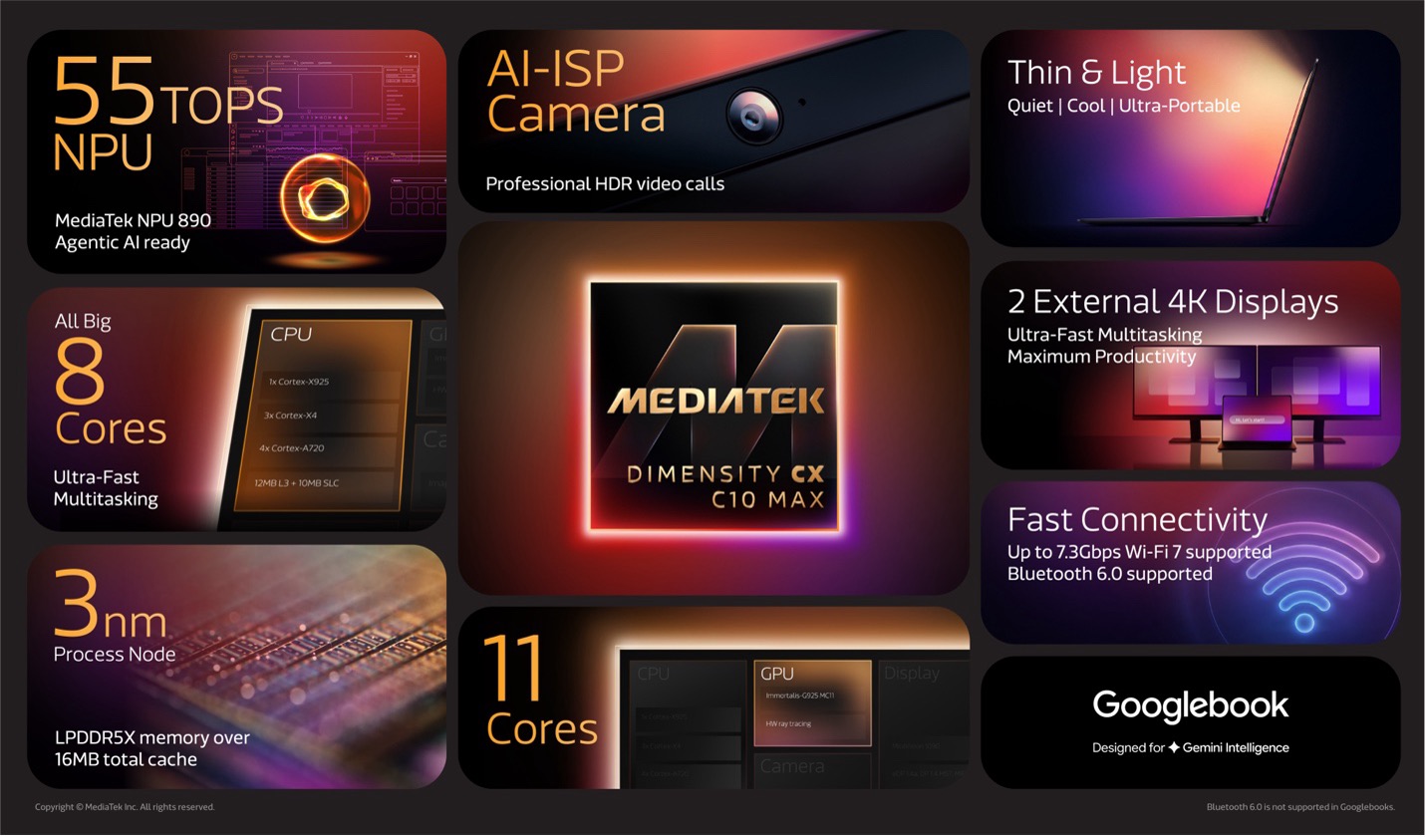
Figure 1. C10 Max overview. (Source: MediaTek)
The specifications are strikingly close to MediaTek’s Kompanio Ultra 910, which already combines the same CPU core configuration, the same GPU, the same cache capacities, and the same NPU 890. Kompanio Ultra clocks its X925 at up to 3.62 GHz, supports LPDDR5X-8533, and quotes up to 55 TOPS at INT8 from the NPU.
So this appears to be an evolution of an existing architecture rather than a new CPU design built specifically for Googlebook.
MediaTek has learned a fair bit from Apple, though this design is not quite as dramatically a unified/shared-memory SoC in the Apple sense. Nonetheless, we think that will be the direction of travel: MediaTek lists a single LPDDR5X-9600 memory subsystem alongside the integrated CPU, Immortalis-G925 GPU, and NPU 890. Its documentation for the closely related Kompanio Ultra 910 says the LPDDR5X memory “ensures the CPU, GPU, and NPU are fed more data without delay,” which strongly indicates those engines share system memory rather than having separate CPU RAM and dedicated GPU VRAM.
Kompanio has historically carried Chromebook associations. Dimensity CX gives the company a new compute identity that sits alongside the Dimensity smartphone brand and, importantly, removes some of the low-cost Chromebook baggage as MediaTek moves further up the notebook stack. MediaTek itself describes CX as its computing brand rather than simply another Chromebook processor family, and we understand it will be run as a new business line, not just an additive product brand.
The C10 Max nomenclature also invites the assumption that there will be other C10 variants and, eventually, other CX generations. MediaTek has not announced those products, but launching a family and a brand for one processor would be an unnecessarily elaborate exercise.
There is a nice bit of history here. When MediaTek launched the Kompanio 838 at Computex in 2024, we were distinctly underwhelmed by the state of Android-based notebook computing. At the time we wrote: “Hopefully, MediaTek is working on something much more like Snapdragon X Elite in the background.” The interesting part is that MediaTek has arrived at that destination by a different road than Qualcomm. Qualcomm used Snapdragon X Elite to attack Windows notebooks directly, spending heavily to establish Snapdragon as a credible PC brand and pushing its Oryon CPU into territory historically occupied by Intel and AMD.
MediaTek stayed closer to Google. At MediaTek Analyst Day in April, the company told us it remained focused on Android-based notebook computing rather than making Windows its immediate priority. At first glance, that could have looked cautious. But Google had just begun reshaping its desktop strategy around the Android technology stack, giving MediaTek another route into premium Arm notebooks.
Our conclusion then was that Google’s move “materially changes the strategic calculus” and that MediaTek’s single-OS discipline suddenly looked rather better than it had a couple of years earlier. Dimensity CX C10 Max makes that argument considerably less theoretical.
The obligatory AI number is 55 TOPS, putting the C10 Max comfortably into the current class of processors designed for substantial on-device inference. But as we have said before, TOPS is becoming a poor way to differentiate these processors. MediaTek’s more interesting work is increasingly at the system level. Its recent Dimensity 9600 Pro smartphone processor similarly treats CPU, GPU, NPU, ISP, memory, and software as cooperating resources rather than independent specification boxes.
The C10 Max’s NPU is intended for continuous agentic tasks, transcription, summarization, multimodal processing, and other workloads where sending everything to a data center would introduce latency, cost, or privacy issues.
That fits particularly well with Googlebook. Google is not merely putting a Gemini application on another laptop. Its intention is to make Gemini part of the interaction model, including contextual functions such as Magic Pointer and personalized widgets. If those capabilities become popular, power-efficient local AI becomes more valuable than a benchmark number that users may never knowingly exercise.
MediaTek, Google, and Lenovo were already talking about this at Analyst Day. We noted then that the discussion had moved beyond AI PC branding toward agents that could act on behalf of users, and orchestration across devices. Google and Lenovo appeared to regard MediaTek increasingly as a technology partner rather than simply another component supplier.
What do we think?
This is rather close to the product we asked MediaTek to build in 2024. What we got wrong was assuming that something resembling Snapdragon X Elite naturally implied Windows. Googlebook gives MediaTek a route into premium notebooks that plays directly to its existing strengths: Arm, Android, low-power SoCs, connectivity, multimedia, AI acceleration, and very close relationships with Google and Asian OEMs. Instead of spending heavily to become another Windows processor vendor, MediaTek can let Google create the software platform while it concentrates on the silicon. This could be a breakthrough product class differentiated at software and hardware levels, just as Apple has done with MacOS and the M-series.
There is still some marketing in the C10 Max announcement where elements of the strategy need to be fleshed out in hardware. Architecturally, this looks much more like Kompanio Ultra 910 Plus than an entirely new class of processor. Same CPU configuration. Same GPU. Same NPU. Same major cache structure.
The distinction gets more interesting when viewed alongside MediaTek’s rapidly expanding relationship with Nvidia. Just three weeks before this announcement, Nvidia and MediaTek expanded their collaboration across AI infrastructure, automotive, and local AI computing. The companies explicitly said they would work together on multiple generations of RTX Spark and DGX Spark PC chips, combining Nvidia graphics and AI technology with MediaTek SoCs. Nvidia also invested $3.5 billion through convertible MediaTek bonds.
So what is going on? MediaTek can address Google’s mainstream and premium Arm notebook ecosystem with its own CPU, GPU, NPU, connectivity, and multimedia IP through Dimensity CX. At another level, it can work with Nvidia on considerably larger local AI and PC platforms where RTX graphics and CUDA become the differentiators. That is a smarter compute strategy than selling Chromebook chips.
We would not be surprised if MediaTek continues to avoid Windows with its wholly owned platforms for a while longer. Windows remains a huge opportunity, but it brings Qualcomm, Intel, AMD, and the substantial marketing expenditure required to fight them, with it. Googlebook gives MediaTek a market in which its Android history is an advantage rather than something it first must overcome.
Still, Google has tried to move beyond the low-cost Chromebook perception before, and premium Chromebook initiatives never seriously disturbed the conventional PC hierarchy. Googlebook has to convince consumers that an $899-plus Android-centric laptop is something fundamentally more useful than an inexpensive Chromebook with Gemini added to it.
That said, we are more excited by this than previous attempts. We’d buy one.
LIKE IT? WE’VE GOT LOTS MORE. TELL EVERYONE YOU KNOW. WE’D LOVE TO HEAR FROM YOU AND THEM.