
Graphics technology is entering another period of architectural change. Nvidia is expanding neural rendering across its RTX pipeline, while AMD is developing new approaches to geometry processing, ray tracing, and AI-assisted image generation. Independent programmers have also demonstrated unofficial Nvidia DLSS implementations on Radeon GPUs. Meanwhile, AI coding agents are helping developers assemble sophisticated rendering software. These developments promise better visual quality, reduced memory requirements, and faster software development, with important implications for game engines, silicon design, and professional visualization.

The graphics industry is changing how GPUs produce images. Conventional rasterization, ray tracing, neural networks, and geometry optimization now share the rendering workload. Nvidia and AMD are developing techniques that reduce processing overhead, improve image quality, and increase the amount of scene detail that existing hardware can manage.
Nvidia’s RTX Kit 2026.3 extends neural processing into graphics workflows through RTX Mega Geometry 2.0, Neural Texture Compression, Neural Shading, and DLSS 5. The technologies address geometry management, texture storage, illumination, image reconstruction, and shader execution.
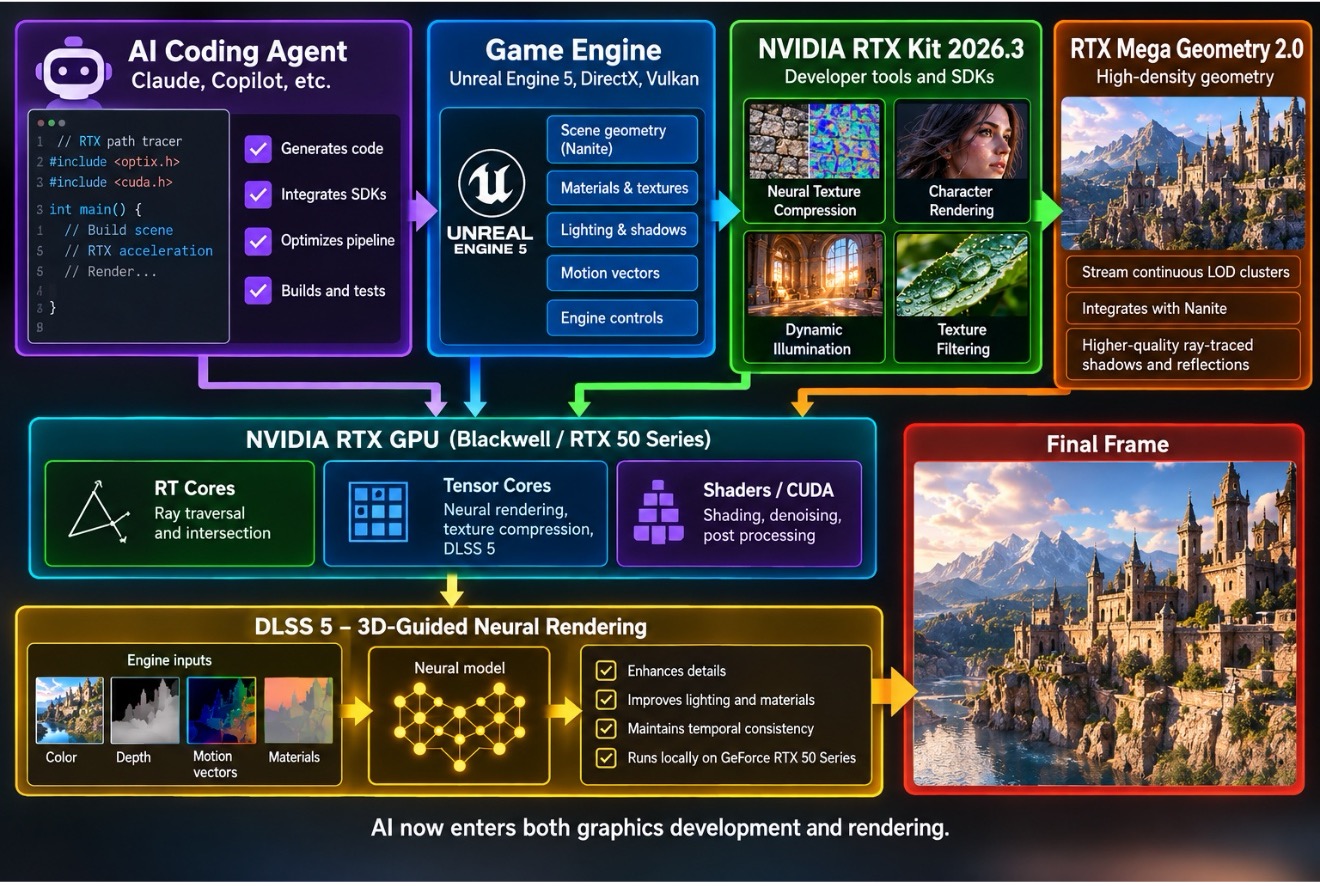
Figure 1. AI now refines pixels and writes the code behind them. (Source: JPR)
Neural Texture Compression 0.10 beta supports Microsoft’s DirectX 12 Agility SDK preview with Linear Algebra. Developers can execute neural texture decompression through Tensor Cores inside DirectX shaders. RTX Neural Shading 1.4 uses the same programming environment, giving ISVs another way to incorporate neural operations into graphics engines.
These developments introduce new scheduling requirements. Engines must coordinate conventional shaders, ray-tracing hardware, neural inference, memory residency, and synchronization within the same frame budget.
Nvidia’s RTX Kit components

Table 1. Nvidia expands neural processing throughout the graphics pipeline. (Source: Nvidia developer materials supplied for this article)
Geometry management changes
RTX Mega Geometry 2.0 streams continuous LOD clusters for complex meshes. Nvidia demonstrated the technology in its updated Zorah scene using textured glTF assets.
Unreal Engine 5 Nanite manages dense geometry efficiently during rasterization. Ray tracing requires acceleration structures that describe scene geometry. Developers often substitute simplified proxy meshes for complex Nanite objects, creating differences between rasterized surfaces and their ray-traced representations.
Those differences affect reflections, shadows, and geometric consistency.

Figure 3. Streamed LOD clusters and neural stages feed one RTX pipeline. (Source: JPR)
Mega Geometry increases the geometric detail available to ray tracing. Nvidia expects the technology to contribute to Microsoft’s DirectX Raytracing 2.0 development. Gears of War: E-Day provides a planned commercial application of Mega Geometry alongside Nanite.
DLSS 5 introduces another processing stage through 3D-Guided Neural Rendering. The engine supplies rendered frames, geometry, textures, lighting, and motion information. Neural models refine the resulting image according to developer-selected controls.
Developers can adjust structural and tonal intensity and apply masks to specific objects or materials. Visual Concepts plans to use DLSS 5 in NBA 2K27 to improve facial rendering, skin subsurface scattering, light transmission, and contact shadows.
These capabilities increase the importance of neural inference throughput, memory bandwidth, model management, and image-quality validation.
AMD develops new rendering approaches
AMD’s rendering research combines geometry optimization with longer-term neural graphics development.
AMD Fellow Holger Gruen demonstrated a tetrahedral cage technique that reduces acceleration-structure maintenance for animated geometry. The method encloses dense meshes inside simplified deformable cages. Animation changes the cage while the detailed geometry and its BVH remain reusable.
In AMD’s research demonstration, approximately 25,000 independently animated plants produced about 500 million active triangles per frame at more than 60 fps on a Radeon RX 9070 XT.
The technique reduced BVH memory requirements from approximately 80 GB to 1.7 GB and reduced update time from more than 300 ms to approximately 3.3 ms.
These savings matter because acceleration-structure maintenance competes with shading, ray traversal, and neural inference for memory bandwidth and processing time.
AMD tetrahedral cage results

Table 2. AMD’s research demonstrates substantial acceleration-structure savings for animated geometry. (Source: AMD GPUOpen)
RDNA 5 and FSR Diamond
Reports concerning AMD’s RDNA 5 architecture describe additional compute resources, a possible 384-bit memory interface, and dedicated neural processing capabilities. The supplied material also describes FSR Diamond, sometimes identified as FSR 5, as a future neural rendering technology.
The proposed capabilities include machine-learning upscaling, neural multi-frame generation, ray regeneration, and processing that uses geometry, material properties, and depth information.
These features could reduce reconstruction artifacts and improve illumination quality and frame stability.
The material also associates FSR Diamond with future PC and console platforms, including Sony’s next PlayStation generation and Microsoft’s Project Helix.
AMD has not established all these reported specifications, performance targets, or product relationships in the supplied evidence. The architectural details and console projections, therefore, remain preliminary.

Figure 3. AMD’s geometry optimizations feed a graphics pipeline combining ray tracing, neural processing, and AI-assisted development.
For silicon teams, the direction suggests growing demand for low-precision matrix operations, efficient data movement, and closer integration between neural processing and graphics execution.
Nvidia DLSS runs experimentally on Radeon
Independent developer Daniel Blanco has released Alpha 0.8.0 of DLSS-NR-on-AMD, an unofficial project that attempts to run Nvidia’s neural graphics technologies on AMD Radeon GPUs. The project reportedly supports DLSS 5 Neural Rendering, Super Resolution, Ray Reconstruction, and Frame Generation on Radeon RX 7000 and RX 9000 hardware.
Its implementation uses HIP compute kernels, custom memory layouts, and DirectX 12 integration. Ray Reconstruction uses an implementation of Nvidia’s Model F, while Super Resolution supports Models M and L.
The NeuralHub manager organizes the necessary libraries, installs the modification loader, and provides an in-game configuration interface.
The developer reports support for Multi Frame Generation up to 4×.
Reported Radeon support

Table 3. DLSS-NR-on-AMD Alpha 0.8.0 reports unofficial Nvidia neural technology support on Radeon GPUs.
A Reddit user demonstrated Ray Reconstruction in Cyberpunk 2077 using a Radeon RX 9070 XT and Ryzen 7 9700X. The user reported running the game at 1440p with maximum graphics settings and path tracing enabled, without measurable frame rate loss from enabling Ray Reconstruction.
The developer separately reported 90–100 fps on an RX 9070 XT at 1080p using a full neural model. The published description omitted the game and measurement conditions, limiting the result’s usefulness for comparisons.
The developer also claims a 25% Neural Rendering performance improvement on RDNA 3 through recent optimizations.
NeuralHub requires Windows 11, compatible DirectX 12 games, AMD Adrenalin 26.1.1 or later, and user-supplied Nvidia libraries. Vulkan and Linux support remain future objectives. Anti-cheat systems may interfere with the modification.
The project lacks official AMD and Nvidia support, and its compatibility and performance claims require independent validation. Its technical significance lies in the potential portability of neural rendering workloads across GPU architectures. That portability depends on software implementation, numerical precision, memory organization, and hardware acceleration.
AI writes rendering software
AI coding agents are also changing graphics development.
A Reddit developer using the name Zealousideal_View_12 reported asking Anthropic’s Claude Opus 5.5 to construct a hardware-accelerated ray tracer for two Nvidia GeForce RTX 5090 GPUs. According to the developer, Claude generated a C++ and CUDA implementation using OptiX 9.1 in approximately one hour.
The renderer divides frames horizontally between the GPUs, balances workload distribution, and manages host-device synchronization. The developer reported 34 fps and 267 million ray samples per second.
The implementation incorporates Shader Execution Reordering, Next-Event Estimation, and Multiple Importance Sampling. These established techniques address ray scheduling, light sampling, and path-tracing efficiency.
The experiment illustrates how coding agents can assemble sophisticated software prototypes from existing APIs and algorithms. Commercial rendering engines still require extensive debugging, validation, performance profiling, security review, and maintenance. ISVs can use coding agents to accelerate experimentation, test alternative implementations, and reduce the engineering time required to investigate rendering techniques.
Where the technologies converge
These developments affect several parts of the graphics pipeline.
AMD’s tetrahedral cages reduce acceleration-structure maintenance. Nvidia’s RTX technologies improve geometry management and introduce neural processing into shader workflows. DLSS-NR-on-AMD explores cross-architecture execution of neural graphics models. AI coding agents reduce the time required to implement and test rendering algorithms.
Each development changes the allocation of GPU resources or engineering effort. For ISVs, the challenge involves combining conventional rendering algorithms with neural processing while maintaining predictable performance and visual quality. Silicon designers must evaluate the balance among RT acceleration, matrix processing, shader throughput, cache capacity, and memory bandwidth.
CIOs responsible for visualization, simulation, and digital-twin infrastructure should consider neural inference performance, software compatibility, and long-term driver support when planning GPU investments.
The industry now has several opportunities to improve visual quality and scene complexity through software development. Commercial engines, shipping games, and repeatable benchmarks will determine how effectively these techniques translate from research and demonstrations into production.
What do we think?
AMD and Nvidia continue to expand the role of software in GPU performance, particularly with AI. Geometry optimization reduces memory pressure, while neural rendering introduces new image-processing capabilities. AMD’s Radeon implementations demonstrate potential portability across architectures, while AI coding agents shorten development cycles. ISVs and silicon designers should measure complete rendering workloads, evaluate neural model quality, and examine integration costs before changing product architectures.
Inflection point. These developments suggest an approaching inflection point in graphics and applied AI. Neural models are increasingly used in shading, reconstruction, illumination, and image generation. Coding agents help developers construct and optimize the software that coordinates those operations. Geometry optimization releases resources that neural processing can use. We think the inflection point will become measurable when production engines integrate these techniques, maintain consistent visual quality, and deliver repeatable performance improvements across commercial GPU architectures. That transition could reshape graphics APIs, silicon design, and software development economics if memory costs don’t stifle the market too much.
LIKE WHAT YOU SAW HERE? SHARE THE EXPERIENCE, TELL YOUR FRIENDS.