
Nvidia just put $3.5 billion into MediaTek, and the real story isn’t the money. The two companies are opening NVLink Fusion to MediaTek’s customers, letting hyperscalers and AI labs build their own custom chips and still plug directly into Nvidia’s rack-scale AI factories. MediaTek becomes the SoC design and packaging partner that makes this possible, spanning data centers, consumer AI PCs, and software-defined cars. We walk through what NVLink Fusion actually offers and why Nvidia now calls itself an infrastructure company, not a chip vendor.
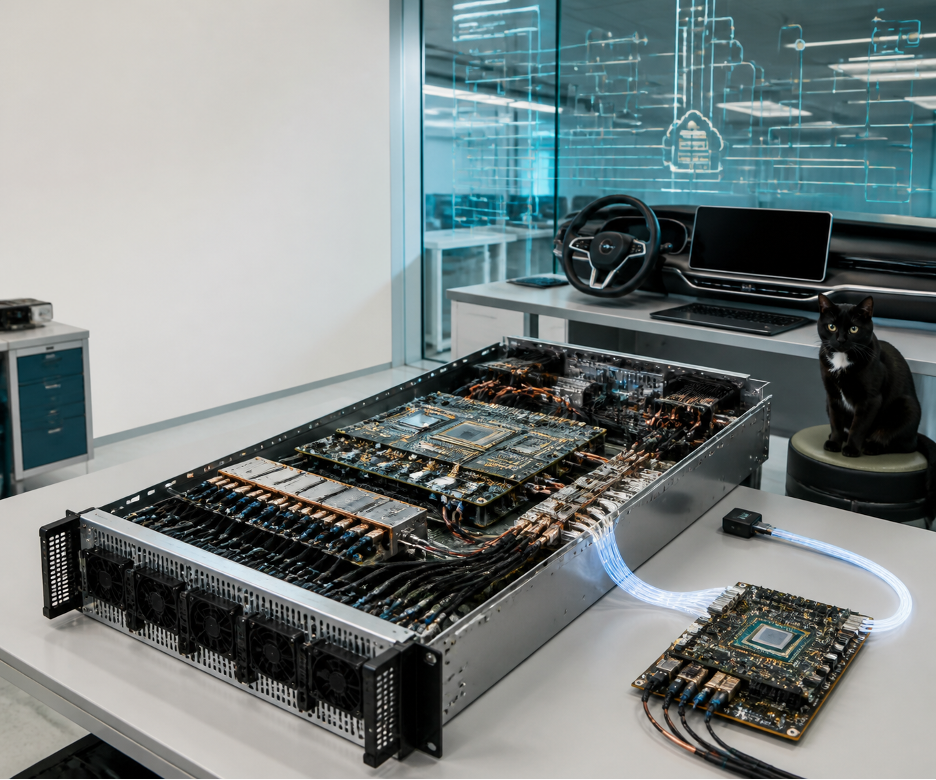
MediaTek raised $3.9 billion by selling overseas convertible bonds, with Nvidia and Alphabet among the AI infrastructure partners participating alongside major institutional investors. Nvidia bought $3.5 billion of that total, a direct investment tied to a separate joint announcement: a deepened, multi-generational partnership spanning AI infrastructure, local AI computing, and automotive. The financial commitment matters less than what it buys: MediaTek adopting Nvidia’s NVLink Fusion platform, opening a prevalidated path for MediaTek’s own customers to build custom AI accelerators that connect directly into Nvidia’s rack-scale AI factories.
NVLink Fusion bundles the technologies a custom accelerator needs to reach production: the NVLink Fusion chiplet connecting XPUs to Nvidia’s scale-up fabric through Nvidia Photonics or electrical interconnects, NVLink-C2C for high-bandwidth chip-to-chip connectivity with Nvidia’s Rosa CPUs and other compatible processors, and NVHBM for customized memory that raises bandwidth and energy efficiency, freeing up silicon area for compute in the process. Building a working accelerator only starts the job. Getting multi-die architectures, advanced packaging, high-speed SerDes, HBM, I/O, and scale-up networking into a manufacturable, production-ready system demands extensive chip-to-rack engineering, qualification, and supply-chain support, work most customers would otherwise have to build from the ground up themselves.
MediaTek fills that gap directly, providing SoC design, advanced packaging, manufacturing, and system integration so customers can concentrate resources on the compute architecture that actually differentiates their platform. Nvidia handles the connectivity, memory architecture, networking, and rack-scale technologies around it. MediaTek also joins the broader NVLink Fusion ecosystem, giving hyperscalers, cloud providers, and frontier model developers a route to connect custom XPUs into Nvidia’s infrastructure alongside Nvidia’s own MGX rack-scale architecture, cutting development complexity and shortening time to market for semi-custom AI factories.
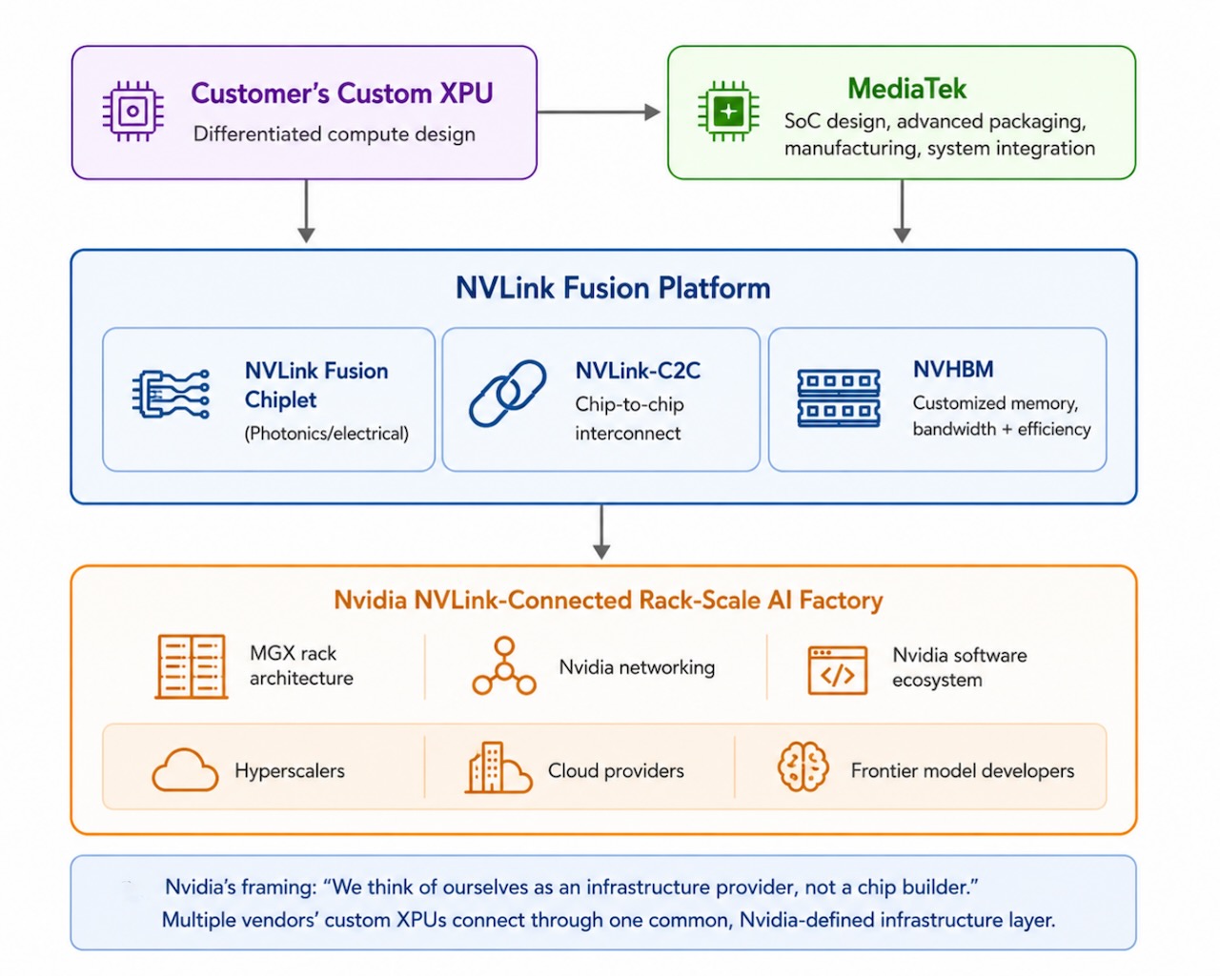
Figure 1. The bank of Nvidia incorporates MediaTek tech.
Nvidia CEO Jensen Huang frames the collaboration around reach: AI now transforms every computing platform, from the largest AI factories down to the PC and the car, and MediaTek’s expertise in SoC design, connectivity, performance, and power efficiency extends Nvidia’s accelerated computing into markets Nvidia can’t reach alone. Rick Tsai, MediaTek’s vice chairman and CEO, ties the deal to a shared vision of pervasive advanced AI computing, spanning cloud infrastructure, local AI computing, and automotive, combining Nvidia’s accelerated computing and software ecosystem with MediaTek’s own diverse AI technology portfolio and its position in custom silicon.
The partnership already has products in market. MediaTek co-developed the GB10 Grace Blackwell Superchip powering Nvidia DGX Spark, pairing a Blackwell GPU with a Grace CPU over NVLink-C2C to bring AI capability to edge systems. That work extends now to RTX Spark, aimed at the next-generation of consumer PCs, AI developer supercomputers, and enterprise-class workstations. In automotive, MediaTek’s Dimensity Auto platforms integrate Nvidia technology and RTX graphics for intelligent vehicle cockpits and work alongside Nvidia Drive AGX, with both companies say they are building toward a scalable architecture across future generations of AI-defined vehicles.
One detail in Nvidia’s own framing carries more weight than the products themselves. Asked whether enabling custom XPUs competes with Nvidia’s own GPUs, Nvidia rejected the premise directly: “We think of ourselves as an infrastructure provider, not a chip builder.” That statement marks a real shift in how Nvidia describes its own business. Instead of measuring success by selling every accelerator inside an AI factory, Nvidia is moving up the stack, making the interconnect, memory architecture, networking, rack design, software ecosystem, and deployment framework the actual strategic control point, the layer hyperscalers and frontier AI developers depend on regardless of whose accelerator sits inside it.
MediaTek’s role in this shift extends well past its traditional mobile SoC and connectivity business. The company becomes a strategic provider of semi-custom AI silicon, advanced packaging, and manufacturing services for hyperscalers and frontier AI developers, an engineering and deployment partner, not a competing accelerator vendor. If this architecture takes hold broadly, competitive differentiation in AI infrastructure shifts away from any single chip and toward the overall AI factory design, with multiple types of custom accelerators from different vendors connected through one common, Nvidia-defined infrastructure layer.
Both companies frame this as multi-generational, not a single product cycle, spanning AI infrastructure, local AI computing, and automotive together. The bonds close the financial chapter of this announcement. The harder question is whether hyperscalers and AI labs actually build on NVLink Fusion at scale, or keep their custom silicon on entirely separate infrastructure instead.
What do we think?
Five deals, five different ownership structures, and that variation matters more than the total dollar figure. Mellanox (2019, roughly $7 billion) remains Nvidia’s only full corporate acquisition in this group, buying outright ownership of interconnect technology that now underpins every rack-scale AI factory Nvidia sells into. Everything since has stopped short of that model, deliberately.
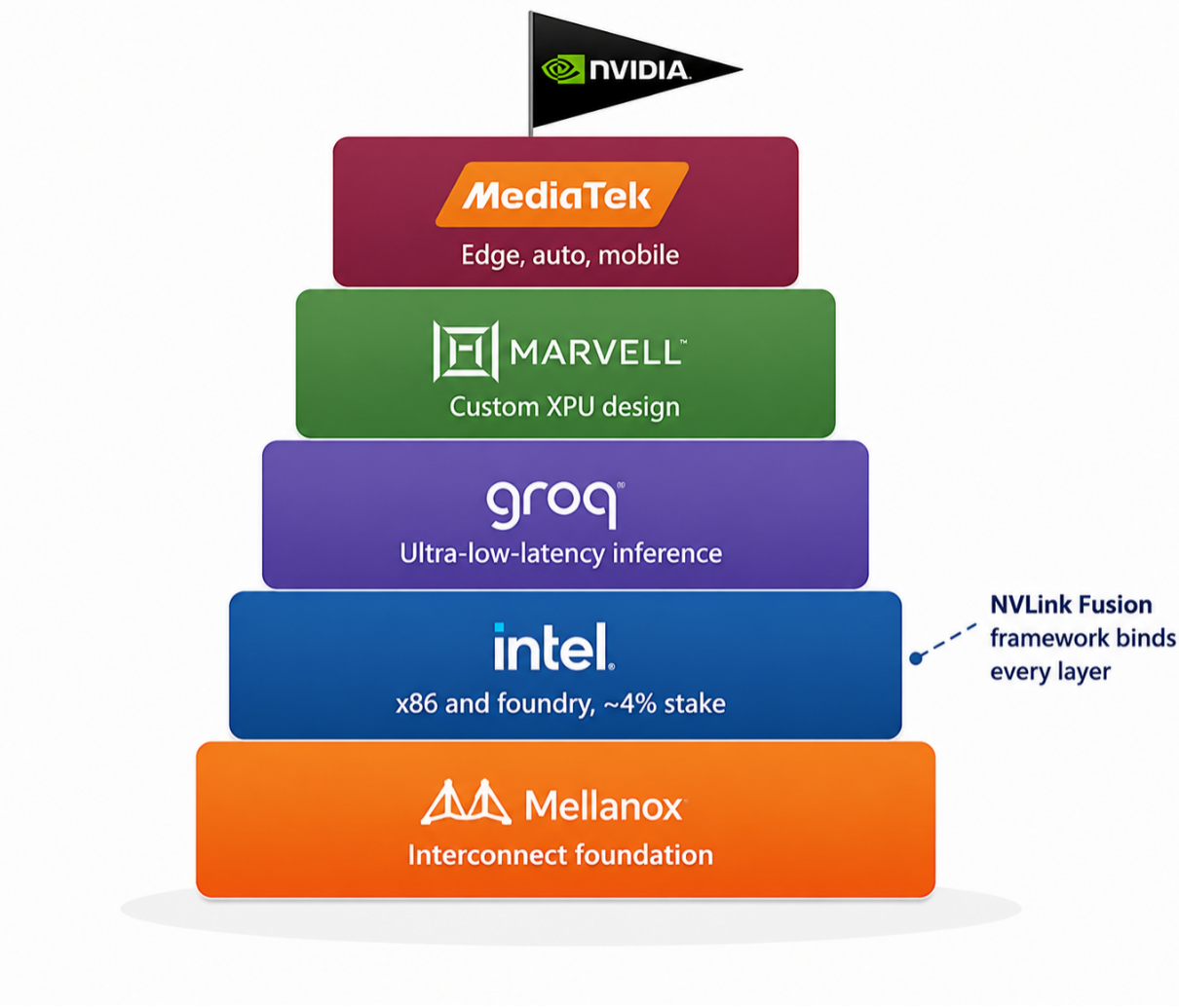
Figure 2. Another five-layer cake.
Intel ($5 billion, agreed September 2025, closed December 2025) is real, current equity: 214.7 million common shares at a fixed $23.28, purchased through private placement, giving Nvidia roughly 4% ownership today, not a future option. Marvell ($2 billion, March 2026) works the same way, a genuine equity stake, sized at roughly 3-4% of Marvell’s market cap, buying into the company whose fastest-growing business exists specifically to build the custom silicon hyperscalers want as an Nvidia alternative. Groq ($20 billion, December 2025) inverts that logic entirely: assets, IP, and talent, explicitly not the company itself, Jensen Huang’s own words. MediaTek ($3.5 billion, August 2026) sits somewhere else again, pure debt today, with equity upside that depends on a conversion price neither company has disclosed. Four structures, four different bets on how much control Nvidia actually needs to own versus simply access.
The strategic logic ties together even where the paperwork doesn’t. Mellanox supplies the interconnect. Nvidia’s own GPUs cover training. Groq’s LPU architecture covers the ultra-low-latency inference workload Nvidia’s HBM-based designs handle less efficiently. Intel adds x86 CPU pairing and domestic foundry capacity. Marvell and MediaTek both extend NVLink Fusion into custom silicon MediaTek’s and Marvell’s own customers design, not Nvidia’s. Layer all five together and the resulting footprint runs from training through inference, merchant GPU through fully-custom XPU, data center through PC through car, with almost nothing in AI compute sitting outside it.
One wrinkle keeps this from reading as a clean, unified stack. NVLink Fusion ecosystem lists Intel among the backers of UALink, a competing open interconnect standard AMD and Broadcom are pushing as an alternative to NVLink. Nvidia holds equity in a company simultaneously funding a rival standard to the very technology at the center of this strategy. That’s not a contradiction serious enough to undercut the pattern, as hyperscalers hedge across camps constantly, and Intel plausibly needs both relationships regardless of which standard eventually wins. It does mean the “everyone connects through Nvidia” narrative works better as a description of Nvidia’s ambition than as a settled fact about where the industry actually lands.
Inflection point: Four deals now form one coherent stack: Mellanox for interconnect, Nvidia’s own GPUs for training, Groq’s LPU architecture for ultra-low-latency inference, and MediaTek’s NVLink Fusion for custom silicon at the edge and in the data center. No other company owns every layer from training through inference, data center through car, merchant silicon through custom silicon. That concentration is the real inflection point: AI infrastructure competition stops being GPU versus GPU and becomes one integrated stack against everyone else’s fragmented pieces. Nvidia is going to have its cake and eat too.
One other point—Nvidia, unlike many other companies, is not erasing the identity or culture of the companies it is investing in and partnering with.
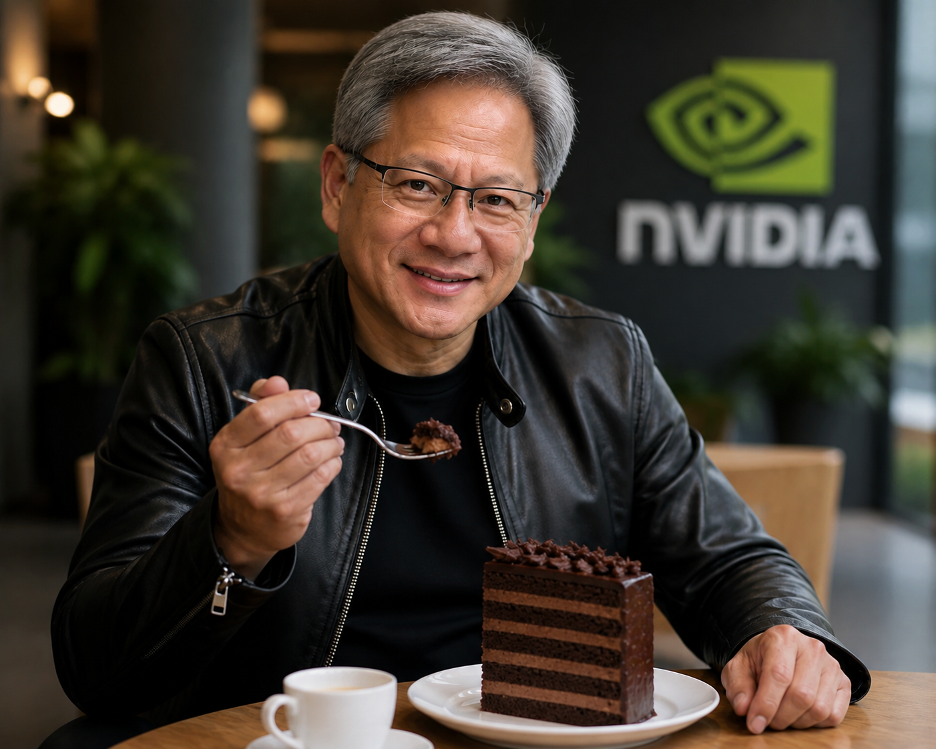
Five-layer cake.
WHATYA THINK? LIKE IT? DON’T BE STINGY, SHARE IT WITH YOUR FRIENDS.