
China’s humanoid robots can box, dance, and play ping-pong, and now the industry wants credit for something harder: folding laundry safely next to people. At NXP’s Tech Day, the chip company laid out a different bet entirely: that physical AI is a systems problem, not a compute problem, and unveiled a three-layer “neural axis” architecture plus new networking silicon to prove it. We walk through China’s software gap, NXP’s case against compute-only rivals, and why $5.1 billion in humanoid investment still adds up to a small slice of physical AI’s real value.
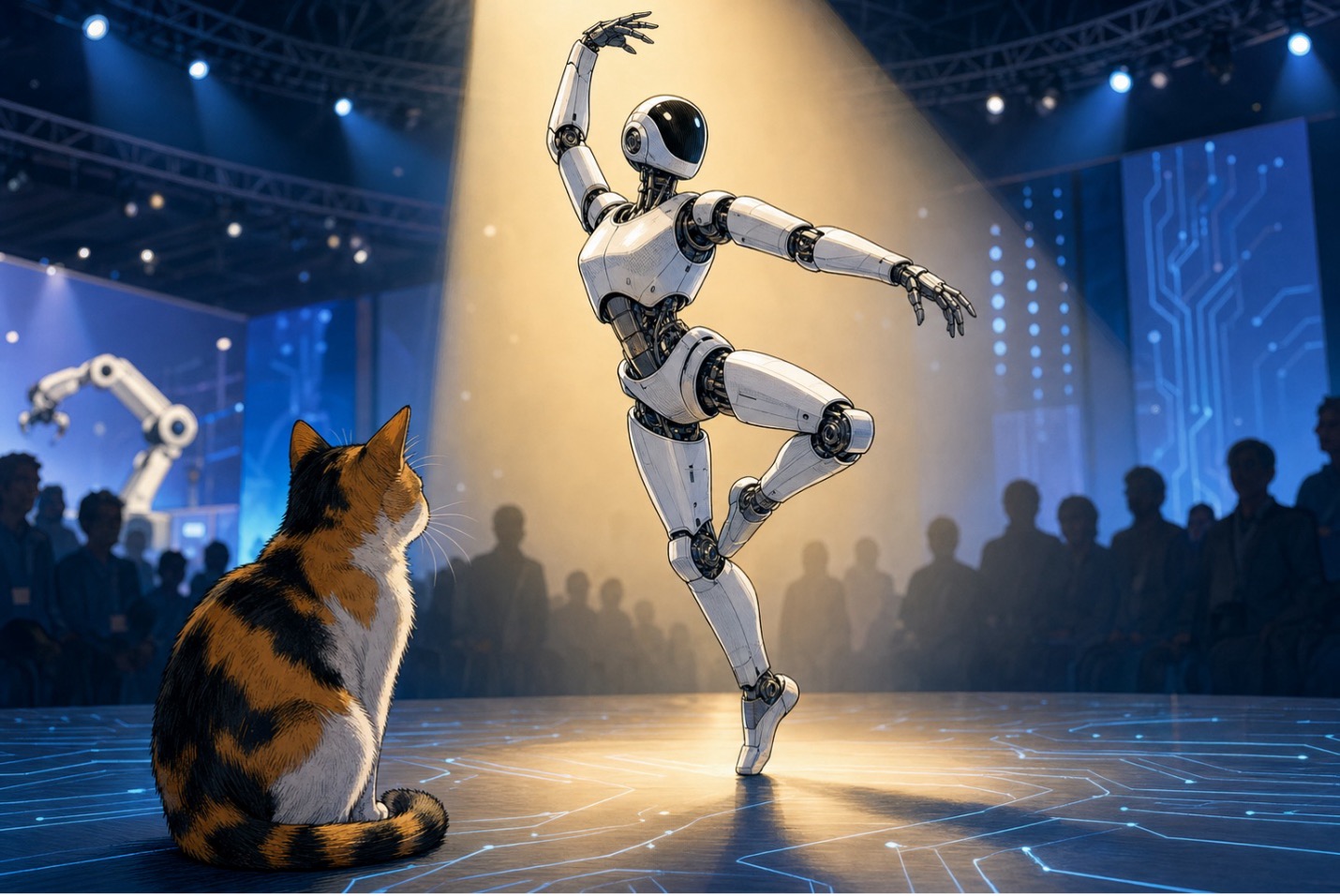
The World Robot Conference opened in Beijing, and China’s humanoid sector came ready to perform. Robots boxed, danced ballet, and played ping-pong—genuine crowd-pleasers inside a conference hall. China already runs the world’s most extensive humanoid supply chain: Nearly all 14,500 humanoids delivered globally last year came from Chinese manufacturers. The gap sits past the choreography. Few of these machines can do more than entertain, and the industry’s own engineers are shifting emphasis toward software, the one area where China still trails its leading American competitors. Folding laundry and stocking shelves matter more to a viable business than another dance routine, and getting there will take real time.
The money flowing into humanoids doesn’t match where the category actually lands, longer term. Investors have committed $5.1 billion to humanoid robots since 2024, real capital chasing a genuinely visible category. Projections put humanoids at just 2% of physical AI’s total value by 2045. The dancing robots get the headlines. The economic weight of physical AI sits almost entirely somewhere else, in the fragmented, less photogenic layer of factory automation, drones, autonomous mobile robots, and automotive systems that never make a conference stage.
Six thousand miles away in Silicon Valley, California, NXP held its Tech Day, with a specific argument: Physical AI is a system problem, not just a compute problem. NXP’s portfolio—MCUs, MPUs, analog solutions, sensing, connectivity, and actuators—gives the company a case against rivals that sell compute alone. The segment NXP is chasing runs wide and includes factory automation, drones, autonomous mobile robots, automotive, and humanoids. NXP framed its advantage, saying, “Embedded is our home.” The company believes the industry is moving away from a single central processor and getting distributed across every system a customer builds, which demands secure communication between every part and a data volume that keeps climbing.
Two things hold factory automation back today, by NXP’s account. Most industrial systems lack IP-based connectivity deep enough to reach every sensor, actuator, and controller, and most lack topology discovery, the automatic mapping of connected devices that makes a network visible and a deployment simpler.
Public humanoid failures at CES and Computex made the stakes concrete. A backflipping robot draws a crowd until it lands wrong. A robot collapsing on stage minutes after a presenter calls the technology ready undercuts the whole pitch. Every one of those moments points to the same unsolved requirements: safety by design, security by design, and real-time response, since latency turns a minor glitch into a real hazard.
Robots are also moving out of the fenced, deterministic automation era and into an open physical AI era, working alongside people instead of behind a barrier, which multiplies the complications. The benchmark obsession—which AI model runs fastest on which processor—only covers half the problem. The harder question is where to put intelligence and how to scale that placement across wildly different robot shapes. NXP’s answer is a three-layer neural axis architecture modeled loosely on the human nervous system: a cerebrum for reasoning, a cerebellum for coordination, and a spinal cord for reflexive response that bypasses the brain entirely so local processors can act first.
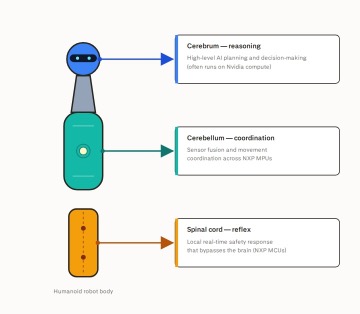
Figure 1. NXP’s answer is a three-layer neural axis architecture.
China’s shift on safety happened fast. Chinese robotics companies spent their early effort optimizing humanoid architecture for AI functions and choreography, dancing, martial arts routines, and impressive demos, with little thought given to safety. After CES, nearly every Chinese robot company now cares about it. The hard part is retrofitting safety onto a design that skipped it the first time. However, a robot with 40 or 50 actuators that never had built-in safety at the actuator level faces a full hardware swap, not a patch. On the compute side. NXP describes their relationship with Nvidia as cleanly divided—they have the brain, we have the body. Most higher-end humanoid designs already run on Nvidia compute, and neither company competes with the other in the territory it currently owns.
None of this settles the deeper question of whether physical AI actually needs a humanoid shape at all. NXP’s own strategy assumes it doesn’t, spanning factory floors, drones, and vehicles right alongside the robots that get the conference-stage attention. The dancing continues either way. The business case builds somewhere quieter instead, in actuators, networking silicon, and safety architecture that never makes it onto a highlight reel.
What do we think?
NXP’s systems argument holds up better than most because it names the gaps: Topology discovery and actuator-level safety are real and currently unsolved industry-wide, not marketing inventions. The Nvidia division of labor looks stable today, brain versus body, and that boundary is exactly where the next competitive fight in physical AI takes shape once humanoid volumes justify it.
NXP’s bet isn’t on humanoids; it’s that physical AI marks an inflection point in what edge silicon means, from isolated MCUs doing one job to a distributed nervous system spanning cerebrum, cerebellum, and spine across a factory or robot body. If that reframing holds, the winners in physical AI won’t be whoever ships the fastest AI benchmark; they’ll be whoever solves topology discovery, actuator-level safety, and secure networking first. China’s dancing robots make the headlines. This infrastructure race decides who profits.
White paper
If you’re interested in humanoid robots, you will likely find our white paper, China Takes the Lead in Robots, interesting and informative.
China has taken a clear lead in humanoid robots. Electric vehicle makers are rushing into the sector as China’s ambitions in physical AI, the race to build machines that see, think, and move on their own, are laid bare. The deployment numbers, the chip supply chain, and the tug-of-war over materials all tell one connected story.
Epilog
Last week, a Chinese humanoid robot, called Superman, clocked a running speed of 12.66 meters per second, beating the record Usain Bolt set. Superman then crashed straight into a wall. Chinese companies expect to sell 50,000 humanoid robots this year, more than triple last year’s figure. Having mastered the hardware behind the machines, the real question becomes whether they can tackle the software.
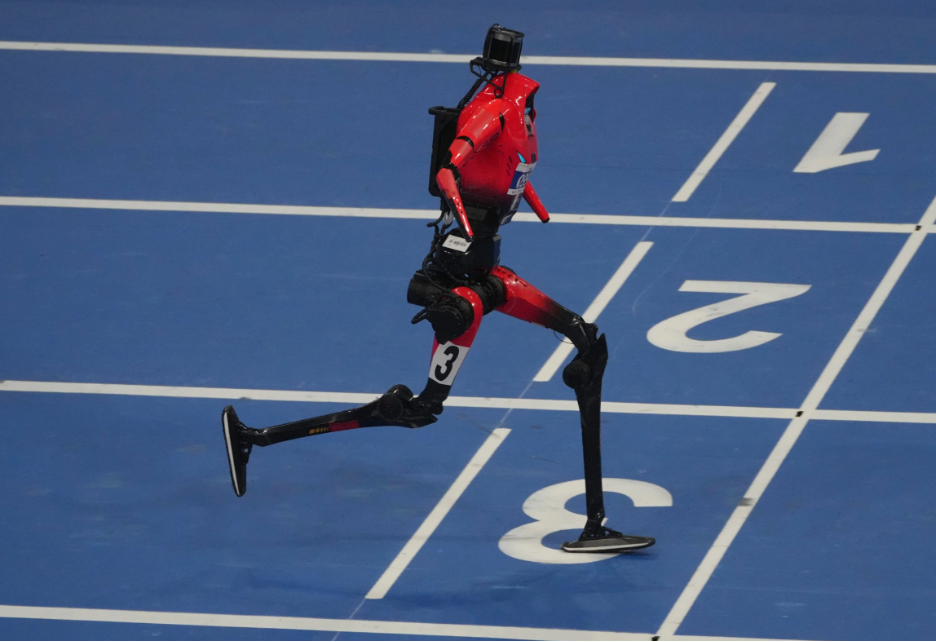
A robot competes in the 1500m during the World Humanoid Robot Games in Beijing on Sunday, Aug. 23, 2026. (AP Photo/Achmad Ibrahim)
LIKE WHAT YOU’RE READING? INTRODUCE US TO YOUR FRIENDS AND COLLEAGUES.