
The Standard Performance Evaluation Corporation (SPEC) has released the SPECviewperf 15.0.1 Linux Edition benchmark, bringing its professional graphics test suite to x86_64 and aarch64 Linux workstations. The benchmark runs eight OpenGL workloads representing applications such as Catia, Creo, Maya, SolidWorks, Siemens NX, and Blender, without requiring users to license those applications. It is free for end users, and it gives studios, engineers, and buyers a standardized way to compare GPUs, drivers, and platforms on Linux.
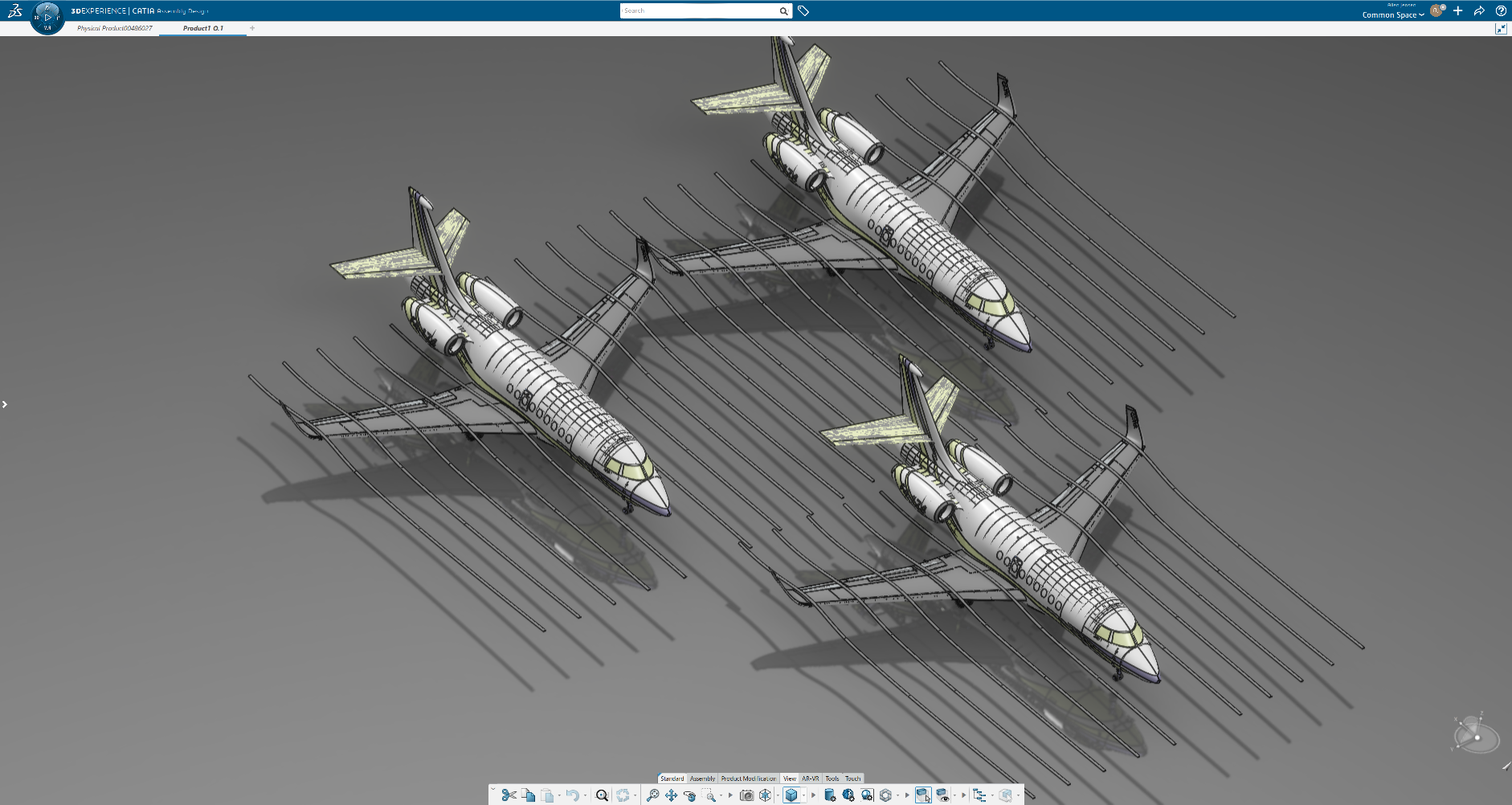
Figure 1. The Catia and 3DExperience models are provided courtesy of Dassault Systèmes.
A benchmark is only as useful as its resemblance to the work people actually do. A synthetic test can tell you a GPU is fast, but a power user wants to know whether the viewport stays fluid when a large assembly spins in Catia or a heavily textured character rotates in Maya. That is the premise behind every benchmark from the Graphics and Workstation Performance Group (GWPG) at SPEC, and it is why the new SPECviewperf 15.0.1 Linux Edition matters.
SPEC announced the benchmark on September 22, 2026. According to the organization, it measures professional graphics performance on Linux workstations using workloads that represent CAD, content creation, engineering, energy, and medical visualization. Users do not need to install or license the represented applications, which removes a costly and time-consuming step from qualifying new hardware.
This is not SPEC’s first Linux release. The new benchmark succeeds the SPECviewperf 2020 v3.0 Linux Edition. What changes is the scope. The Linux edition now tracks the workload set of SPECviewperf 15, adds Arm support, and replaces much of the old setup friction with a graphical interface. It also acknowledges something the Windows-centric benchmarking world tends to forget: The operating system is part of the workload. Drivers, windowing systems, and distribution choices all shape how a GPU behaves, so a Linux shop needs Linux numbers.
“The release addresses the increasing diversity of professional Linux workstation platforms and represents a leap forward in capability, productivity, and cost efficiency for organizations that have adopted Linux for engineering, visualization, and content-creation workflows,” said Anthony Mansur, chair of the SPECgpc committee.
Linux has deep roots in professional graphics, especially in visual effects and animation. The VFX Reference Platform describes Linux, the successor to Silicon Graphics’ Irix, as the primary operating system on artist workstations at many studios. Linux is also a cornerstone of open-source software, and the film industry has invested in that open-source ecosystem. In 2018, the Academy of Motion Picture Arts and Sciences and the Linux Foundation launched the Academy Software Foundation to lower the barrier to developing and using open-source software, with founding members that included The Walt Disney Studios, DreamWorks Animation, and Weta Digital. The VFX Reference Platform’s “2024 VFX/Animation Studio Workstation Linux Report,” produced with the Visual Effects Society Technology Committee, surveyed 67 studios that already run Linux on at least some of their workstations. As Figure 2 shows, more than half of the artists in every studio-size group use a Linux workstation as their primary machine, and at the smallest studios, nearly all of them do. That depth of use is what makes a Linux-native benchmark important.
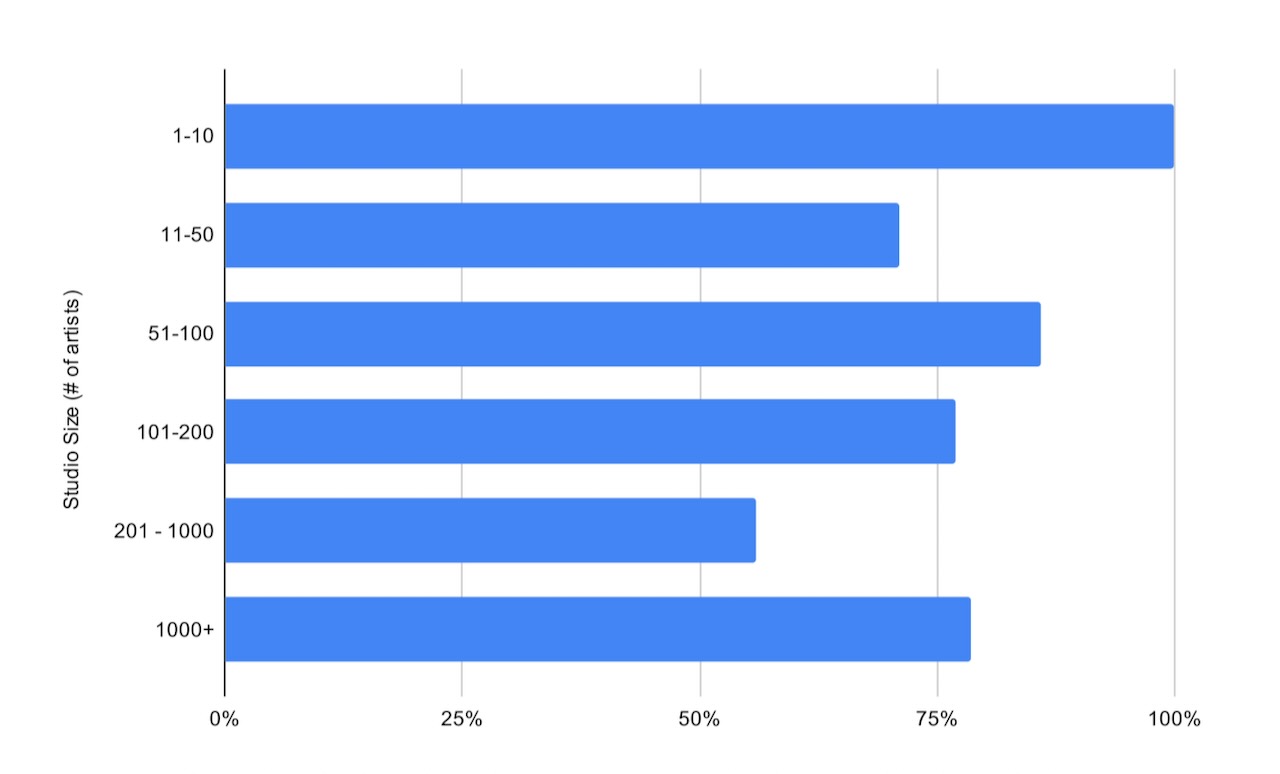
Figure 2. Proportion of artists using a Linux workstation as their primary machine, by studio size. (Source: VES Technology Committee, “VFX/Animation Studio Workstation Linux Report, 2024”)
x86 and, now, Arm
The benchmark supports x86_64 systems running Ubuntu 24.04 LTS, Red Hat Enterprise Linux 10, Rocky Linux 10, and Fedora 43. On the Arm side, it supports aarch64 systems running Ubuntu 24.04 LTS. The minimum configuration calls for 16GB of system memory, 100GB of disk space, 4GB of GPU memory, and OpenGL 4.5 compliance, according to SPEC.
The aarch64 support is the headline for us. An Arm-based Linux workstation can now be measured with the same workloads and the same scoring as an x86 system. That turns a marketing conversation about architecture into a data conversation about delivered graphics performance.
The workloads
The suite includes eight OpenGL workloads. SPEC built them from traces of the represented applications and updated most of them for this release:
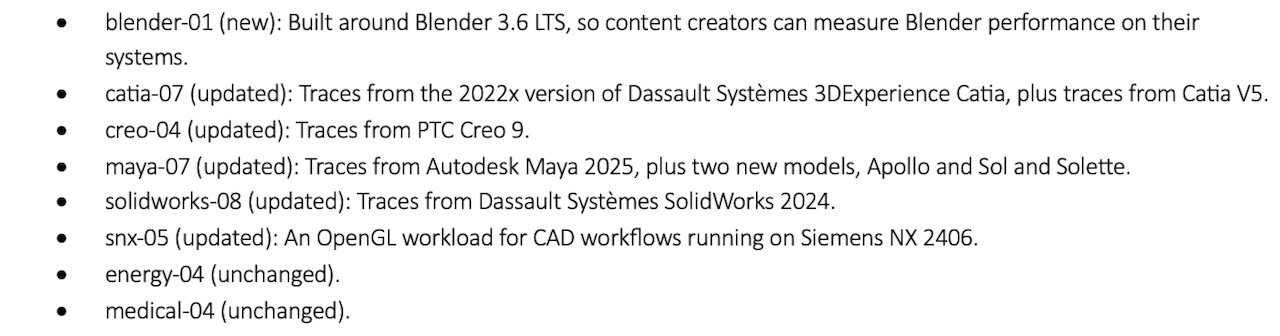
The mix matters. Six of the eight workloads cover mechanical CAD and digital content creation; energy and medical visualization round out the suite. That spread lets a buyer weight the results toward the applications its own users run.
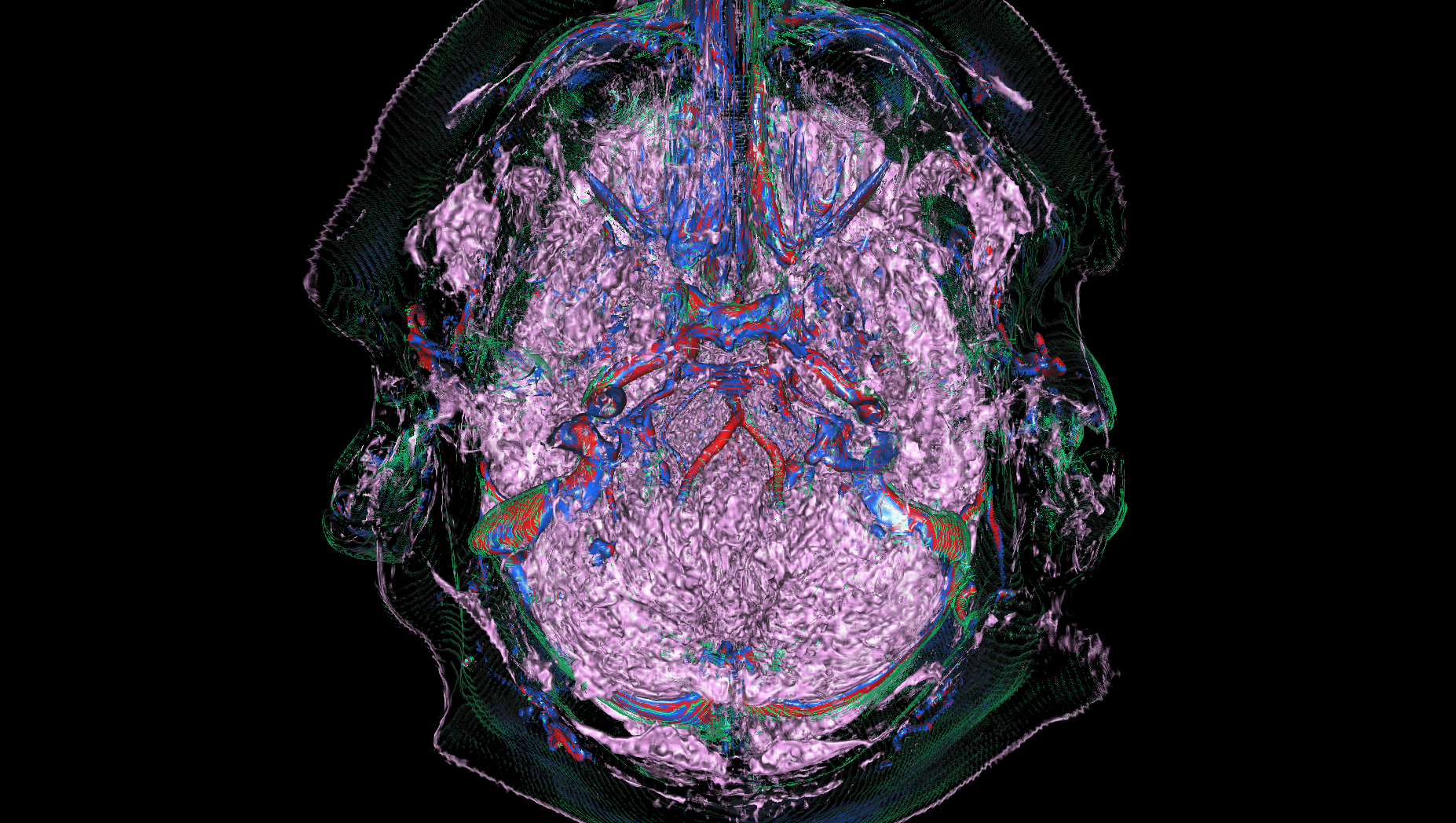
Figure 3. Segment of the human head and torso model: Provided by a member of the SPECgpc subcommittee. (Source: Ross Cunniff)
Built for the people who run benchmarks
SPEC put real effort into usability. The new graphical interface lets users select, install, uninstall, and update workloads; choose Full HD or 4K resolution; review the detected system configuration; run the benchmark; and manage completed results.
A Results Manager opens the browser-based reports, lets users annotate and organize runs, flags results that are candidates for official submission, and packages selected results. For automation, the specviewperf15-cli interface supports scripted execution, including listing workloads; running official, installed, or selected workloads; choosing the resolution; enabling debug output; and canceling workloads mid-run.
The “snap-in” architecture may be the most practical change. Users can download, run, and submit results for any subset of workloads without installing or executing the full suite. A SolidWorks shop can run solidworks-08 and move on. An IT team qualifying a new fleet can script only the workloads its users care about.
Pricing and availability
The SPECviewperf 15.0.1 Linux Edition benchmark is available now. It is free for the user community and costs $2,500 for sellers of computers and related products and services. Existing license holders of the SPECviewperf 15 benchmark can purchase the Linux Edition for $1,000. SPEC/GWPG members receive benchmark licenses as a membership benefit. SPEC also publishes a results page for the Linux Edition, so buyers can compare systems before they test their own.

Figure 4. The Metroverse scene was contributed by Intel.
What do we think?
Linux is not a niche in professional graphics; in visual effects and animation, it is a mainstay. The studios in the VES survey were moving off CentOS 7 after its June 2024 end of life and picking successor Enterprise Linux distributions, and SPEC’s support for Red Hat Enterprise Linux 10 and Rocky Linux 10 speaks directly to that platform refresh. The most influential studios run Linux, and they deserve to know what they are leaving on the table by staying on older workstation platforms. SPECviewperf 15.0.1 Linux Edition answers that question for viewport graphics.
Linux also levels the workstation marketplace for non-x86 platforms, and aarch64 support makes that concrete. It raises the obvious next question: Will we see RISC-V support eventually? Still, SPECviewperf is a graphics benchmark, and testing graphics architectures matters more than testing processor architectures. When Bolt Graphics starts benchmarking its Zeus GPU, it should join SPEC/GWPG and run these state-of-the-art workloads. Zeus would answer both questions at once, since the design integrates RISC-V cores that run Linux. The catch is that SPECviewperf requires OpenGL 4.5 compliance, and Zeus is a path-tracing-first design, so a conformant OpenGL driver is the ticket to entry.
The OpenGL-only suite is the limitation to watch. OpenGL remains the viewport API for many professional applications on Linux, which is why these workloads are representative today. As applications and drivers move toward Vulkan, SPEC will need to follow to stay representative tomorrow.
The pricing removes every excuse. End users pay nothing, so a studio or engineering firm can run the benchmark on evaluation units before signing a purchase order. Buyers should ask vendors for SPECviewperf Linux Edition results as part of any workstation proposal. Vendors pay $2,500, which is a rounding error against the cost of one lost deal.
Finally, a standardized Linux comparison puts driver maturity on display, not just silicon. Nvidia, AMD, and Intel all ship professional GPUs with Linux drivers, and now their results sit side by side under the same rules. On Arm, Ubuntu-based aarch64 workstations become measurable alongside x86 systems. The members of SPEC/GWPG, AMD, Dell, HP, Intel, Lenovo, MulticoreWare, and Nvidia, deserve applause. Competitors that work together to build fair, real-world tests have produced what we consider the best professional graphics benchmarks in the industry. Upcoming GPU companies that have not joined SPEC/GWPG yet have some homework to do: Joining the group and running these workloads is the most credible way to prove their hardware to professional users. When it comes to workstation benchmarking, nobody comes close to the depth and workload coverage that the SPEC/GWPG brings with SPECviewperf (GPU), SPECworkstation (full system), and SPECapc (application-specific) benchmarks.
—The Workstation Cavalry
AND IF YOU LIKED WHAT YOU READ HERE, DON’T BE STINGY, SHARE IT WITH YOUR FRIENDS.
Disclaimer: This article is not financial advice. The content is for informational purposes only. The author may own shares in companies mentioned, and readers should not consider this article a recommendation to buy, sell, or hold any assets.