
Gamer or not, you in all likelihood are familiar with the title Halo, but do you know its story and how it became an industry titan? Halo soon will be celebrating its 25th anniversary. Today, we know it as a huge property for Microsoft, but the game underwent many iterations to reach its present-day popularity. In fact, it almost wasn’t made. How did the franchise go from zeroes to galactic heroes?
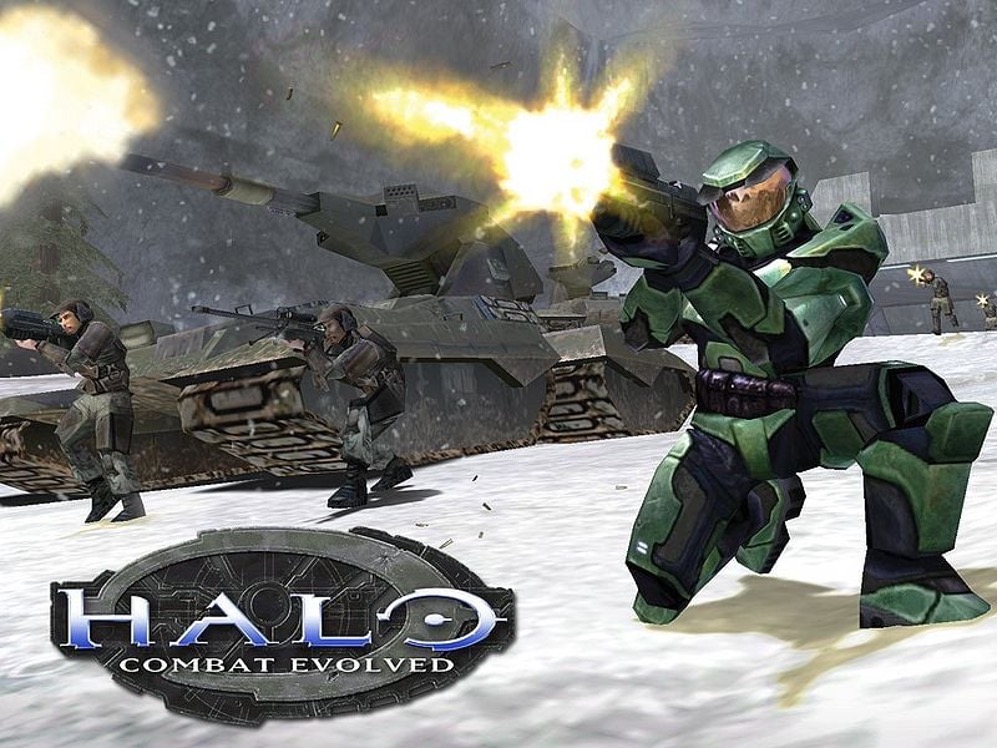
Master Chief and a squad of Marines with an escort of Scorpion tanks, fighting through a frozen canyon. (Source: Halopedia)
Part I of a two-part series
For over 25 years, Halo has put players in the combat boots of the Master Chief: a seven-foot-tall supersoldier who kicks butt in outer space and saves more lives than he can count. But he’s more than just a galactic hero: Master Chief and the Halo franchise are industry titans that revolutionized FPS games, proving that shooters and consoles can work together.
Against all odds, Halo skyrocketed from an omelet of ideas that no one knew was going to work to a genre-defining masterpiece that made Microsoft millions. Whether on Xbox, PC, or (in the not-so-distant future) PlayStation, Halo has brought hope to countless households across the world. The story of Halo is more than just a video game; its legacy is one that has changed the course of modern history, and it continues to evolve to this day. It is a property that Microsoft wants to keep in the public eye, and for good reason. What is it about this science-fiction, fantasy adventure, military action shooter that keeps audiences, greenhorns and elites alike, following the path and finishing the fight, over and over and over again? With the upcoming release of the new Halo: Campaign Evolved being on the horizon, we decided to delve into its predecessor’s success and uncover the reason why they call it “Halo.”
Humble beginnings
Chicago, 1995, and the fledgling studio Bungie just released their fifth game, Marathon 2: Durandal, which would become the developer’s third Mac shooter hit in a row. Just the year prior, they were a two-person studio; now, they were scratching the big leagues. Co-founder Jason Jones wanted to level up what their previous release brought to the table. The next game needed to be a spiritual successor, one that would turn heads and make it clear that change was on the horizon. The game would be Bungie’s first PC-developed title, featuring an open world with destructible terrain and fauna that players could interact with. Though their experience was mostly with Mac devices, their ambition would fly them higher than they thought possible.
Halo was revealed to the world at Macworld on July 21, 1999, as a third-person shooter. Jones showcased the demo, which, thankfully, didn’t crash on start-up (a pestering bug that still needed patching). Even in its infantile state, this demo was mesmerizing. During its development, Narrative Director Joe Staten described the soundtrack as “ancient, epic, mysterious,” a crucial piece of what immersed the audience at Macworld. Throw in a few bizarre alien vehicles and an expansive landscape, and the ring world that players would be marooned on was begging to be explored. There was only one problem: Bungie unveiled everything they had during that demo. There was still much work to be done, and over the next two years, the game they had showed off at Macworld would be almost unrecognizable.
Halo’s working title was Monkey Nuts. Not wanting to admit to his mother that he was working on a game with that moniker, Jones re-dubbed the project Blam!, in honor of the many would-be car crashes the team heard outside their Chicago office.
“You’d hear the screech of tires and then nothing… so I’d just yell, ‘Blam!,’ just so there was some sense of completion,” recalled Robert “Robt” McLees, Bungie artist, in The Art of Halo: Creating A Virtual World.
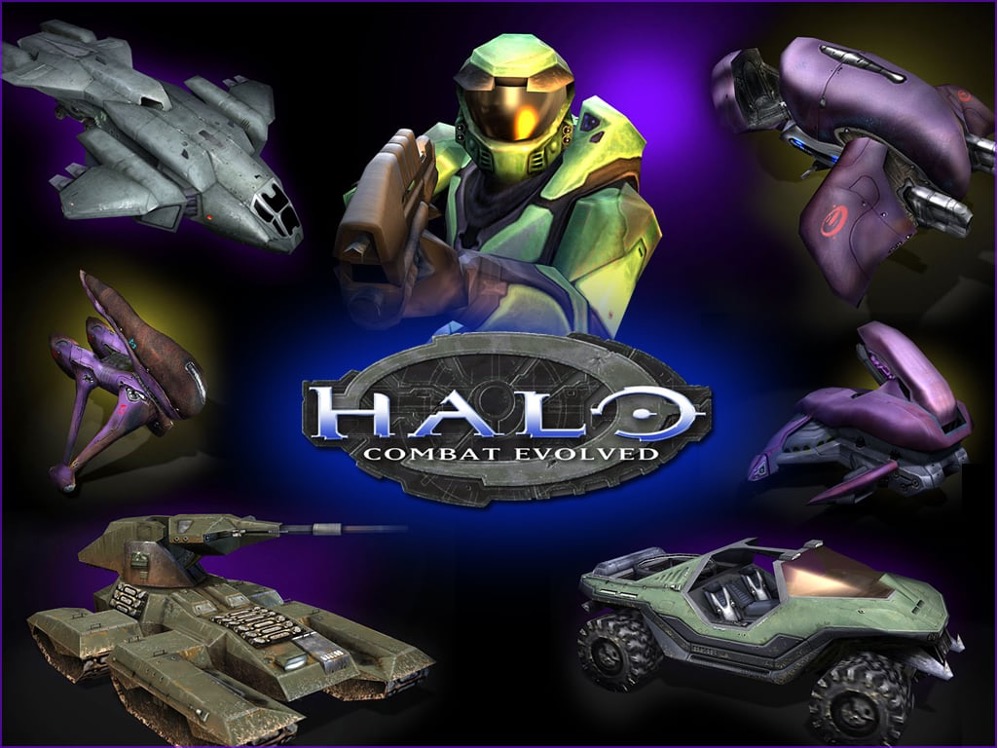
Promotional poster featuring multiple vehicles, including a Pelican drop ship, a Ghost hover craft, a Banshee fighter, a Wraith tank, a Scorpion tank, and a Warthog armored car, with Master Chief in the center. (Source: Halopedia)
This name change was one of many shifts in the development cycle for Halo. Bungie was building their new game for the PC, which was a departure from their usual Macintosh platform. Technology was advancing, and companies like Apple and Sony were doing everything they could to keep up. The PlayStation 2 was being promoted, and the Mac OS 9 was not far behind. Bungie knew this technological shift applied to them as well, but their partners at Apple weren’t moving fast enough for their satisfaction.
After months of meetings and discussions, Microsoft swiped the golden goose and bought Bungie for $30 million on June 19, 2000. But it was more than money that got Jason Jones and co-founder Alex Seropian to join the ranks of Microsoft CEOs Bill Gates and Steve Ballmer (who reportedly got an earful from Steve Jobs over the phone after the acquisition). Jones saw the potential in Microsoft’s new flagship console, the Xbox, and wanted the tech titan to help put their new “killer app” on the map.
The Xbox
The Xbox was Microsoft’s debut into console gaming. By 1999, over 90% of the world’s computers functioned on a Windows operating system. Video games were taking the market by storm, but Microsoft was missing out. Sony already made leaps and bounds with their PlayStation console, and with the PS2 on the horizon, Microsoft had to have felt threatened by the possibility of irrelevance. Sony wasn’t making gaming consoles only for video games; they were trying to replace the personal computer. Microsoft was running out of time. Luckily, DirectX was there to buy them some.
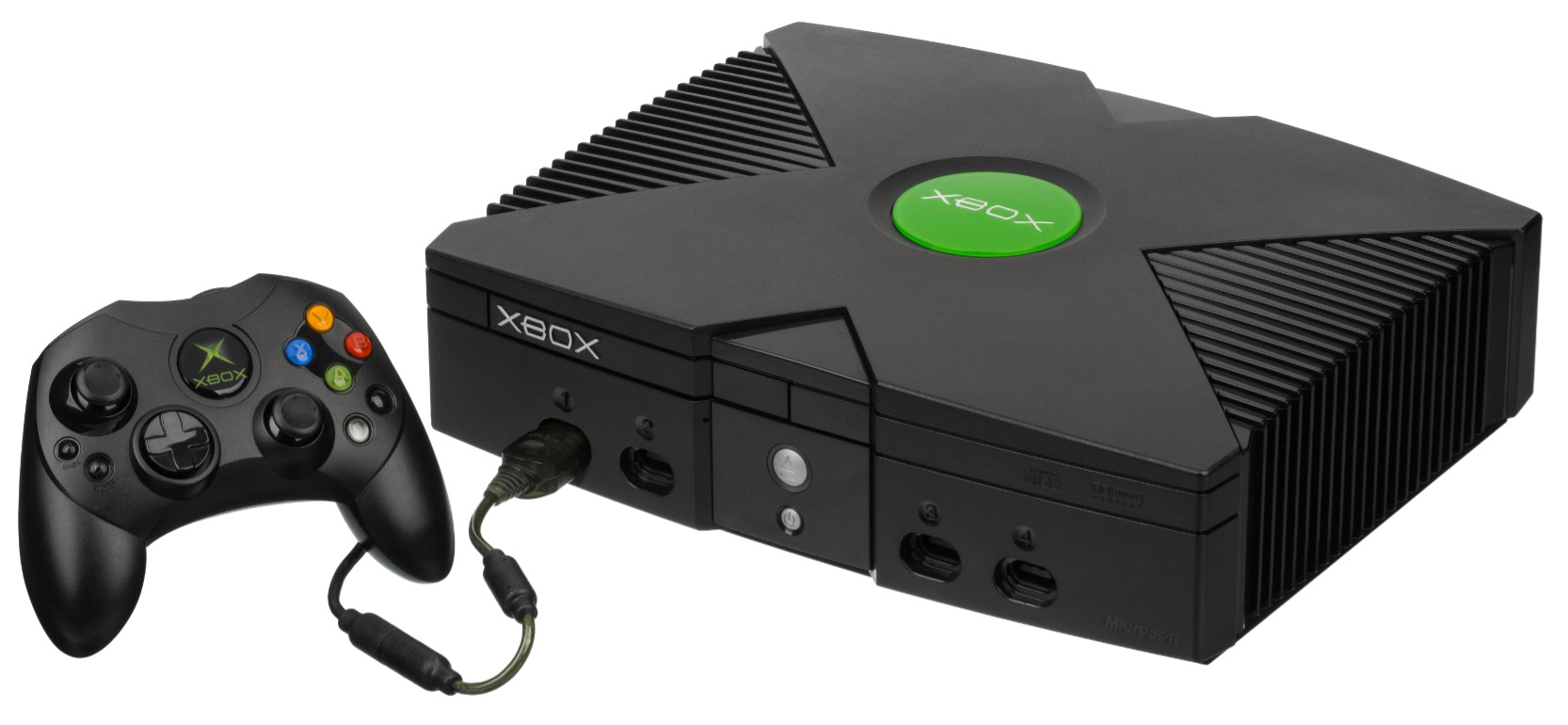
The original Xbox with the controller S model. (Source: Wikimedia.org)
DirectX, a set of software tools that standardize game development across PC hardware, would be Microsoft’s golden parachute. Otto Berkes was the head of the development team for DirectX and worked closely with marketing specialist Ted Hase. They were knee-deep in the graphics industry and were curious about where the technology was headed. Video games were finding their footing not only in arcades but also in home entertainment systems. Both Berkes and Hase knew a couple colleagues from their respective departments who were interested in taking the technology in an ambitious, new direction for the company—Program Manager Seamus Blackley and Marketing Analyst Kevin Bachus. Collectively, they were the four horsemen of DirectX and were eager to turn their day jobs into true passion projects. The pieces were there: the technology, the motivation, and the drive to build a Microsoft home entertainment system powered by DirectX. All they needed was the funding.
Finding funding was more challenging than anticipated, however. Meeting after meeting, rejection after rejection, the DirectX team kept bumping into barriers—people who could not see the potential of a gaming console made by Microsoft. The winds changed after Software Architect Nat Brown joined the project. It’s about who you know, and Brown knew a lot of people. With the right connections, the team could finally get a DirectX box into living rooms across the globe. The name “DirectX Box” was a mouthful, so Brown shortened it to “Xbox.” It was a working title that would eventually just… work.
Fighting for the spotlight
One of Nat Brown’s connections was video game programmer Ed Fries. Fries joined Microsoft in 1986 as an intern and was critical in the creation of Office. His enthusiasm for programming video games was pivotal in bringing this impossible idea to life. Fries was known for his Frogger clone, Froggy, and would later work with Ensemble Studios to develop the huge PC title known as Age of Empires, an RTS game that got Microsoft games some well-deserved attention. But the age of consoles was fast approaching, and while Bill Gates liked what PC gaming brought to the table, Fries knew there was potential in what Microsoft refused to embrace. Then, the DirectX team knocked on Fries’ door.
On March 2, 1999, Sony’s PlayStation 2 was unveiled, threatening the personal computer. Equipped with two Vector Processing Units (VPUs) and 4 MB of embedded DRAM, the PS2 was capable of delivering 48 GBs of bandwidth, boasting an impressive 15–20 million polygons per second. All this provided the PS2 an edge in graphical fidelity, giving players crisp, clear frames and breathtaking images on their TV screens. Microsoft was playing defense: They needed a foot in the console market, and fast. Despite the power of the competition, the PS2’s Emotion Engine only seemed to empower the DirectX team to prove to Gates, once and for all, to move into console gaming.
Gates was listening—but not just to one team. According to “Power on: The story of Xbox,” in a vital meeting, Hardware Manager Rick Thompson is said to have asked the question, What if Sony joined forces with cable and Internet companies to box us out? The answer was obvious: the extinction of the PC. A countermeasure was necessary for survival. This was the chance the DirectX team was looking for. Gathering their resources, they pitched their idea to Gates, hoping for a slam dunk. There was just one problem they hadn’t anticipated: There was another team shooting for the same basket.
Ted Kummert, head of Windows CE at Microsoft, believed his team held the solution to the console crisis. Windows CE was an operating system designed for handheld computers as well as consoles. The group already had good relations with Sega, providing the OS for the Sega Dreamcast as well as the Panasonic Real 3DO. It seemed like this was the dream team to make Microsoft its magic bullet, but the DirectX team was not going to roll over and accept defeat.
Both teams readied PowerPoints to pitch their ideas to Gates in a battle of corporate combat. The Windows CE group wanted to re-create the 3DO to ensure safety and security within the market. The DirectX team wanted to push two main ideas for their console: a hard drive to ensure mass storage and longevity for users, and to bring broadband Internet to television through Ethernet, connecting players across the Web. One team brought experience and reassurance, the other brought ambition and risk.
Gates was interested but far from impressed. It would take more to move the man behind Microsoft. Then, the DirectX team revealed their secret weapon. In the weeks prior to this meeting, they had jerry-rigged a console out of various computer components, built with a PlayStation software emulator modified for Windows—the first-ever Xbox prototype. Back in 1999, PCs took roughly three to five minutes to boot up. When Seamus Blackley pressed the power button on their prototype, it is said to have started up within four seconds. No doubt in awe, Gates requested the console be turned off and on again a number of times, wondering why Windows wasn’t like this already. Upon the final start-up, Tomb Raider was ready to play. DirectX won the debate. But Gates was not the only one the team had to reason with. The other was Microsoft Co-founder Steve Ballmer.
With $500 million and a multibillion-dollar company on the line, all the DirectX team had to do was persuade one man to make it happen. A businessman first and foremost, Ballmer knows how money flows, knows how to make it move, and knows not to take a risk if there is no reward. During their meeting, Ballmer asked the DirectX team a series of questions that spun their heads, business-type questions that none of them had the answers to, and they admitted as such. They confessed that they didn’t know the cost of the hardware, the price of an Ethernet port, or what “reserve for returns” even meant. But they believed in the value of their work, they believed in the games they wanted to create, and they believed that the pivot to consoles kept Microsoft on the map. For Gates and Ballmer, that was enough. They knew they could not sit back and watch their competition reap all the benefits of an infant market that was rapidly growing. Otto Berkes would step down, leaving Rick Thompson to lead DirectX. The Xbox was green-lit.
This was only the start of a great journey, which is detailed in Part II.
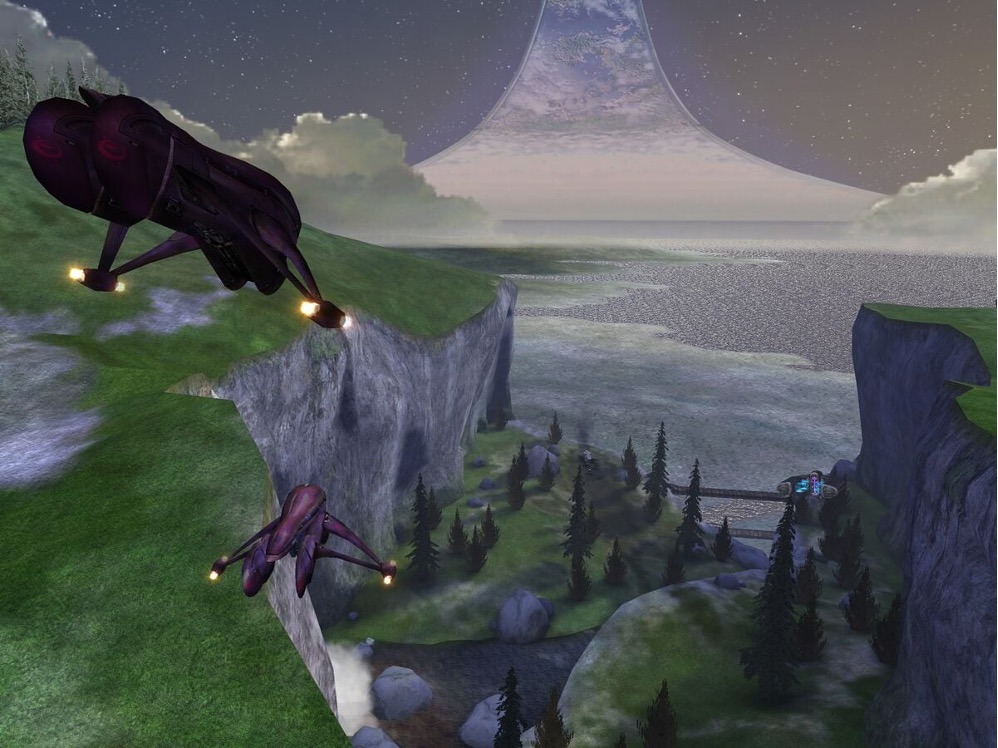
A pair of Covenant Banshees and a Spirit dropship investigate a UNSC lifeboat having crash-landed on Halo. (Source: Halopedia)
LIKE IT? THINK YOUR FRIENDS AND ASSOCIATES MIGHT? PLEASE SEND IT TO THEM WITH OUR BEST WISHES.