
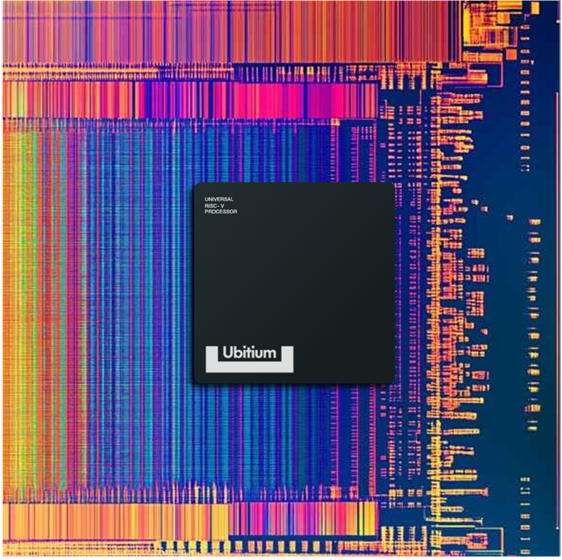
Ubitium, a German semiconductor start-up, has taped-out its first silicon on Samsung Foundry’s 8 nm process, completing the milestone in December 2025. The company says its chip extends RISC-V beyond the role of a conventional CPU into a universal processor that can replace the mix of specialized processors used in modern embedded systems. The pitch is aimed at a fast-growing complexity problem: Vehicles, robots, drones, and industrial machines are accumulating more compute engines, more software stacks, and more integration pain just as AI pushes even more workload to the edge.
(Source: Ubitium)
Ubitium said on March 9, 2026, that it had taped-out its first silicon on Samsung Foundry’s 8 nm process. The company said the tape-out was completed in December 2025. Ubitium describes itself as building on RISC-V, the open instruction set architecture already used in billions of chips, and extending it beyond a conventional CPU into what it calls a universal processor for embedded systems.
The company’s claim is that one chip can replace the stack of specialized processors now common in embedded designs. Instead of splitting work across CPUs, DSPs, GPUs, FPGA logic, and AI accelerators, Ubitium wants a single RISC-V-based architecture to take on general-purpose compute, real-time signal processing, and edge AI workloads within one software environment.
Ubitium says embedded computing is a $115 billion market and argues that it has become unmanageably untidy. In automotive, the company says today’s vehicles can contain more than 200 processors, each potentially tied to its own toolchain, software stack, and supplier. As AI workloads spread into robots, drones, and industrial equipment, the complexity of integrating and maintaining all those compute elements is likely to increase rather than subside.
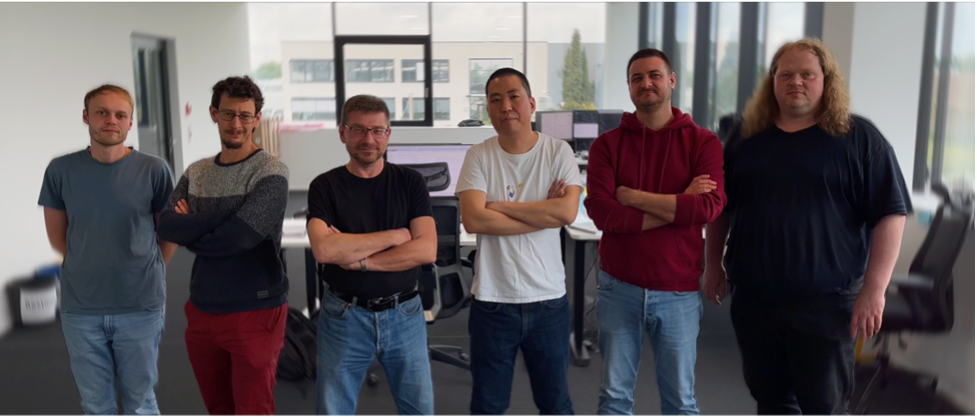
Figure 1. Ubitium core team. (Source: Ubitium)
The broader context is important. Ubitium is not the only company trying to use RISC-V as the organizing layer for heterogeneous compute. Semidynamics announced a 3 nm AI inference silicon tape-out with TSMC in February 2026, while CoreLab has been positioning RISC-V-based open platforms for robotics and automotive edge systems with Tenstorrent. These are not the same architectures or market targets, but together they suggest that RISC-V is increasingly being used as a common foundation for mixed-workload compute rather than merely as an alternative CPU ISA.
What do we think?
This story is more interesting when seen as part of a trend rather than as a stand-alone universal-processor claim. Ubitium, Semidynamics, and CoreLab are all approaching the same underlying problem from different angles: Heterogeneous systems are getting harder to build and maintain, and RISC-V is becoming a useful common base for bringing more of that complexity under one architectural umbrella.
That does not make Ubitium unique, but it does make it timely. The real question is not whether the company can eliminate every specialized block, but whether its Samsung 8 nm design can simplify embedded development enough to win customers that are tired of juggling too many processors, software stacks, and suppliers.
WHAT DO YOU THINK? LIKE THIS STORY? TELL YOUR FRIENDS, TELL US.