
The Kendryte K210 is the chip that first proved RISC-V could run AI inference at the edge and it did it in 2018, before most of the industry was paying attention. It is the world’s first RISC-V-based edge AI chip, with 0.8 TOPS KPU, 0.3 W, TSMC 28 nm, dual-core 64-bit, and built-in audio and vision accelerators. The Sipeed Maix boards that followed put it in the hands of a million developers. Then, on June 23, 2025, Canaan shut the whole Kendryte AI division down. The chip matters. The business didn’t.
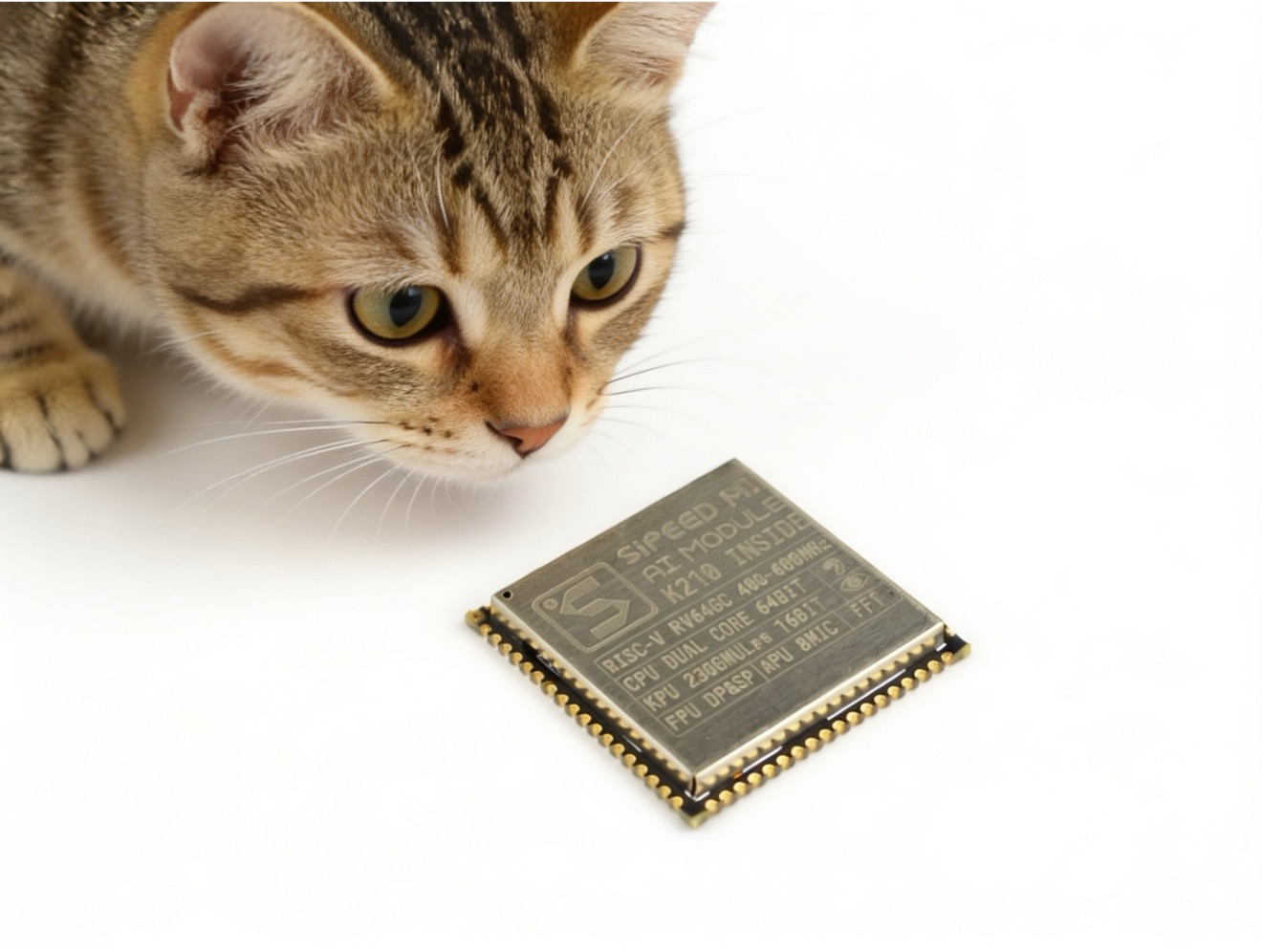
Canaan Inc. was founded in 2013 by Nangeng Zhang—known as NG Zhang—in Hangzhou, China. The company specializes in blockchain servers and ASIC microprocessors for Bitcoin mining. That’s the primary business, and it’s the reason Canaan is publicly traded on Nasdaq (CAN). The Kendryte AI chip division was a secondary story—an important one historically, but always secondary. The K210 was released in September 2018 and went into mass production immediately. It is the world’s first RISC-V-based edge AI chip.
Canaan’s headquarters are in Beijing, with offices in Hangzhou and international operations in Singapore. Full-year 2024 revenue was approximately $270 million, up 27.4% year over year. That’s almost entirely Avalon Bitcoin mining ASIC revenue. Kendryte AI chip revenue in 2024 came to $900,000—against total company operating expenses that the AI unit alone consumed at a 15% share. Employee count runs approximately 700, predominantly Bitcoin mining focused.
The K210
The K210 is a SoC. It integrates two 64-bit RISC-V cores at 400 MHz, each with an independent FPU, alongside three dedicated hardware accelerators: the KPU, APU, and FFT engine. The package runs at 0.3 W typical and under 1 W peak—which puts it in the same power envelope as a microcontroller, not a conventional AI chip.
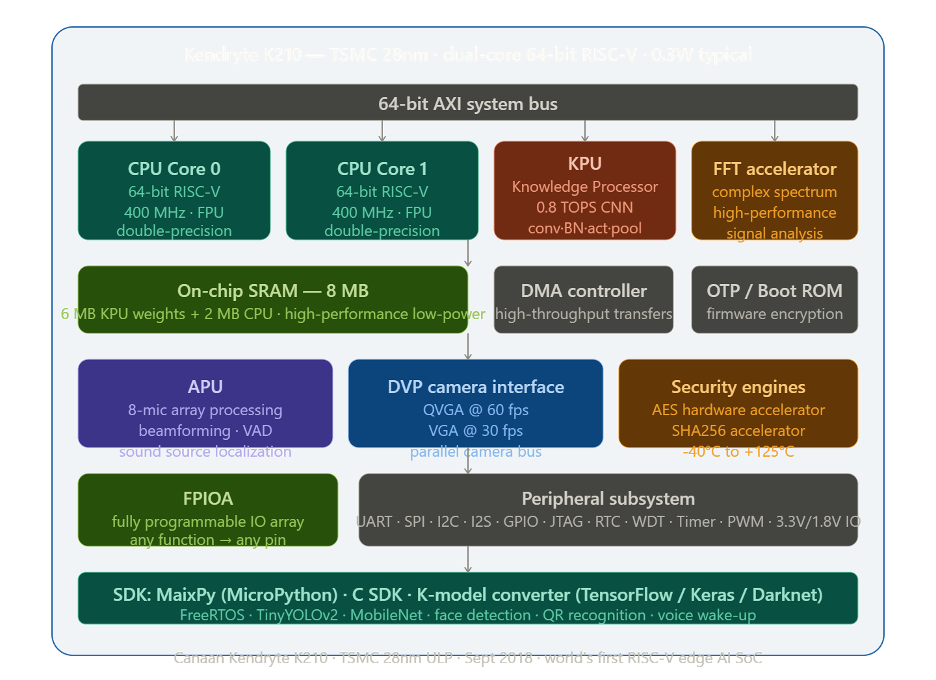
Figure 1. Block diagram, Canaan’s K210. (Source: JPR)
The KPU (Knowledge Processing Unit) is the AI engine. It runs CNNs natively—convolution, batch normalization, activation, and pooling all execute in hardware without CPU intervention. Peak performance runs 0.8 TOPS, with 0.5 TOPS sustained across typical workloads. At 0.3 W, it represented efficiency that digital AI chips of the same period couldn’t match at that price point.
The APU handles eight-microphone array processing—sound source localization, beamforming, voice wake-up, and speech recognition. The FFT accelerator supports complex spectrum analysis. The K210 does two things simultaneously that most edge devices require separate chips to handle: It sees, and it hears.
On-chip SRAM totals 8 MB. No external memory is required for most inference workloads the weights for TinyYOLOv2, MobileNet, and similar compact models fit on-chip. The DVP camera interface supports QVGA at 60 fps or VGA at 30 fps. The security subsystem includes AES and SHA256 hardware accelerators. Operating temperature range is -40°C to 125°C, which opened automotive and industrial use cases that consumer SoCs typically can’t meet.
The FPIOA (Fully Programmable IO Array) is worth calling out specifically. It lets any peripheral function be mapped to any physical pin—a flexibility that significantly simplified board design and made the K210 practical for embedded developers who didn’t want to spin a custom PCB to accommodate fixed-pin assignments.
Development ecosystem
The K210 shipped with two development paths: MaixPy, a MicroPython implementation for Python-based neural network development; and the official C SDK for teams needing full performance. Both support converting TensorFlow, Keras, and Darknet models to the K-model format for direct on-device deployment.
Sipeed drove the maker community adoption. Their Maix series—Maix Bit, Maix Dock, Maix Go, MaixDuino, MaixCube—put the K210 on a $10-$30 board with a camera, display, microphone, and expansion headers. The MaixCube specifically added a TFT display, lithium battery, speaker, and TF card slot in one compact enclosure. These boards generated hundreds of community projects—face recognition access control, automated inventory counting, voice-activated robotics. The Sipeed ecosystem is still active even though Canaan’s AI division is not.
The K510 and K230
Canaan followed the K210 with the K510 in 2021: triple-core RISC-V at 800 MHz, 3 TOPS NPU, H.264 1080p60 video encoder, USB 2.0 OTG, Gigabit Ethernet, MIPI CSI/DSI. Same TSMC 28 nm process, ~2W. The K510 targeted UAV aerial photography, panoramic video, robotics, and ADAS preview. The K230 followed in 2023 with approximately 4 TOPS and RISC-V vector extensions. Both chips were discontinued along with the entire Kendryte division in June 2025.
Canaan exits AI—June 23, 2025
On June 23, 2025, Canaan announced it was shutting down the Kendryte AI semiconductor business entirely. The numbers explain it plainly: the AI unit generated $900,000 in revenue in 2024—against total company revenue of $269.3 million—while consuming 15% of company-wide operating expenses. Canaan had been exploring options for the unit, including selling it, since March 2022. No buyer materialized.
CEO Nangeng Zhang said: “Doubling down on our core strengths in crypto infrastructure and Bitcoin mining is the most strategic path forward for Canaan.” The company expects the wind-down to complete within months and anticipates a sharp drop in operating costs once it does.
The exit is not surprising. The AI chip business was never viable at Canaan’s scale or with Canaan’s focus. $900K in revenue against 15% of operating expenses is not a side business—it’s a drain. The Kendryte chips were technically credible but commercially marginal, and the team building Bitcoin mining ASICs had little strategic overlap with the team building edge AI SoCs. The decision to wind it down should have come sooner.
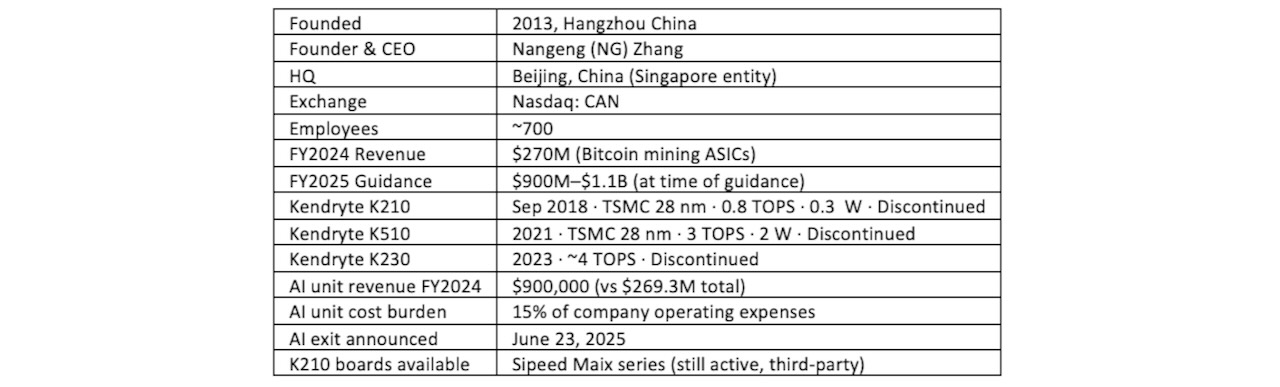
Table 1. Canaan overview.
The K210 matters more as a historical marker than as a current product selection. It proved in 2018 that RISC-V could carry a dedicated AI accelerator at edge power levels, and the Sipeed Maix ecosystem proved that a sub-$30 development board with a camera and a working ML toolchain could reach a global developer community without a marketing budget. Every cheap edge AI SoC sold since 2019—from Rockchip RK3399Pro to Qualcomm’s Snapdragon X Plus—competes in a market the K210 helped define.
The K510 and K230 had found real application in manufacturing, robotics, and UAV. Canaan’s exit doesn’t erase that. It just means no further development, no support roadmap, and no next-generation chip. For anyone currently running Kendryte silicon in production, now is the time to plan migration. The Sipeed boards and community SDK will likely persist for years, as maker communities tend to outlive their chip companies. But Canaan isn’t coming back to this market.
What do we think?
The K210 is a landmark chip—first RISC-V edge AI SoC, mass-produced, developer-friendly. The Kendryte division’s commercial failure is a separate story from the chip’s technical contribution, and those two things should be kept distinct. Canaan tried for seven years to make the AI business work. It didn’t. The $900K in 2024 revenue after that much time and operating expense is the honest verdict. For anyone sourcing edge AI silicon in 2026, move to a vendor for whom AI is the primary business—not a Bitcoinminer trying to run two incompatible roadmaps.
The Kendryte K210’s 2018 launch marked an inflection point in edge AI silicon: the moment a dedicated neural network accelerator shipped in a chip priced under $10 on a RISC-V core, proving that AI inference didn’t require expensive proprietary ISAs or high-end silicon. That inflection point opened the maker and industrial IoT market to on-device AI—and it established RISC-V as a credible AI SoC foundation, a conclusion that has since shaped roadmaps at SiFive, Alibaba XuanTie, and a dozen Chinese AI chip startups. The K210 wasn’t the most powerful chip in 2018. It was the most accessible, and that turned out to matter more. Canaan’s exit is a business story, not an architectural one. The inflection point happened. It isn’t going back.
The Canaan K210 is but one of the 152 AI processors in our AI Processor Tracking Service, which also lists performance and other specifications for 291 products.
LIKE WHAT YOU SAW HERE? SHARE THE EXPERIENCE, TELL YOUR FRIENDS.