
Nvidia introduced RTX Spark at Computex 2026, marking its first Windows-focused Arm platform. This SOC integrates Grace CPU technology, Blackwell graphics, local AI acceleration, and unified memory. Designed for AI development, content creation, engineering applications, and gaming, the platform brings Nvidia’s extensive software ecosystem directly to Windows on Arm. Supported by Microsoft and leading PC manufacturers, RTX Spark extends Nvidia’s influence from discrete graphics cards into the core client computing market.
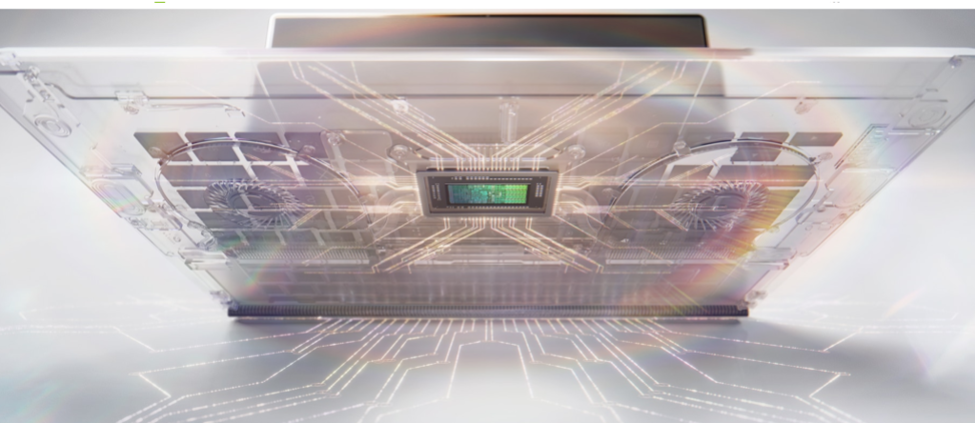
(Source: Nvidia)
For decades, Nvidia supplied separate graphics processors for PCs running on Intel and AMD central processors. The RTX Spark platform rewrites this relationship. The new architecture places Nvidia in AMD’s, Intel’s, and Qualcomm’s face at the center of the computer by integrating the central processor, graphics engine, AI acceleration, memory, and software into a single system, like the other companies’ SoCs. Who didn’t see this coming?
Announced in Taipei, Taiwan, RTX Spark combines a 20-core Grace Arm processor with a Blackwell GPU containing 6,144 processing cores. The system includes Nvidia’s fifth-generation Tensor Cores, local AI acceleration, and up to 128 GB of unified low-power memory. An internal high-speed interconnect links these components. Nvidia rates the platform’s performance at 1 PFLOPS of artificial intelligence compute.
The physical design scales down technology from data center architectures into 14-inch and 16-inch laptops alongside compact desktop systems. This configuration handles heavily overlapping data workloads. AI development, 3D visualization, local model inference, and gaming routinely require massive memory resources. The unified memory layout previously ridiculed by Nvidia solves this by allowing the central processor and graphics engine to access the same storage pool simultaneously.
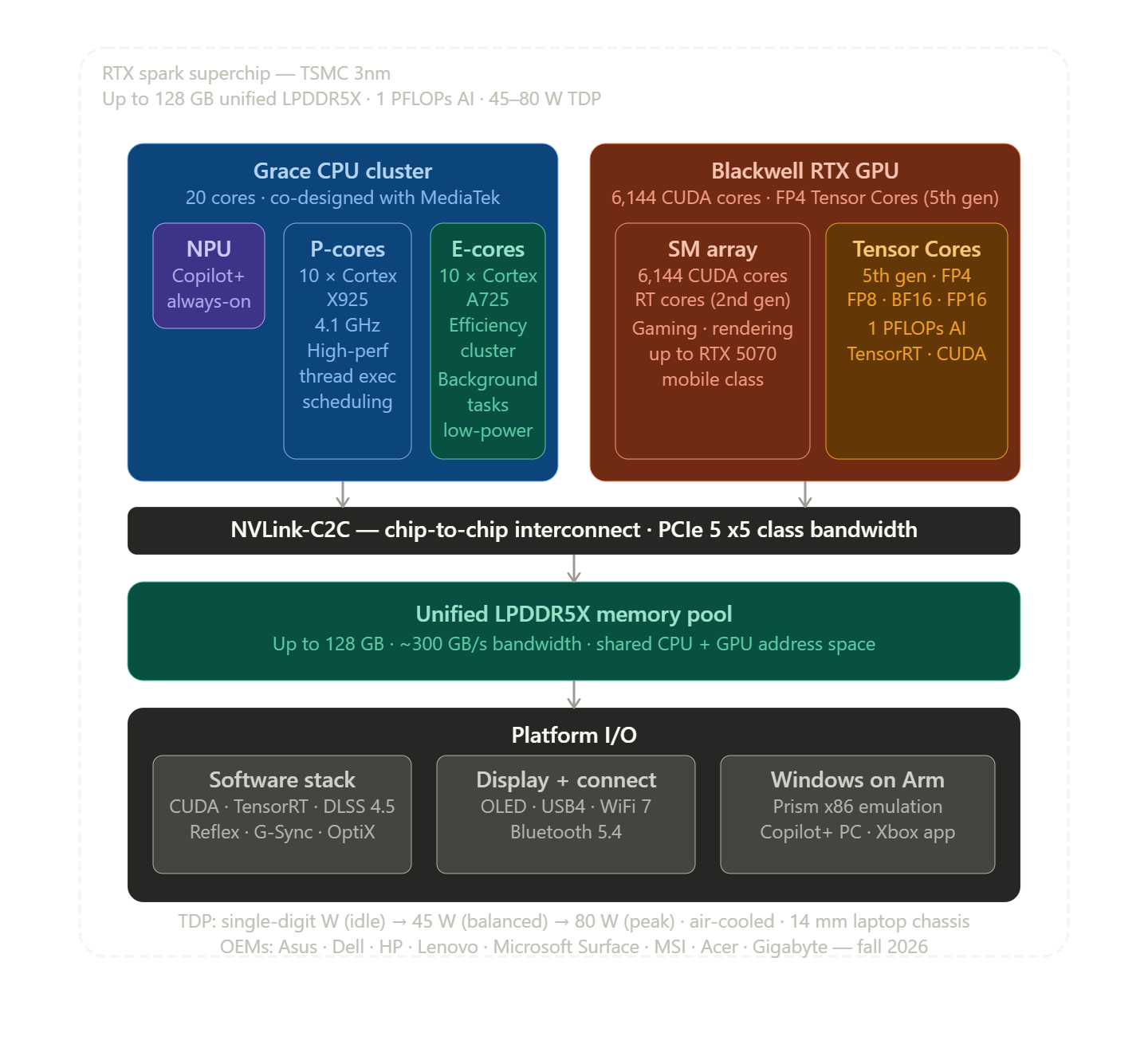
Figure 1. Unofficial block diagram of the RTX Spark SoC. (Source: JPR)
The RTX Spark has a TDP range of 45 to 80 W. Nvidia also noted that it scales down to “low, low single-digit” wattage at the bottom end for maximum battery life but doesn’t detail how that happens. So the full power range is roughly single-digit watts → 45 W → 80 W, depending on workload and OEM configuration—similar to how Qualcomm’s Snapdragon X and Intel’s Lunar Lake scale dynamically between idle and peak.
However, the 80 W ceiling is notably lower than a typical high-performance laptop with a discrete GPU, which helps explain how Nvidia expects RTX Spark to fit in a 14 mm thin chassis without liquid cooling. For comparison, a standard RTX 5070 laptop GPU alone runs 80–100 W TGP before adding the CPU.
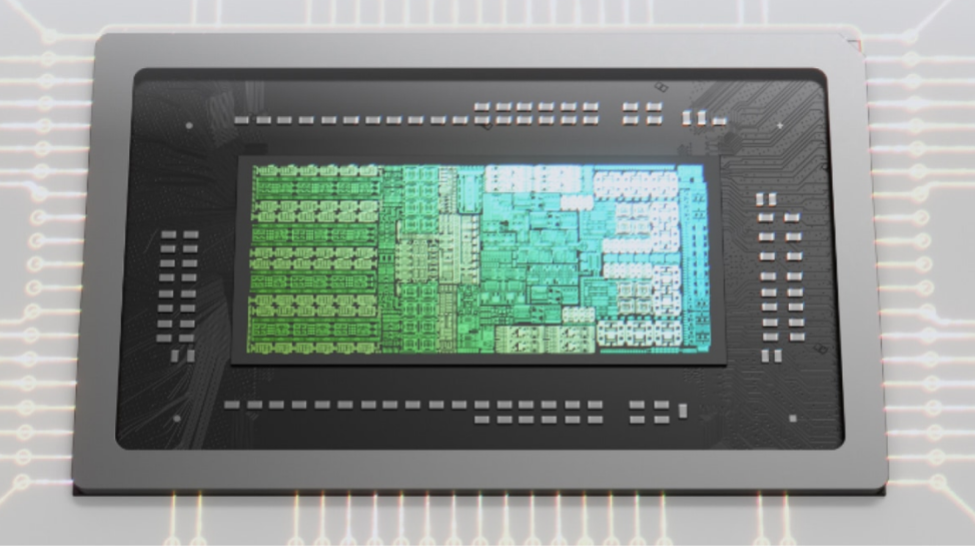
Figure 2. Nvidia’s RTX Spark PC chip. (Source: Nvidia)
Software compatibility dictates industry adoption. Nvidia includes its full stack, providing immediate access to CUDA, TensorRT, and specialized ray-tracing technologies, tools, and libraries. Microsoft provides deep operating system management for this unified memory layout, power distribution, and application scheduling.
Software companies are building native applications for this architecture. Adobe is rewriting its flagship video and imaging applications specifically for this Arm layout, targeting double the performance of older emulation methods. Additional production support comes from developers of tools like Blender, DaVinci Resolve, Cinema 4D, and Redshift. Microsoft continues updating its emulation translation software to maintain performance for older x86 applications, while engineering native software protection layers for PC gaming.
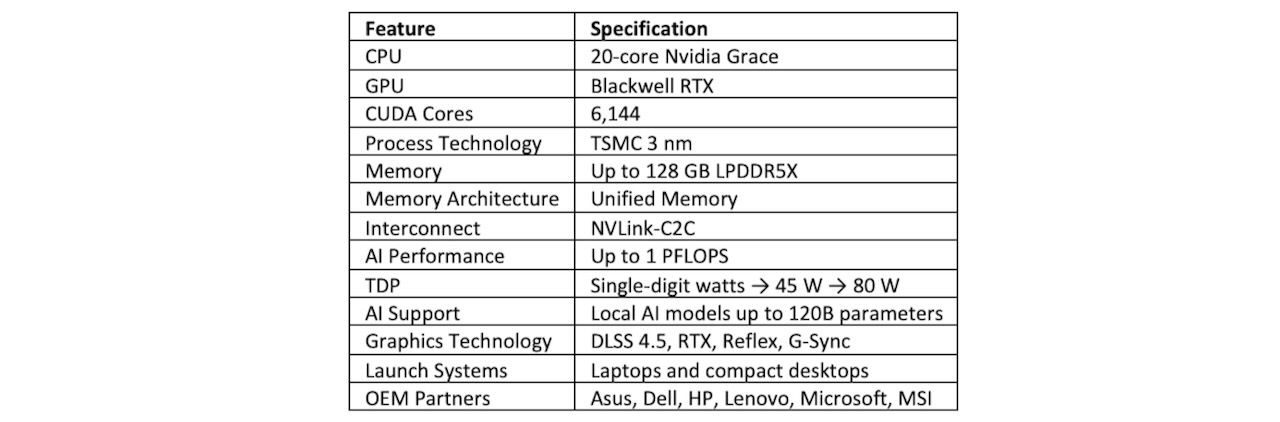
Table 1. Nvidia RTX Spark platform specifications. (Source: Nvidia)
RTX Spark positions Nvidia in the client processor sector long dominated by traditional x86 manufacturers and Qualcomm. The company merges its hardware acceleration heritage with a unified Windows platform. Success depends entirely on real-world software compilation, application performance, and retail pricing. This launch establishes Nvidia as a complete system architect for personal computers.
What do we think?
RTX Spark establishes a major direction for client computing for Nvidia. The architecture pairs established AI software tools with a strong graphics ecosystem. If independent software vendors deliver widespread native applications and Microsoft maintains its system translation updates, Nvidia will secure a stable foothold in premium workstation and developer laptops, creating new revenue outside traditional add-in graphics cards.
RTX Spark marks an inflection point for personal computer design. The industry is shifting toward highly integrated platforms combining distinct compute blocks and memory into a single silicon package. Nvidia’s arrival accelerates this structural transition. The system emphasizes local processing, massive unified memory pools, and heterogeneous software scheduling. This rollout establishes an inflection point toward AI-native hardware built around integrated acceleration blocks rather than old discrete component layouts.
WHAT DO YOU THINK? LIKE THIS STORY? TELL YOUR FRIENDS, TELL US.