
Texas Instruments’ TDA4VM is the chip that brings together deep learning acceleration, safety-certified compute, and multi-sensor processing in a single automotive SoC. Built on TI’s Jacinto 7 architecture, it targets ADAS and autonomous driving at Level 2+—but its combination of an 8 TOPS Matrix Multiply Accelerator, C7x DSPs with vector AI extensions, and ASIL-D functional safety also makes it a strong fit for industrial robotics, machine vision, and edge AI systems well outside the vehicle.
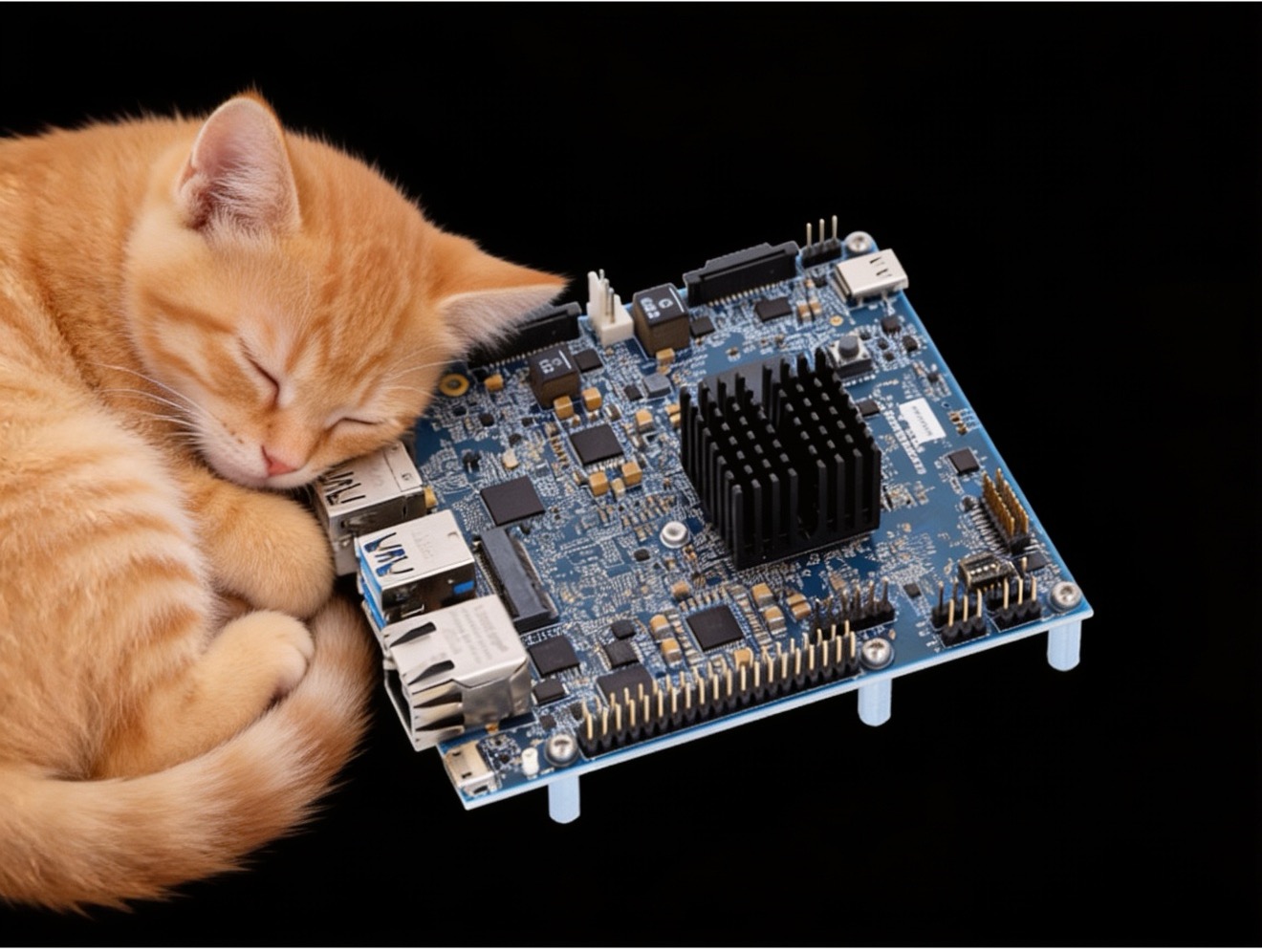
Texas Instruments built the TDA4VM on its Jacinto 7 platform, targeting the computational demands of advanced driver assistance systems and autonomous vehicle perception. The chip integrates a heterogeneous array of processing engines—AI accelerators, application processors, real-time cores, DSPs, GPU, ISP, and safety hardware—onto a single die, eliminating the multi-chip architectures that dominated earlier ADAS generations.
The compute architecture
The TDA4VM organizes AI processing across three distinct hardware blocks, each targeting a different layer of the inference pipeline.
The MMA (Matrix Multiply Accelerator) handles deep learning inference directly. It delivers 8 TOPS at INT8 precision, operating at 1.0 GHz within TI’s specified automotive worst-case junction temperature of +125°C. This is TI’s functional equivalent of an NPU—purpose-built for the convolution and matrix arithmetic at the core of object detection, lane recognition, and sensor fusion networks. TensorFlow Lite, ONNX Runtime, and TVM all run against it through standard APIs.
The C7x DSP is TI’s next-generation signal processor, combining the capabilities of TI’s previous DSP and EVE cores into a single core with floating-point vector calculation. The C7x adds AI workload support through 512-bit SIMD vector extensions, enabling neural network layers that complement what the MMA handles—particularly recurrent and attention-based operations that benefit from programmable vector compute. TI includes two C7x cores on the TDA4VM, alongside two legacy C66x floating-point DSPs for backward-compatible signal processing workloads.
The VPAC (Vision Processing Accelerator) and DMPAC (Depth and Motion Processing Accelerator) handle pre- and post-processing for the AI pipeline. The VPAC integrates TI’s 7th-generation ISP—supporting broader sensor input types, higher bit depth, and analytics-specific processing modes. The DMPAC handles distance and motion estimation from radar and stereo camera inputs. Both operate independently of the main compute cores, leaving the MMA and C7x free for inference rather than data conditioning.
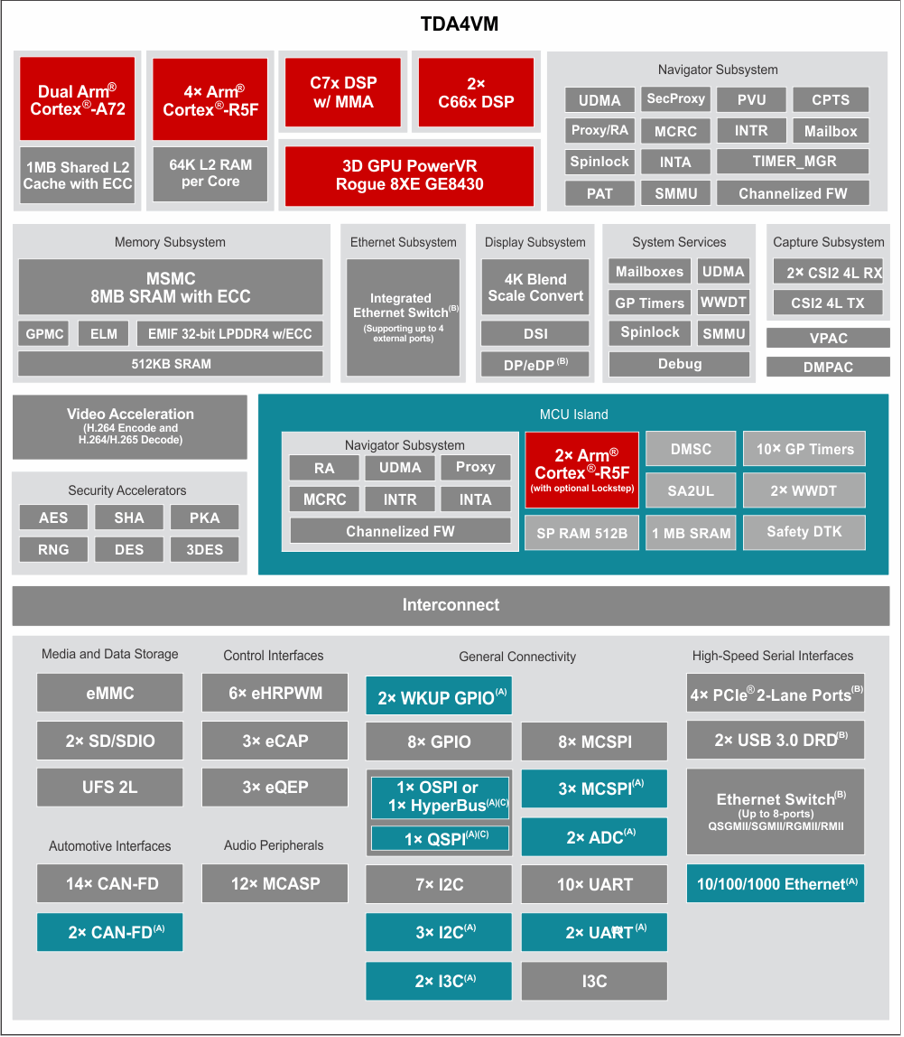
Figure 1. The full TDA4VM SoC. (Source: Texas Instruments)
Beyond the AI compute stack, the TDA4VM integrates the processor subsystems required for a complete ADAS platform.
The dual Arm Cortex-A72 cluster runs at up to 2.0 GHz and supports multi-OS configurations with minimal hypervisor overhead—Linux for the AI application stack alongside a real-time OS for safety-critical functions. Six Arm Cortex-R5F cores at up to 1.0 GHz handle timing-critical tasks, including sensor interfacing, actuation control, and safety monitoring, leaving the A72 cores unencumbered for higher-level perception and planning. A PowerVR Rogue 8XE GE8430 GPU provides up to 100 GFLOPS for 3D rendering in instrument cluster and eMirror applications.
Connectivity runs to the breadth expected for a centralized ECU: PCIe hub, Gigabit Ethernet switch with automotive TSN support, 12 MCASP audio channels, CSI-2 camera interfaces, and CAN bus. An integrated MCU island eliminates the need for an external system microcontroller, reducing BOM cost and board complexity.
Functional safety targets ASIL-D / SIL-3—the highest automotive safety integrity level. Integrated diagnostics, error correction, and lockstep processor configurations support that certification target directly in silicon. Security hardware protects against external data attacks across the sensor and communication interfaces.
Development platform
TI’s SK-TDA4VM Starter Kit packages the SoC on a development board with pre-built demos and tutorials structured for under one hour to first inference. The kit runs standard Linux with TensorFlow Lite, ONNX Runtime, TVM, GStreamer, Docker, ROS, and OpenGL ES—the standard embedded AI toolchain with no proprietary SDK requirement. That toolchain compatibility matters: Teams developing ADAS perception stacks or industrial vision systems can port existing model workflows directly to the TDA4VM without retraining their development process.
The TDA4VM targets two distinct market segments. In automotive: surround-view systems, front camera ADAS, sensor fusion ECUs integrating camera, radar, and LiDAR, and next-generation eMirror and park assistance platforms. In industrial: autonomous mobile robots (AMR/AGV) with functional safety requirements, machine vision stations, smart retail systems, edge AI inference boxes, and off-highway vehicle controls. The shared requirement across both segments is real-time AI inference with deterministic latency and a certifiable safety architecture—exactly what the Jacinto 7 platform delivers.
The TDA4VM represents TI’s answer to a specific engineering problem: deploying AI inference in environments where power consumption, junction temperature, functional safety certification, and multi-sensor integration all constrain the design simultaneously. The MMA’s 8 TOPS at +125°C within automotive power envelopes, combined with ASIL-D certification support and a standard Linux toolchain, makes it a practical choice for ADAS development teams who need qualified silicon rather than maximum benchmark performance. The SK-TDA4VM starter kit reduces time to prototype to under an hour—a meaningful advantage in programs where schedule pressure matches technical complexity.
What do we think?
The TDA4VM makes a clear architectural argument: Heterogeneous compute with dedicated AI, DSP, and safety hardware in one SoC beats assembling those functions from discrete chips. The 8 TOPS MMA is modest by data center standards but appropriate for the L2+ ADAS power envelope. TI’s strength is the software toolchain and ASIL-D certification path—two factors that matter more than raw TOPS in automotive program decisions.
The TDA4VM’s arrival marks an inflection point in automotive AI silicon: the moment deep learning inference moved from an optional coprocessor to a required subsystem inside the main ADAS SoC. That inflection point is now reshaping automotive ECU architecture—centralized compute platforms with integrated AI replacing distributed single-function controllers. Every major Tier-1 supplier now qualifies SoCs with integrated NPUs for L2+ programs. TI’s Jacinto 7 platform demonstrates that automotive-grade AI inference no longer requires a separate accelerator card or external NPU chip.
The TI TDA4VM is one of the 152 AI processors in our AI Processor Tracking Service, which also lists performance and other specifications for 291 products.
LIKE IT? THINK YOUR FRIENDS AND ASSOCIATES MIGHT? PLEASE SEND IT TO THEM WITH OUR BEST WISHES.