
Asus just made a major move by launching its first Intel Arc Pro B70 graphics card, the UGen Intel Arc Pro B70 32 GB GDDR6, designed for demanding AI inference and professional workstation tasks. This new hardware brings serious competition to the market, giving developers and IT leaders an open, high-density alternative for local model execution. We look at how this dense hardware architecture scales local workflows and changes design choices for enterprise tech stacks.
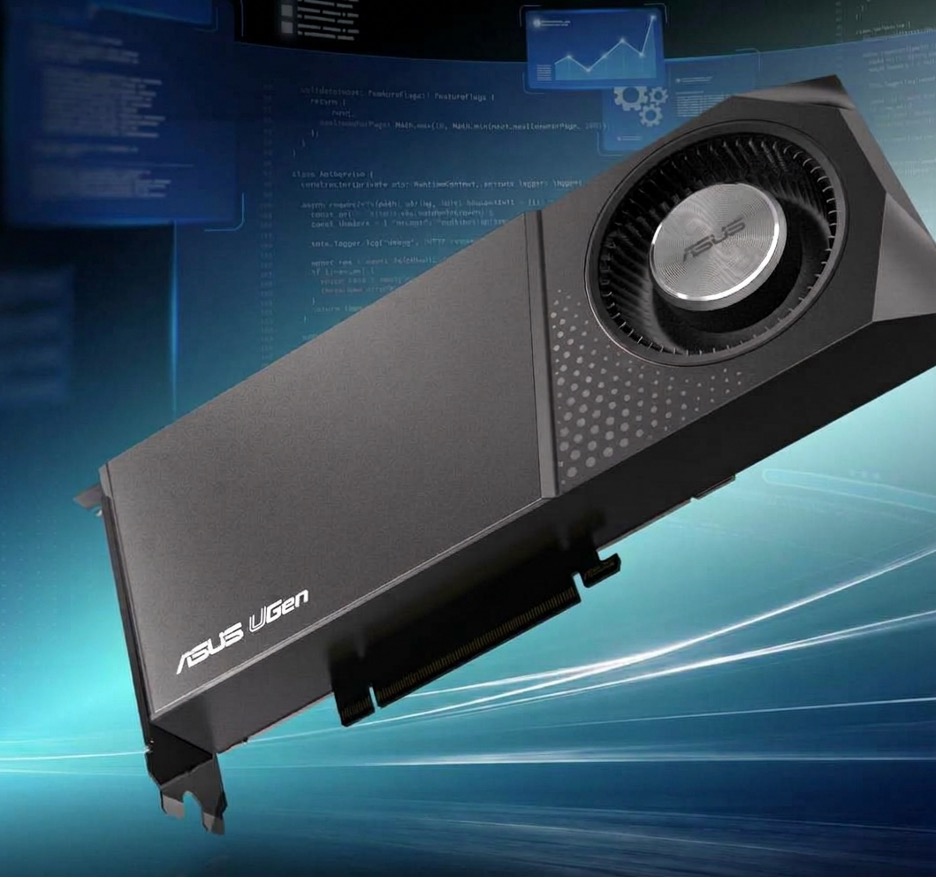
Asus entered the Intel discrete workstation graphics market with the launch of the UGen Intel Arc Pro B70 32 GB GDDR6 hardware platform. This product signals a shift in the desktop silicon landscape, targeting engineers, independent software vendors (ISVs), and enterprise silicon teams. Asus missed previous generations of Intel discrete graphics processing units (GPUs). This release marks a definitive return to the Intel stand-alone hardware ecosystem.
The UGen hardware utilizes the Intel Xe2-HPG architecture, providing dedicated hardware resources for specialized math operations. The design places 32 Xe cores and 256 Intel Matrix Extensions (XMX) AI engines onto the silicon. The card delivers 367 trillion INT8 operations per second (TOPS). This level of computational throughput meets the needs of heavy inference tasks on local workstations.

Table 1. Asus UGen Intel Arc Pro B70 architectural core specifications and thermal parameters.
Memory architecture remains a critical factor for local large language model (LLM) execution. The Asus UGen features 32 GB of GDDR6 memory with error-correcting code (ECC). ECC memory protects operational integrity by detecting and correcting single-bit memory errors, preventing system crashes during multi-day training or inference runs. The memory subsystem operates over a 256-bit bus, delivering 608 GB/s of memory bandwidth. This speed ensures continuous dataflow to the XMX engines during calculation cycles.
Physical engineering on the card reflects multi-GPU server rooms and tight workstation spaces. Asus selected a dual-slot, turbofan blower cooling structure. Blower designs exhaust hot air through the card’s rear bracket, keeping internal chassis temperatures low. This thermal approach enables dense multi-GPU clustering. The card integrates one HDMI port and three DisplayPort connections, supporting multi-monitor development environments. The hardware draws power through a PCIe 5.0 x16 interface. The design requires 310 W of typical board power (TBP).
Software integration represents a major pillar of this release. Intel and Asus engineered the UGen platform for an open software ecosystem, avoiding proprietary lock-in. The hardware supports production-ready artificial intelligence frameworks through open application programming interfaces (APIs). Silicon teams can deploy workloads via oneAPI and OpenVINO tools. The card runs standard industry frameworks including PyTorch with Intel Extension for PyTorch (IPEX), vLLM using XPU acceleration, SGLang, Ollama, and llama.cpp via SYCL or Vulkan backends. The hardware maintains compatibility with the Asus Zenni Claw environment.

Table 2. RAM memory architecture and open software framework ecosystem compatibility.
Scale architectures extend past a single desktop card. Enterprise teams can configure the UGen hardware into multi-GPU setups. A single workstation accommodates up to four Asus UGen cards working together via tensor parallelism. This four-card configuration yields 128 GB of total VRAM on a single local node. This memory footprint allows teams to run large local models containing up to 120 billion parameters.
Local execution offers distinct advantages for data privacy. Workstations running a single 32 GB UGen card can process agentic workflows for daily corporate operations entirely on-premises. Employee notes, planning records, and proprietary operational data remain on the local machine. This setup keeps data safe from external servers.
For larger deployments, the Intel SuperClaw architecture scales multi-agent fleets across a four-GPU system. SuperClaw implements local-first hybrid routing to serve multiple concurrent users. The infrastructure processes sensitive enterprise workloads on-premises. The software reserves cloud-based models for edge cases requiring deep reasoning. This hybrid balance reduces cloud token consumption by 70%.

Table 3. Multi-GPU scaling capacity and SuperClaw on-premises performance metrics.
Asus has not yet published specific pricing details on its official product pages. Market context for professional Intel Arc Pro hardware indicates an expected price range between $1,299 and $2,000 per card. Final pricing depends on sales channels and regional distribution agreements.
The Asus UGen platform changes the calculus for IT departments building local AI testing infrastructure. IT leaders gain an alternative to Nvidia setups. The combination of dense hardware engineering and open-source software optimization provides a reliable path for on-premises development.
What do we think?
The Asus UGen card provides an excellent option for enterprises prioritizing data sovereignty. The raw 367 TOPS performance and 32 GB ECC memory deliver great value for local workloads. We expect the open software stack to accelerate adoption among ISVs, making this Intel platform a strong competitor against standard market hardware.
Inflection point. The arrival of the Asus UGen points to a clear inflection point in the silicon industry. This hardware shifts deep learning workflows away from consolidated cloud monocultures into localized, open-ecosystem hardware arrays. The platform proves that local workstations can run highly complex agentic systems without relying on expensive remote servers. This development marks an inflection point where open software APIs break historical software monopolies, allowing IT departments to regain control over their data infrastructure budgets.
LIKE WHAT YOU’RE READING? TELL YOUR FRIENDS; WE DO THIS EVERY DAY, ALL DAY.